
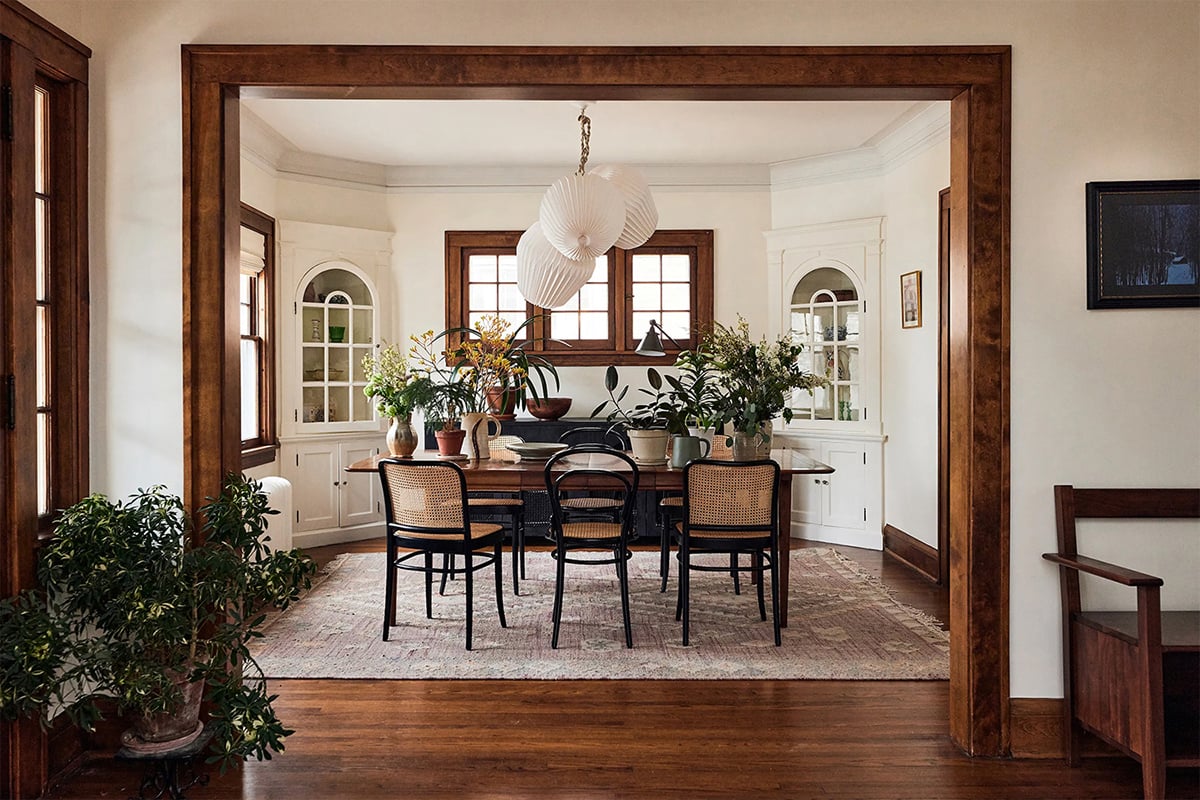
Rustic Dining Room Ideas: Natural Materials and Country Charm
By Interior Designer TRACY SVENDSEN | Published on January 19, 2024 | Updated on June 22, 2026 |
The dining room is one of the most rewarding spaces to take rustic — it’s built around gathering, and rustic design is built around warmth, which makes them a natural fit. In my work, I find that rustic dining rooms succeed when a few foundational decisions are made well: the right table, honest materials, layered lighting, and enough texture to make the space feel grounded rather than dressed up.
Whether your style leans toward traditional farmhouse, modern rustic, Southwestern, or coastal, the ideas below cover the full range — from choosing the right color palette and furniture to layering lighting and decorative accents. Feature image courtesy of Architectural Digest.
Key Takeaways: Rustic Dining Room Ideas
- The dining table is the foundation of the room — choose a solid wood farmhouse or reclaimed wood table with enough scale to anchor the space, and pair it with chairs that have visual weight to match.
- Earthy, nature-inspired color palettes — warm browns, beiges, muted greens, and soft blues — create the grounded, warm atmosphere that defines rustic dining rooms.
- Lighting does more for a rustic dining room than almost any other element — layer a statement chandelier above the table with wall sconces or dimmers for a warm, intimate glow.
- Natural materials throughout: wood flooring, stone or brick accents, natural fiber rugs, and linen or cotton textiles all reinforce the connection to the outdoors that defines the style.
- Rustic dining rooms adapt across many styles — traditional farmhouse, modern rustic, Southwestern, coastal, and Scandinavian all share the same natural-material foundation.

Rustic Dining Room with White Walls
Image courtesy of Locati Architects
Why choose a rustic dining room style?
The dining room is one of the spaces where rustic design makes the most intuitive sense — it’s a room built around gathering, and rustic style is built around warmth and natural materials that make people want to stay at the table longer. In my experience, clients who choose a rustic direction for their dining room rarely second-guess it because the style ages beautifully and never feels like it needs updating the way more trend-driven interiors do.
Rustic dining rooms also adapt across a wider range of homes than people expect. Whether the setting is a mountain log home, a suburban farmhouse, or a city apartment that wants a grounded, organic feel, the foundational elements — natural wood, honest materials, layered texture — translate across very different architectural contexts. The design style changes in scale and material emphasis depending on the setting, but the underlying warmth stays consistent.
The sections below cover the full range of rustic dining room directions — from color palette and furniture selection to lighting, textiles, and specific style variations.
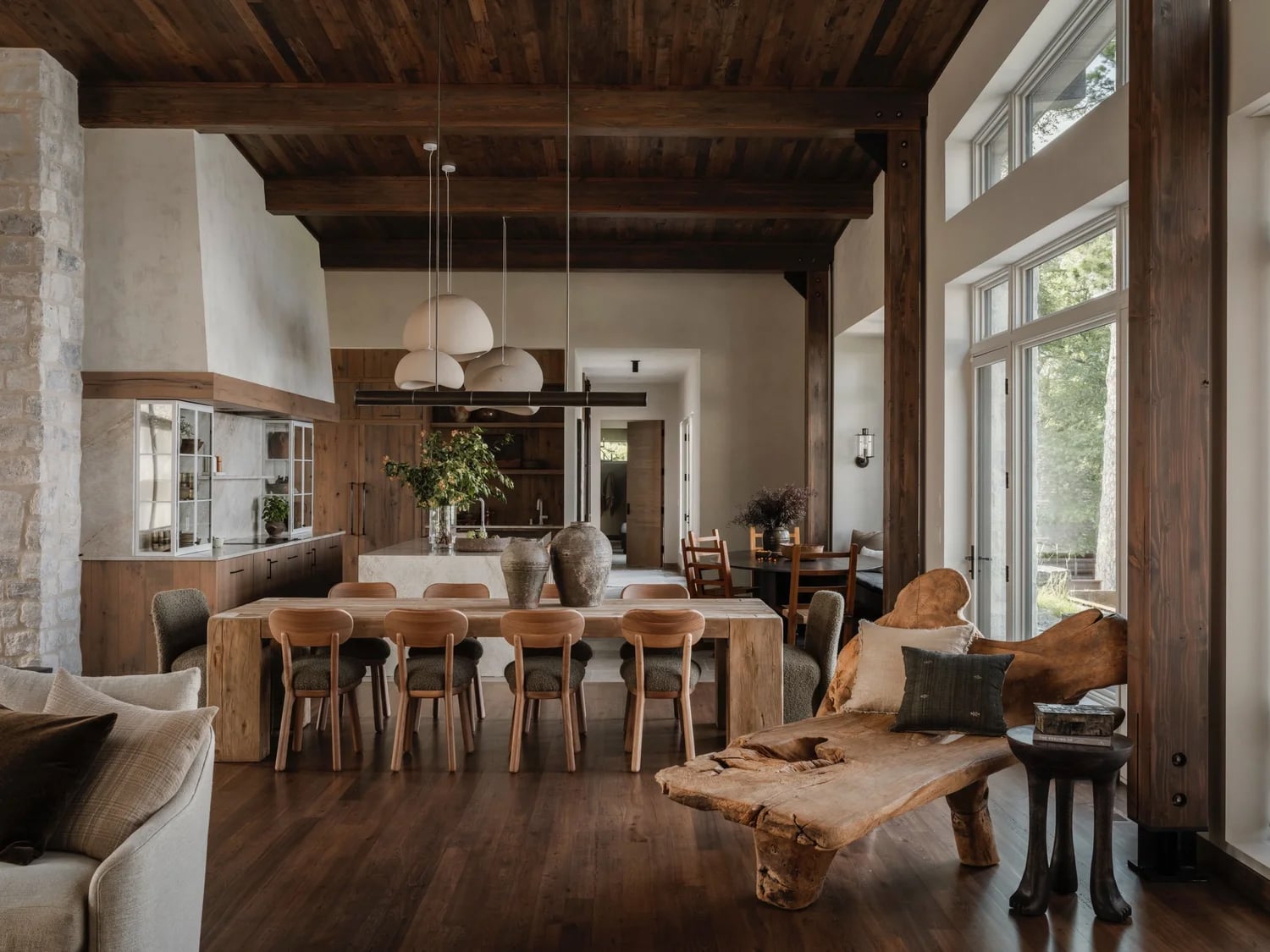
Rustic Dining Room with Dark Wood Flooring, Ceiling Beams, and Stone Accent Wall
Image courtesy of Tays & Co (Taylor O’Brien Photo)
1. Choose The Rustic Style You Wish To Incorporate
There are many distinct rustic design styles to draw from — traditional rustic, Southwestern, modern rustic, Scandinavian, country cottage, and farmhouse among the most common — and each brings a different material emphasis and atmosphere to the dining room. Whether you’re decorating a lake home, a log cabin, or a more conventional home that wants a rustic direction, identifying which style resonates most with how you actually live is the most useful first step.
A traditional rustic dining room leans into heavy timber, stone, and antler details, while a modern rustic approach uses those same natural materials with cleaner furniture lines and a more restrained palette. Country cottage and farmhouse styles tend toward softer palettes, vintage finds, and pattern — gingham, floral, and plaid — which sit at the warmer, more casual end of the rustic spectrum.

Rustic Country Cottage Dining Room
Photo courtesy of Heidi Callier Design
2. Building Your Rustic Color Palette
Color is one of the most personal decisions in a rustic dining room, and the good news is that the palette almost selects itself — earth tones and natural hues do the heavy lifting, so there’s very little risk of choosing something that feels out of place. I usually start with a neutral wall color for clients, something in the beige or warm gray family, that acts as a quiet backdrop for the room’s natural materials.
From there, the earthy accent tones layer in naturally — warm browns, soft greens, and sandy beiges that echo the wood, stone, and textile choices throughout the space. These can be pulled in through paint, artwork, upholstered seating, window treatments, or an area rug, depending on how much color commitment feels right. The key is keeping the palette warm rather than cool — even a neutral wall color should lean toward cream or taupe rather than stark white or gray, since cooler tones can work against the organic warmth that defines the style.

Rustic Dining Room Ideas with Earth Tones
Image courtesy of Amber Lewis Design
3. Adding Color Without Losing the Rustic Feel
One of the questions I hear most often from clients is how to add color to a rustic dining room without it feeling out of place. The answer is almost always the same: reach for muted, nature-inspired shades rather than anything saturated or trend-driven. Sage green is one of my most consistent recommendations — its earthy, slightly gray quality keeps it firmly within the rustic palette while adding genuine freshness. Dusty blue works beautifully too, particularly in spaces that lean toward a coastal rustic direction.
This dining room is a good example of how color can be built into the architecture itself rather than just accessories. A gradient wall treatment moving from warm tan at the top through soft blue to deeper navy at the base creates a tonal, layered effect that references both the sand and the sea without resorting to literal nautical decor. White walls elsewhere in the room keep things from feeling heavy, while a warm wood dining table and white chairs ground the space in the natural-material foundation that rustic style depends on. Built-in bench seating with white and blue pillows ties the color story together at the human scale — exactly where you feel it most when sitting down to a meal.

Rustic Dining Room with Blue Accents
Image courtesy of Luxe Design
4. Let Natural Materials Do the Work
Natural materials are the foundation of every rustic dining room I’ve designed — not as a decorative layer added on top, but as the structural starting point around which everything else builds. Wood is the most versatile of these, showing up in the dining table, chairs, flooring, ceiling beams, and open shelving simultaneously without ever feeling repetitive, because each application has its own grain, tone, and character.
This farmhouse dining room shows how naturally these materials layer when chosen with intention. White wood-paneled walls create a clean, bright shell that lets the warm wood ceiling beams read as genuine architectural detail rather than decoration. Light wood flooring carries the warmth underfoot, while a darker wood dining table grounds the center of the room with enough visual weight to anchor the space. Woven natural fiber chair seats add texture at exactly the right height — where guests actually sit and feel it — and a copper range hood and pots introduce a warm metallic element that bridges the wood and stone materials without competing with either.
Rustic pottery filled with seasonal fruit and a dried floral arrangement on the counter are the finishing details that make the room feel lived-in rather than styled — the kind of touches that reinforce the natural material story without requiring any additional design effort. Beyond wood, stone accent walls and brick fireplaces bring the same honest, textural quality to a rustic dining room, creating a focal point that paint alone simply cannot replicate.

Decorating with Natural Elements
Image courtesy of AHG
5. Choosing Furniture with Natural Wood Tones
Wood furniture is the heart of a rustic dining room — not just the table, but the chairs, storage pieces, and built-ins that together establish the room’s material identity. The most important thing I tell clients when selecting wood furniture is to resist the urge to match everything perfectly. A room where every wood tone is identical tends to feel flat; a room where light and dark woods coexist feels layered and genuinely collected over time.
This dining room is a strong example of that principle in practice. A large built-in cabinet anchors one wall with a solid base in light wood beneath glass doors and open shelving above — functional, beautiful, and deeply characteristic of the rustic approach to storage as display. The oval dining table pairs a weathered light wood top with a darker, more rustic base, creating a tonal contrast within a single piece that keeps the eye interested. Light wood flooring ties the room together underfoot, while dining chairs in warm wood with leather seat backs introduce a refined material contrast — natural and tactile, yet sophisticated enough to prevent the room from feeling purely rustic.
Whether you opt for a distressed finish, a whitewashed treatment, or simply a natural wood left to show its grain and character, the underlying principle is the same: choose pieces that look as though they have history, even if they’re new.

Wood & Leather Rustic Dining Room Furniture
Image courtesy of Amber Lewis Design
6. The Rustic Modern Farmhouse Dining Room
Farmhouse dining rooms work because they balance rustic warmth with a cleaner, more refined sensibility — the result feels welcoming without being heavy. Vintage textiles, distressed chairs, and antique-inspired pieces add the character, while a restrained neutral palette keeps everything feeling current.
This dining nook shows the style at its most elegant. A curving upholstered banquette in white follows the arc of the wall, paired with a circular wood pedestal table and three patterned upholstered chairs that introduce subtle texture without disrupting the calm palette. Linen window treatments, a wood console with wicker baskets underneath, and botanical prints above complete the room with the kind of layered, natural detail that defines modern farmhouse at its best. Cream-toned flooring ties it all together — warm, soft, and quietly sophisticated.

Modern Farmhouse Dining Room with Round Table | Louise Bradley Design
Image courtesy of LuxDeco
7. Use Open Shelving as a Design Feature
Open shelving does double duty in a rustic dining room — it provides practical storage while giving you a surface to display the collected, personal objects that make the space feel genuinely lived-in rather than decorated. Vintage dishes, woven baskets, pottery, and seasonal botanicals all look at home on open shelves in a way they never quite do behind closed cabinet doors.
In this open-concept kitchen and dining area, the shelving sits against a whitewashed brick backsplash that adds texture and warmth behind the displayed pieces. A long, weathered-wood dining table anchors the dining side of the space, paired with an upholstered bench and linen chairs that keep the seating light against the room’s medium wood tones. Light wood ceiling beams overhead complete the layering of natural materials — warm, cohesive, and deeply characteristic of the rustic approach to open-plan living.

Rustic Dining Room Ideas
Image courtesy of Kara Childress Design
8. Choosing the Right Dining Table
The dining table is the most important single decision in a rustic dining room — everything else arranges itself around it. A large rectangular farmhouse table is the classic choice, and for good reason: its substantial scale and natural wood finish create an immediate sense of gathering and permanence that smaller tables simply can’t replicate.
This dining room takes a more unexpected approach — a dark rectangular farmhouse table paired with dark blush velvet chairs and a built-in leather bench brings a sophisticated, almost moody quality to the rustic foundation. The built-in olive green bookshelf as a backdrop adds depth and color in a way that feels deliberately designed rather than incidental. It’s a good reminder that rustic dining rooms don’t have to default to light wood and neutral upholstery — darker, richer tones can feel just as grounded and warm.
For smaller spaces, a square or round table creates a more intimate seating arrangement. Look for tables with carved legs, a weathered finish, or interesting joinery details — these small touches add the sense of history and craftsmanship that makes a rustic dining room feel genuinely considered rather than simply furnished.

Rustic Dining Room with Large Table
Image courtesy of Amber Lewis Design
9. The Sideboard: Storage that Earns Its Place
A sideboard or rustic buffet is one of the most hardworking pieces in a dining room — it handles storage for table linens, serving pieces, and dinnerware while providing a dedicated surface to style with a collected, eclectic arrangement that makes a room feel genuinely designed rather than just furnished.
This bright farmhouse dining room shows how a sideboard can anchor a wall without competing with the room’s other elements. White-paneled wall detailing provides a clean architectural backdrop, while honey-toned wood flooring and tan linen chairs bring warmth to an otherwise light, airy palette. The sideboard itself is styled simply — fresh greenery in a glass vase beneath a round mirror — which is often the most effective approach in a room already rich in texture and detail. A crystal chandelier overhead adds an unexpected refined note that keeps the space from reading as purely rustic, which is exactly the kind of contrast that makes a dining room feel considered.

Dining Room with Area for Display
Image courtesy of Sara Lynn Brennan Design
10. Statement Lighting: The Chandelier
Lighting sets the mood in a rustic dining room more than almost any other single element — the right fixture above the table pulls the whole room together, while the wrong one can undercut even the most carefully chosen materials. A chandelier in wrought iron, aged brass, or natural wood with candlestick-style bulbs creates exactly the kind of warm, layered glow that makes people want to linger at the table.
This handcrafted log home dining room shows an authentic rustic iron chandelier doing exactly that — hanging above a warm wood dining table surrounded by leather chairs with nailhead trim, the fixture feels like it belongs to the architecture rather than having been added afterward. Plaid curtains reinforce the traditional rustic direction, while a weathered gray wood hutch along the wall adds both storage and the kind of aged, collected character that gives a room its personality. Everything in this room has visual weight and purpose — the chandelier simply holds it all together from above.

Dining Room with a Rustic Chandelier
Image courtesy of Houzz
11. Adding Warmth and Definition with an Area Rug
An area rug does more than add warmth underfoot — it defines the dining area within a larger space, softens the acoustic hardness of wood and stone floors, and provides a visual anchor that ties the table and chairs together into a cohesive arrangement. In rustic dining rooms specifically, a rug in natural fibers like wool or jute reinforces the material language of the rest of the space rather than introducing something foreign.
This large, modern, rustic dining room showcases the layering effect at its best. A vaulted wood ceiling with a dramatic, weathered gray barnwood accent wall running vertically to the peak creates a real architectural presence, balanced by a light wood dining table and warm-toned leather-and-wood chairs that keep the palette from feeling too heavy. A large neutral area rug sits over wide plank wood flooring, defining the dining zone and softening the visual weight of all that timber and barnwood above. The rug’s restraint is exactly right here — in a room this architecturally strong, a patterned or colorful rug would compete rather than complement.
When sizing a rug for a dining room, always go larger than feels necessary — the rug should extend far enough beyond the table that chair legs remain on the rug even when pulled out for seating.

Rustic Dining Room Ideas with Area Rugs
Image courtesy of Architectural Digest
12. Rustic Meets the American Southwest
Southwestern style is one of the most natural partners for rustic dining rooms — both draw from the same well of natural materials, earthy color, and a connection to the land. Where traditional rustic leans toward forest and mountain, Southwestern brings the warmth of the desert: terracotta, ochre, sun-bleached wood, and bold graphic patterns inspired by Native American and Mexican cultural traditions.
This dining room takes a refined, contemporary approach to the style. Large light wood beams and tonal wood flooring establish the rustic foundation, while a graphic area rug in black, ochre, and cream tones introduces the Southwestern pattern element with real confidence. The contrast between that bold rug and the contemporary white curving chairs is exactly the kind of tension that keeps a rustic room from feeling like a period piece — the chairs are clean and modern, the rug is rich and cultural, and the combination feels considered rather than accidental.
Tan linen curtains framing a black-framed window and white modern pendants above complete the palette, keeping the room bright and airy despite the graphic strength of the rug below. The rug continues into the adjoining spaces, which is a detail worth noting — carrying a strong pattern element through connected areas creates cohesion across an open floor plan far more effectively than trying to coordinate multiple different rugs.

Southwestern Dining Room
Image courtesy of Locati Architects
13. The Warmth of Country Cottage Style
Country cottage is the softest, most romantic interpretation of rustic dining room design — it trades the heavier timber and stone of traditional rustic for floral prints, gingham fabrics, pastel accents, and vintage accessories, creating a space that feels genuinely personal and lived-in. Natural materials are still central — wood, stone, and brick remain the foundation — but the overall atmosphere leans toward lightness and charm rather than rugged weight.
This dining room captures the style beautifully. A large oval warm wood table paired with wood chairs in blush velvet upholstery strikes exactly the right balance between rustic and refined — the wood is honest and natural, the velvet is soft and feminine, and together they create a pairing that feels deliberately considered. Floral wallpaper in cream, green, and blush tones wraps the room in pattern without overwhelming it, while a large archway opening to the kitchen maintains an airy, connected feel between spaces. Floral arrangements on the table and antique accessories mixed with more contemporary elements give the room that layered, collected quality that defines rustic homes at their most personal — as though the space has been added to gradually over time rather than designed in a single pass.

Rustic Country Cottage Dining Room
Image courtesy of Heidi Caillier
14. Rustic Coastal: Where Nature Meets the Water
A coastal approach to rustic dining works beautifully whether your home is actually on the water or simply drawn to the palette — soft blues, natural wood, whitewashed surfaces, and airy light all reinforce each other in a way that feels genuinely calm rather than decorated. The coastal style brings freshness to the rustic foundation without disrupting it, since both share the same commitment to natural materials and honest finishes.
This dining room makes the connection between rustic and coastal feel entirely natural. Warm wood flooring and ceiling beams establish the rustic foundation, while horizontal shiplap walls painted white keep the space bright and airy — a detail that references both farmhouse and coastal traditions simultaneously. A large window frames lake views, making them part of the room’s design and bringing the water indoors in the most direct way possible. A whitewashed wood table grounds the center of the room, and dining chairs slipcovered in a light blue-and-white narrow-striped fabric introduce the coastal palette at exactly the right scale — present enough to signal the direction without overwhelming the warm wood tones surrounding them. The combination of natural greens from the lake view and the blue-and-white textile creates a palette that feels as though it came directly from the landscape outside.

Rustic Elegant Coastal Dining Room
Image courtesy of Muskoka Living
15. Rustic Scandinavian: Calm, Clean, and Considered
Scandinavian design brings a quality to rustic dining rooms that no other style quite replicates — a deliberate calm born of restraint rather than emptiness. Where traditional rustic can lean toward abundance and layering, the Scandinavian approach edits everything down to what’s essential: natural materials, clean lines, a neutral palette, and just enough texture to keep the room from feeling stark.
This dining room embodies that balance quietly and confidently. Parquet wood flooring adds a subtle pattern underfoot without competing with the room’s simplicity, while a large cream area rug defines the dining zone and softens the space at the human level. A warm wood dining table with woven-seat chairs keeps the material palette honest and natural — no upholstery, no distressing, just clean wood and natural fiber doing exactly what they do best. White walls and black accents provide the high-contrast framework that Scandinavian interiors depend on, giving the eye clear points of rest and definition without any decorative excess. The result is a dining room that feels genuinely calm — the kind of space where a long meal and good conversation come naturally.

Scandinavian Dining Room Design
Image courtesy of Lili Jen Crantz
16. Modern Desert: Sun-Baked Tones and Natural Texture
Modern desert decorating brings a specific quality to a rustic dining room that’s harder to achieve with other styles — warmth that feels expansive rather than enclosed. The desert palette of warm earth tones, sun-bleached neutrals, and natural textures creates a sense of calm that references the landscape without replicating it literally.
This open-concept dining room captures that spirit with real clarity. Light oak flooring and ceiling beams establish a warm, natural foundation, while white walls keep the space bright and open — essential in a desert-inspired interior where airiness is as important as warmth. Black-framed doors leading to the outdoor entertaining area blur the boundary between inside and out, a defining quality of desert design at its best. A warm wood dining table paired with curving wood and bouclé dining chairs introduces the contemporary edge that separates modern desert from purely rustic territory — the curves are soft and sculptural, the bouclé adds tactile richness, and together they give the room a sophistication that feels current without abandoning its natural material roots. Rustic pottery on the table is the one detail that anchors everything back to the handcrafted, honest aesthetic that both rustic and desert design share.

Modern Desert Dining Room
Image courtesy of The Lifestyled Co.
17. Let the Landscape Define the Palette
One of the most reliable color strategies I use in rustic dining rooms is to look outside first. The colors immediately visible from the dining room window — sky, trees, fields, stone — are almost always the right starting point for a palette, because they’re already in harmony with the natural materials inside the room. A surrounding landscape of dense forest suggests deep greens and rich browns; an open meadow points toward sandy beiges and soft ochres; a mountain view brings in cool grays and warm timber tones.
This open-concept log home dining room makes that connection explicit. Views of forest and fields through large windows become part of the room’s visual palette, and the interior responds directly — warm wood flooring and a wood dining table echo the tree tones outside, while red and brown plaid chairs at the ends of the table and earth-tone leather chairs along the sides bring in the deeper, richer colors of autumn foliage. A stone fireplace anchors the corner of the room with the same material language as the landscape beyond. A bouquet of florals on the table is the one seasonal accent that ties the indoor and outdoor palettes together at the human scale — simple, fresh, and exactly right for a room this connected to its surroundings.

Rustic Dining Room Ideas | aren Millet Photography
Image courtesy of Architectural Digest
18. Lighting that Works with the Architecture
In a rustic dining room, lighting should feel like a continuation of the architectural story rather than something added afterward. The most successful fixtures are those that reference the room’s materials — wrought iron, aged brass, natural wood, or organic sculptural forms — while providing the layered illumination that makes a dining room feel genuinely warm rather than simply well-lit.
This modern rustic mountain home dining room shows how a contemporary lighting choice can strengthen rather than undercut a rustic interior. A series of sculptural, organic pendant lights hangs above a dark wood dining table, their forms echoing the natural shapes of the hand-hewn beams overhead. The contemporary white dining chairs make the same argument — clean, modern silhouettes that create contrast against the room’s rustic architecture rather than blending into it. Sliding glass doors frame expansive mountain views, a vaulted wood ceiling with rough-hewn beams draws the eye upward, and a stone fireplace anchors the corner — the lighting sits within this architectural richness without competing for attention.
Beyond the statement pendant, layering matters. Wall sconces along the perimeter, dimmable overhead lighting, and candles on the table create the kind of depth and warmth that a single fixture above the table simply cannot achieve on its own.
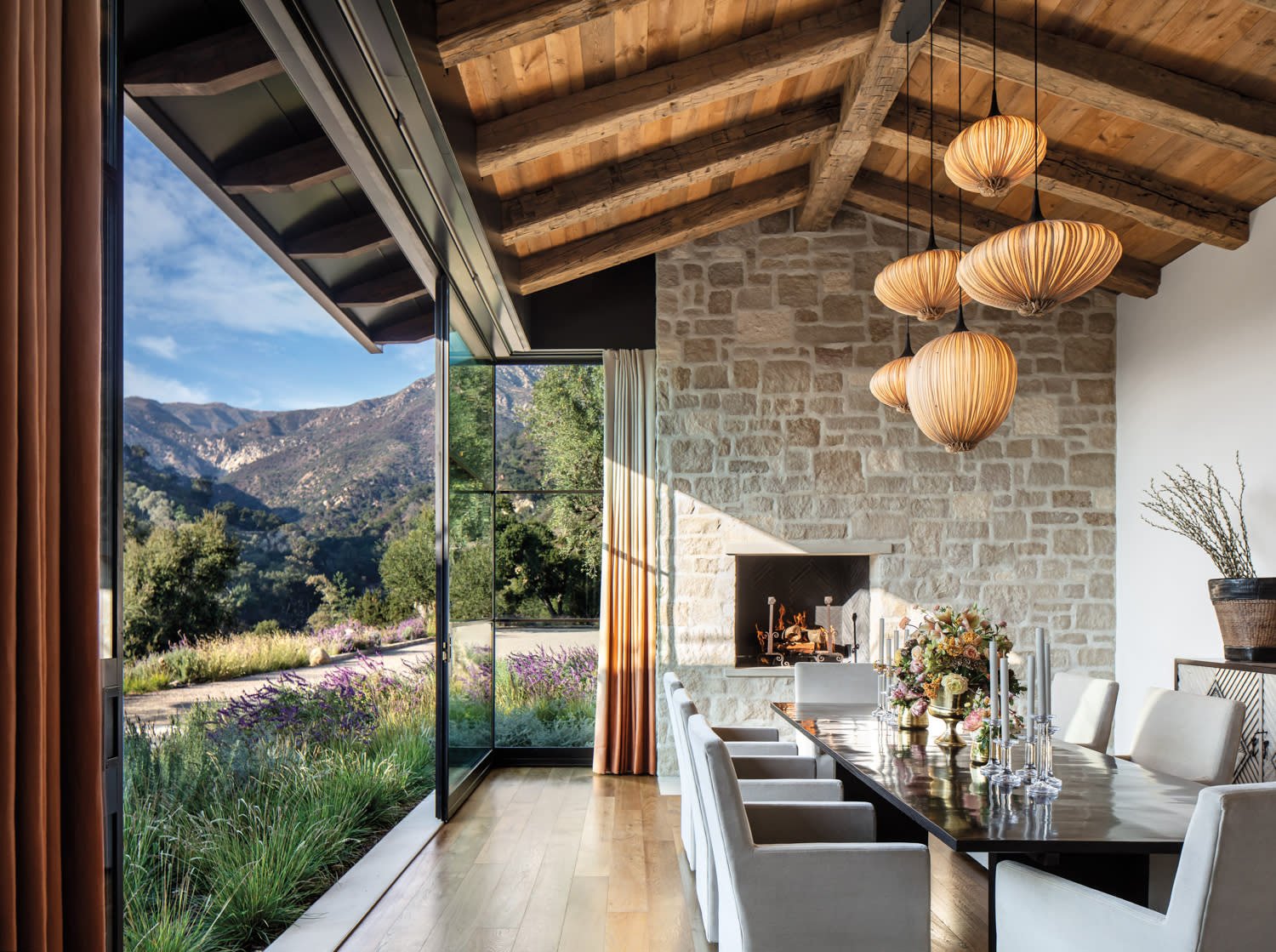
Rustic Lighting Fixtures
Image courtesy of Luxe Source (photo: Manolo Langis, Dara K. Barker Design)
19. Natural Light as a Design Element
Natural light does something in a rustic dining room that no artificial source can replicate — it brings out the depth and variation in wood grain, the texture of stone, and the warmth of earthy tones in a way that feels alive and changing throughout the day. I always treat natural light as a design element in its own right rather than simply a functional consideration, which means window placement, treatment choices, and the direction a room faces are all part of the design conversation from the beginning.
This modern mountain home dining room makes natural light the clear centerpiece. A large expanse of window frames snowy mountain views that shift with the seasons, flooding the vaulted wood ceiling and light oak flooring with cool, clear light that highlights every grain and texture in the room. The stone fireplace anchors one wall, while the open-concept layout allows light to flow freely through the space. A dark wood dining table with white contemporary chairs sits beneath a modern glass chandelier — the glass is a deliberate choice here, allowing light to pass through rather than blocking it, keeping the room feeling open even when the chandelier is the primary light source after dark.
In a room like this, window treatments aren’t needed at all — the black-framed windows are a design feature in themselves, their graphic lines providing definition against the expanse of glass and mountain views beyond. Sometimes the best window treatment decision is no treatment, particularly when the view is this strong and privacy isn’t a concern.

Rustic Dining Room Ideas
Image courtesy of Locati Architects
20. When Light and Wood Work Together
Wood flooring is the foundation of most rustic dining rooms — its natural grain, color variation, and durability make it the most practical and authentic choice for a high-traffic space. But as this open-concept farmhouse dining room shows, the relationship between the wood flooring and the lighter elements surrounding it often makes a room feel genuinely considered rather than simply decorated.
Light wood flooring runs throughout the living and dining area, grounded by a dark wood dining table and woven rattan chairs that provide enough contrast to anchor the dining zone without breaking the room’s overall cohesion. White vaulted ceilings with wood beams, a white stone fireplace, and white furniture keep the space feeling open and airy — the wood floor is what prevents all that white from feeling cold or clinical, adding the warmth and texture the room needs underfoot. Black-framed windows punctuate the white walls with graphic definition, tying together the room’s light palette with a confident, contemporary edge.
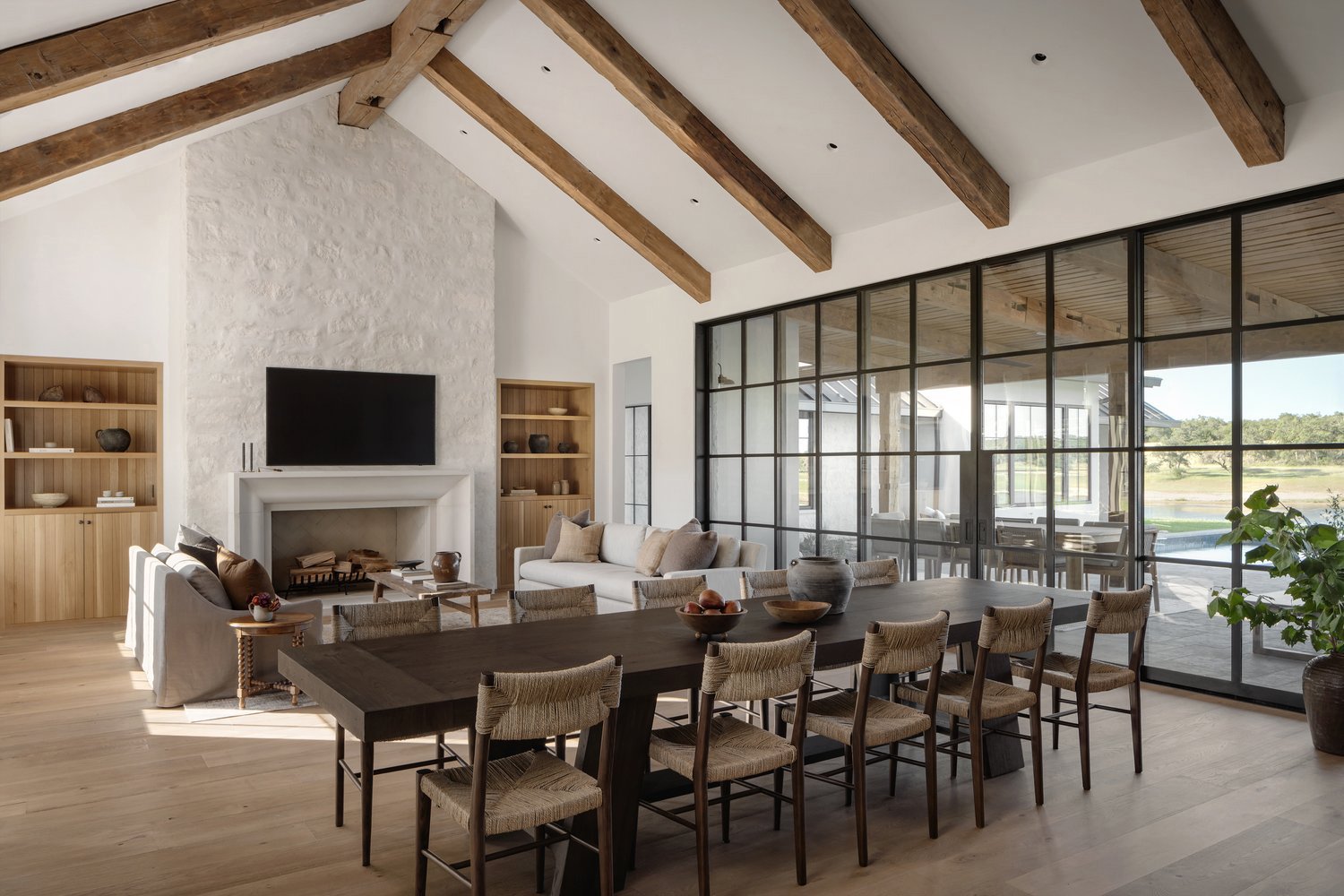
Wood Flooring in the Dining Room
Image courtesy of Cedar & Oak Homes
21. Setting the Mood with Candlelight
No artificial lighting source does what candlelight does in a dining room — it creates a warmth and intimacy that even the most carefully layered electric lighting can’t fully replicate. Candlesticks or lanterns as a table centerpiece, candles grouped on a sideboard, or a mix of both create the kind of soft, flickering glow that makes every dinner feel like an occasion without any additional effort.
This open-concept farmhouse dining room uses contrast as its primary design strategy, and the candlelight on the table plays directly into that. Dark hardwood flooring, dark wood dining table, and dark wood chairs create a rich, grounded base, while white ceilings, walls, upholstery, area rug, and countertops throughout the connected kitchen and living area provide the light counterpoint that keeps the dark tones from feeling heavy. A brass chandelier above the table bridges the two — warm metallic, neither dark nor white — and floor-to-ceiling warm white curtains soften the room’s edges beautifully. The candlesticks on the table complete the picture, adding a layer of warmth and flickering light that makes the contrast between the dark wood and the white upholstery feel intentional and intimate.
Beyond candles, dimmable wall sconces or table lamps in adjoining spaces let you control the overall light level across the open-concept area — bringing everything down together creates cohesion that makes the dining moment feel deliberate.

Romantic Farmhouse Dining Room
Image courtesy of Sarah Lynn Brennan
22. Rustic Western Ranch Style
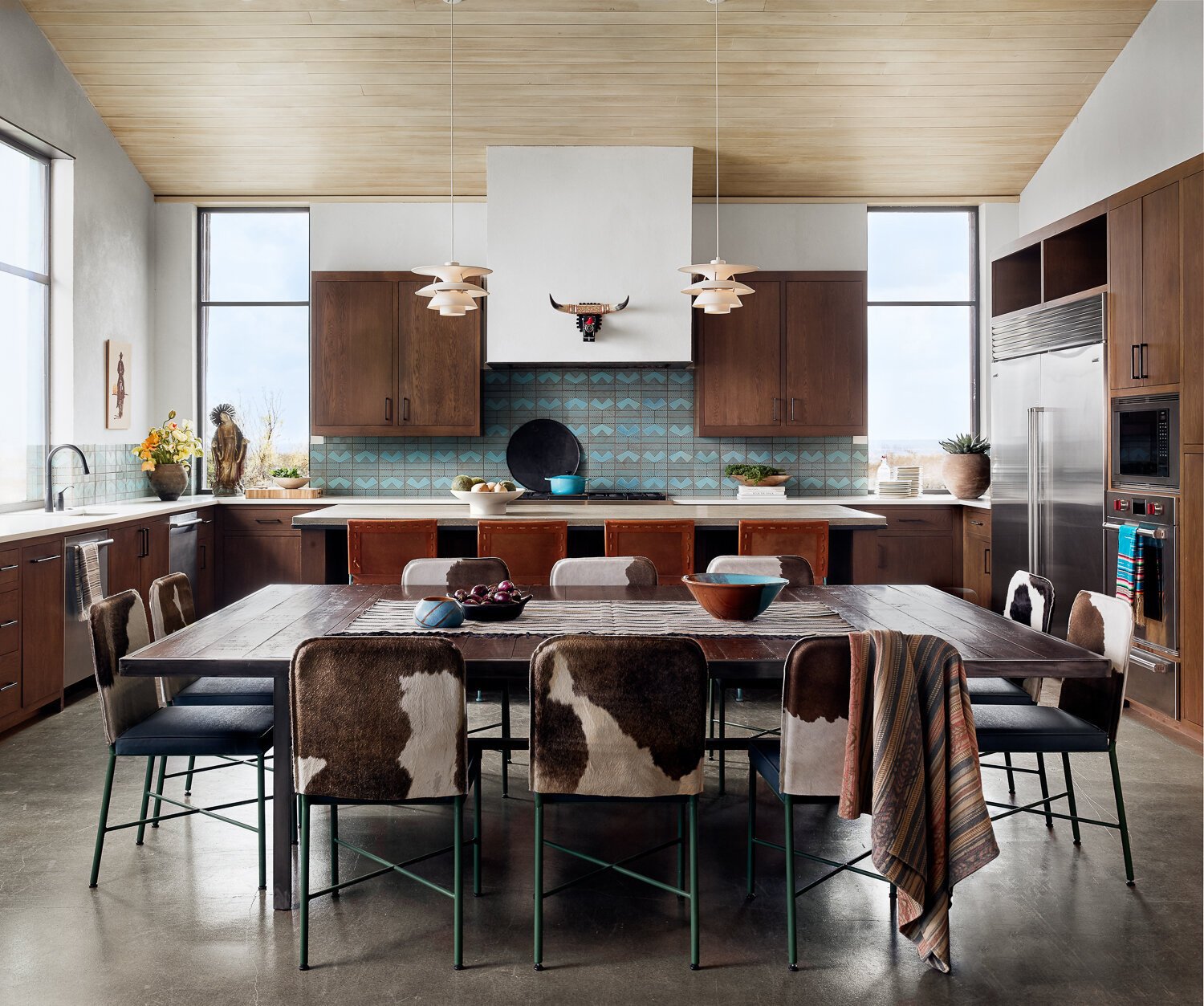
Western and ranch-inspired dining rooms share rustic design’s love of natural materials and honest craftsmanship, but with a distinctly American character — cowhide, leather, turquoise, and dark wood bring a bold, confident energy that sets this style apart from the softer rustic variants on this list.
This kitchen-dining area captures that spirit directly. Cowhide-back chairs around a dark rustic wood table make an immediate statement — the pattern is graphic and unmistakably Western, yet completely at home against dark wood cabinets and tile flooring. A turquoise backsplash is the room’s most unexpected detail, pulling in the regional color that connects Western design to the landscapes of the American Southwest without resorting to anything literal or themed. White walls and a light wood ceiling keep the room from feeling too heavy, giving the darker elements room to breathe.
Natural accents like branches, fresh or faux florals, or potted plants work particularly well in Western and ranch-style dining rooms, softening the stronger material choices and reinforcing the connection to the dining room’s natural surroundings.
Southwestern Dining Room
Image courtesy of Studio Seiders
23. Choosing Natural Fabrics
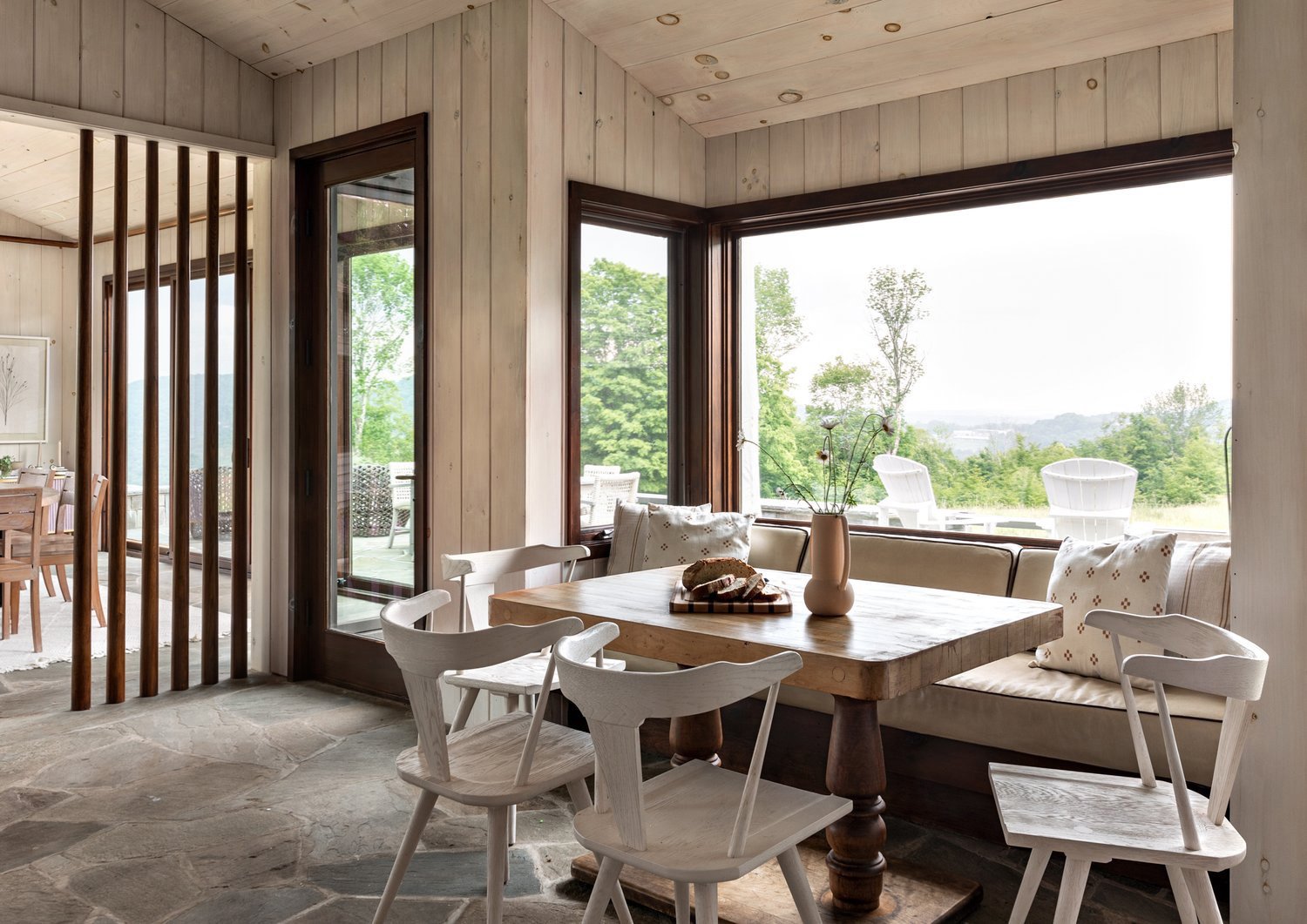
Textiles do quiet but essential work in a rustic dining room — they soften hard surfaces, add tactile warmth, and introduce the kind of layered detail that makes a space feel genuinely lived-in. Table linens in natural fibers like linen or cotton, patterns like gingham or plaid, and upholstered seating in wool or performance fabric all reinforce the natural-material story without requiring any structural changes.
This breakfast nook with mountain views shows how textiles transform a dining space at a more intimate scale. A built-in upholstered banquette tucked into the window creates the kind of seating that immediately invites you to settle in — layered throw pillows add softness and color against the light wood paneled walls, while natural stone flooring and whitewashed chairs keep the palette grounded and honest. The banquette’s position framing the mountain views makes the whole nook feel like the most desirable seat in the house, which is exactly what good interior designers aim for — furniture and textiles working together to create a moment within the larger room.
Cozy Textiles
Image courtesy of Allison Lind Design
24. Layering Texture
Texture layering is what separates a rustic dining room that feels professionally designed from one that simply has the right furniture. The principle is straightforward — combine materials with genuinely different tactile qualities so the eye and hand experience contrast and depth rather than a flat, uniform surface. Smooth leather against a chunky knit throw, a faux fur accent over bare wood flooring, polished concrete beside rough-hewn timber — these pairings create the visual interest that makes a room feel rich and considered.
This mountain dining and living room demonstrates how texture layering works across an open-concept space. Curved dark wood dining chairs with white leather upholstery sit at the dining table — the curve is sculptural, the leather smooth and refined — while the adjoining living room takes a completely different textural direction, with plush sofas layered with throw pillows and faux-fur throws in front of a concrete-and-black-steel fireplace. High wood ceilings, light oak flooring, and large black-framed windows provide the architectural framework that holds all these contrasting textures together without the room feeling disjointed. The black accents threading through both spaces — chair frames, window frames, fireplace surround — create the unifying element that makes the textural variety feel intentional rather than accidental.

Rustic Industrial Dining Room
Image courtesy of Berg Design Studio
25. The Character of Vintage and Collected Pieces
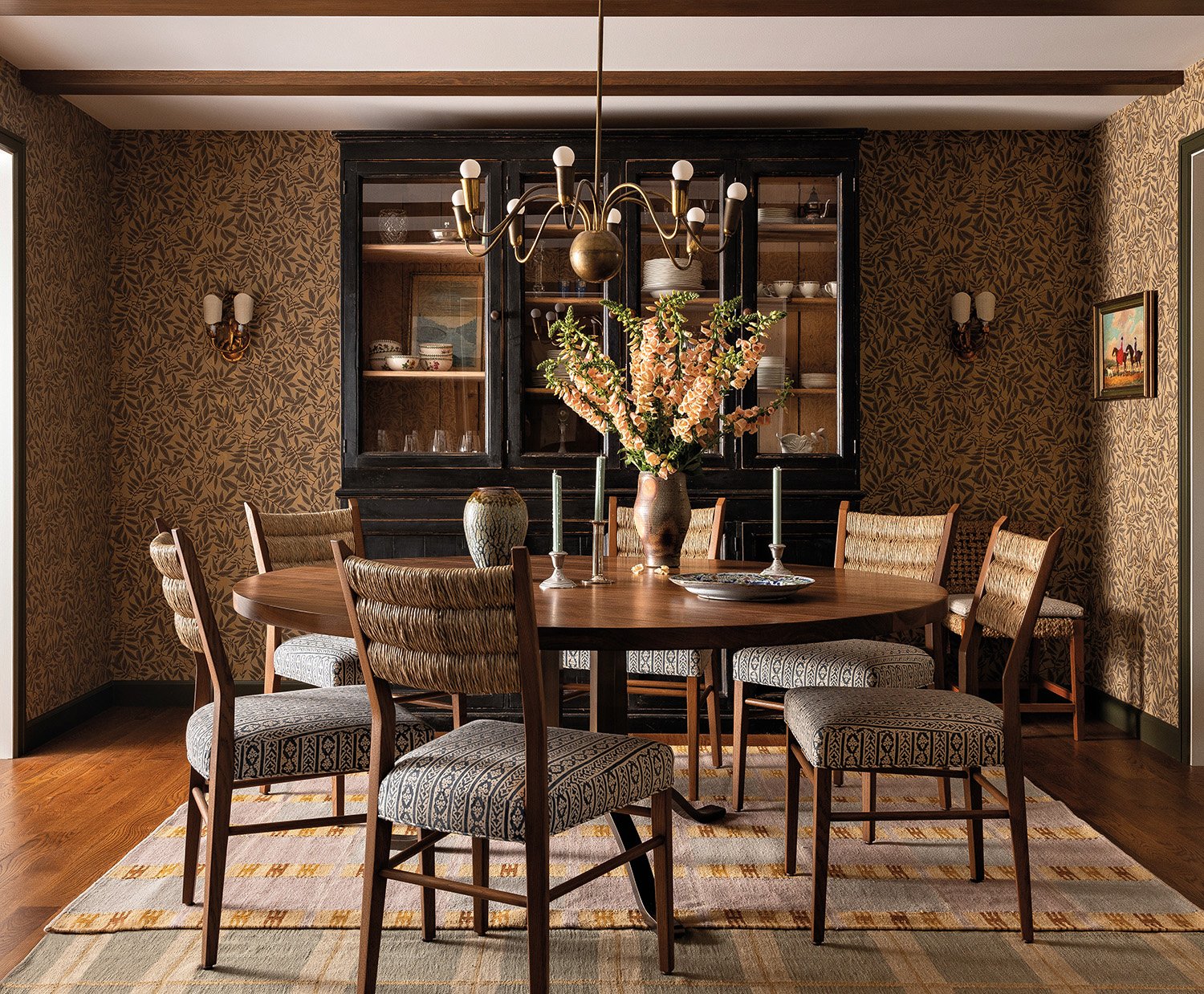
Vintage finds are what give a rustic dining room its sense of history — the suggestion that the space has been lived in and added to over time rather than assembled in a single purchase. Antique mirrors, old frames, vintage signs, handcrafted pottery, and antique dishes all contribute to this quality in a way that new pieces simply can’t replicate, regardless of how well-made they are.
This country cottage dining room shows how vintage and collected elements can come together into something genuinely rich and layered. Earthy leaf-patterned wallpaper in warm ochres and browns wraps the room in pattern and sets a deeply organic tone, while a rustic black vintage cabinet with glass-fronted cabinetry above and open wood shelving below provides both storage and a display surface for vintage pottery and collected objects. A round wood table sits at the center, surrounded by chairs with handwoven rush backs and patterned upholstered seats in navy blue and cream — the kind of chair that reads as genuinely old rather than vintage-inspired. A patterned area rug in gray, ochre, and rust tones grounds the room and picks up the wallpaper’s earthy palette, while vintage artwork completes the walls. Everything in this room tells a story, which is exactly the quality that separates a truly personal rustic dining room from one that simply has the right furniture.
Vintage Accents
Image courtesy of Heidi Callier Design
26. Rustic Decor as the Room’s Focal Point
Rustic character doesn’t always come from the architecture or the furniture — sometimes it comes entirely from what’s on the table and the shelves. Reclaimed wood accents, handcrafted pottery, natural textures, and earth-tone vessels can introduce a rustic element into an otherwise contemporary or eclectic space without requiring any structural changes.
This Scandinavian eclectic dining room is a strong example of that principle. White walls, light wood flooring, black accents, and light wood framed windows create a clean, high-contrast framework that reads as contemporary rather than rustic — yet the table transforms the entire room. A collection of rustic pottery and handcrafted bowls fills the surface with organic warmth, while sculptural branches in one of the larger vessels add verticality and a direct reference to the natural world.
The mix-and-match chairs, eclectic artwork, and collected sculptures reinforce the gathered-over-time quality that rustic decor does best. Fresh or faux florals and potted plants on open shelving carry the same natural-material energy beyond the table and into the wider room. It’s a useful reminder that rustic and contemporary aren’t mutually exclusive — sometimes one well-styled table is all it takes to bridge the two.

Layering the Table
Image courtesy of JJones Design Company
27. Layering a Rustic Tablescape
The table itself is the most personal expression of rustic dining room style — it’s where natural materials, handcrafted objects, and seasonal elements come together in a way that changes with every gathering. A well-layered tablescape doesn’t require matching pieces or a formal arrangement; it requires a considered mix of textures, tones, and organic elements that feel genuinely abundant rather than styled.
This tablescape shows exactly how that layering works in practice. A tan linen tablecloth softens the dark rustic wood beneath it, creating an immediate contrast between the rough-hewn table and the relaxed, natural fabric. Cream-toned stoneware and warm brown linen napkins establish the earthy palette, while seagrass rattan cage tumblers introduce a natural fiber element that reinforces the rustic direction without matching anything too precisely. Two large rustic vases anchor the center of the table, flanked by fall leafy branches in rust tones that run the length of the setting — adding color, height, and a direct seasonal reference. Fresh bread, grapes, and salad complete the picture in the most honest way possible: a rustic table always looks best when it’s actually being used.

Rustic Dining Room Ideas
Image courtesy of Amber Lewis Design
28. The Fireplace as a Dining Room Focal Point
A fireplace in a dining room changes the entire character of the space — it shifts the room from purely functional to genuinely atmospheric, providing both physical warmth and the kind of visual anchor that makes people want to linger at the table long after the meal is finished. In log homes and cabins especially, a fireplace feels like a natural extension of the architecture rather than an added feature, reinforcing the connection between the interior and the landscape outside.
This rustic log home dining room shows the fireplace at its most commanding. A natural stone fireplace anchors the room with real architectural presence — the same warm wood used for the flooring wraps around the windows, creating a continuous material language that connects every surface in the room. Cowhide high-back chairs around a large dining table bring a Western, ranch-inspired character that suits the rugged stone perfectly, while a crystal chandelier above introduces an unexpected, refined element that elevates the room without disrupting its rustic design foundation. Mountain views through the windows complete the picture — a dining room that feels genuinely connected to its setting in every direction.

Rustic Dining Room with a Fireplace
Image courtesy of Locati Architects
29. The Coffee Bar: Function Meets Rustic Style
A coffee bar in a rustic dining room adds a layer of everyday functionality, making the space work harder without changing its character. It creates a natural gathering point separate from the dining table — somewhere guests gravitate toward before or after a meal — and gives you a dedicated surface for the kind of collected, displayed objects that rustic dining rooms do best.
This built-in cabinet handles the coffee bar beautifully while doing much more than storing a coffee maker. Closed lower cabinetry keeps everyday clutter out of sight, while a combination of glass-fronted and open shelving above in a warm blue-gray tone creates a display area for stacked plates, pottery, plants, and artwork — the layered, personal arrangement that gives a rustic dining room its character. The coffee station itself sits naturally within this framework, with the coffee maker and mugs becoming part of the display rather than a utilitarian afterthought. In a rustic dining room, a coffee bar works best when it’s designed with the same natural wood finishes, distressed accents, and vintage elements as the rest of the space — functional, personal, and genuinely part of the room rather than something added to it.

Coffee Bar in a Rustic Dining Room
Image courtesy of Jean Stoffer
A rustic dining room works because it puts the focus back on what dining rooms are actually for — gathering, conversation, and comfort. Natural materials, an honest color palette, and layered lighting do most of the work. Whether you lean toward a traditional farmhouse table with mismatched vintage chairs or a more refined modern rustic approach, the underlying principle is the same: let the materials speak, keep the choices intentional, and the room will feel warm without any extra effort.
Frequently Asked Questions About Rustic Dining Room Design
How do you decorate a rustic dining room?
Start with the table — a large solid wood farmhouse table or a reclaimed wood piece with visible grain and character sets the tone for everything else. From there, layer in natural materials: wood flooring or stone tile, natural fiber rugs, linen or cotton textiles, and a chandelier in wrought iron or aged wood. Earthy, neutral wall colors provide the backdrop, while open shelving, a sideboard, or rustic buffet give you room to display vintage dishes, baskets, and collected objects that add personality. The detail that separates a well-decorated rustic dining room from a generic one is restraint — a few genuine, character-rich pieces consistently outperform a room filled with mass-produced rustic accessories.
What are the dining room trends for 2026?
The clearest direction in rustic dining rooms for 2026 is toward a more refined, edited aesthetic — fewer pieces, better quality, and a stronger emphasis on natural materials over decorative accessories. Dark, moody color palettes (deep greens, charcoal, rich terracotta) are gaining ground alongside the traditional lighter neutral palette, particularly in rooms with good natural light where the depth of color reads as warm rather than heavy. Statement lighting — oversized chandeliers in hand-forged iron or natural materials — continues to be the highest-impact single design decision. The farmhouse table remains central, but paired increasingly with more refined upholstered seating rather than purely rustic wooden chairs.
What furniture works best in a rustic dining room?
A solid wood dining table with a distressed, reclaimed, or natural finish is the non-negotiable starting point — it needs enough scale and visual weight to anchor the room. Chair choices depend on the specific rustic direction: traditional rustic works well with wooden ladder-back or Windsor chairs, while modern rustic often pairs the same table with upholstered linen or leather seating for a more refined contrast. A sideboard or rustic buffet along one wall provides both storage and a display surface, and open shelving above it creates an opportunity to style vintage dishes, baskets, and natural objects. Benches on one side of a farmhouse table add informality and extra seating without crowding the space.
What colors work best in a rustic dining room?
Warm neutrals are the foundation — beige, warm white, and soft taupe create a calm backdrop that lets natural wood and stone textures take the lead. Earthy accent tones like muted green, dusty blue, terracotta, and warm brown layer in naturally without competing with the materials. For a more dramatic approach, deep charcoal or forest green walls work beautifully in rustic dining rooms with abundant natural light and pale wood or stone to balance the depth. The key principle across all of these choices is warmth — even neutrals should lean warm rather than cool, since cool grays or stark whites can work against the organic quality of the natural materials.
How do you light a rustic dining room?
A statement chandelier centered above the dining table is the most important lighting decision in a rustic dining room — look for wrought iron, aged brass, or wood fixtures with candlestick-style bulbs for the most authentic feel, and size it generously rather than conservatively. Layer in wall sconces or dimmable ambient lighting around the perimeter to create warmth at multiple heights rather than relying on a single overhead source. Natural light is equally important — large windows that allow daylight to enhance the textures of wood and stone should be treated with light-filtering linen sheers or simple shutters rather than heavy drapery that blocks the view. Candles on the table or sideboard add a final layer of warmth for evening dining that no electric fixture can fully replicate.
RELATED POSTS: Dining Room Ideas
View Recent Posts
Stunning Range Hood Design Ideas
Range hood design ideas covering stone, wood, plaster, copper, and stainless steel — with designer tips on proportion, material selection, and installation.

Fireplace Design Ideas
45 fireplace design ideas, from ceiling-high stone and fluted plaster to wood paneling and black tile, with a designer’s tips on materials, scale and color.
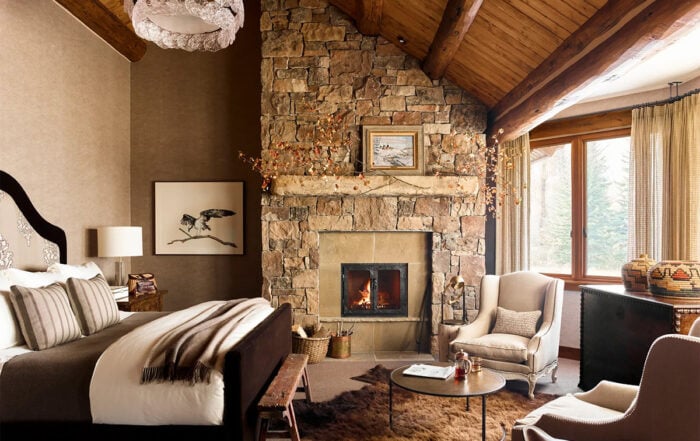
Rustic Bedroom Ideas
Rustic bedroom ideas covering natural materials, layered textiles, color palettes, and professional design strategies for log cabin, modern rustic, Scandinavian, and luxury retreat styles.
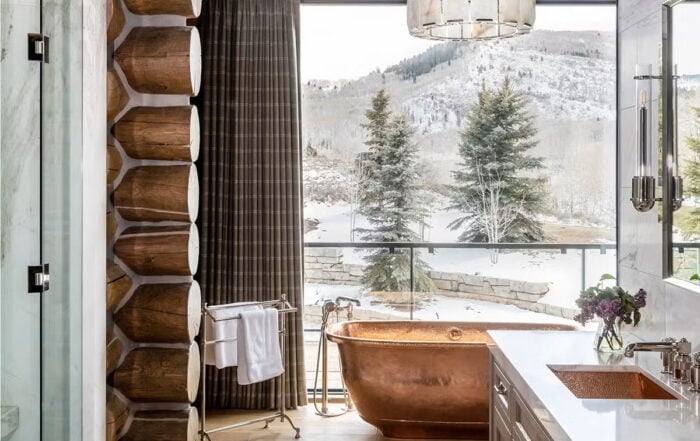
Rustic Bathroom Ideas
Rustic bathroom ideas — natural materials, vintage fixtures, earthy palettes, and designer tips for log homes, cabins, and mountain retreats.
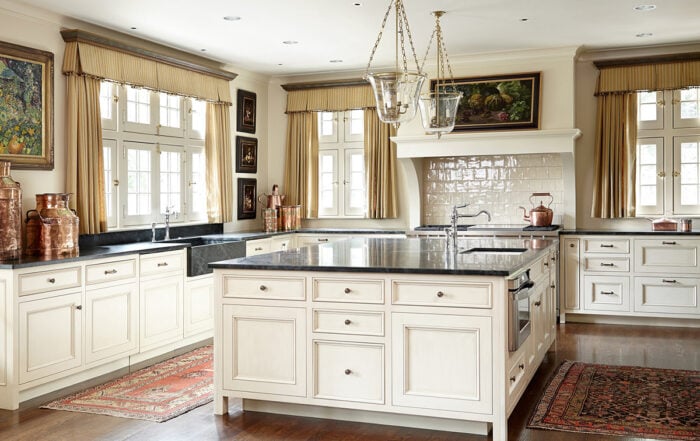
Cream Kitchen Cabinet Ideas
Cream kitchen cabinet ideas curated by interior designer Tracy Svendsen. Warmer than white and more versatile than beige, cream cabinets work beautifully across farmhouse, rustic, traditional, and modern kitchens.
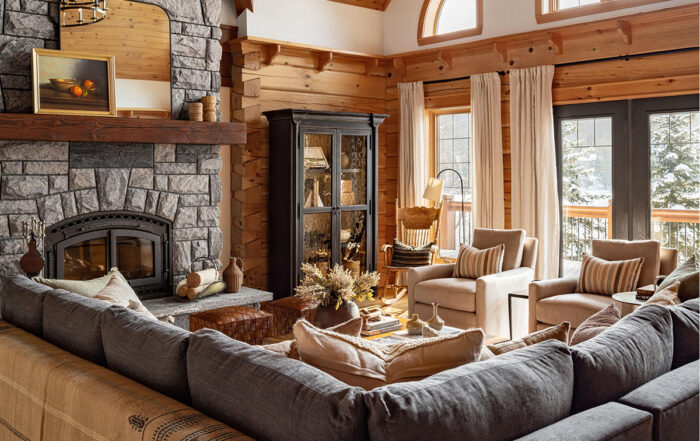
Log Home Decorating Ideas
Log home decorating ideas covering color palettes, furniture selection, lighting, stone fireplaces, and modern approaches to handcrafted log home interiors.

