
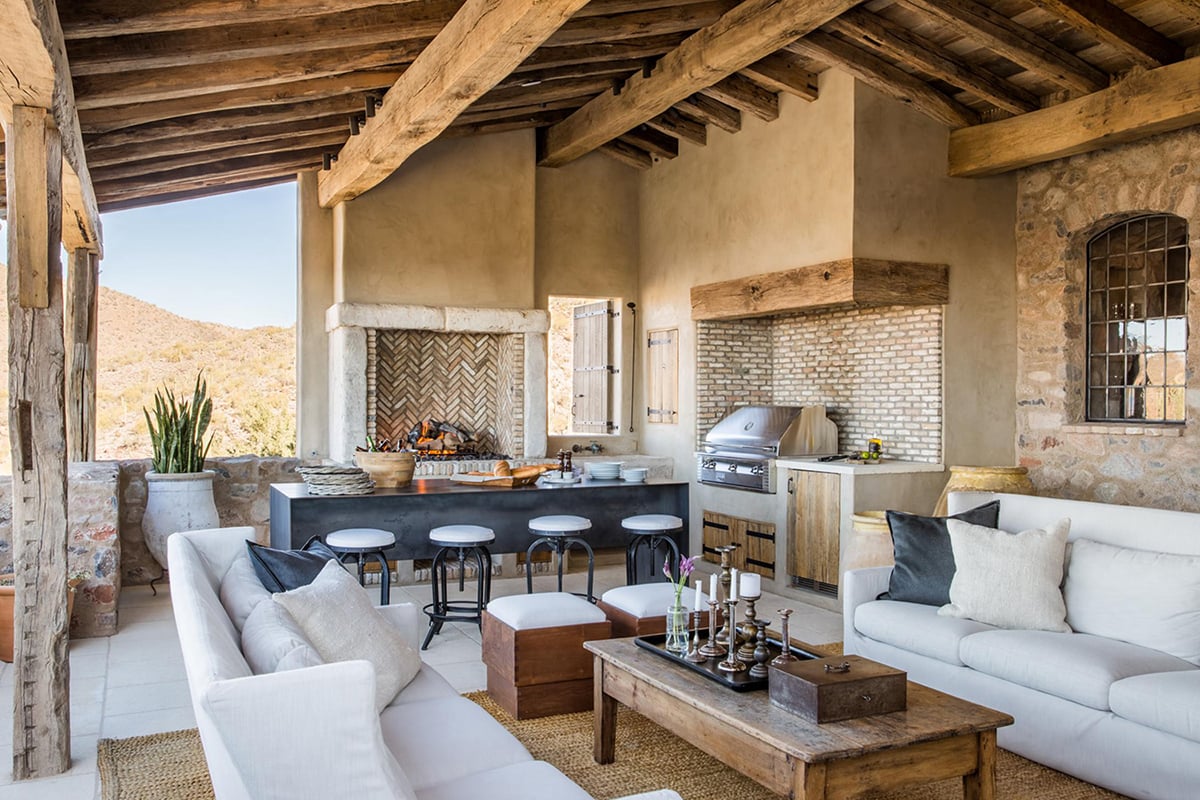
Rustic Backyard Ideas: Natural Materials and Outdoor Living
By Interior Designer TRACY SVENDSEN | Published on March 05, 2021 | Updated on July 17, 2026 |
Growing up on a farm in Northern Alberta, I spent my childhood outdoors — in the fields, the garden, and around the fire. A rustic backyard wasn’t an aesthetic choice; it was simply the landscape I grew up in. The fire pit was functional before it was decorative, the garden beds were practical before they were styled, and the connection between the house and the land outside it was assumed rather than designed.
Outdoor living has evolved significantly since then — today’s rustic backyard is as considered as any interior space, with outdoor rooms, statement lighting, water features, and planting schemes that bring genuine design thinking to the space outside the back door. The ideas in this guide bridge both worlds: the authenticity of a backyard that genuinely connects to the natural landscape and the design quality that makes it worth spending time in.
Thirteen years as a partner in a handcrafted log home company deepened that instinct — the outdoor spaces surrounding log homes and wilderness resorts need to feel as considered as the interiors, and they need to work with the natural landscape rather than impose on it. The ideas in this guide reflect that approach: natural materials, functional outdoor rooms, and the kind of planting and landscaping that connects a backyard directly to the surrounding environment.
Whether you have a large rural property or a modest urban backyard, the rustic approach translates — it’s about material authenticity and a genuine connection to the outdoors rather than square footage. Image courtesy of Oz Architects.
Key Takeaways: Rustic Backyard Ideas
- A rustic backyard works best when built from the landscape out — starting with climate-appropriate planting and natural materials before making any furniture or decorating decisions.
- Define each outdoor zone with an anchor element first — a fire pit, pergola, or dining table — then arrange seating and accessories around it. Without an anchor, outdoor spaces rarely come together regardless of how good the individual pieces are.
- Natural materials improve with age in a rustic outdoor space — weathered wood, aged metal, and worn wicker all read as character rather than neglect, making rustic outdoor furniture one of the most practical and forgiving choices available.
- Container gardening offers the flexibility that in-ground planting can’t — pots can follow the sun, change with the seasons, and be brought inside to overwinter, extending both the plant’s life and the garden’s seasonal range.
- Outdoor lighting is the single most effective way to extend the usability of a rustic backyard into the evening — layering overhead, table-level, and ground-level light sources creates the depth and warmth that a single string of lights alone never achieves.

Rustic Backyard Living Room
Image courtesy of Mindy Gayer Design
What Makes a Backyard Feel Rustic
Rustic outdoor design is defined by the same principles as rustic interiors — natural materials, weathered finishes, and a connection to the landscape that feels genuinely organic rather than manufactured. The difference between a rustic backyard and a conventional one isn’t primarily about style; it’s about material honesty. Aged brick, natural stone, weathered wood, handmade pottery, and planted containers that spill and trail rather than sit rigidly in place all signal a space that has been lived in and tended over time.
This courtyard demonstrates the principles clearly. Weathered earth-tone brick and stone tile in a circular pattern create an immediate sense of age and permanence, echoed by the round white table and wicker seating at the center and the circular brick planter bed surrounding the whole arrangement. White, purple, and pink flowers fill the planters, vines trail over the brick wall beyond, and rustic pottery with rounded English boxwood topiary adds the sculptural element that elevates the space from a simple garden to a genuinely designed rustic outdoor room.
The material details are worth noting: the weathered brick reads as aged and rooted in a way that new pavers never do, and the circular geometry — repeated from the tile pattern to the planter bed to the table — creates a cohesion that makes the courtyard feel planned from the beginning rather than assembled over time.

Lovely Courtyard Surrounded by White Florals | Karen Rogers Design
Photo courtesy of Houzz
1. Natural Elements in a Rustic Style Backyard Design
The most effective rustic backyards draw their character from the same natural elements that define the surrounding landscape — native plants, natural stone, weathered wood, and water. Starting with plants that thrive in your local climate reduces maintenance while creating a backyard that feels genuinely connected to its environment rather than imposed on it. Native plants, fragrant herbs, ornamental grasses, and raised garden beds layered together add the depth and texture that a single plant type alone never achieves.
This European-style backyard shows how structure and planting work together across a generous outdoor space. Three separate pergola-covered areas — dining, outdoor living, and a lounge zone — are widely spaced across terracotta brick tile flooring, each surrounded by lush floral arrangements in planter boxes and pots. The wood pergolas and seating connect all three zones with a consistent natural material, while the generous planting between the areas creates a sense of moving through a garden rather than simply crossing a paved outdoor space.
Designer Tip: I always recommend choosing climate-appropriate and native plants over exotic or high-maintenance varieties for a rustic backyard — plants that belong naturally to the local landscape give a space its most authentic rustic character. A backyard where the planting feels inevitable rather than imported will always look more genuinely rustic than one filled with plants that require constant attention to survive the climate.

European Outdoor Seating Area Casa Smith Designs
Photo courtesy of Casa Smith Designs
2. Outdoor Seating Areas for a Rustic Backyard
A rustic backyard works best when it’s organized around distinct outdoor rooms — a lounge area for relaxing, a dining area for meals, and a transition zone between the two that allows movement without disrupting either. The furniture choices in each zone should connect to the natural material palette: wicker, weathered wood, and natural-fiber cushions in earth tones all suit a rustic direction while holding up to outdoor conditions.
This log home entertaining area shows the principle at full scale. A Tuscany pergola with classic Tuscan pillars and rustic wood slats above creates a defined outdoor room that houses a wicker sofa, two accent chairs, and a coffee table — a complete living room arrangement that functions independently of the house behind it. Hanging baskets with florals soften the pergola structure and add the planted, garden quality that keeps an outdoor room from feeling too architectural. Just outside the pergola, a large stone fireplace anchors the transition zone, surrounded by potted plants — serving as the focal point that draws people from the covered seating area to the open space beyond. Stone flooring throughout connects all the elements into a single cohesive outdoor room.
Designer Tip: I always recommend defining each outdoor seating zone with its own anchor element — a pergola, a fire pit, or a dining table — before choosing any furniture. Once the anchor is in place, the furniture arranges itself naturally around it. Without an anchor, outdoor seating tends to feel scattered regardless of how good the individual pieces are.

Outdoor Lounging Area
Photo courtesy of HGTV
3. Outdoor Lighting for a Rustic Backyard
Outdoor lighting does more to extend the usability of a rustic backyard than almost any other single addition — it transforms a space that disappears at dusk into one that draws people outside after dark. Warm, soft light sources suit the rustic direction best: string lights draped from a pergola or between trees, lanterns in wrought iron or weathered wood placed along pathways and on tables, and candles that add the flickering quality that no electric light fully replicates.
This timber-frame back deck integrates lighting into the architecture rather than adding it as an afterthought. Black post lamps mounted on the wood railing provide the functional light level needed for dining and conversation, while the warm wood beams, roof structure, and flooring create a naturally warm backdrop that amplifies the light rather than absorbing it. A dining table and chairs alongside four upholstered accent chairs with a coffee table create two distinct outdoor zones on the deck, with the mountain and vista views beyond the railing becoming part of the evening experience — a reminder that in a setting like this, the most restrained lighting decision is often the right one, allowing the landscape rather than the fixtures to define the atmosphere.
Designer Tip: I recommend layering at least three light sources in a rustic outdoor space — one overhead source for ambient light, one at table level for warmth, and one along pathways or at ground level for depth. String lights alone create a flat, one-dimensional effect; the layering is what gives an outdoor space its genuinely atmospheric quality after dark.

Rustic Outdoor Seating Area with Magnificent Views
Image courtesy of Locati Architects
4. The Back Porch as an Outdoor Living Room
A back porch is the most natural transition between the interior of a home and the landscape beyond it — and in a rustic home, it deserves the same design attention as any room inside. The material palette should connect directly to the house: natural stone, weathered wood, and stone or concrete accents that feel like a continuation of the architecture rather than a separate outdoor addition.
This timber frame deck shows the approach at its most considered. Natural stone tile flooring establishes the material foundation, while stonework rising up the base of the wood beams connects the deck to the ground below. A large trapezoid concrete fire pit anchors the center of the space — substantial enough to hold its own against the scale of the timber frame structure above. A large dark gray sectional and two pale gray accent chairs surround the fire pit, layered with striped and solid gray pillows and Southwestern blankets that add pattern and warmth without disrupting the neutral palette. The covered wood-frame structure above defines the outdoor room and provides the shelter that makes the space genuinely usable in varied weather conditions.
Designer Tip: I always carry the interior material palette directly onto the back porch — the same stone, wood tones, and textile colors used inside should continue outside so the transition feels seamless rather than abrupt. In this deck, the stonework rising up the beam bases and the natural stone tile flooring connect directly to the timber frame interior behind it. That material continuity is what makes a porch feel like a genuine extension of the home rather than an afterthought.

Rustic Outdoor Seating Area in Shades of Gray
Image courtesy of Locati Architects
5. Farmhouse Backyard Ideas
Farmhouse style translates naturally to outdoor spaces — the same principles that define it indoors (natural materials, unpretentious surfaces, a mix of refined and rustic elements) work equally well in a backyard. The range within farmhouse is broad, from early American to French country and everything in between, but the common thread is always material authenticity over decorative excess.
This modern farmhouse backyard shows the contemporary end of the spectrum. A large U-shaped outdoor area wraps around a white modern farmhouse exterior with black-framed windows, anchored by two distinct zones — a pergola-covered seating area with white outdoor furniture and a neutral stone fireplace, and a separate fire pit area with four accent chairs, accessible directly from the primary bedroom via large glass double doors. The clean, contemporary approach to the architecture is softened by surrounding shrubs and potted plants that bring the organic, natural element the farmhouse direction requires.

Modern Farmhouse Backyard Area
Photo courtesy of Brooke Wagner Design
One of the most distinctive qualities of farmhouse outdoor design is the use of repurposed and found objects as decor. Milk jugs, butter churns, wagon wheels, wooden stumps, industrial spools, barnboard, barrels, and antique signs all translate naturally into outdoor planters, tables, lamps, and decorative accents — objects that carry genuine age and history rather than manufactured character. The first image shows this at its most personal: a rustic antique wooden bench with a large wicker basket of lavender and three wicker baskets on the wooden decking below, filled with flowers, berries, and pinecones — simple, gathered, and entirely authentic. The second takes the same principle to a courtyard scale: a large collection of rustic pottery and urns in terracotta-tiled surroundings, each filled with floral arrangements, creating the kind of abundant, collected display that only comes from accumulation over time.
Designer Tip: I recommend starting a farmhouse backyard collection with one or two genuinely aged or antique pieces rather than purchasing everything new at once. A single authentic item — an antique butter churn, a weathered wooden bench, or a collection of vintage pottery — establishes the tone that newer pieces can then build around. Authenticity in one piece reads through the whole space; without it, even well-chosen new pieces can feel like a costume rather than a character.

Farmhouse Lavender
Photo courtesy of Mester Gronn

Potted Florals by Casa Smith Designs
Photo courtesy of Casa Smith Designs
6. Rustic Outdoor Furniture
Outdoor furniture selection depends on three practical factors before any aesthetic ones — the weather in your location, the protection your space offers, and how seriously you intend to use it. A covered deck in a mild climate can support almost any type of furniture; an exposed patio in a wet climate needs materials that withstand real weathering.
One advantage of rustic design outdoors is that wear improves rather than damages the look — unfinished wood, scratched metal, and aged wicker all read as character rather than neglect. A coat of outdoor sealer extends the life of wood pieces without altering their weathered appearance.
This modern mountain deck showcases the contemporary end of rustic outdoor furniture — gray upholstered pieces with faux-fur throws, a stump accent table, and a black square fire pit on a light wood deck. The stump accent table is the detail that grounds the otherwise contemporary furniture in the natural landscape.
Designer Tip: I recommend keeping a weatherproof storage chest on any outdoor deck — a cedar chest or simple deck box — to store cushions and throws between uses. The single biggest reason outdoor spaces stop being used is the effort of bringing textiles in and out. Remove that friction and the space gets used year-round.

Modern Rustic Outdoor Furniture
Photo courtesy of Alder & Tweed
7. Plants and Container Gardening
Plants do more to soften and personalize a rustic porch than any piece of furniture or decorative accessory — they add life, scent, seasonal change, and the organic quality that manufactured decor can never fully replicate. Container gardening is particularly well-suited to porch design because it allows flexibility: pots can be moved to follow the sun, rearranged as plants grow, and brought inside to overwinter when temperatures drop.
The key to a well-planted porch is varying height — plants at floor level, on tables, and in hanging positions create a layered, abundant quality that a single row of pots along the railing never achieves. Vary texture as well: smooth petals alongside rough stems and different leaf sizes create visual interest within the same green palette. Fragrant plants — potted lavender, jasmine, or gardenia — add the sensory dimension that sight alone can’t provide, and herbs and vegetables mix naturally into a farmhouse porch planting scheme alongside ornamental varieties.
This southwestern outdoor entertaining area shows container planting used structurally — potted trees and shrubs around a white brick fireplace and stone accent wall with an archway create the sense of an enclosed garden room rather than simply a furnished outdoor space. Stone pavers and four white upholstered accent chairs anchor the seating zone, while the planted perimeter softens the hard architectural surfaces throughout.
Designer Tip: I recommend investing in a heavy-duty plant trolley for any large container on a rustic porch — it allows you to move substantial pots to follow sun exposure, reposition for seasonal interest, or bring them inside before the first frost without damaging either the plant or your back. It’s a small practical investment that significantly extends both the plant’s life and your willingness to experiment with placement.

Adding Plants to Outdoor Areas
Photo courtesy of Forest Studio
8. Decorating Your Rustic Outdoor Space for the Season
A rustic outdoor space that changes with the seasons feels genuinely alive rather than permanently staged — and the material palette of rustic design makes seasonal transitions particularly natural. The same wicker chairs and wood table that hold summer florals transition effortlessly into autumn branches and candlelight, then into evergreen and lanterns for winter.
This outdoor dining setting captures the autumn transition at its most considered. A wood dining table with wicker chairs is styled with candles running the full length of the center — the warm glow doing more to establish the seasonal mood than any decorative object. Three rustic pots filled with branches and rust-toned florals anchor the arrangement, while stoneware, linen napkins, and a warm brown-and-white checkered table runner complete the layered, harvest-quality table. Everything here is natural, organic, and directly connected to the fall outdoor decorating direction — nothing reads as purchased seasonal decoration.
Seasonal decorating in an outdoor space works best when the base elements — furniture, flooring, structure — stay constant and only the textiles, plants, and accessories change. This keeps the investment manageable while allowing the space to feel genuinely current throughout the year.
Designer Tip: I recommend keeping a dedicated outdoor storage box stocked with seasonal accessories — autumn branches and rust-toned textiles, winter evergreens and lanterns, spring botanicals and lighter linens — so the seasonal transition takes an afternoon rather than a shopping trip. The ease of the swap is what makes seasonal outdoor decorating sustainable rather than aspirational.

Adding Seasonal Flare to Outdoor Areas
Image courtesy of Amber Lewis Design
My Own Modern Rustic Backyard Decorated for Fall
This is my own backyard — the same space year-round, shifted into fall with a few deliberate additions rather than a complete redecoration. The wicker sofa and two light gray accent chairs stay out through the season, dressed with white faux fur throws, embroidered pumpkin pillows, and a crocheted orange and white pot holder on the end table alongside candles. A fire pit anchors the seating area — on it, a wood charcuterie board and two orange pumpkin mugs that make the space feel genuinely used rather than styled. A black and white outdoor area rug grounds the whole arrangement under a large black outdoor umbrella.
The planting is where the seasonal transition happens most naturally. I buy large coleus from Costco every year in warm reds, oranges, and rust tones mixed with trailing vines, and pot them in woven baskets on either side of the sofa. They perform beautifully through summer and transition effortlessly into fall without any replanting — paired with rust-toned mums, they create the warm, harvest-quality planting that connects the seating area directly to the season. The whole setup takes an afternoon to arrange and stays looking strong well into October. The finishing detail that makes the biggest difference after dark: the back fence is lined with row upon row of LED twinkle lights — the warm glow behind the seating area transforms the space completely once the sun goes down, extending the time we actually spend out there well into the cool fall evenings.
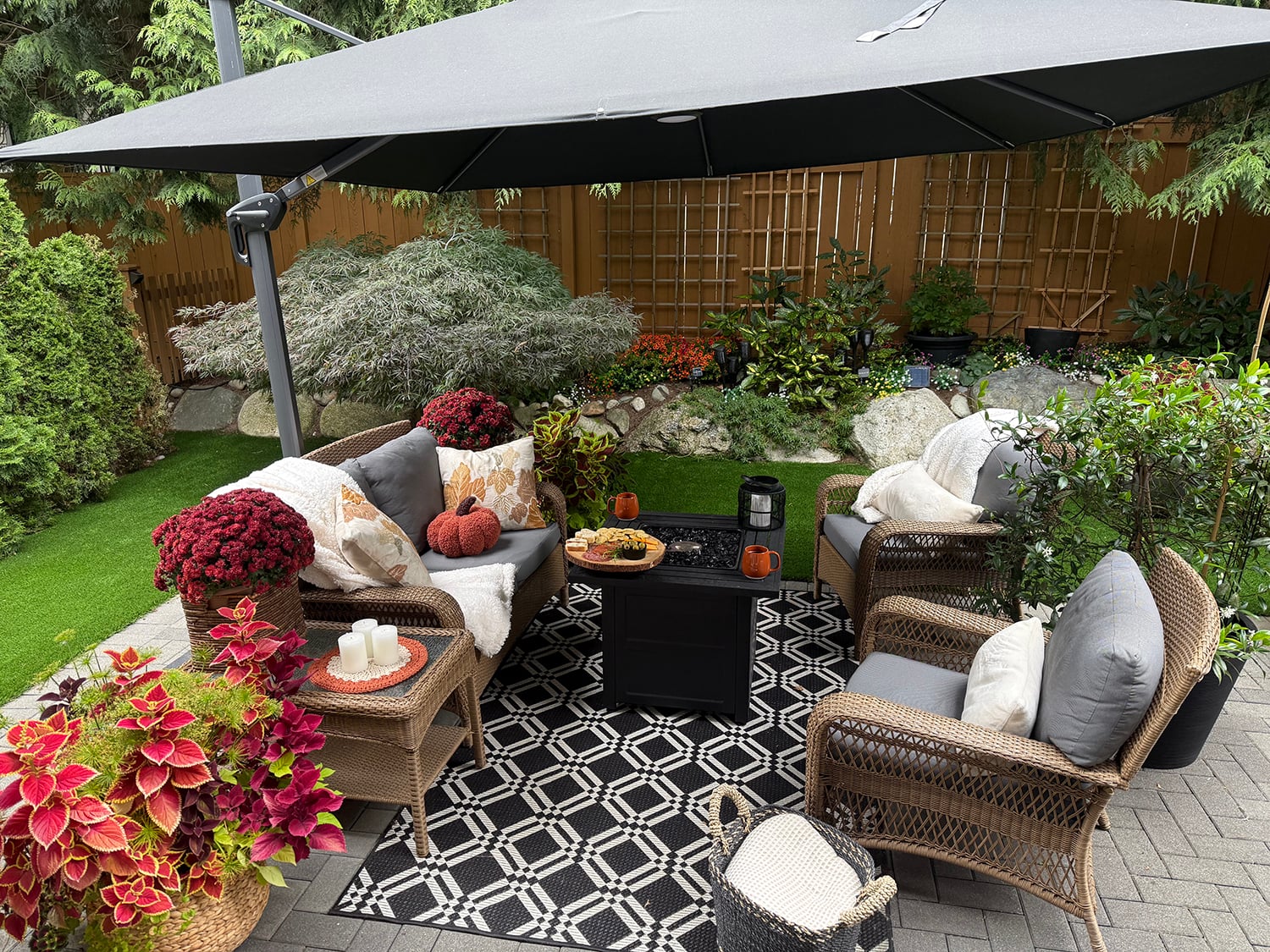
My Backyard Decorated for Fall
9. Container Gardening in a Rustic Backyard
Container gardening suits a rustic backyard particularly well — it provides color and seasonal interest without the commitment of full garden beds, and it allows the display to change throughout the year. The same pot can hold tulips in spring, geraniums in summer, chrysanthemums in fall, and evergreens in winter — four seasonal moments from a single investment. Containers work especially well at gates, entrances, and dark corners where a full garden bed isn’t practical.
This potager garden, designed by Hoerr Schaudt landscape architects at Woodland Edge Estate, takes container and raised bed gardening to its fullest expression. A white gardener’s shed with a rustic wood-shingled roof anchors the space, surrounded by raised wood garden beds filled with vegetables and florals — the combination of the practical and the beautiful that defines the best kitchen garden tradition. A seating area within the garden makes it a destination rather than simply a working space.
Designer Tip: I recommend raised garden beds for anyone who wants a productive, rustic garden without the physical demands of traditional in-ground planting — the elevated height eliminates bending and kneeling, making regular tending and harvesting genuinely enjoyable rather than a chore. Cedar is the best material choice for rustic raised beds: it’s naturally rot-resistant, weathers beautifully to a soft gray over time, and suits the rustic aesthetic without any treatment or staining required.

Container Gardening Ideas
Image courtesy of Hoerr Schaudt
Containers also solve a specific gardening problem — plants you’ve nurtured through warm weather can be brought indoors for winter protection and returned outside the following spring, extending their life indefinitely. Starting seeds directly in their permanent container also eliminates transplanting, reducing both effort and the risk of plants failing to take root.
In a rustic backyard, almost any found object becomes a potential container — wine barrels, farm buckets, livestock watering troughs, vintage sinks, old birdbaths, milk jugs, and wash tubs all suit the aesthetic while adding genuine character. Group plants in varying heights and pair complementary colors — purple alongside orange, for example — to create displays with visual depth rather than a flat uniform arrangement.

Potted Containers with Flowers and Herbs
Photograph courtesy of Luxe Source
10. Rustic Backyard Landscaping Ideas
Rustic landscaping works best when it feels like a natural extension of the site rather than something imposed on it — native stone, natural grade changes, and planting that connects to the surrounding landscape all reinforce the organic quality that defines the rustic outdoor aesthetic.
This wooded retreat in wine country, designed by Wade Design Architects in collaboration with Jennifer Robin Interiors, demonstrates landscaping fully integrated with architecture. The exterior of patinated board-on-board red cedar, Douglas fir, and native stone excavated directly from the site establishes the material connection to the landscape from the ground up. The covered concrete deck extends from a natural stone fireplace, with two parallel concrete stairways descending to a narrow pool below — the steps flanking a central landscaped zone of florals, large rocks, and shrubs that reads as both structural and planted simultaneously. The same planting repeats on either side of the steps, creating a symmetrical but entirely natural-feeling composition that feels genuinely designed rather than simply planted.
Designer Tip: I recommend incorporating at least one level change in a rustic backyard landscaping plan — steps, terraces, or raised beds — even in a relatively flat yard. Grade changes add the spatial complexity that makes a backyard feel like a landscape rather than simply an outdoor floor. They also create natural opportunities for planting between levels, where some of the most interesting rustic garden compositions occur.
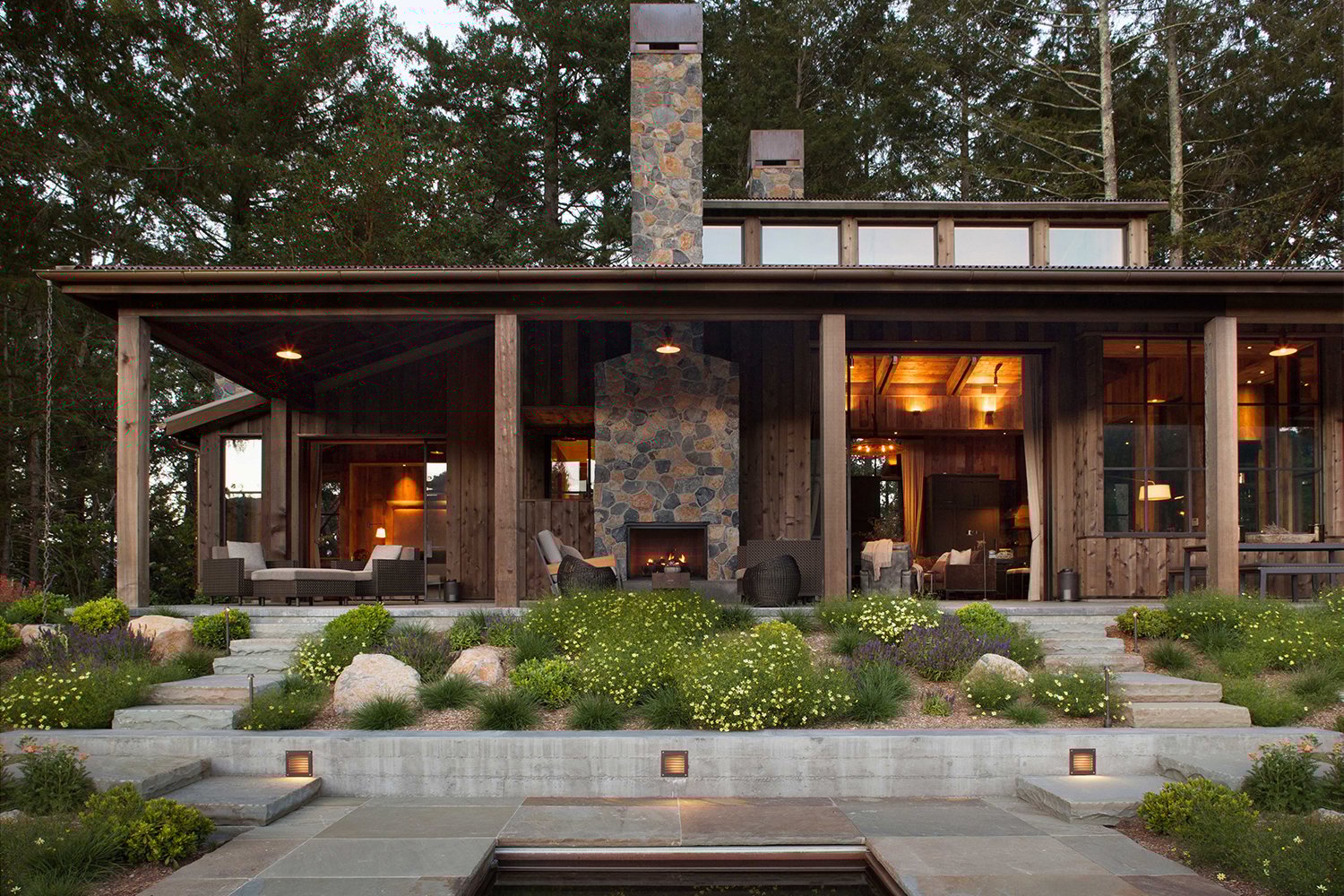
Rustic Home with Beautiful Landscaping
Image courtesy of Jennifer Robins Design
11. Planning Your Rustic Backyard Layout
Before planting or hardscaping, sketch a simple plan and zone the space for different activities — dining, gardening, lounging, and pet areas all have different sun, privacy, and surface requirements. Identifying these early prevents costly changes later.
A rustic garden shouldn’t look too manicured — paths meander, surfaces are rough and weathered, and lawns lean toward native meadow grasses rather than precision turf. Take cues from working landscapes: the small vineyards of France, Montana ranches, or Scandinavian summer cabin gardens. This T-shaped gazebo built into a forested backyard shows thoughtful zoning at its best — a stone pathway leads to the wood structure, opening into a barbecue and dining area, then widening into a larger covered seating area beyond. Two distinct outdoor rooms within one structure.
Designer Tip: I always recommend a simple scale drawing before any planting or hardscaping decisions — even a rough sketch reveals spatial relationships that are impossible to assess just by standing in the space.

Outdoor Retreat in Kingwood, Texas
Photo courtesy of Texas Custom Patios
12. Log Home Porches and Outdoor Living
Log homes have a natural advantage in outdoor living — the architecture itself establishes the rustic character before a single piece of furniture is placed. The outdoor space simply needs to continue what the building already does.
This manufactured log home back porch by Pearson Design Group shows that material thinking is applied with real sophistication. Large concrete tiles define the perimeter, while rustic wood flooring anchors the covered seating area — an unusual combination that creates distinct zones within a single continuous space. Barnwood slab ceilings, a central fireplace with a modern black metal chimney hood, and custom reclaimed timber furniture complete the material palette. White upholstered seating provides the contrast that prevents the warm wood tones from feeling heavy, and the mountain views beyond the porch frame the whole composition.
Designer Tip: I always recommend one high-contrast element on a log home porch — white upholstery, a dark metal fixture, or a bold plant color — to prevent the warm wood tones from blending into each other. Without contrast, even a beautifully furnished log home porch can feel visually flat.

A Refined Rustic Outdoor Living Room
Photo courtesy of Pearson Design Group
13. Log Home Gardening and Landscaping
A log home garden should carry the architectural character of the building into the landscape — and logs themselves are one of the most natural landscaping materials available. Log ends and stumps set into the ground make charming pathways, while logs can be fashioned into gazebos, arbors, fencing, raised garden beds, hollowed planters, and outdoor lighting posts. If there’s leftover wood from the home’s construction, incorporating it into the landscaping creates a direct material connection between the building and the grounds.
This aerial view of a large handcrafted log home shows what considered log home landscaping achieves at full scale. A bluestone patio integrated into the deck provides a dining and lounging area with fire pit, while a two-level stroll garden traverses the property — mass plantings of perennials and grasses on the upper level, trees and shrubs below. The path passes a destination pergola with a three-person swing, then continues through native stone steps, a rock garden hugging a cliff-like retaining wall, and onto a grassy knoll leading to the parking court. Every element connects to the next, creating a landscape that rewards exploration rather than simply providing a backdrop.
Designer Tip: I recommend designing a log home garden around a clear circulation path — a route that moves visitors through the space rather than leaving them to wander randomly. A well-designed path creates the sense of discovery that makes a garden genuinely memorable, and it gives structure to planting that might otherwise feel unorganized.

Rustic Backyard Ideas
Photo courtesy of Zone 4 Landscapes
Rustic Backyard Ideas Conclusion
A rustic backyard works best when it’s built from the landscape out rather than the furniture in — starting with planting that belongs naturally to your climate, adding structure through pathways, raised beds, and outdoor rooms, and layering in the personal details that make the space genuinely yours.
The most successful rustic outdoor spaces are the ones that actually get used — a fire pit that gets lit, a garden that gets tended, a porch that gets sat on in the evening. Design toward that quality rather than toward appearance alone, and the aesthetic follows naturally.
Frequently Asked Questions About Rustic Backyard Ideas
How do I make my backyard look rustic?
Start with natural materials — weathered wood, natural stone, aged metal, and wicker — as the foundation before making any furniture or planting decisions. A rustic backyard reads as genuinely authentic when the materials feel connected to the surrounding landscape rather than purchased from a single shopping trip. Define distinct outdoor zones with a pergola, fire pit, or dining area as the anchor for each space, then layer in planting, textiles, and accessories around those anchors. Repurposed and found objects — old wooden crates, antique pottery, wine barrels, and vintage lanterns — add the collected, personal quality that manufactured rustic decor rarely achieves. The goal is a space that looks like it has been tended and lived in over time rather than installed all at once.
How do I design a rustic garden?
A rustic garden should feel like a natural extension of the surrounding landscape rather than something imposed on it. Start with climate-appropriate and native plants that thrive without intensive maintenance — plants that belong naturally to your region give a garden its most authentic rustic character. Incorporate natural stone pathways, raised garden beds in weathered wood, and organic borders rather than formal geometric edges. Allow some looseness in the planting — meandering paths, trailing vines, and plants that spill slightly beyond their boundaries all reinforce the rustic quality. Log ends, stumps, and salvaged timber can be incorporated as pathways, planters, and garden edging, carrying the material character of a log home directly into the landscape. A rustic garden should look tended but not manicured — the difference between a space that’s cared for and one that’s controlled.
What are the latest backyard trends for 2026?
The strongest backyard trend for 2026 is toward genuine outdoor rooms — fully furnished, weather-appropriate spaces that function as extensions of the interior rather than simply patios with a table and chairs. Covered outdoor living areas with proper seating, lighting, fire features, and even outdoor kitchens are increasingly common across all property sizes. Natural and reclaimed materials continue to dominate — weathered wood, natural stone, and aged metal over manufactured composite materials. Container gardening and raised bed vegetable gardens are growing in popularity alongside ornamental planting, reflecting a broader interest in productive outdoor spaces. Fire pits remain the single most popular backyard addition, valued both for their practical warmth extension and their role as a social anchor in outdoor seating arrangements. Outdoor lighting — particularly string lights, lanterns, and low-level pathway lighting — is increasingly being treated with the same layered approach as interior lighting design.
What plants work best in a rustic backyard?
Native and climate-appropriate plants are always the strongest choice for a rustic backyard — they require less maintenance, attract local wildlife, and connect the garden naturally to the surrounding landscape. Ornamental grasses add height, movement, and seasonal interest with minimal care. Lavender, rosemary, and other fragrant herbs suit rustic gardens particularly well, providing both visual and sensory interest alongside their practical use. Climbing plants — roses, clematis, and wisteria — work beautifully on pergolas, arbors, and fencing, adding the soft, trailing quality that defines the best rustic gardens. For container planting, coleus in warm reds, oranges, and rust tones transition naturally from summer into fall without any replanting, and they grow quickly and substantially enough to anchor a basket or large pot effectively. Chrysanthemums, echinacea, and native wildflowers add seasonal color while reinforcing the natural, organic character of a rustic outdoor space.
How do I create a rustic outdoor seating area?
Start with an anchor element — a fire pit, pergola, or substantial piece of outdoor furniture — and arrange the seating around it rather than placing chairs and sofas first and hoping the space comes together. The anchor defines the zone and gives the seating area a clear focal point and reason for being. Choose furniture in natural materials — weathered teak, wicker, or reclaimed timber — that suits the outdoor environment and improves with age rather than showing wear. Layer in textiles through cushions, throws, and outdoor rugs in earth tones, stripes, or subtle patterns to add the warmth and comfort that hard furniture surfaces alone can’t provide. A fire pit or outdoor fireplace extends the usability of the seating area significantly into cooler evenings and provides the atmospheric quality that makes an outdoor space genuinely inviting after dark. Store cushions and throws in a weatherproof chest nearby to remove the friction of bringing them in and out — the easier the setup, the more the space actually gets used.
View Recent Posts
Stunning Range Hood Design Ideas
Range hood design ideas covering stone, wood, plaster, copper, and stainless steel — with designer tips on proportion, material selection, and installation.
Rustic Bedroom Ideas
Rustic bedroom ideas covering natural materials, layered textiles, color palettes, and professional design strategies for log cabin, modern rustic, Scandinavian, and luxury retreat styles.
Rustic Bathroom Ideas
Rustic bathroom ideas — natural materials, vintage fixtures, earthy palettes, and designer tips for log homes, cabins, and mountain retreats.
Cream Kitchen Cabinet Ideas
Cream kitchen cabinet ideas curated by interior designer Tracy Svendsen. Warmer than white and more versatile than beige, cream cabinets work beautifully across farmhouse, rustic, traditional, and modern kitchens.
Log Home Decorating Ideas
Log home decorating ideas covering color palettes, furniture selection, lighting, stone fireplaces, and modern approaches to handcrafted log home interiors.
Country Kitchen Ideas
Discover 43 country kitchen ideas featuring warm earth tones, natural materials, vintage accents, and expert guidance on cabinets, colors, and styling for an authentic country kitchen design.

