
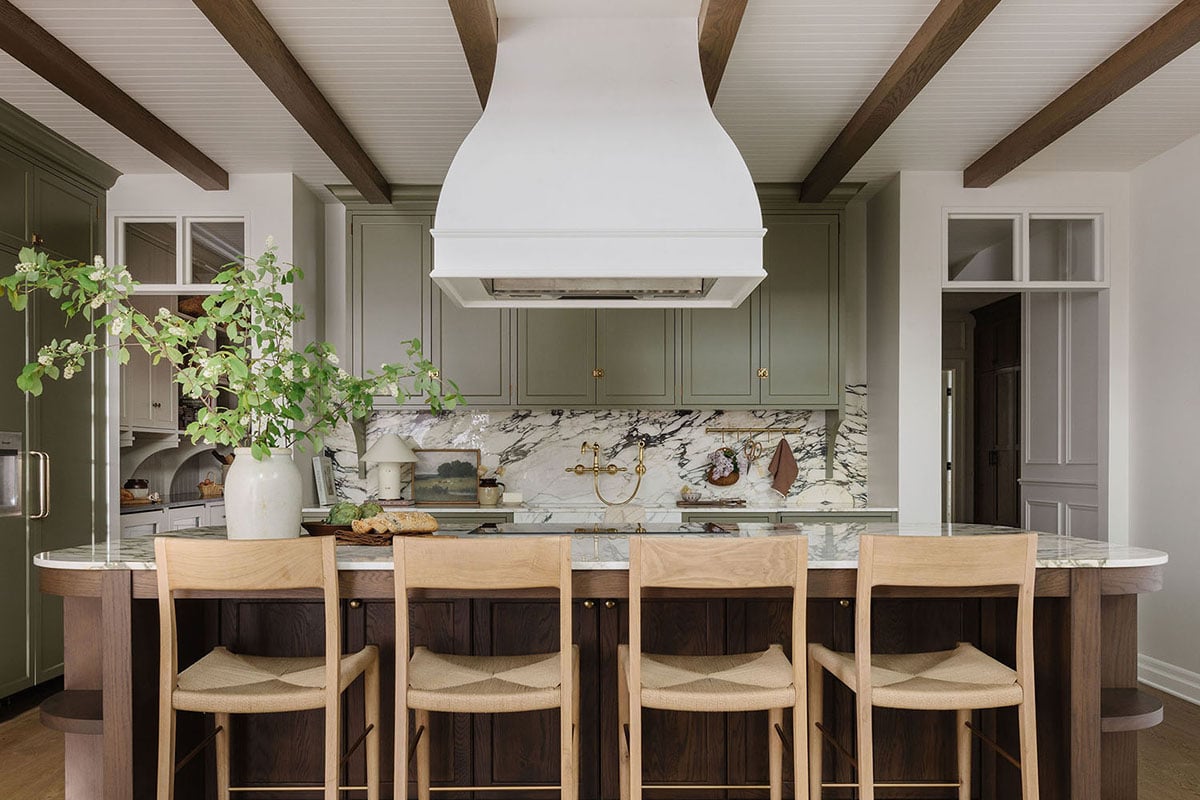
Green Kitchen Cabinet Ideas from Sage to Olive
By Interior Designer, TRACY SVENDSEN | Published on May 06, 2022 | Updated on January 11, 2026 |
The “all-white” kitchen is officially evolving. According to the 2026 NKBA Trends Report (National Kitchen & Bath Association), green has emerged as the premier statement color for the home, with 86% of designers naming it a top choice in the years ahead. As an interior designer, I welcome this shift toward Organic Modern interiors—spaces that feel grounded, calming, and deeply connected to nature through earthy palettes. For more ideas and inspiration across the full spectrum of cabinet colors, see my guide to kitchen cabinet color ideas.
While neutrals remain the foundation of kitchen design, green is increasingly being used intentionally. Designers are pairing it with white oak (51%) and natural quartzite (62%) to create kitchens that feel both fresh and enduring. In this guide, I’ll break down how to incorporate green kitchen cabinets successfully—from moody forest tones that elevate slab-backsplash designs to soft olive hues that complement the continued rise of wood-grain cabinetry. Feature image courtesy of AKB Design.
Key Takeaways: Green Kitchen Cabinets 2026
- Green kitchen cabinets pair best with high-texture neutrals, such as white oak and natural stone.
- The undertone of green should always be selected based on the kitchen’s exposure to natural light.
- Deep greens can feel timeless when balanced with organic materials and classic proportions.
- The 60–30–10 color rule helps prevent green cabinetry from overwhelming the space.
- Designer-favorite green paints offer a reliable starting point for achieving a refined, organic look.

Sage Green Kitchen Cabinets
Image courtesy of Kesley Leigh Design
Designer Mood Board: Organic Farmhouse Kitchen with Green Cabinets
The kitchen below, designed by Kelsey Leigh, demonstrates how green cabinetry can function as a structural element rather than a decorative accent. In my experience, green works best when it is coordinated with the surrounding architecture and materials. Here, the moody brown-green cabinets (Crownsville Grey) are calibrated to complement the forested property setting, providing a consistent tonal foundation for the space.
The dark oak–stained island functions as a freestanding element, mediating between cabinetry and flooring to maintain spatial balance. Tonal layering, rather than high contrast, ensures the kitchen feels cohesive, while material choices—wood, natural stone, and unlacquered brass—reinforce durability and long-term aesthetic stability. This is an approach I frequently apply in modern farmhouse and rustic kitchens to create spaces that are both functional and visually grounded.
By integrating green with stone, brass, and wood in measured proportions, the design maintains clarity and cohesion. This mood board illustrates how green cabinetry can support the overall kitchen composition, creating a space that is considered, functional, and enduring, rather than trend-dependent.
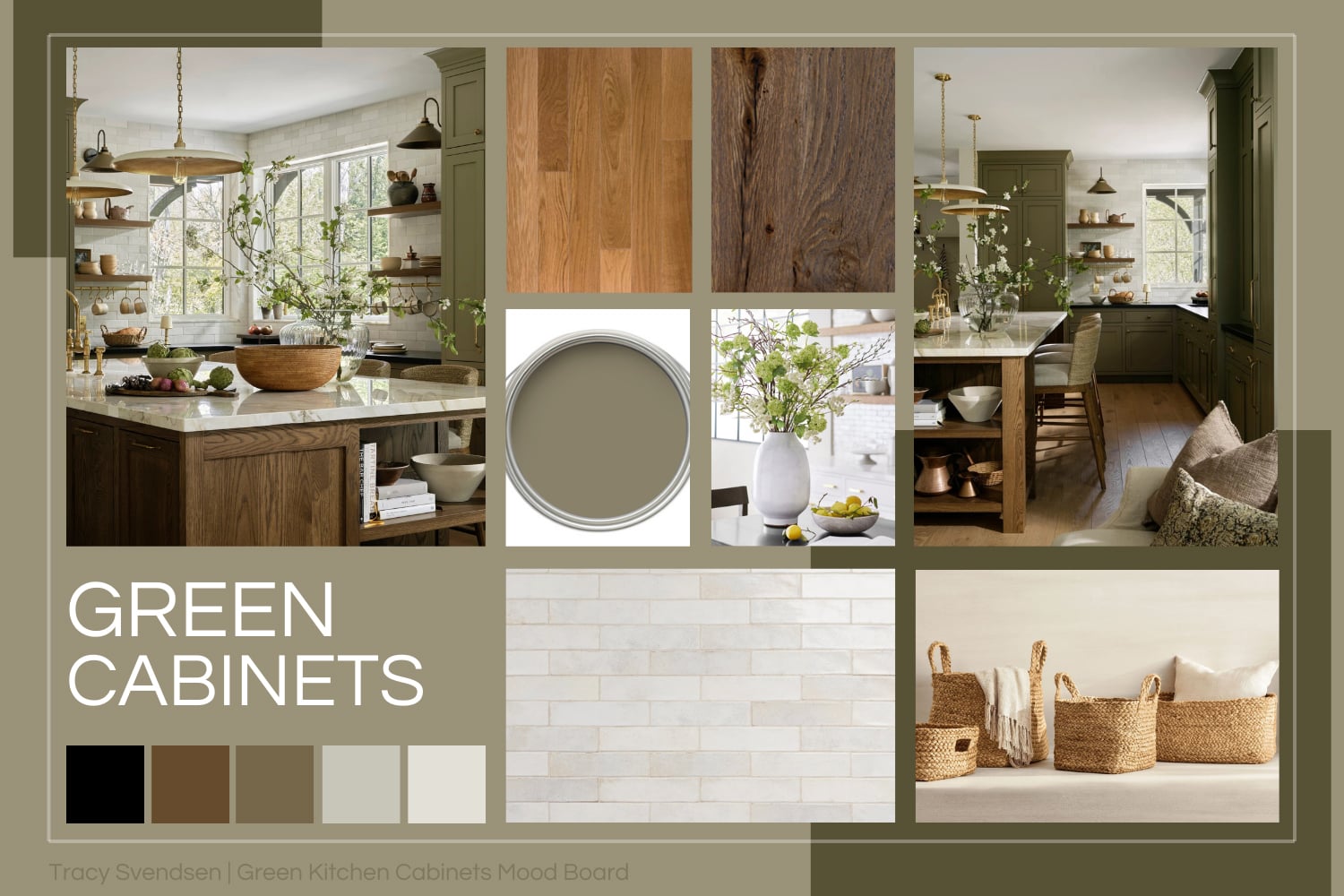
Designer mood board interpretation by interior designer Tracy Svendsen, showing how moody green cabinetry can be layered with wood, stone, and brass to create a grounded, functional, and enduring kitchen.
1.0 How to Incorporate Green Kitchen Cabinets
While the data confirms green as the “color of the decade,” a timeless kitchen depends on how it’s executed—not just the color. In my practice, I follow three specific “design pillars” to ensure a green kitchen feels sophisticated rather than just “trendy.” These three design pillars ensure green cabinetry feels layered, intentional, and enduring rather than overly trend-driven.

Incorporating Green Kitchen Cabinets
Image courtesy of Architectural Digest
Rule 1: Balance with High-Texture Neutrals
As White Oak and Natural Quartzite emerge as the top pairings for 2026, achieving a high-end look comes down to material selection. Wood grains with visible cathedraling and stone slabs with pronounced veining introduce the movement needed to keep green cabinetry from feeling flat or one-dimensional.
In the Valley Vistas project, Shea McGee draws directly from the surrounding desert landscape. Warm ochres and muted sages are layered against creamy plaster finishes and blackened steel, while light-catching linens and handwoven textiles introduce warmth without adding visual weight. The result is a richly layered, multidimensional space where green serves as a calm, grounding anchor.

Light Wood Flooring & Layered Textures
Image courtesy of Studio McGee
Rule 2: Match Your Shade to Your Natural Light
Green is a “chameleon” color that shifts dramatically throughout the day. Natural light has the biggest influence on how green appears once installed.
- North-Facing Kitchens: Lean into warmer, “yellow-based” greens like Olive or Moss to counteract cool, blue light.
- South-Facing Kitchens: You can afford to go moodier with “blue-based” smoky jades or forest tones, which will stay crisp even in bright afternoon sun.

Country Kitchen with Green Cabinetry
Image courtesy of Tiffany Leigh Design
Rule 3: Apply the 60-30-10 Color Rule
To keep the space from feeling overwhelmed by color, I recommend using a classic ratio:
- 60% Neutral foundation: (Walls, ceilings, and light-toned flooring).
- 30% Green Statement: (Cabinetry or a large kitchen island).
- 10% Metallic or Wood Accents: (Aged brass hardware, copper pots, or white oak shelving).

Applying the Color Rule
Image courtesy of Interior Archaeology
2.0 Choosing the Right Shade of Green
Choosing the perfect green is a high-stakes balancing act between your home’s natural light and the architectural “mood” you want to evoke. While north-facing kitchens benefit from warmer, yellow-based olives that counteract cool shadows, south-facing spaces can handle the atmospheric depth of smoky jades and forest tones. To simplify your search, I’ve curated this designer-led shortlist of the most reliable green paints used by industry-leading firms to achieve a sophisticated, organic look.
| Brand | Color Name | Designer Favorite For |
|---|---|---|
| Benjamin Moore | Deep River (1582) | The Moody Chameleon: Often used by Studio McGee, this saturated hue blends green, gray, and black. It is the perfect choice for a bold, color-drenched kitchen that still feels sophisticated. |
| Farrow & Ball | Studio Green (No. 93) | The Historic Forest: A favorite of Jack Creasy and Heidi Caillier. This deep, near-black green creates a stunning, “old-world” drama that shifts beautifully throughout the day. |
| Magnolia Home | Cottage Grove (JG-161) | Dramatic & Cozy: Joanna Gaines’ signature “navy-meets-green” blend. It offers a fresh, moody look that feels both historic and modern, especially when paired with warm brass. |
| Portola Paints | Nitty Gritty | The Industrial Artisan: A favorite of Nate Berkus and Jeremiah Brent. This “muddy” green offers an earthy, lived-in depth that reads as a neutral while providing a rich, textured atmosphere. |
| Benjamin Moore | Dark Olive (2140-30) | Earthy & Elegant: Recommended by Kate Marker for its ability to infuse a space with equal parts warmth and elegance. It pairs exquisitely with light wood tones and white countertops. |
| Benjamin Moore | Sagebrush Green (1531) | The Tranquil Neutral: A go-to for Heidi Caillier, this soft sage acts as a foundational color. It is light enough to be restful but has enough gray to feel mature and “collected.” |
| Sherwin-Williams | Ripe Olive / Pewter Green | The “Custom” Statement: A signature 50/50 mix by Kelsey Leigh. This combination creates a complex, medium-to-dark green that is perfectly balanced—neither too “forest” nor too “gray.” |

Kitchen Cabinets in Benjamin Moore’s Webster Green
Image courtesy of Peacock Home (Droid Gallucci Photography)
3.0 Designer Inspiration: Greens in Action
Seeing these hues in professionally curated spaces reveals how green can function as a versatile anchor for any architectural style. While each project features a specific brand, remember that most paint retailers can expertly color-match these tones across different finishes and price points. Use these designer favorites as your starting point to find the perfect saturation and undertone for your own unique lighting conditions.

Kitchen Cabinets in Herb Bouquet by Benjamin Moore
Image courtesy of Lindsey Hanson Design
3.1 Deep River (Benjamin Moore)
In this design, Shea McGee used a color-drenched approach, pairing the cabinetry with a deep green Lacanche range for a seamless, bold statement. To balance the dark tones, a plaster range hood draws the eye upward while a white oak band connects the adjoining open shelving. This moody hue, achievable with Benjamin Moore’s Deep River, is grounded by soapstone island countertops that serve as a sophisticated anchor for the expansive family space.


Deep River by Benjamin Moore
Image courtesy of Studio McGee
3.2 Studio Green (Farrow & Ball)
To honor the heritage of a 1906 Toronto Victorian, designer Jack Creasy utilized a color-drenching technique, enveloping both the kitchen and bar cabinetry in the near-black depth of Farrow & Ball Studio Green. This moody foundation serves as a dramatic backdrop for vibrant jewel tones, gleaming brass fixtures, and bold wallpaper that reflects the homeowners’ South Asian roots. The result is a high-functioning party space where clever storage meets an “old-world” aesthetic that feels both historic and deeply personal.


Studio Green by Farrow & Ball
Image courtesy of Jack Creasy (Patrick Biller Photography)
3.3 Cottage Grove (Magnolia Home)
In her restoration of a historic 1900s castle, Joanna Gaines moved away from traditional farmhouse whites toward Cottage Grove, a sophisticated “navy-green” blend from her Magnolia Home collection. This moody, jewel-toned shade is a true chameleon, shifting between a deep forest green and a rich navy depending on the natural light throughout the day. By coating her cabinetry in this timeless hue, Joanna proves that even the most dramatic colors can feel incredibly cozy when paired with vintage-inspired brass accents and creamy marble surfaces.

Cottage Grove by Magnolia Home
Image courtesy of Magnolia
3.4 Nitty Gritty (Portola)
For their own New York City residence, Nate Berkus and Jeremiah Brent opted for Nitty Gritty, a smoky, dusted green that functions as a “non-color” neutral. Berkus favors this specific Portola shade for its muddy, understated quality, which adds a sophisticated layer of depth without the vibrance of a traditional green. By pairing this muted hue with dramatic Calacatta Macchia Vecchia marble, the duo created a kitchen that feels effortlessly curated and timeless rather than trend-driven.

Nitty Gritty by Portola
Image courtesy of House Digest (Nate Berkus/Jeremiah Brent Design, Nicole Franzen Photography)
3.5 Dark Olive (Benjamin Moore)
Designer Kate Marker uses Benjamin Moore’s Dark Olive to ground a light-filled, airy kitchen, proving that deep green can feel incredibly approachable in a large-scale space. The design creates a striking organic contrast by pairing the saturated cabinetry with white rough-hewn ceiling beams, a feature brick wall, and light wood parquet flooring. This “earthy elegant” aesthetic is rounded out by a weathered wood island base and black quartz countertops, creating a country-style kitchen that feels both historic and high-end.

Dark Olive by Benjamin Moore
Image courtesy of Kate Marker
3.6 Sagebrush Green (Benjamin Moore)
In this narrow, sun-drenched kitchen, Heidi Caillier utilizes Benjamin Moore’s Sagebrush Green to create a space that feels both tranquil and atmospheric. The cabinetry’s soft, desaturated tone shifts beautifully as natural light pours through double doors, transitioning between a delicate sage and a moodier, deeper green. By pairing this hue with warm hardwood flooring and matching countertops, the design achieves a cohesive, organic look that bridges the gap between the indoors and the backyard views.

Sagebrush Green by Benjamin Moore
Image courtesy of Heidi Caillier Design
3.7 Ripe Olive / Pewter Green (Sherwin-Williams)
Designer Kelsey Leigh achieved a perfectly balanced, custom hue by blending Sherwin-Williams Ripe Olive and Pewter Green in a 50/50 ratio. This specific mix results in a complex, medium-to-dark green that avoids looking overly “forest” or too gray, providing a sophisticated depth that feels unique. The saturated cabinetry is beautifully complemented by light oak flooring, a matching white oak island, and gleaming brass hardware, creating a warm, modern, organic aesthetic.

Sagebrush Green by Benjamin Moore
Image courtesy of Heidi Caillier Design
4.0 Expert Pairings for 2026
Selecting your perfect shade of green is only the first step in creating a soulful kitchen; the real magic happens when you layer that color with the right textures and finishes. As we move toward the “Nature-Informed” and “Historic Lodge” aesthetics favored for 2026, the relationship between your greenery-inspired cabinetry and your “fixed” elements becomes the defining feature of the home. Here is how to pair your green cabinetry with the most influential design elements of the upcoming seasons:

Pale Green Cabinets with Brass Hardware
Image courtesy of WINN Design
4.1 What Colors to Pair with Green
Green cabinetry feels most refined when paired with tones that either ground its earthiness or enhance its natural vibrancy. Crisp whites and warm wood tones remain the foundation of the Organic Modern look, while gold or brass hardware introduces a necessary layer of warmth and polish. For a more nuanced contrast, subtle accents of blush, soft peach, or terracotta can be used sparingly to offset green’s cool undertones without overpowering the space.
| Complementary Element | Why It Works |
|---|---|
| Natural Wood & Gold | Warm wood grains and brass accents prevent deep greens from feeling too cold or “muddy.” |
| Soft Terracotta & Blush | These “earth-toned” pinks provide a subtle, organic contrast that makes green pop. |
| Creamy Neutrals | Swapping stark white for beige or cream creates a softer, more high-end “lived-in” feel. |

A Bright & Airy Kitchen with Light Green Cabinets & White Island
Image courtesy of Caitlin Flemming Design

Green Bedboard Panels add a Touch of Color
Image courtesy of Kelsey Leigh
4.2 Layered Textures for Visual Interest
Green kitchen cabinets of any shade benefit from layered, tactile materials that add depth and prevent the color from feeling flat or overly uniform. Matte finishes, subtle wood-grain detailing, and softly honed surfaces enhance dimension without competing with the cabinetry.
To build visual contrast, incorporate natural materials such as stone, brick, or textured tile through backsplashes, countertops, or architectural accent walls. Softer elements are equally important—linen café curtains, woven runners, and upholstered seating help balance harder surfaces, creating a kitchen that feels warm, inviting, and thoughtfully composed.


Adding Texture for Visual Interest
Image courtesy of AKB Design
4.3 The Power of Simplicity
When green cabinetry serves as the primary visual anchor, restraint in the surrounding elements defines a successful result. Clean-lined hardware and streamlined backsplashes allow the color’s depth to take center stage, preventing the space from feeling visually cluttered. Jeanne Stoffer demonstrates this balance beautifully by pairing warm oak paneling with a soft green island, letting sculptural light fixtures serve as the room’s jewelry without competing with the cabinetry.


Two-Tone Kitchen Cabinets in Wood & Pale Green
Image courtesy of Jeanne Stoffer
4.4 Warm Metallics
Warm metallic finishes are a natural complement to green kitchen cabinets, introducing contrast, depth, and a subtle layer of refinement. Brass and copper, in particular, enhance green’s organic qualities while preventing the palette from feeling flat or overly muted.
In this beautifully designed kitchen by Tiffany Leigh, olive-toned cabinetry is balanced with brass pendant lighting and coordinating hardware. The warm metal accents add polish and visual warmth, elevating the space without competing with the cabinetry’s understated elegance.


Green Kitchen Cabinet Ideas
Image courtesy of Tiffany Leigh Design
4.5 Blue-Green Cabinets as a Neutral
Blue-green cabinetry offers a more restrained way to introduce depth while maintaining a calm, sophisticated palette. These cooler greens read as subtle and mature, making them among the easiest to incorporate into a wide range of kitchen styles.
In this farmhouse kitchen by Emily Henderson, Sherwin-Williams Pewter Green creates a soft, blue-leaning backdrop that pairs effortlessly with marble countertops and warm hardwood flooring. The interplay between cool cabinetry and warm natural materials keeps the space balanced, layered, and timeless rather than overtly trend-driven.

Sherwin-Williams Pewter Green Cabinets
Image courtesy of Emily Henderson Design
4.6 Pairing Green with Neutrals
Pairing green cabinetry with a neutral palette is one of the most effective ways to create balance and visual clarity in the kitchen. White, cream, and soft off-white finishes lighten the overall composition, allowing green to remain the focal point without overwhelming the space.
In this kitchen by McKee Design, green lower cabinets are grounded by warm white upper cabinetry, while a white-and-green backsplash ties the palette together seamlessly. The restrained use of color creates a layered, timeless look that feels fresh yet enduring.

Blue Green Paired With Neutrals
Image courtesy of McKee Design
4.7 Mixed Metals
Mixing metallic finishes adds depth and visual interest to green kitchen cabinets when done with intention. Warm metals, such as brass or bronze, soften green’s natural earthiness, while cooler finishes, like polished nickel or aged steel, introduce contrast and refinement.
To maintain cohesion, limit the palette to two complementary metals and repeat each finish at least twice—through hardware, lighting, or plumbing fixtures. When applied thoughtfully, mixed metals feel layered and deliberate rather than decorative or trend-driven.

Green Cabinets in Forest Floor by Benjamin Moore
Image courtesy of Rudy Winston

Cabinet Color: Sherwin-Williams Jack Pine Green
Image courtesy of Jaclyn Peters Design
4.8 Natural Tones
Green kitchen cabinets are beautifully enhanced by natural, earthy accents. Stone, wood, and woven materials reinforce the cabinetry’s organic qualities, adding warmth and depth to the space. Accessories—such as a patterned rug, sculptural lighting, or decorative objects in these tones—help tie the palette together without overwhelming it.
In this kitchen by Pure Salt Interiors, warm earth tones appear throughout the design: a stone accent wall, a wood island and flooring, and statement lighting all harmonize with the green cabinetry. Additional details—black-framed windows, woven rattan chairs, and a sculptural range hood—layer texture and color, creating a kitchen that feels cohesive, layered, and timeless.

Natural Tones with Green Cabinets
Image courtesy of Pure Salt Interiors
5.0 Green Cabinets in Different Design Styles
Green kitchen cabinets are remarkably versatile, capable of complementing a range of aesthetics from sleek modern spaces to warm, rustic farmhouses. By applying the design principles we’ve covered—layering textures, balancing color, and pairing with natural materials—green cabinetry can feel intentional, cohesive, and timeless in any style.
Whether your goal is a minimalist modern kitchen, a cozy country space, or a modern farmhouse, these examples demonstrate how green cabinets adapt to suit the mood, scale, and architectural features of each style. Below, we explore the defining characteristics of each style and how to bring green cabinetry to life in ways that feel polished and authentic.

Green Cabinets in Different Design Styles
Image courtesy of Anne McDonald Design
5.1 Modern Farmhouse Kitchen
In this modern farmhouse kitchen by Jenna Barton Westbrook, pine-green cabinetry creates a cohesive visual thread that extends seamlessly from the kitchen into the adjoining dining space. Crisp white countertops and a classic white zellige tile backsplash balance the muted green.
Light oak flooring and a generously scaled wood island introduce warmth and natural contrast, preventing the palette from feeling overly refined. Woven wood chairs add tactile texture, while rustic pottery, layered cutting boards, and sculptural branch displays bring an organic, collected quality to the space.

Green Cabinet & Light Wood Tones
Image courtesy of Jenna Barton Westbrook
5.2 Modern Kitchen
In this modern kitchen by Studio AA Design, light-green cabinetry serves as a refined neutral, allowing architectural details and material contrasts to take center stage. A dramatic island anchors the space, finished with a white waterfall-edge countertop richly veined with warm earth tones and organic movement.
Above the island, sculptural pendant lights in crisp white and gleaming brass introduce a subtle layer of warmth without interrupting the kitchen’s clean lines. Light parquet wood flooring softens the modern palette, while a glossy white zellige tile backsplash adds texture and light-reflective depth.
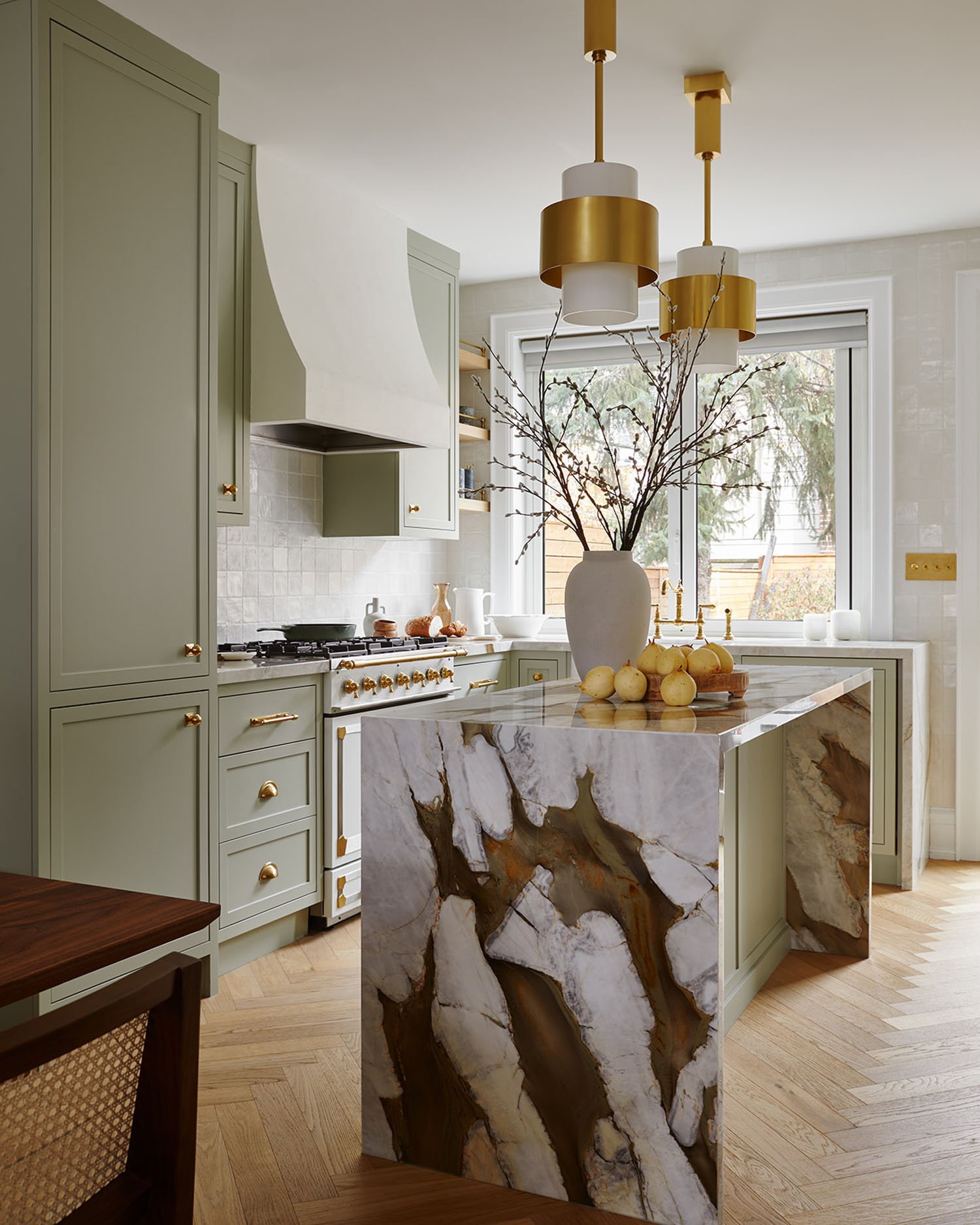
Modern Kitchen with Light Green Cabinets
Image courtesy of Studio AA Design
5.3 Country Kitchen
Designed by Weeth Home, this country kitchen embraces depth, contrast, and lived-in elegance. Moody green cabinetry with subtle blue undertones wraps the perimeter, while a deeper-stained island introduces warmth and visual weight at the center of the space. Rather than relying on expected finishes, the design layers rich, character-driven stone—Bardiglio marble on the perimeter and Black Diamond quartzite on the island—to create a sophisticated, collected feel.
Soft-fold Roman shades add a gentle hit of pattern and softness, reinforcing the relaxed nature of a country kitchen. One of the most striking details is the way the stone countertops extend seamlessly into the interior window jambs, forming a continuous marble ledge.
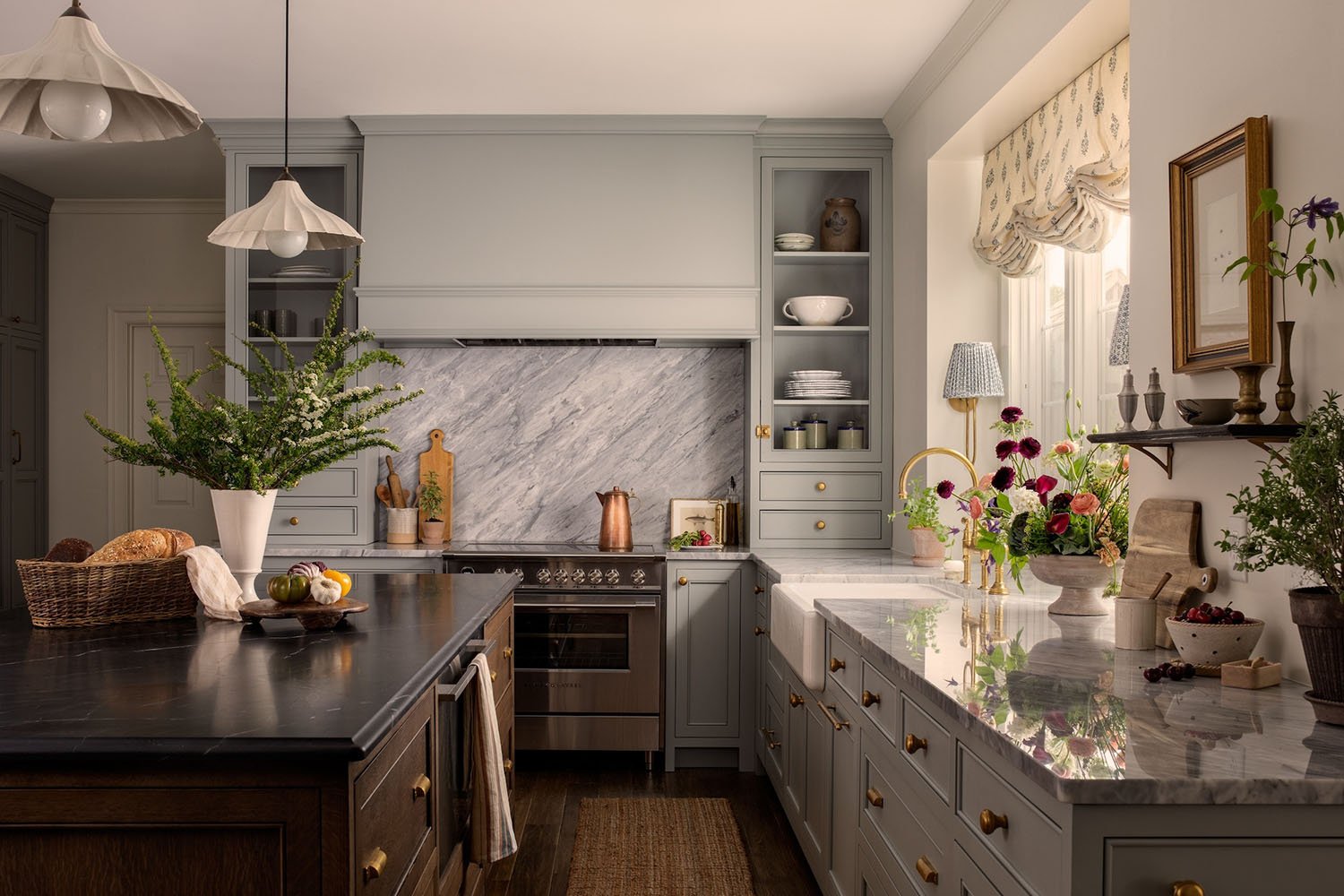
Green Cabinets in a Country Kitchen
Image courtesy Weeth Home
6.0 Other Ways to Incorporate Green
Green doesn’t need to dominate the entire kitchen to make an impact. These alternative applications show how green can be introduced strategically—through placement, contrast, and layering—to create depth without overwhelming the space.


Green Cabinets in a Country Kitchen
Image courtesy Weeth Home
6.1 Green Cabinets on the Perimeter
In this kitchen by Randy Blain Construction, green cabinetry is used selectively along the perimeter, framing a white-centered focal wall and a crisp white island. This thoughtful placement creates visual balance, allowing the darker green tones to feel intentional rather than heavy.
White cabinetry and backsplash provide contrast against the green, while light wood flooring and exposed beams soften the palette. Black accents throughout the space add definition, reinforcing the architectural lines and grounding the design.

Green & Bronze Hues
Images courtesy of Randy Blain Construction
6.2 Painted Green Kitchen Island
A kitchen designed by Tiffany Leigh demonstrates how a single green element can anchor an otherwise neutral space. Here, a light sage green island introduces softness and contrast against surrounding white cabinetry and a white quartz countertop.
Open wood shelving layered with green-toned artwork, stoneware, and cutting boards reinforces the organic palette, while leafy branches and pottery add a subtle connection to nature. Dark hardwood flooring grounds the space, preventing the lighter finishes from feeling overly delicate.

Green Kitchen Island
Images courtesy of Tiffany Leigh Design
6.3 Green Accessories: Artwork & Appliances
Green can also be introduced through accessories rather than cabinetry. In my own kitchen remodel, I paired a green-painted island with white cabinetry, using deep olive green appliances and coordinating counter stools to reinforce the palette.
Light oak flooring keeps the look warm and balanced, while white quartz countertops, backsplash, and range hood allow the green accents to stand out without competing for attention. This approach is ideal for homeowners who want flexibility without committing to full green cabinetry.

Green Accessories
Image courtesy of Tracy Svendsen
6.4 Branches & Florals
Sometimes the simplest additions have the most significant impact. A sculptural arrangement of leafy branches, set in handcrafted pottery, adds height, movement, and organic contrast—particularly effective in kitchens with green cabinetry.
In this kitchen by Gray Space Interiors, green cabinets are layered with a white textured backsplash, wood counter stools with bouclé seating, and patterned tile flooring. The natural elements soften the space while reinforcing the green’s connection to nature.

Wood Range Hood
Images courtesy of Gray Space Interiors
6.5 Green Cabinets with Glass Doors
Glass-front cabinetry is an effective way to prevent green kitchens from feeling visually heavy. In this design by Jessica Nelson Interiors, pale green cabinets are paired with glass upper doors, allowing light to move freely through the space. A black island introduces contrast, while white and gray marble countertops and light wood flooring maintain balance. Brass hardware adds warmth and refinement, elevating the overall

Black Kitchen Island
Images courtesy of Jessica Nelson Interiors
6.6 Green Lower Cabinets & Island
Using green on the lower cabinetry and the island keeps the color grounded while preserving a light, open feel above. In this kitchen by Jessica Nelson Interiors, green lower cabinets are paired with white walls, light oak flooring, and a full-height white tile backsplash. Black accents—seen in the counter stools and window frames—provide contrast and structure, while open shelving flanking the range adds breathing room to the design.

Green Lower Cabinets
Images courtesy of Jessica Nelson Design
Green Kitchen Cabinet Ideas: Conclusion
Green kitchen cabinets continue to prove their staying power, offering a timeless alternative to all-white kitchens while maintaining versatility across modern, farmhouse, country, and transitional styles. Whether used boldly across full cabinetry or introduced through islands, accessories, or lower cabinets, green adds depth, warmth, and a natural sophistication that evolves beautifully over time.
When incorporating green into your kitchen, consider your home’s natural light, architectural style, and surrounding materials. Thoughtful layering—through texture, contrast, and restraint—ensures the result feels intentional rather than trend-driven. With the right balance, green cabinetry can create a kitchen that feels both current and enduring for years to come.
Frequently Asked Questions About Farmhouse Kitchen Cabinets
Are green kitchen cabinets a timeless choice?
Yes — and the reason comes down to material relationships rather than the color itself. Green is one of the few cabinet colors that occupies neutral territory when paired with the right materials. Sage, olive, and muted forest tones alongside white oak, marble, quartzite, and warm metals read as grounded and enduring rather than trend-driven, because they’re echoing colors found in nature rather than a manufactured palette moment. The cabinets that age poorly are almost always the ones chosen as a standalone statement rather than as part of a considered material story.
What shade of green works best in kitchens with limited natural light?
Warmer, yellow-based greens — olive, moss, softened sage — perform best in kitchens with limited natural light. Cooler, blue-based greens can read as flat or even slightly gray in rooms without much sun, while warmer greens retain their depth and character throughout the day. Pairing these warmer tones with creamy whites and light wood finishes helps reflect what light is available, keeping the space from feeling closed in. This is one of the first things I assess before recommending a green — the kitchen’s actual light conditions, not just the cabinet sample under a showroom bulb.
Are green kitchen cabinets too trendy?
Green can feel trend-driven when it’s saturated, glossy, or paired with equally bold accents — but the shades with genuine staying power are rooted in natural materials rather than trend cycles. Sage, olive, and muted forest greens function as neutrals when paired with white oak, stone, and warm metals, which is why they’ve remained in steady use across multiple design eras rather than appearing and disappearing in a single one. The cabinets that feel dated quickly are usually the ones chosen for a specific trend moment rather than for how they relate to everything around them — a risk that applies to any cabinet color, not just green.
What’s the difference between sage, olive, and other popular green cabinet shades?
Sage is the coolest and most muted of the popular greens — a soft, grayed tone with almost no yellow, which makes it versatile but prone to reading flat in low light without warm materials nearby. Olive sits warmer and more yellow-based, with an earthy quality that pairs especially well with brass and wood in dimmer kitchens. Dark or forest green is the most dramatic option — deep and saturated, best balanced with high-texture neutrals like white oak or veined stone so it doesn’t feel heavy. Light green, closer to celadon, suits bright kitchens looking for a fresh, airy feel without going fully neutral. The right shade depends largely on the kitchen’s light and the materials already in place.
What materials pair best with green cabinetry?
Natural materials are what make green cabinetry feel intentional rather than simply colorful. White oak, aged brass, marble, quartzite, and handmade tile all bring the texture and movement that keep green from feeling flat or overly saturated. The principle I return to again and again is layering — green as the anchor, with materials around it that have their own variation and character, so the whole composition feels considered rather than a single color choice dropped into a neutral box.
Inspired by these ideas? Explore my full Kitchen Design Ideas for 2026 collection for inspiration on cabinets, layouts, storage, and finishing touches.
View Recent Posts
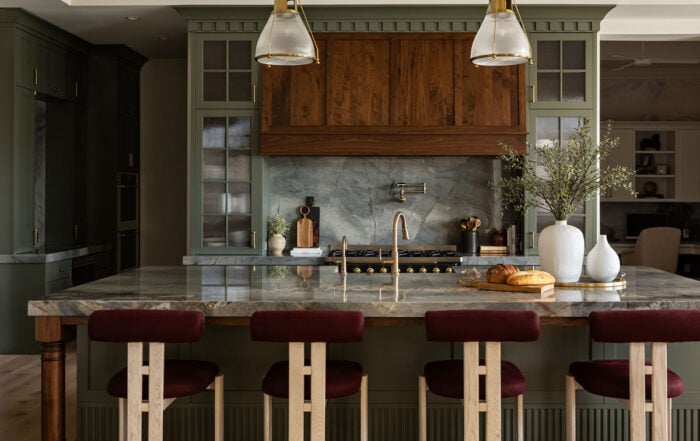
Stunning Range Hood Design Ideas
Range hood design ideas covering stone, wood, plaster, copper, and stainless steel — with designer tips on proportion, material selection, and installation.
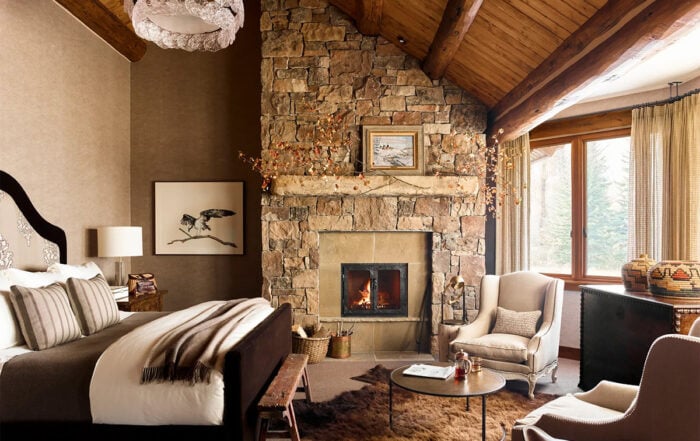
Rustic Bedroom Ideas
Rustic bedroom ideas covering natural materials, layered textiles, color palettes, and professional design strategies for log cabin, modern rustic, Scandinavian, and luxury retreat styles.
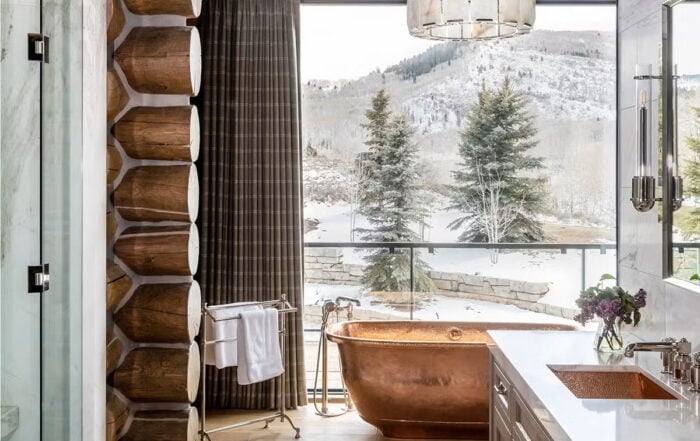
Rustic Bathroom Ideas
Rustic bathroom ideas — natural materials, vintage fixtures, earthy palettes, and designer tips for log homes, cabins, and mountain retreats.
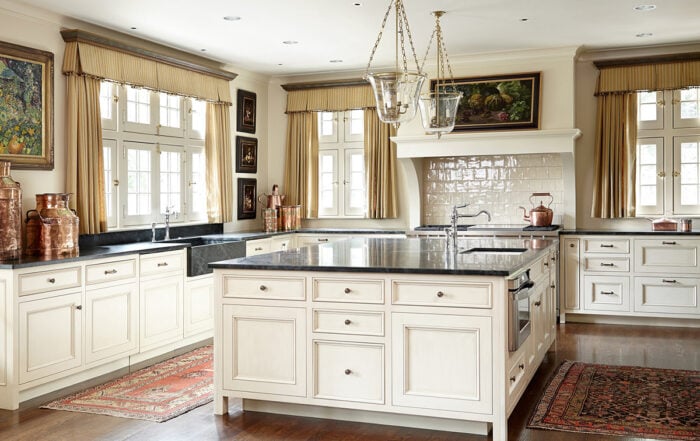
Cream Kitchen Cabinet Ideas
Cream kitchen cabinet ideas curated by interior designer Tracy Svendsen. Warmer than white and more versatile than beige, cream cabinets work beautifully across farmhouse, rustic, traditional, and modern kitchens.
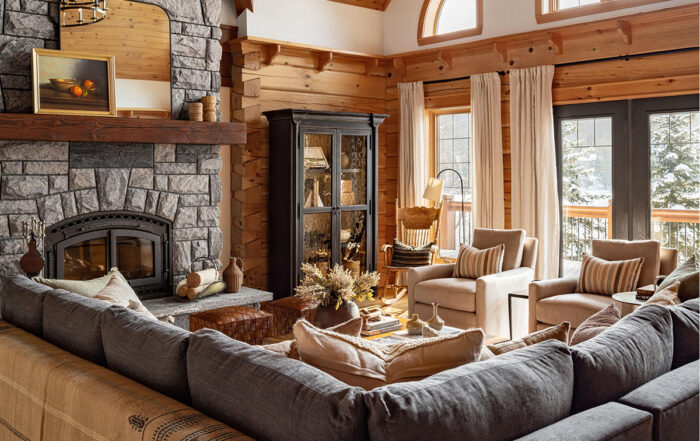
Log Home Decorating Ideas
Log home decorating ideas covering color palettes, furniture selection, lighting, stone fireplaces, and modern approaches to handcrafted log home interiors.
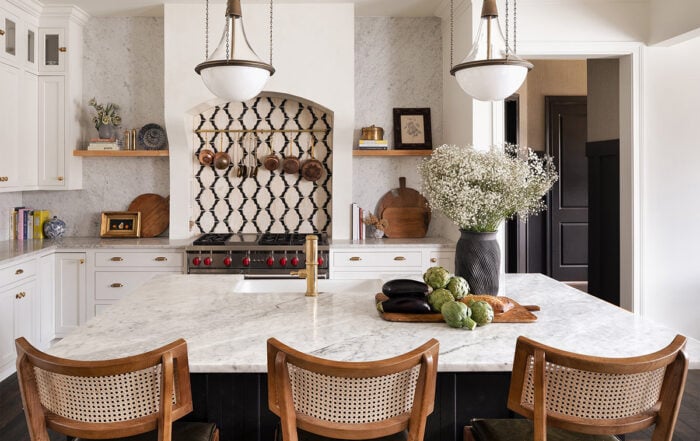
Country Kitchen Ideas
Discover 43 country kitchen ideas featuring warm earth tones, natural materials, vintage accents, and expert guidance on cabinets, colors, and styling for an authentic country kitchen design.

