
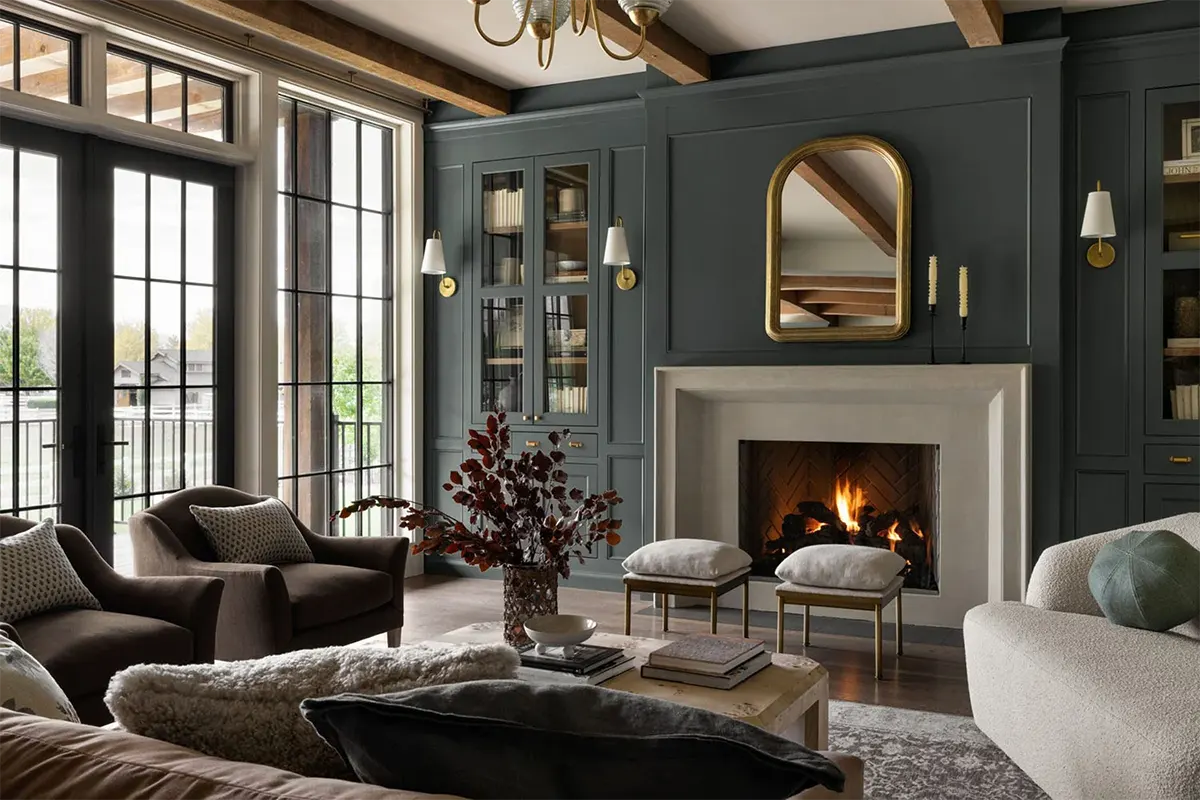
Decorating With Sage Green: Colors, Rooms & Styling Tips
By Interior Designer TRACY SVENDSEN | Published February 10, 2024 | Updated June 20, 2026 |
Sage green has become one of the most requested paint colors in my design work over the past few years — and unlike many color trends, I think it has real staying power. Its earthy, slightly muted quality means it reads as calming rather than trendy, and it works across a far wider range of styles than most greens.
Sage green appears throughout my own home in various forms — most prominently in the artwork I’ve created, where the muted, earthy quality of the color connects naturally to the organic materials and coastal landscape that inspire my work. Seeing the color live on my own walls across different light conditions and seasons has given me a specific understanding of how it behaves — the way it shifts from warm and mossy in morning light to cooler and more sophisticated in the evening, and how it reads completely differently against white walls versus warm wood tones.
The ideas and pairings throughout this post reflect that firsthand experience alongside years of specifying sage green across client projects — from single accent walls in living rooms to full kitchen cabinet treatments. Whether you’re considering a subtle introduction of the color or a more committed application throughout the home, the goal is the same: a space that feels grounded and considered rather than simply on trend. Feature image courtesy of Studio McGee.
Key Takeaways: Decorating with Sage Green
- Sage green’s muted, earthy undertone gives it more staying power than brighter greens — it reads as calming rather than trend-driven, which is why it works across modern, farmhouse, rustic, and traditional interiors alike.
- Shade selection matters as much as the color itself: lighter sage tones (celadon, mint-leaning) open up small or dark rooms, while deeper, olive-leaning sage adds coziness in larger, light-filled spaces.
- Sage green pairs beautifully with warm neutrals like ivory and beige for a soft, cohesive look, or with bold contrasts like navy and burgundy for a more dramatic, sophisticated pairing.
- Natural materials — wood, rattan, stone, and woven textures — are sage green’s most natural complement, reinforcing its earthy, botanical character.
- The color performs well as both a dominant choice (walls, cabinetry, furniture) and a subtle accent (pillows, accessories, artwork), making it adaptable to nearly any budget or commitment level

Warm and Inviting Seating Area in Sage Green Thomas Woltz Design
Image courtesy of Elle Decor
1. Note That a ‘Sage Green’ Look Isn’t Always Sold as Green
This dark and moody bedroom, designed by John de Bastiani, uses a technique called color drenching — wrapping the entire room, including the walls, wainscoting, baseboards, window frame, doors, and sloped ceiling, in a single shade to create an immersive, cocoon-like effect. The paint is actually Inchyra Blue by Farrow & Ball, officially described by the brand as an “aged blue grey” — but in this room’s lighting, it reads distinctly toward sage green, which is exactly the kind of shift I mentioned in the intro: the same color can present completely differently depending on the light and the materials around it.
The room leans into that ambiguity rather than fighting it. A black iron canopy bed anchors the space, with a multicolored tapestry headboard in warm greens and apricot tones, a dark olive green duvet with cream flecks, and a deep green bolster pillow that pulls the wall color back into the bedding. Warm wood flooring and two dark ceramic lamps keep the room from reading cold despite the moody, saturated wall color.
Designer Tip: Don’t shop for a sage green paint by name alone — some of the best sage-reading colors are officially marketed as blue-grays or greiges. Get a sample of any color you’re considering and look at it in your own room’s actual lighting before committing, since the name on the chip won’t tell you how it will really read.

Sage Green Walls
Image courtesy of John de Bastiani
2. Bring in Sage Green Throughout Bedding and Accessories
This modern farmhouse bedroom by Pure Salt Interiors takes the opposite approach from a fully color-drenched room — white walls and light oak flooring stay completely neutral, while sage green enters only through soft goods and accessories: a sage quilt draped at the foot of a four-poster light wood bed, a mix of white and green accent pillows against heavily textured all-white bedding, and a green candle on the nightstand.
The rest of the room pulls the same palette through in muted, secondary ways — a large area rug in warm apricot, cream, and soft green tones, an earth-toned marbled ceramic lamp on a white reeded nightstand, and a large planter with a moss-covered base echoing the green without repeating it exactly. A fluted white dresser and a window view of trees behind the nightstand keep the whole room feeling airy rather than saturated.
Designer Tip: If you’re not ready to commit to a full sage green wall, introduce the color only through textiles and small accessories — a quilt, pillows, a candle — that can be swapped out easily. It’s the lowest-commitment way to test whether you actually like living with the color before painting a whole room in it.

The Popularity of Sage Green in Design
Image courtesy of Pure Salt Interiors
3. High-End Design Meets Mountain Warmth
Sage green’s current popularity isn’t just an online trend — it’s showing up in what high-end designers are actually specifying for clients right now. “Our clients are gravitating toward nature-inspired warm neutrals — think wheat, caramel, terracotta, and warm grays with taupe and greige undertones,” say Anne Marie Ostmeyer and Kristine Perry of Slifer Designs in Edwards, Colorado. “We’re also seeing pops of burnt umber, clay and dusty sage as accents. These earthy palettes create depth without overwhelming, and they pair beautifully with natural wood tones and organic textures.”
This modern mountain living room by Slifer Designs puts that philosophy into practice: a dusty sage Huntington House sectional anchors the room against white walls and wood-trimmed windows framing the mountain view outside, while two curving amber-toned accent chairs, an Interlude sheepskin chair, faux fur pillows, and a large gray area rug bring in the warm, textural neutrals Ostmeyer and Perry describe. The sage reads as another earth tone in the mix rather than a standout color — it echoes the landscape outside the window as much as it complements the furniture around it.
Designer Tip: In a room with real natural views, I recommend choosing a sage shade that leans toward the greens actually visible outside your windows — evergreens, sagebrush, moss — rather than a more saturated or blue-leaning green. It reads as an extension of the view instead of competing with it.
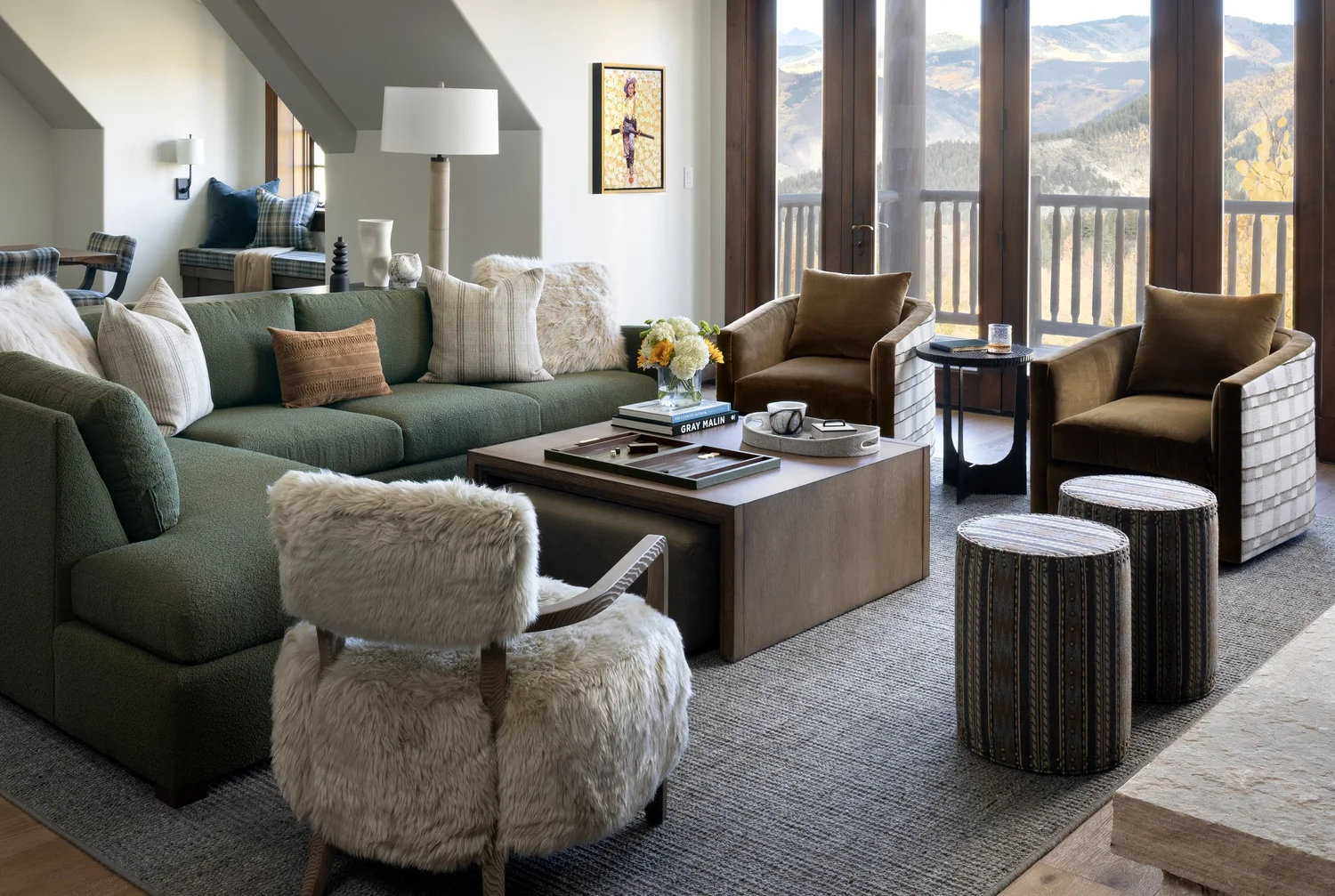
Sage Green Sofa in a Modern Mountain Home
Image courtesy of LuxeSource (Slifer Design)
4. Play with Contrasting Shades in Your Color Scheme
This formal sitting room is part of a fully restored listed villa in Munich, designed by Nicky Dobree Interior Design and documented by the British Institute of Interior Design. Against white walls and a cream area rug with abstract gold banding, sage green appears in layers rather than as a single accent: curtains on brass rods, Roman shades on a window box bench, and the backing of a built-in bookcase with open shelving all repeat the same tone.
The sofa breaks from that lighter sage palette entirely — a deep, saturated velvet green paired with botanical throw pillows in varying shades of green — creating genuine contrast within the same color family rather than relying on an entirely different hue. A brass coffee table ties the metal tones together across the room.
Designer Tip: Contrast doesn’t always require a different color — using both a pale and a saturated version of the same hue in one room (here, soft sage against a rich emerald-toned velvet) can create just as much visual interest as pairing sage with something entirely different, while keeping the room feeling cohesive.

Experiment With Different Shades of Sage Green
Image courtesy of Nicky Dobree Design
5. Let Sage Green Anchor a Calm, Collected Room
This Connecticut living room, designed by Mark Cunningham for Edie Parker founder Brett Heyman, shows how sage green can anchor a room meant to feel like a retreat. Heyman wanted a deliberate contrast to her loud, colorful New York apartment: “muted, calm, and that really played well with the outside.”
A soft sage on the walls does just that — calm and enveloping rather than a bold pop of color, drawing the eye out to the greenery beyond the windows. A Frank Gehry waterfall cocktail table gives the room a sculptural focal point against the flat green backdrop, while a gray velvet sofa, warm white floor-to-ceiling curtains, and a woven area rug keep the rest of the palette quiet.
Designer Tip: A muted, matte sage green works especially well as a “retreat” color — one that recedes rather than demands attention — so it’s a smart choice for a room where the goal is calm rather than drama. If you want your green to feel more like a design statement, lean toward a richer or more saturated shade instead.

Modern Minimalism
Image courtesy of Mark Cunningham Design
6. Sage Green Answers the Biophilic Design Trend
Sage green’s popularity ties directly into biophilic design — the idea that a stronger visual connection to nature improves how a home feels to live in. As Architectural Digest Middle East notes, sage has replaced grey and beige as the new neutral of choice: it’s more sophisticated and pared-back than a cooler green like neo-mint, and it pairs easily with sand tones, blush pinks, and pale blues — but with a warmth that grey can’t offer.
This RH Interiors modern rustic living room shows why sage works so well as a neutral rather than an accent. A curved, textured sage sofa anchors the room, softened by wheat-toned pillows and a thick, earth-toned area rug. A dark wood circular coffee table and matching cabinets ground the space, while warm brass-and-glass lighting and abstract art in browns, cream, and black keep the whole palette feeling rich rather than cold.
Designer Tip: Sage reads warmer than grey because it has just enough yellow undertone to play well with wood, brass, and earth tones — lean into those pairings rather than cooler metals if you want the room to feel inviting.
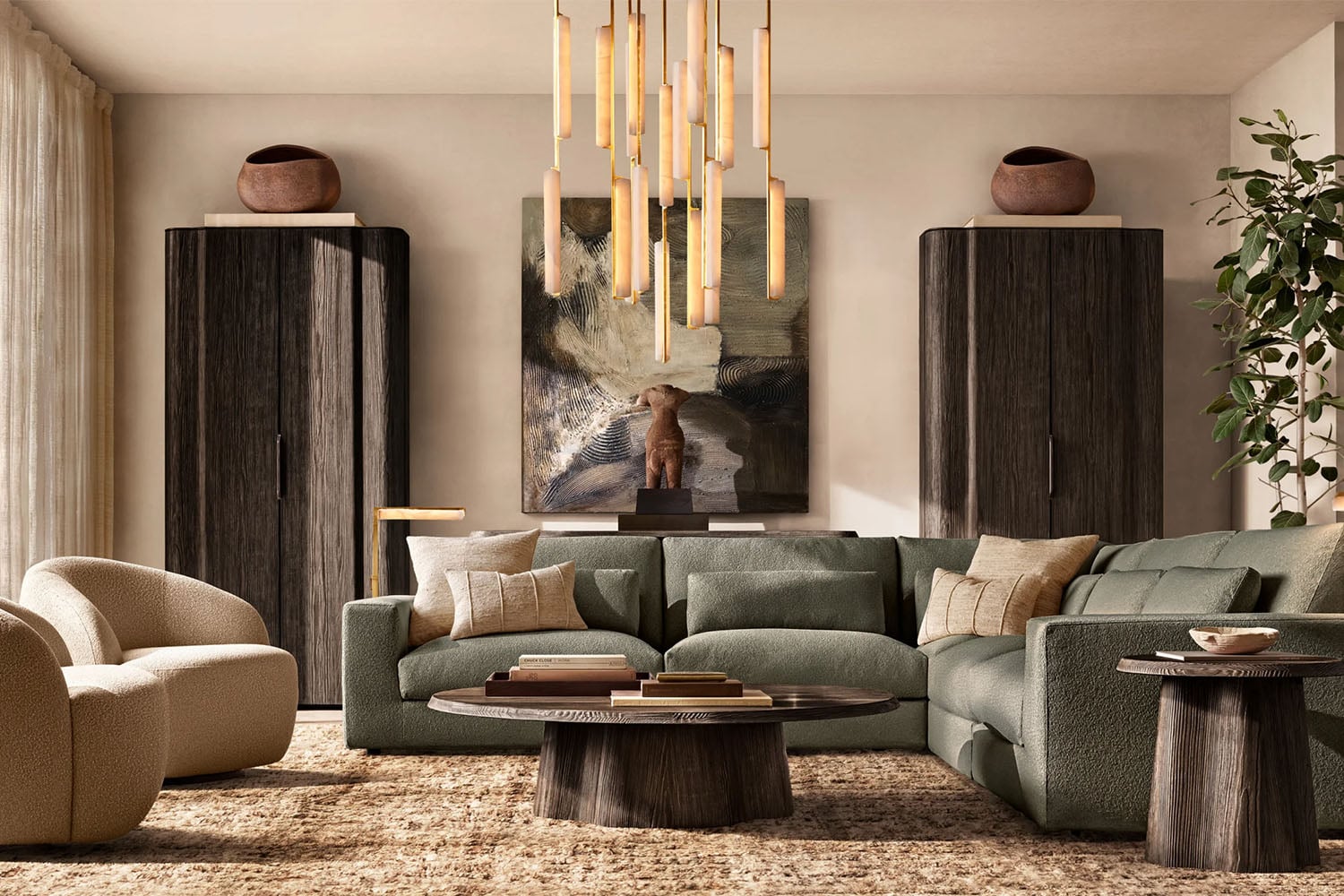
Modern Rustic Living Room with a Sage Green Sectional
Image courtesy of RH Interiors
7. Sage Green in Country Cottage Design
Sage green suits country cottage design because its earthy undertones feel at home alongside natural wood and stone, and it works equally well as a quiet backdrop for vintage pieces or as the star of the room itself.
This kitchen by Seattle designer Heidi Caillier — known for her layered, green-toned kitchens — shows the look at its best. Sage cabinets are paired with gray marble countertops and brass hardware, a combination that feels charming and rustic without tipping into dated or overly precious territory. The brass warms up the cool marble, while the marble’s subtle veining keeps the cabinet color from feeling flat.
Designer Tip: Pairing sage with a cool-toned stone like gray marble, rather than a warmer stone, keeps the look crisp and current — save warmer stones for a more rustic, farmhouse-leaning take on the same color.

Country Cottage Kitchen
Image courtesy of Heidi Callier Design
8. Sage Green Wallpaper
If you’re not ready to commit to painting an entire room, sage green wallpaper is a lower-commitment way to bring in the color while adding texture and pattern at the same time.
This twin bedroom, designed by Tiffany Leigh Design for a client’s twin daughters, pairs a striped floral wallpaper with a soft sage ceiling to tie the whole room together. Two cream metal beds are dressed in warm-white botanical quilts with soft blue piping, and warm white linen Roman shades keep the window treatments simple so the pattern play on the walls and ceiling stays the focal point. A paneled ceiling adds its own subtle stripe, echoing the wallpaper below it.
Designer Tip: Painting the ceiling to match a patterned wallpaper — rather than leaving it white — makes a small room feel more enveloping and intentional instead of just “papered.”

Sage Green Wallpaper
Image courtesy of Tiffany Leigh Design
9. Use Sage Green on Ceilings or as a Backdrop for Shelving
Sage green doesn’t have to stay on the walls — using it on the ceiling and cabinetry too can make a room feel fully immersive rather than just accented.
This home office, designed by Kelsey Leigh, color-drenches the walls, ceiling, and built-in cabinetry in a deep, dark sage. Fluted upper cabinet fronts and open shelving (styled with black-and-white family photos) keep the millwork from feeling heavy, while brass handles and sconces warm up the green. Light oak flooring and floor-to-ceiling cream curtains lighten the room, and a white marble desktop on a dark wood base grounds the camel leather desk chair. A bright abstract painting in green, orange, red, rust, gold, and purple tones adds an unexpected jolt of color against all that dark green, and a capiz chandelier above the desk keeps the lighting soft and textural rather than heavy.
Designer Tip: A dark, color-drenched sage works especially well in a smaller room like a home office, where you’re not trying to keep a large space feeling open — use warm metals and one bold piece of art to keep it from feeling closed-in.

Sage Green Home Office
Image courtesy of Kelsey Leigh Design
10. Sage Pillows and Throw Blankets
One of the easiest ways to bring sage green into a room is through throw pillows and blankets — an effortless way to add color and texture without any commitment.
This living room is from Studio McGee’s first international project: a 22,852-square-foot home in Cabo San Lucas. The home leans on natural materials — wood, plaster, and stone — to tie its indoor and outdoor spaces together. As Shea McGee explains: “The stone on the fireplace is the same that was used on the exterior of the home, and the floors are a smooth limestone that carries seamlessly from the courtyard, through the main living areas, and continues to the back of the home.” Two oversized white linen sectionals are dressed in sage green throws and a matching sage pillow, paired with tonal neutral pillows, in front of a full stone fireplace wall and warm wood-paneled ceilings.
Designer Tip: Layering just one or two sage pillows in with mostly neutral tones — rather than filling the sofa with green — lets the color read as a deliberate accent instead of overwhelming an otherwise neutral room.

Sage Green Pillows and Throws
Image courtesy of Studio McGee
11. Layer Sage Green Through Art and Decor
Beyond furniture, sage green works just as well introduced through artwork and decorative accessories — a landscape painting with sage tones, or a few vases and candles in the color, can bring it into a space without a bigger commitment.
This traditional lodge-style living room, designed by Bardes Interiors, builds a full nature-inspired palette around warm beige walls, with sage and olive greens carried through the fabrics and pops of rich coral for warmth. A carved stone fireplace with a herringbone brick interior sits beneath a warm wood-planked ceiling and iron chandelier, while pale yellow floor-to-ceiling curtains soften the windows. A white sofa and a sage green sofa flank a low, square wood coffee table, with two square-tufted ottomans in a windowpane green-and-cream pattern pulling the palette together.
Designer Tip: Pairing sage with a warmer, closely related shade like olive — rather than a single flat green throughout — gives a room more depth without introducing a second, competing color.

Living Room in Shades of Sage Green
Image courtesy of Bardes Interiors
12. Sage Green in a Cozy Breakfast Nook
A warm, wood-floored kitchen designed by Studio Laloc sets the stage for this sage green banquette nook. Sage cabinets are paired with slate gray countertops, brass pulls and knobs, and an antique brass faucet, keeping the metals warm rather than cool. In the breakfast nook itself, a rectangular wood table is surrounded by a sage green banquette with thin sage-and-white striped upholstery, while sage, cream, and burnt-orange floral curtains and matching cushions tie the space together. Two antique brass candlesticks with burnt-orange tapered candles pick up that same warm accent color.
Designer Tip: Repeating one accent color — here, burnt orange — in just two or three small doses (curtains, cushions, candles) is enough to make a mostly green-and-neutral room feel finished, without it becoming a third competing color.


Pairing Sage Green with Other Colors
Image courtesy of Studio LALOC
13. Sage Green in Period and Historic Homes
Sage green suits period properties especially well — its softness works with original architectural details rather than fighting them. As Homes & Gardens notes, the color’s popularity has returned in 2026 after its initial rise in 2021, and it’s showing up everywhere from kitchen cabinets to staircases in the historic homes they’ve toured this year.
Designer Marion Lichtig used it throughout this Grade II–listed Arts & Crafts cottage in Hampstead, built in 1908. She chose Farrow & Ball’s Green Smoke — officially a smoky green-blue, though it reads distinctly sage-toned in this application — for the dining room walls, explaining: “I used Farrow & Ball’s Green Smoke in the dining room to pick up the color of the original tiles in the fireplace… and Green Smoke in the library to mirror the dining room to give a balance to the space.” Because the color is so strong, she balanced it deliberately: “As Green Smoke is quite strong, I styled it with soft muted colors on natural fabrics and different textures with a jute rug so that the room would feel calm.”
Designer Tip: When using a deep, saturated green in a period home, let it pick up an existing architectural detail — original tile, a fireplace surround, trim — rather than choosing the color in isolation. It grounds the choice and makes the room feel intentional rather than trend-driven.
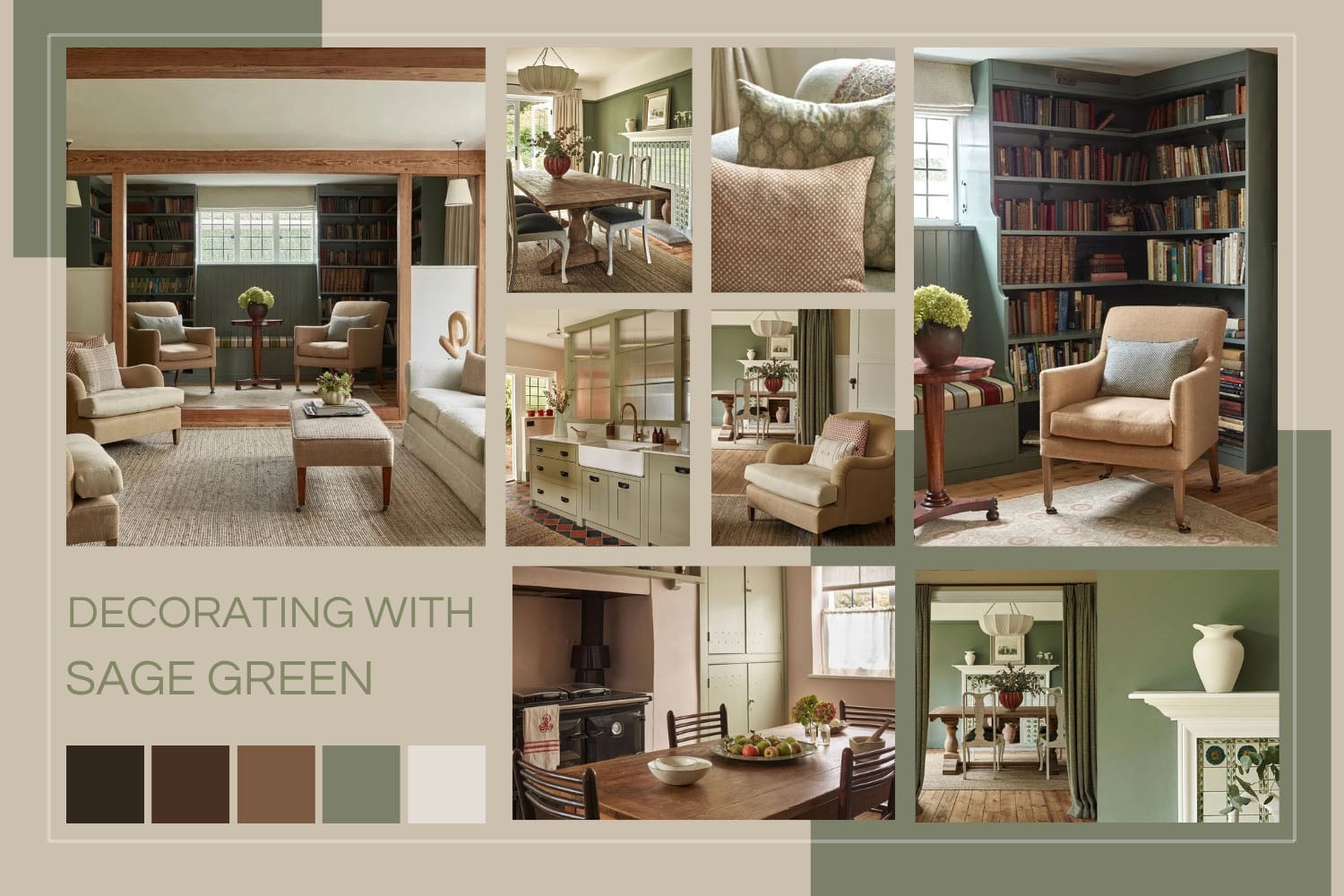
Mood Board Created by Tracy Svendsen of a Home Decorated in Sage Green
14. Sage Green in a Softly Layered, Traditional Bedroom
Sage green works just as well in a quiet, layered room as it does as a bold statement, as this traditional country bedroom by Mark Cunningham shows.
A ceiling-height canopy frames the bed, matched to an upholstered floral headboard and drapery, with the fabric’s reverse in a muted olive green-and-cream gingham peeking through. Underneath, the bedding layers a quilted white base with a tiny gray floral duvet and silk pillows, keeping everything soft rather than graphic. Sage green repeats quietly around the room — in the curtains, on a light wood writing desk’s fabric chair by the window, and in a toile sage-and-cream accent chair and a pale sage armchair tucked into opposite corners.
Designer Tip: When working with several patterns in one room, keep them all in the same muted, tonal register — as this room does — so sage green can tie them together without any one element competing for attention.

Colors that Pair Well with Sage Green
Image courtesy of Mark Cunningham Design
15. Sage Green Kitchen Cabinets
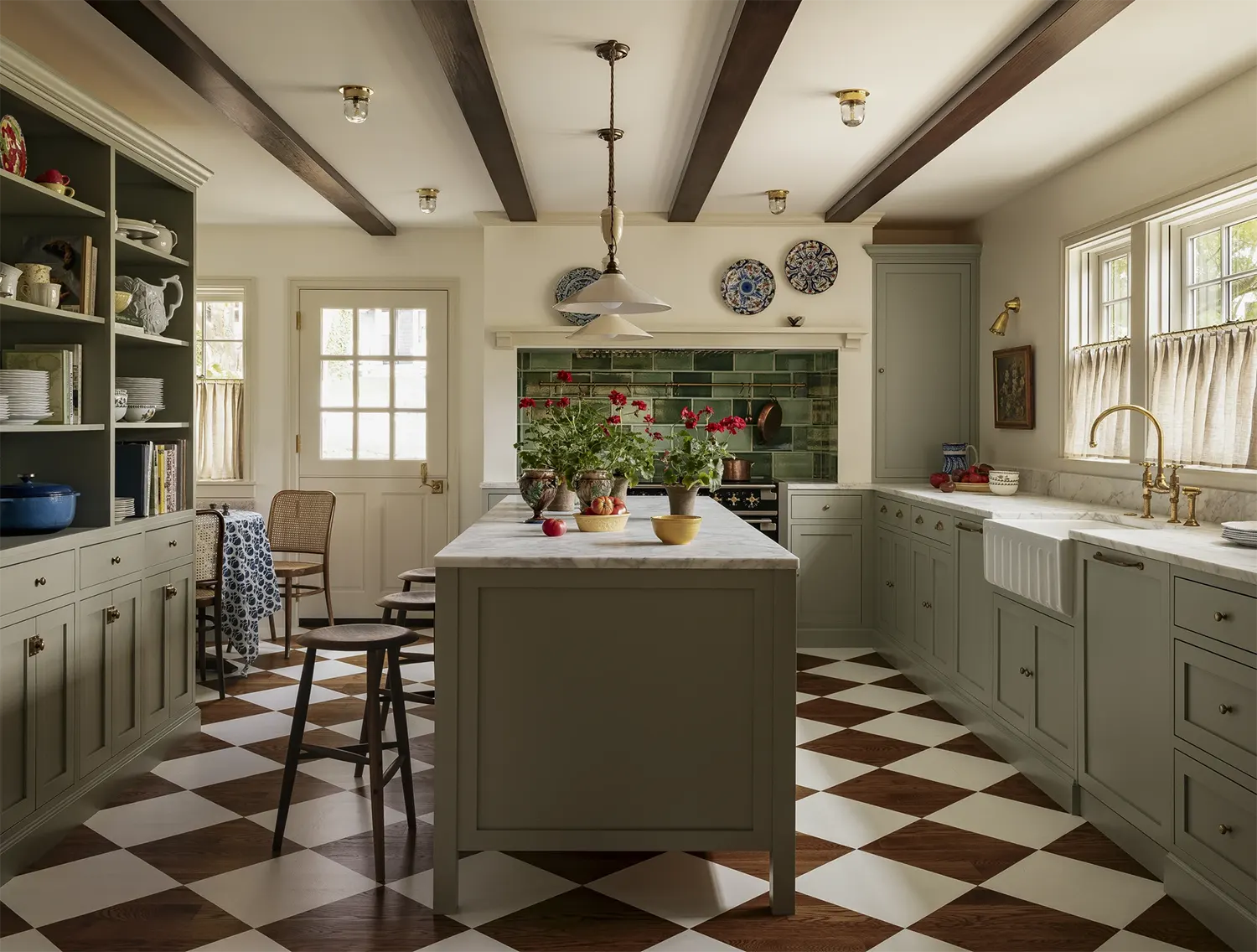
One of the most impactful ways to bring sage green into your kitchen design is through painted cabinets — whether you paint them all or just the lower ones, it adds instant elegance. Pair sage green kitchen cabinets with white walls, light countertops, and brass accents for a fresh, airy look. Not ready to commit to painted cabinets? Sage green towels, dishware, and utensils — or a sage green backsplash or countertop — can create the same effect in smaller doses.
This traditional British-style kitchen, designed by Heidi Caillier with architecture by Lauren Crocco, shows the look at its best. Classic inset cabinets in a sage tone are fitted with aged-brass hardware, surrounding an island that stands on furniture-like legs. A hand-painted checkerboard floor in creamy squares lets the natural wood grain show through in every other tile, echoing the wood-toned ceiling beams above. Bright green tile in varying shades wraps the range’s backsplash, adding a bolder pop of color against all that soft sage.
Designer Tip: Pairing a soft sage cabinet color with a bolder, brighter green in just one spot — like a range backsplash — lets you use two shades of the same color family without it reading as mismatched.
Sage Green Kitchen Cabinets
Image courtesy of Heidi Caillier Design
16. Sage Green in the Bathroom
Sage green brings a spa-like calm to the bathroom, whether it’s painted on the walls or the vanity. Paired with white or light fixtures, it reads clean and fresh; brought in through tiles or accessories instead, it adds texture without a bigger commitment — a great option for a rustic bathroom design where sage subway tile or a few sage towels can do the work on their own.
This bathroom, designed by Studio McGee, pairs a sage green vanity with brass knobs and an antique silver faucet against a white marble countertop with gray veining, set over tonal gray tile flooring. An oval mirror in a silver frame is flanked by two brass wall sconces, while William Morris’s Pimpernel wallpaper — its pale orange and white florals threaded with sage green leaves and vines — pulls the whole room’s palette together.
Designer Tip: A patterned wallpaper that already contains your accent color, like this Pimpernel print, is an easy way to tie a vanity color to the rest of the room without matching everything exactly.

Sage Green Bathroom Ideas
Image courtesy of Studio McGee
17. Sage Green in the Living Room
There are countless ways to bring sage green into a living room design. The easiest is as an accent — throw pillows, curtains, or a rug. If you have open shelving, a few curated sage-toned pieces can tie the whole look together. For more depth, consider sage green furniture itself: a velvet sofa or armchair makes a bolder, softer statement, while wall art, vases, or candles in the color offer a lighter touch.
This Studio McGee living room shows the quieter end of that range. A built-in white window bench sits in a white nook, layered with throw pillows in tan, gray, and sage green. The walls themselves are a pale green, echoed in a large abstract artwork that mixes green, warm earth tones, and white. A caramel accent chair and a white boucle ottoman — topped with a wicker basket, a vase of florals, and a candle — round out the room’s warm, textural palette.
Designer Tip: Painting the walls a pale, muted green and then repeating that same tone in pillows and art — rather than introducing a second, brighter green — keeps a room feeling cohesive instead of matchy.

Decorating with Green
Image courtesy of Studio McGee
18. Sage Green in the Dining Room
A soft sage green on the walls brings a calming feel to the dining room, especially paired with neutral furniture and natural textures for contrast. For a lighter touch, use it as an accent instead — sage upholstered or painted dining chairs, or a sage tablecloth, bring in the color without committing the whole room. In a country-style dining room, pairing sage with white plates and natural textures like rattan placemats or wooden chargers adds warmth alongside the color.
This dining room, designed by Jean Stoffer, centers around a built-in cabinet wall in a pale sage green with a dark countertop. Open shelving styled with mugs, artwork, and plants sits alongside glass-front cabinets displaying dinnerware, with a coffee bar built into the center section. Rustic wide-plank wood flooring and a light wood dining table keep the room grounded and warm against all that cabinetry.
Designer Tip: A full wall of sage green cabinetry, rather than just an accent piece, works especially well when it includes some open shelving — it keeps a large expanse of color from feeling too heavy or monochromatic.

Sage Green in the Dining Room
Image courtesy of Jean Stoffer
19. Create a Serene, Textural Bedroom Retreat
When incorporating sage green into a bedroom design, it can work as a wall color, curtains, throw pillows, or upholstered seating. Pairing sage bedding with soft neutrals like white or beige creates a calming, serene contrast, while adding a deeper shade elsewhere in the room — navy, rich brown — brings in depth. Natural textures like wood or rattan round out the cozy, inviting feel.
This bedroom, designed by Lindye Galloway, builds that calm largely through texture rather than color alone. Light wood flooring pairs with a dark wood beamed ceiling overhead, while a light wood canopy bed frames a boucle headboard. The bedding stays in soft tans and grays, with a single sage green bolster pillow as the only saturated color note — echoed again in a sage velvet seating piece nearby. A landscape artwork in cream and green tones hangs above the bed, and modern brass lamps add a touch of warmth to the otherwise soft, tonal palette.
Designer Tip: Using just one or two sage green accents — a bolster pillow, a single chair — against an otherwise neutral, textural room lets the color read as a deliberate detail rather than the room’s main event.

Sage Green Bedroom
Image courtesy of Lindye Galloway Design
20. Sage Green in the Laundry Room
Sage green suits a laundry room well — it’s calming and feels natural in a functional space. Painted cabinets in a soft sage, paired with white or light countertops, keep the room feeling fresh and airy. If you’re not ready to commit to cabinetry, sage accents — a rug, a laundry basket, wall art, or even wallpaper — bring in the color with less commitment.
This combined primary closet and laundry room, designed by Studio McGee, shows how well sage works in a larger, multi-purpose space. White walls and a large built-in closet in light oak with open shelving and hanging space keep most of the room neutral, while a central folding island in sage green with a white quartz countertop anchors the room. Built-in cabinetry in the same sage tone surrounds a stacked washer and dryer, with brass hardware warming up the whole palette.
Designer Tip: Keeping sage green confined to one or two elements — the cabinetry or an island, rather than the walls too — lets a small laundry room stay bright and functional instead of feeling closed in by too much color.

Sage Green Laundry Room
Image courtesy of Studio McGee
21. Sage Green in the Entryway
Sage green makes a strong first impression in the entryway, setting a calming tone the moment guests walk in. Painting the walls — or just the front door — in a light sage introduces the color without overwhelming a small space, while a darker sage shows up well in smaller doses, like artwork or accessories. Natural elements like plants or a woven rug in earthy tones round out the look, and a sage green console table or bench adds function along with color; a mirror or artwork above it creates a focal point while bouncing light back into the space.
These two entryways, both designed by Studio McGee, show the range of that approach. In the first, the front door itself is painted sage green — a simple, high-impact way to introduce the color right at the threshold. In the second, a sage green door leads into a mudroom-style entry with a built-in bench over storage baskets, backed by sage green wall paneling, with a matching sage built-in cabinet anchoring the far end of the space.
Designer Tip: Painting just the front door sage green — rather than the whole entry — is one of the lowest-commitment ways to try the color, and it’s easy to change later if your taste shifts.


Sage Green in the Entryway
Image courtesy of Studio McGee
22. Sage Green in a Dark, Moody Corner Nook
Sage green can be a striking contrast color in a dark, moody space, not just a soft neutral. This reading nook, designed by Jessica Nelson, proves the point: black walls and light wood flooring set a dramatic backdrop for a sage green velvet bench that wraps around the corner, layered with pillows in sage green, burnt orange, and navy blue for a warm, eclectic mix of contrast colors.
A small antique round table with an earth-toned marble top holds a simple bowl of lemons, adding a bright, unexpected note against all that dark backdrop. Behind the bench, an eclectic gallery wall mixes a moody landscape, a butterfly print, farmhouse scenes, and an antique plate — a layered, collected look that keeps the nook feeling personal rather than staged.
Designer Tip: Sage green reads completely differently against black than it does against white — pairing it with a dark wall lets the green feel rich and jewel-toned rather than soft and pastel, so don’t assume sage only works in light, airy rooms.

Green in a Nook
Image courtesy of Jessica Nelson Design
23. Sage Green Adds Country Charm
This kitchen, designed by W Design Collective, shows how far sage green can go when it’s used as a full palette rather than just an accent. Sage cabinets cover both the upper glass-fronted and lower closed cabinetry, while the countertops themselves — a mix of sage, white, and gray — keep the look from feeling too uniform. The walls and even the window frame carry the same sage tone, with a tall, narrow window bringing in views of the trees outside.
A white farmhouse sink with brass faucets breaks up all that green, framed by a white-and-green gingham curtain that adds a country touch. Dark, warm wood flooring grounds the whole space and keeps it from feeling too monochromatic.
Designer Tip: When sage green covers nearly every surface — walls, cabinets, even the window frame — a warm, contrasting wood tone on the floor becomes essential; it’s what keeps a fully sage-toned room feeling warm and grounded rather than flat.

Country Charm
Image courtesy of W Design Collective
24. Sage Green Sofas Add Serene Color
Two sage green velvet sofas bring subtle, rich color to this modern farmhouse living room, designed by Olivia Crawford for London’s Walton House. Crawford’s approach here — sourcing vintage pieces to blend seamlessly with modern elements — gives the room a layered, collected feel rather than a showroom look.
A vintage stone fireplace surround anchors the room, flanked by mirrored panels that run all the way to the ceiling, amplifying the light from floor-to-ceiling tan linen curtains. A dark modern wood table sits between the two sage sofas, grounded by a woven sisal rug, while a linear brass light fixture and fresh greenery add warmth and life. Light wood flooring and cream walls keep the backdrop soft, letting the sage sofas read as the room’s quiet centerpiece.
Designer Tip: Pairing two identical sage sofas — rather than one sage piece and a neutral counterpart — makes the color feel intentional and grounding rather than like a single accidental accent.

Sage Green Sofas
Image courtesy of Crawford Design
This powder room, designed by W Design Collective, uses wallpaper as the star of the room. The pattern is William Morris & Co.’s classic Bird & Pomegranate, in the Blue/Sage colorway — detailed birds perched among winding foliage and fruit, with bursts of orange adding warmth against the green and blue tones.
A gray stone floating vanity keeps the rest of the room simple, letting the wallpaper do the work, with a burnt orange hand towel echoing the pattern’s warm accent color. A dark wood-framed mirror, flanked by two modern sconces, adds a grounding, more traditional element against the pattern.
Designer Tip: In a small space like a powder room, a bold historic pattern like this one works especially well — the room is small enough that the pattern reads as a full statement rather than overwhelming, which is a bigger risk in a larger room.

Green Wallpaper
Image courtesy of W Design Collective
Decorating with Sage Green Conclusion
Sage green earns its place as one of the most versatile neutrals in interior design precisely because it isn’t just one look — it reads as a soft, calming backdrop in a sunlit bedroom, a rich contrast color against black walls, and a natural fit for everything from a country kitchen to a formal London sitting room. That range is what makes it worth the effort to get right, rather than treating it as a single trend to apply the same way everywhere.
The biggest thing I’d encourage you to do before committing to sage green in your own home: see it in your own lighting, at different times of day. The same paint color can look distinctly different depending on your home’s natural light, the undertones in your existing wood and stone, and what’s around it — which is exactly why some of the “sage green” you’ll find online is really closer to olive, blue-grey, or pine once you look closely. Bring home a sample before committing to a full room.
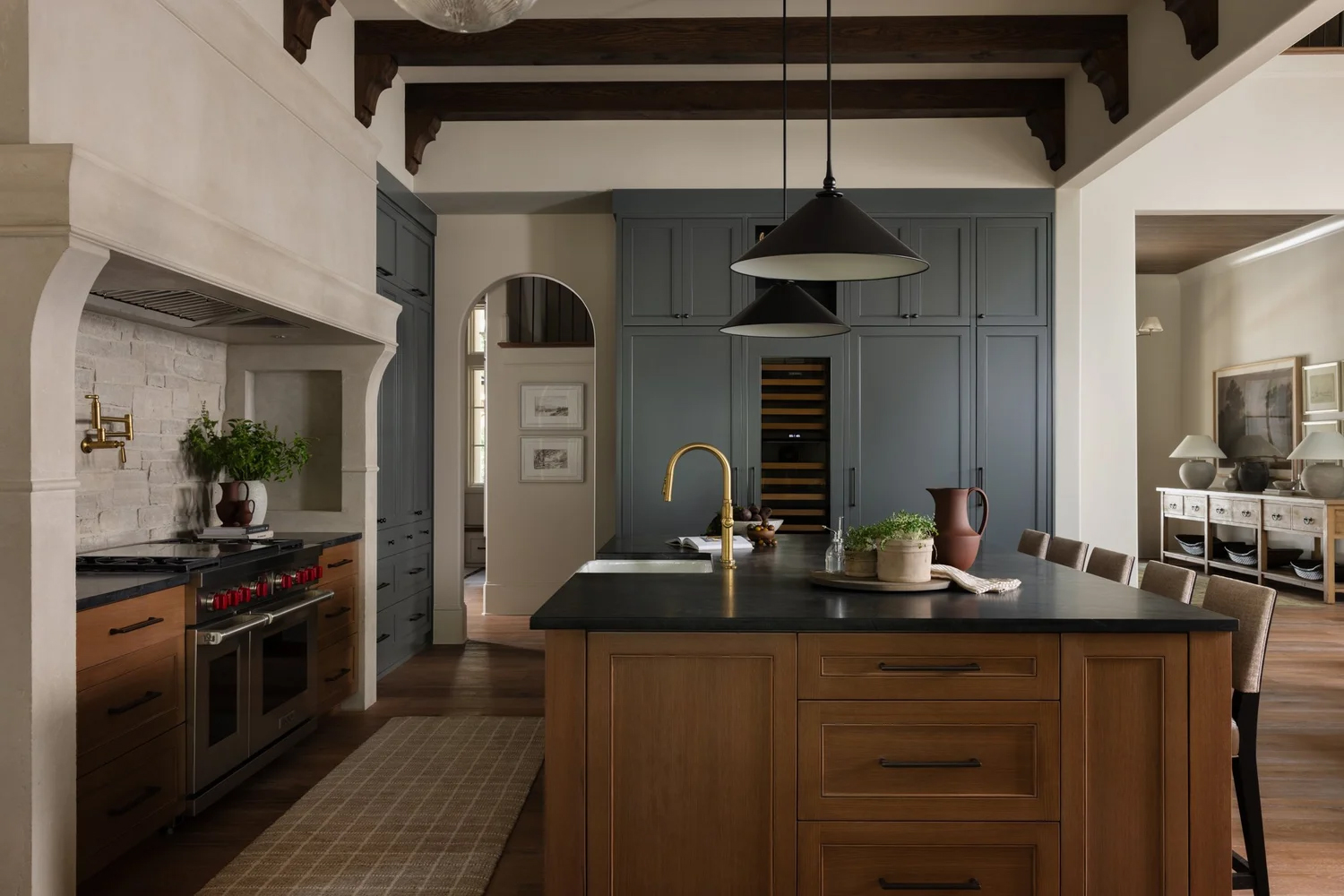
Beyond that, the pairing matters more than the shade itself. Warm metals like brass, natural wood tones, and a mix of textures are what keep sage green feeling grounded and intentional rather than flat — whether you’re using it as a full wall color, a single piece of furniture, or just a few accessories.
Sage Green Kitchen Cabinets
Image courtesy of Ashley Martin Home
Frequently Asked Questions About Decorating With Sage Green
What colors look best with sage green?
Sage green pairs beautifully with soft neutrals like ivory, beige, and warm white, which let its muted, earthy quality stand out without competition. For more contrast, deep navy, rich burgundy, or chocolate brown create a dramatic, sophisticated pairing that grounds the softness of the green. Warm metals — brass, copper, and aged gold — bring out sage green’s warmth and work especially well in kitchens and bathrooms. Natural materials like wood, rattan, and stone are also a natural complement, since sage green’s earthy undertone already reads as connected to nature.
Is sage green still in style in 2026?
Yes — and it’s proven more durable than most color trends. Unlike brighter, more saturated greens that can feel tied to a specific moment, sage green’s muted, earthy quality has let it move fluidly across design styles for several years now, from farmhouse and country to modern minimalist and rustic interiors. Its continued popularity comes down to versatility: it works as a calming neutral-adjacent color in nearly any room, which gives it longevity that more statement-driven colors don’t have.
What color makes sage green pop?
Deep, saturated colors create the most striking contrast against sage green’s muted quality. Navy blue and rich burgundy both work exceptionally well, creating a sophisticated, dramatic pairing. Terracotta and rust tones bring out sage green’s warmth while adding visual energy. For a more unexpected combination, a deep charcoal or near-black accent makes sage green appear brighter and more vivid by contrast. The key with any of these pairings is using the bold color in smaller doses — an accent wall, artwork, or upholstery — while letting sage green remain the dominant tone.
Does sage green work in small or dark rooms?
It can, with some care given to the specific shade. Lighter sage tones, sometimes described as celadon or mint-leaning sage, work well in smaller or darker rooms because they reflect available light rather than absorbing it, helping the space feel open rather than closed in. Deeper, more olive-leaning sage tones are better suited to larger rooms or spaces with ample natural light, where the richness reads as cozy rather than cave-like. If a small or dark room is a concern, testing a sample on the actual wall at different times of day is worth the extra step, since sage green’s undertones can shift noticeably under different lighting conditions.
What’s the difference between sage green and other green paint tones?
Sage green sits in a specific, muted middle ground — grayer and more subdued than a true green, but warmer and more saturated than a pure gray-green like eucalyptus. Olive green leans more yellow and is generally darker and more dramatic, while mint or seafoam greens lean cooler and brighter. What distinguishes sage specifically is its dusty, almost faded quality, which is part of why it reads as calming rather than vibrant. This subtlety is also why sage green works across so many design styles — it never competes for attention the way a brighter or more saturated green would.
View Recent Posts
Stunning Range Hood Design Ideas
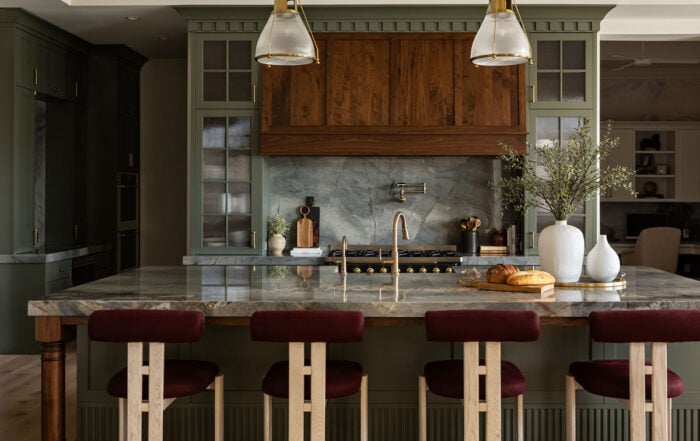
Range hood design ideas covering stone, wood, plaster, copper, and stainless steel — with designer tips on proportion, material selection, and installation.

Fireplace Design Ideas
Discover fireplace design ideas that range from rustic to modern, country, traditional, Scandinavian and farmhouse with stunning photos.
Rustic Bedroom Ideas
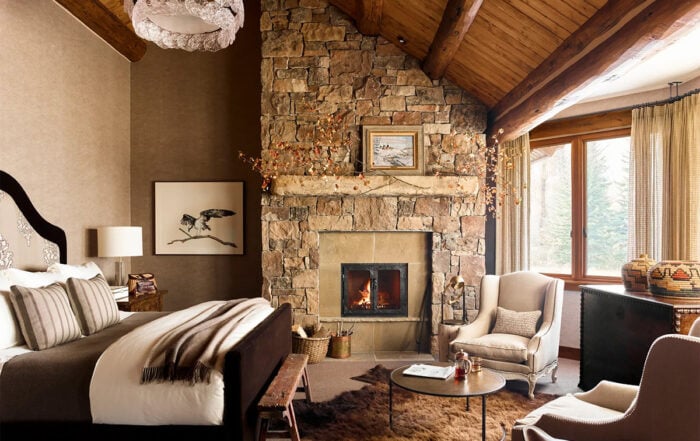
Rustic bedroom ideas covering natural materials, layered textiles, color palettes, and professional design strategies for log cabin, modern rustic, Scandinavian, and luxury retreat styles.
Rustic Bathroom Ideas
Rustic bathroom ideas — natural materials, vintage fixtures, earthy palettes, and designer tips for log homes, cabins, and mountain retreats.
Cream Kitchen Cabinet Ideas
Cream kitchen cabinet ideas curated by interior designer Tracy Svendsen. Warmer than white and more versatile than beige, cream cabinets work beautifully across farmhouse, rustic, traditional, and modern kitchens.
Log Home Decorating Ideas
Log home decorating ideas covering color palettes, furniture selection, lighting, stone fireplaces, and modern approaches to handcrafted log home interiors.

