
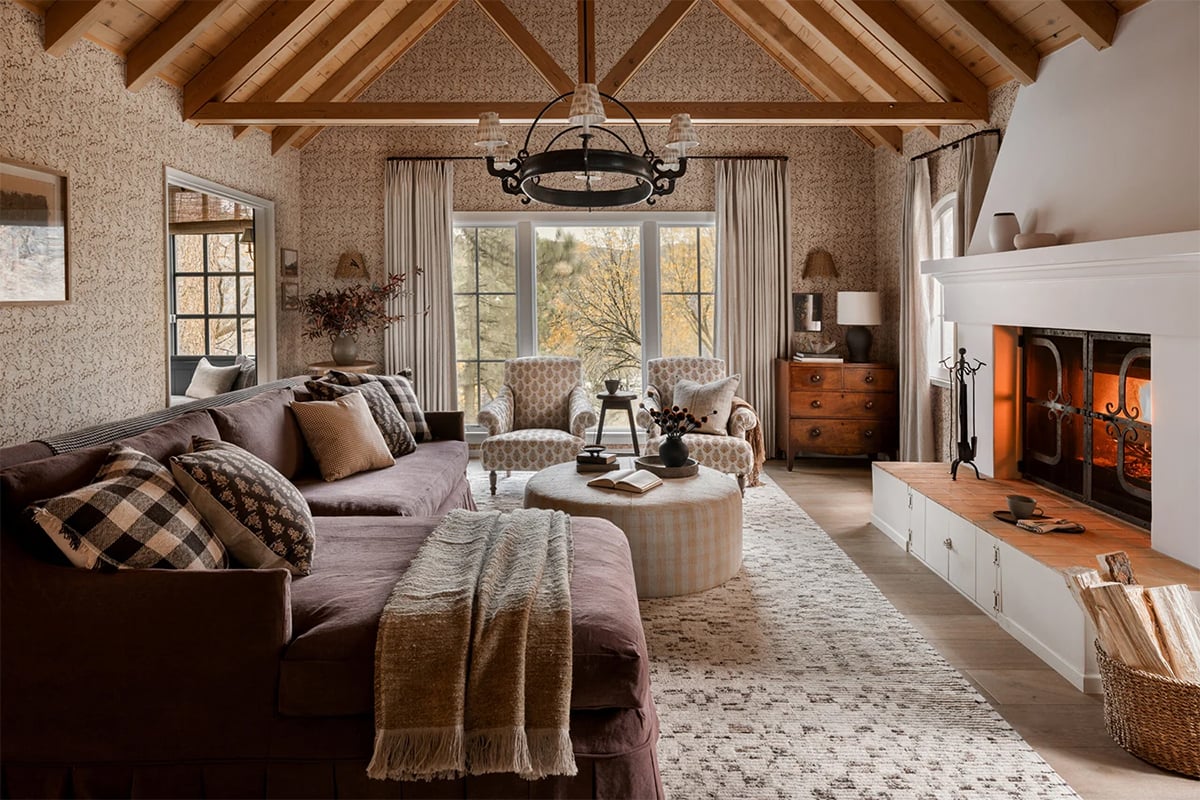
33 Country Living Room Ideas: A Designer’s Guide to Cozy, Rustic Decor
By Interior Designer TRACY SVENDSEN | Published January 28, 2024 | Upadated February 11, 2026 |
Designing a country living room is an exercise in building permanent, lived-in comfort. Across my career—from drafting rugged timber-frame lodges to styling refined rural retreats—I’ve learned that a true country space isn’t just about a “look”; it’s about a feeling of structural honesty.
While trends like “Modern Farmhouse” have evolved, the core of country living room ideas remains rooted in authenticity. In this guide, I’m sharing 33 of my favorite design concepts that balance today’s organic modern influences with timeless rustic charm. These ideas are curated to help you build a space that feels deeply connected to nature, history, and the simple pleasures of everyday life. Feature image courtesy of Amber Interiors.
Country Living Room Key Takeaways for 2026
-
Texture Over Trend: The most successful country rooms in 2026 focus on “tactile honesty”—think wire-brushed oak, chunky wool throws, and matte-finished stone.
-
The “Mushroom” Palette: We are moving away from stark whites toward warmer, “muddy” neutrals like mushroom, ochre, and moss green to create a cocoon-like environment.
-
Collected, Not Cluttered: My professional rule of thumb is to mix eras. Pair a clean-lined modern sofa with a vintage trunk or a family heirloom to ensure the room feels “gathered” rather than “purchased in a set.”
-
Natural Light Integration: Country design thrives on the connection to the outdoors. Use linen drapery or sheer treatments to maximize natural light while maintaining privacy.

Country Living Room Ideas
Image courtesy of Heidi Caillier Design
Designer Mood Board: Country Living Rooms
For this mood board, I selected a rustic country living room designed by Kevin Dumais because it captures something I often strive for in large-scale spaces: warmth without heaviness, and cohesion without predictability.
With 24-foot ceilings and dramatic architectural volume, the room could have easily felt cavernous. Instead, it feels intimate. The rough-hewn ceiling beams and weathered limestone treatment establish a strong architectural envelope, while multiple seating groupings anchored by substantial sofas create a human scale. This is a strategy I frequently use in expansive rooms—breaking up volume through intentional furniture placement rather than relying solely on décor.
What makes this space especially compelling is its balance of eras and silhouettes. Antiques sit comfortably alongside contemporary forms, such as the custom curved bouclé sofa and sculptural burl-wood coffee tables. The mix feels collected rather than decorated. Textural layering—from the patchwork hide rug to the Belgian wood chairs and leather accents—adds depth and authenticity, allowing rustic and country influences to blend seamlessly with modern refinement.
This room demonstrates that country design in 2026 is not about theme—it’s about thoughtful contrast, material integrity, and creating a space that feels layered, grounded, and deeply livable.

Designer mood board interpretation by interior designer Tracy Svendsen, highlighting a layered rustic country living room design.
The Charm of Country Living Rooms
Country living rooms have an undeniable charm that brings comfort and nostalgia. They are spaces that embrace the beauty of imperfections and celebrate the warmth of natural materials. The key to creating an inviting country living room is to strike the perfect balance between simplicity and coziness.
One of the defining characteristics of country living rooms is the use of warm, earthy colors. Using rustic hues such as warm browns, soft beiges, and muted greens is the best way to create a sense of tranquility and harmony. These colors evoke a connection to nature, making the room feel cozy and inviting.
To enhance the rustic charm of your country living room, I recommend incorporating weathered wood elements. Exposed wooden beams, reclaimed wood furniture, or a statement wooden wall can add a touch of authenticity and create a focal point in the room. The natural texture and warmth of wood bring a sense of grounding and comfort to the space.
Another important aspect of country living rooms is the use of natural materials. Think soft cotton, cozy wool, and plush leather. These materials not only add visual interest but also provide tactile comfort. Incorporating natural textiles into your living room, such as a chunky knit throw or a leather armchair, will create a cozy and inviting atmosphere.
Key elements of a country living room:

Charming Country Living Room
Image courtesy of Ariel Okin Design
1. The 2026 Palette: Beyond Beige
One of the defining characteristics of country design is the use of colors that evoke a connection to the landscape. To create a sense of tranquility, I recommend moving beyond basic beige into “Organic Neutrals”:
-
Stony Undertones: Look for grays with brown bases (greiges) to avoid a cold, “office” feel.
-
Nature-Inspired Accents: Deep terracotta or muted sage greens work beautifully to ground a room, especially when paired with the warm orange tones often found in natural pine or cedar walls.
Analysis: Why This Room Works
The space below, designed by Heidi Caillier, is a masterclass in the “collected” country aesthetic. Caillier blends brick reds and ochres with botanical blues for a nostalgic yet fresh feel. Dark wood provides the visual weight needed to keep a mix of patterns from feeling cluttered. The secret is in the “unstudied” details—like stacked books and garden-fresh flowers.

Country Living Room in Warm Earth Tone Colors
Image courtesy of Heidi Caillier Design
2. Warm Browns
Rich, warm browns evoke a deep sense of permanence and are the foundation of any successful rustic retreat. Rather than feeling “dated,” these tones ground a living room when used on architectural elements like built-ins or fireplace surrounds.
Tonal Balance: When using deep browns, look for shades with red or umber undertones. These prevent the room from feeling heavy and instead create a sophisticated, “enveloping” atmosphere that mimics the natural patina of aged timber.
Analysis: Why This Room Works: In a living room designed by Heidi Caillier, the fireplace surround and built-in shelving are drenched in a rich, chocolate hue. This design serves as a sophisticated study in contrast: the dark paint provides a crisp frame for the gray marble insert, allowing the warm wood flooring to glow. By saturating the cabinetry in the same tone as the architectural trim, Caillier creates a seamless, integrated look that feels original to the home’s history.
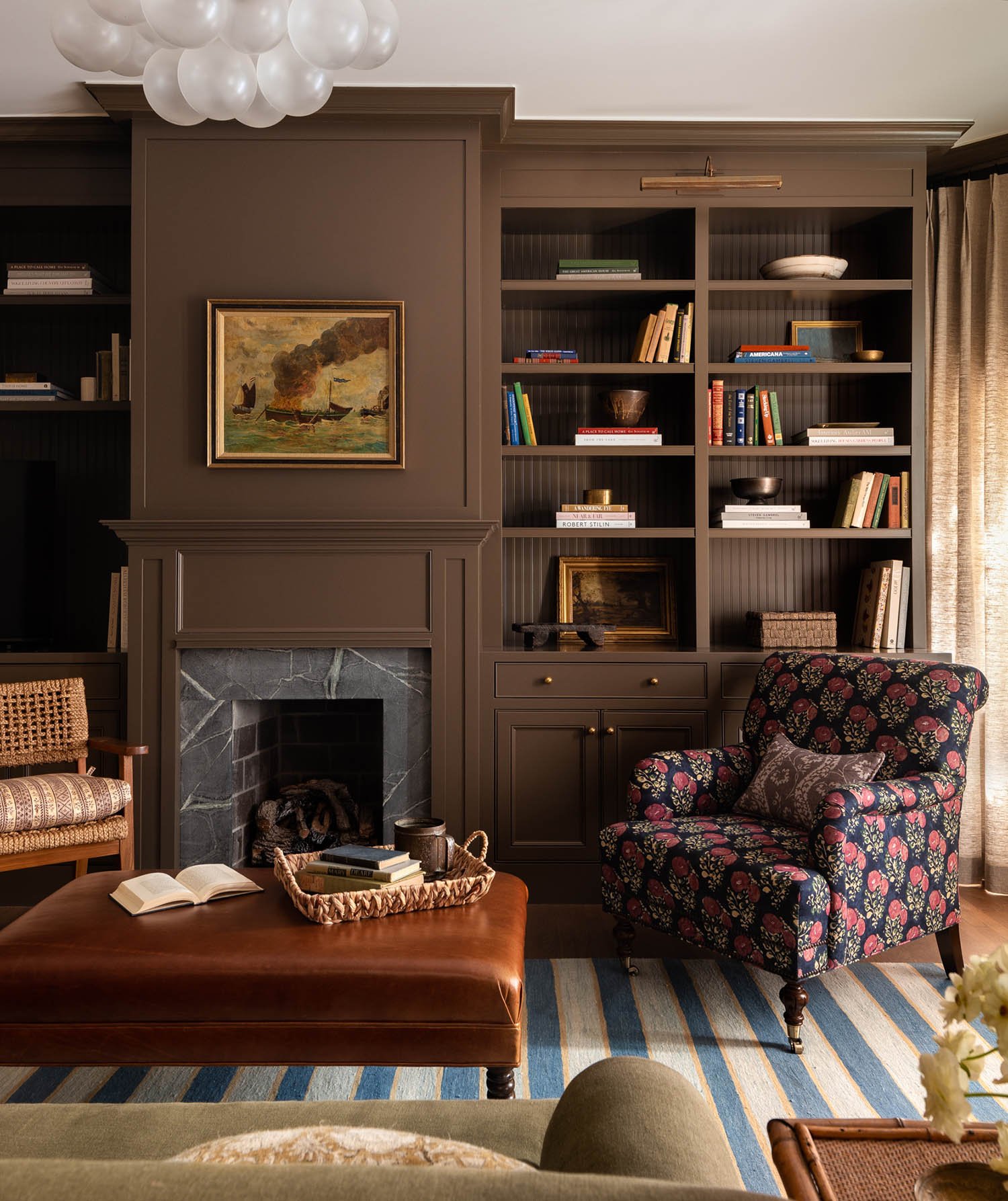
Warm Brown Tones
Image courtesy of Heidi Caillier Design
3. The Versatility of Soft Beige
Soft beiges serve as the essential neutral foundation for a country interior, offering a more forgiving and warmer alternative to stark white. When used correctly, these tones act as a canvas, allowing more delicate accent colors to shine without losing their rustic “groundedness.”
The Layering Rule: To keep a beige palette from feeling flat, the secret is to vary the textures rather than the colors. Pair matte-painted walls with slubby linens, velvet cushions, and woven wool rugs to create depth through “tactile contrast” rather than high-contrast color.
Analysis: Why This Room Works: In an airy seating area designed by Sims Hilditch, we see a beautiful demonstration of tonal harmony. By layering sumptuous shades of blush pink and chocolate brown against a beige backdrop, the design achieves a warm, feminine charm that remains sophisticated. The floor-to-ceiling window treatments draw the eye upward, while the large mirrors serve as “internal windows,” bouncing natural light across the various patterns to keep the space feeling fresh and expansive.
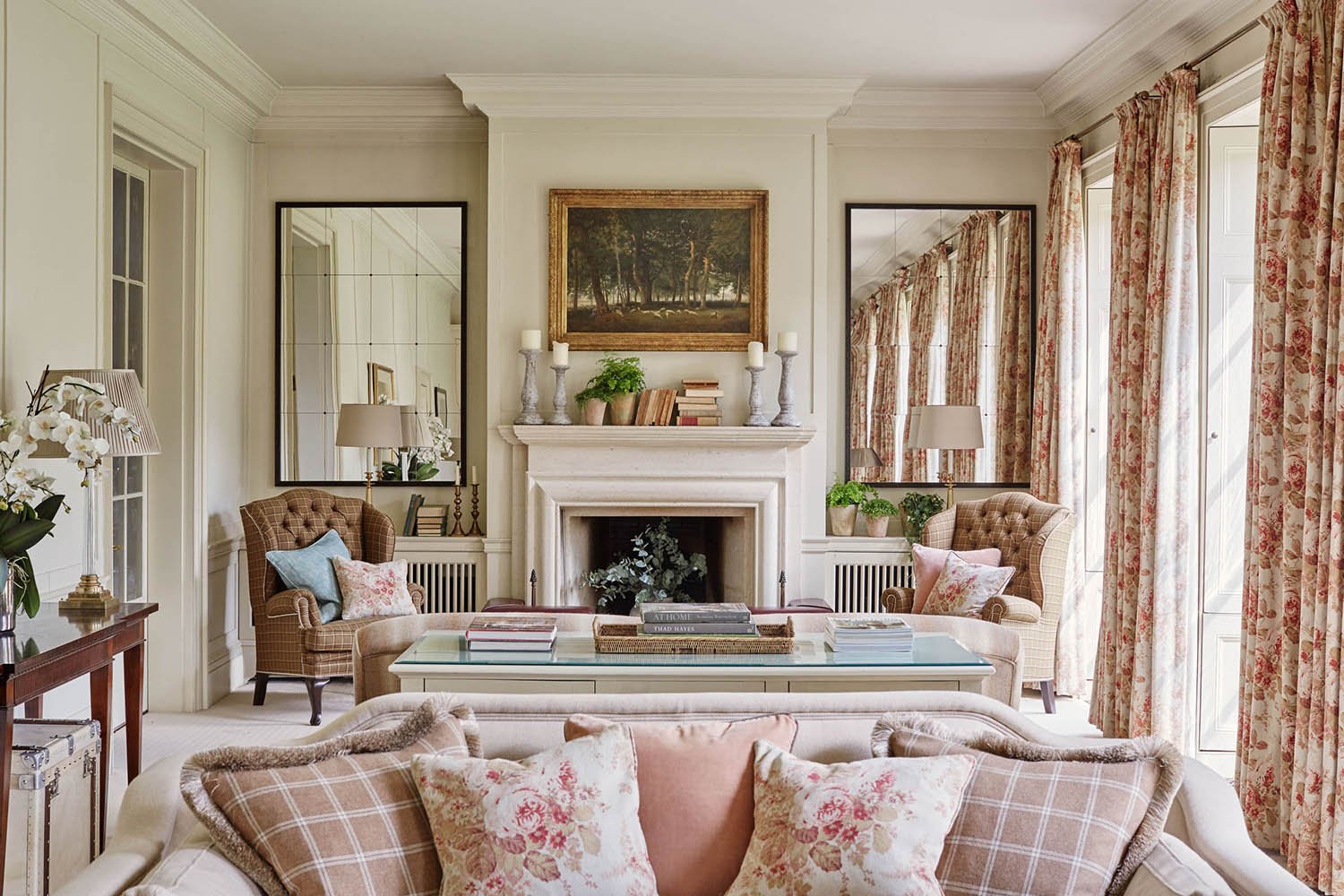
Country Living Room in Warm Tones and Soft Beiges
Image courtesy of Sims Hilditch
4. The Serenity of Muted Greens
Muted greens, specifically sage, moss, and olive, act as a “neutral from nature.” These tones are particularly effective in country cottages because they pull the colors of the landscape into the home, creating a seamless visual transition through the windows.
The Earth-Tone Balance: Green is a powerful tool for softening the “red” undertones often found in rustic wood. A dusty olive or sage provides a cooling foil to reclaimed oak or pine beams, preventing the wood from feeling overly orange or saturated.
Analysis: Why This Room Works: In this Vail Mountain retreat by Bardes Interiors, the design showcases a sophisticated example of color weaving. Rather than a single feature wall, soft shades of green are distributed through textiles and accents to harmonize with cheerful yellows and pale pinks. This approach prevents the “traditional” elements from feeling heavy; instead, the green serves as a fresh, botanical thread that ties the disparate colors together, ensuring the room feels open and inviting despite its cozy, mountain-condo proportions.

Traditional Country Living Room with Green Accents
Image courtesy of Bardes Interiors
5. The Warmth of Earthy Oranges
Earthy oranges, such as terracotta, clay, and burnt sienna, provide an instant sense of heat and “hearth” to a country home. Unlike bright, synthetic oranges, these muddy, clay-based tones feel grounded and organic, making them the perfect choice for spaces that need to feel cozy during colder months.
Managing Color Temperature: In a room with extensive wood paneling, earthy oranges work as a tonal extension of the wood grain rather than a distraction from it. By staying within the same “warm” family, these shades add depth without creating the jarring visual break that a cooler color might cause.
Analysis: Why This Room Works: This cozy cabin serves as a perfect blueprint for high-contrast layering. By pairing burnt orange with deep navy blues and hunter greens, the design utilizes a sophisticated “complementary” palette that vibrates with energy against the wood-paneled walls. The use of plaid curtains serves as a visual bridge, tying the disparate primary colors into a cohesive, heritage-inspired look. The result is a space that feels vibrant and “collected” rather than cluttered.
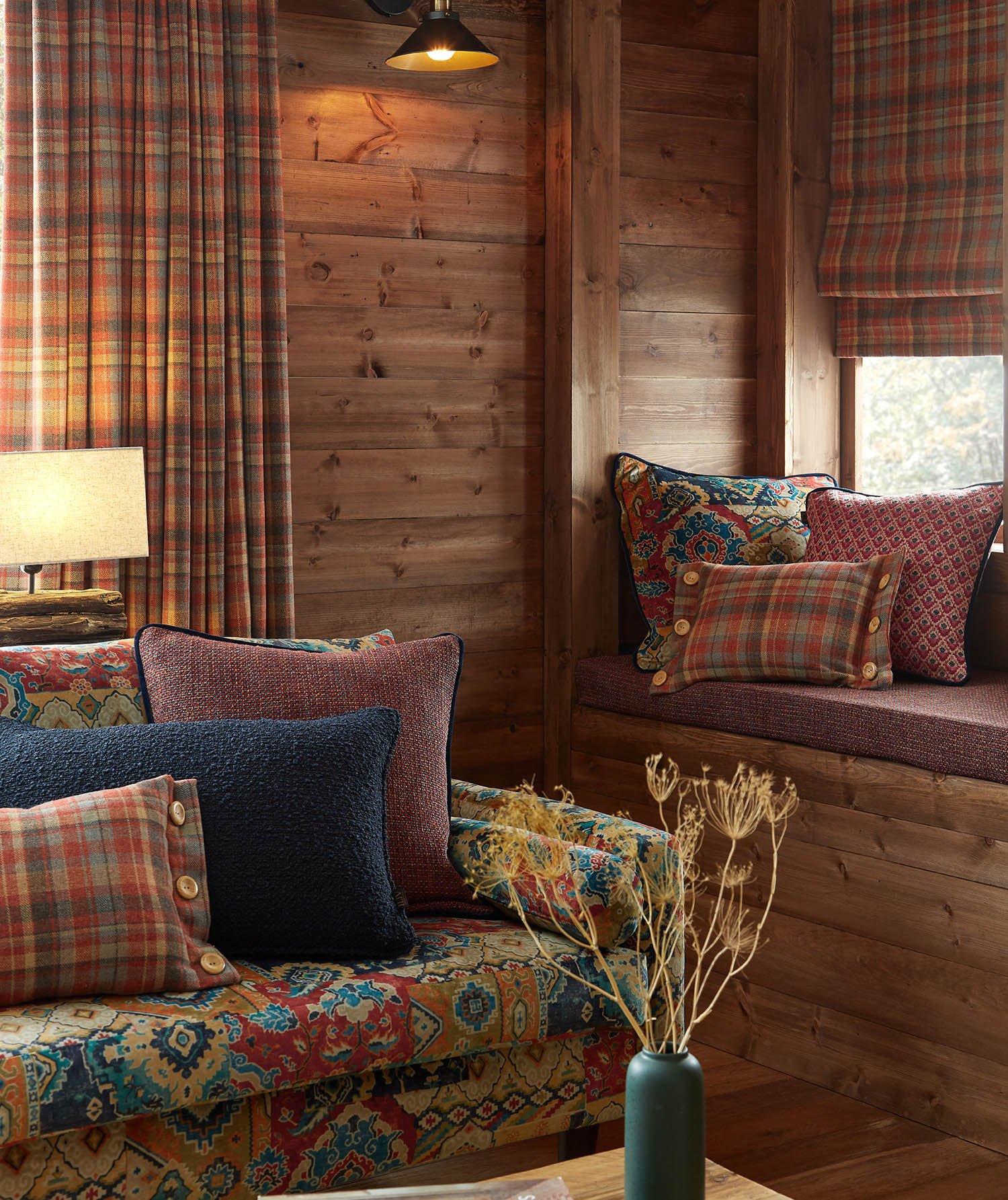
Earthy Orange Hues
Image courtesy of ILIV Interior Textiles
6. The Texture of Weathered Wood
Weathered wood is the quintessential “soul” of country design, offering a tactile history that new materials cannot replicate. Whether through structural exposed beams or curated reclaimed furniture, wood introduces a sense of permanence and architectural grit, grounding the softer elements of a room.
The Contrast Principle: To prevent a wood-heavy room from feeling like a “time capsule,” I recommend the Rule of Opposites. Pair the rugged, matte texture of reclaimed timber with sleek, modern light fixtures or smooth stone. This tension between the “refined” and the “raw” is what makes a contemporary country space feel sophisticated.
Analysis: Why This Room Works: This interior by SCW Interiors is a stunning case study in material balance. By flooding the space with natural light, the designer allows the deep textures of the ceiling beams and antique furniture to take center stage without feeling heavy or dark. The inclusion of a stone accent wall adds a secondary layer of natural texture, while the crisp, modern lighting provides a necessary “stylistic pivot” that keeps the rustic elements feeling current and fresh.
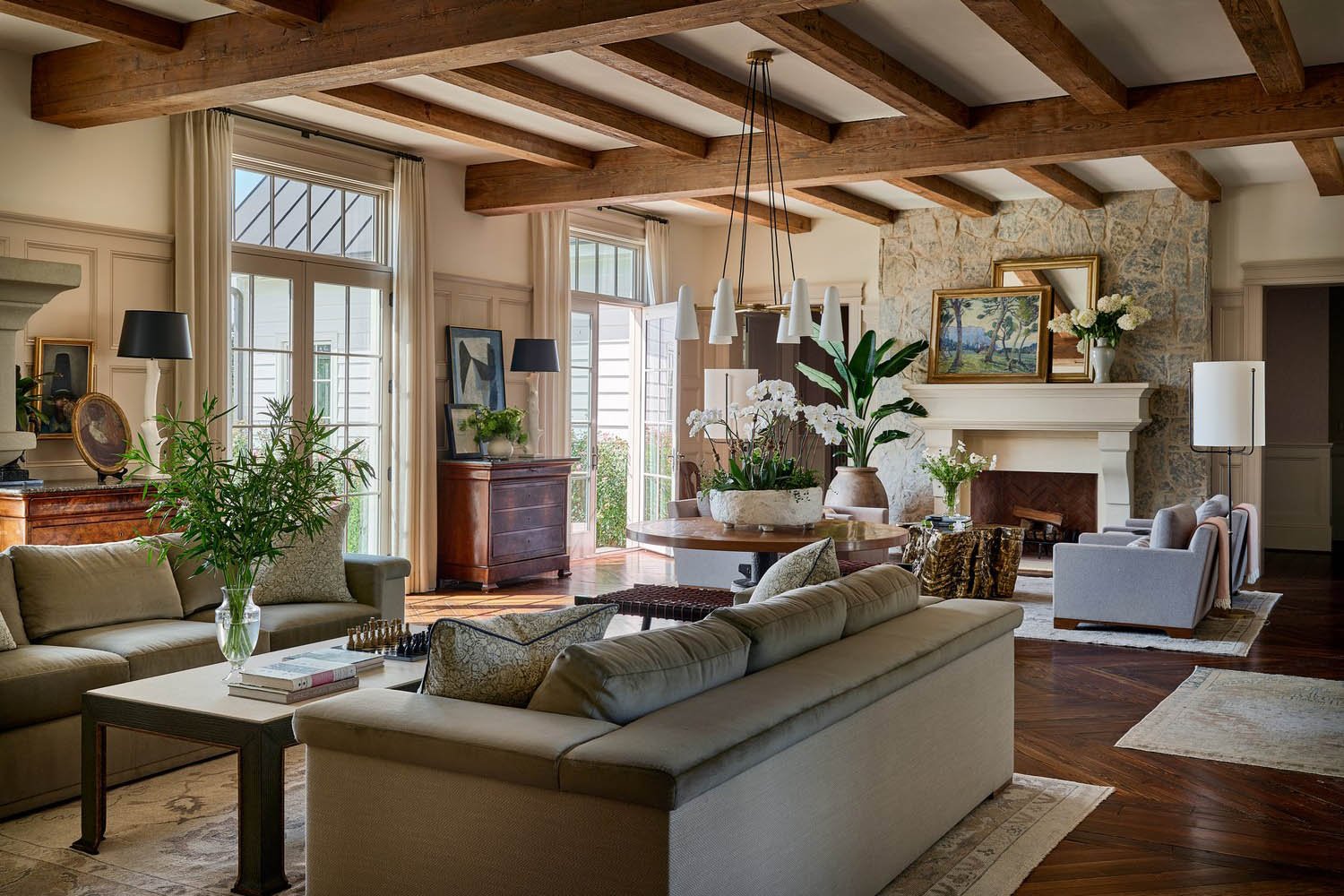
Weathered Wood
Image courtesy of SCW Interiors
7. The Comfort of Natural Textiles
In a country retreat, the “hand-feel” of a room is just as vital as its color palette. To achieve a space that feels authentically cozy, I prioritize a mix of high-integrity fibers—cotton, wool, and leather. These materials breathe, age beautifully, and provide the tactile comfort necessary for a room intended for relaxation.
The Weight Ratio: A professional trick for textile layering is to balance “visual weight.” If you have a light, floral cotton on a sofa, anchor it with a heavy wool throw or a structured leather ottoman. This mix prevents the room from feeling too “precious” or fragile, giving it a sturdy, grounded quality.
Analysis: Why This Room Works: This romantic cottage living room by Heidi Caillier is a premier example of soft-scale layering. By using floor-to-ceiling window treatments in a neutral tone, she creates a sense of height. The floral sofas—often a risky choice—succeed here because they are balanced by a restrained, neutral palette and antique accents that provide historical context. The result is a space that feels deeply nostalgic yet structurally sound and sophisticated.

Country Cottage Living Room
Image courtesy of Heidi Caillier Design
8. Vintage and Antique Furniture Finds
Incorporate vintage and antique pieces to act as the “narrative” of your country living room. Unlike mass-produced items, weathered furniture—such as a distressed leather sofa or a timeworn apothecary chest—introduces a sense of soul and history that grounds the entire design scheme.
The Heritage Anchor: When styling with antiques, I suggest using them as focal points rather than accessories. A singular, high-quality vintage piece provides a “stylistic anchor” that allows you to mix in more contemporary or whimsical patterns without the room feeling cluttered or uncoordinated.
Analysis: Why This Room Works: This sunny sitting spot by Sims Hilditch serves as a charming reference for pattern play. By integrating vintage furniture alongside whimsical floral wallpaper and a checkerboard accent chair, the design achieves a “British Country” sensibility that feels effortlessly gathered. The striped sofa acts as a geometric stabilizer, providing a clean line that balances the more organic, fluid shapes of the floral patterns and the aged character of the antique pieces.
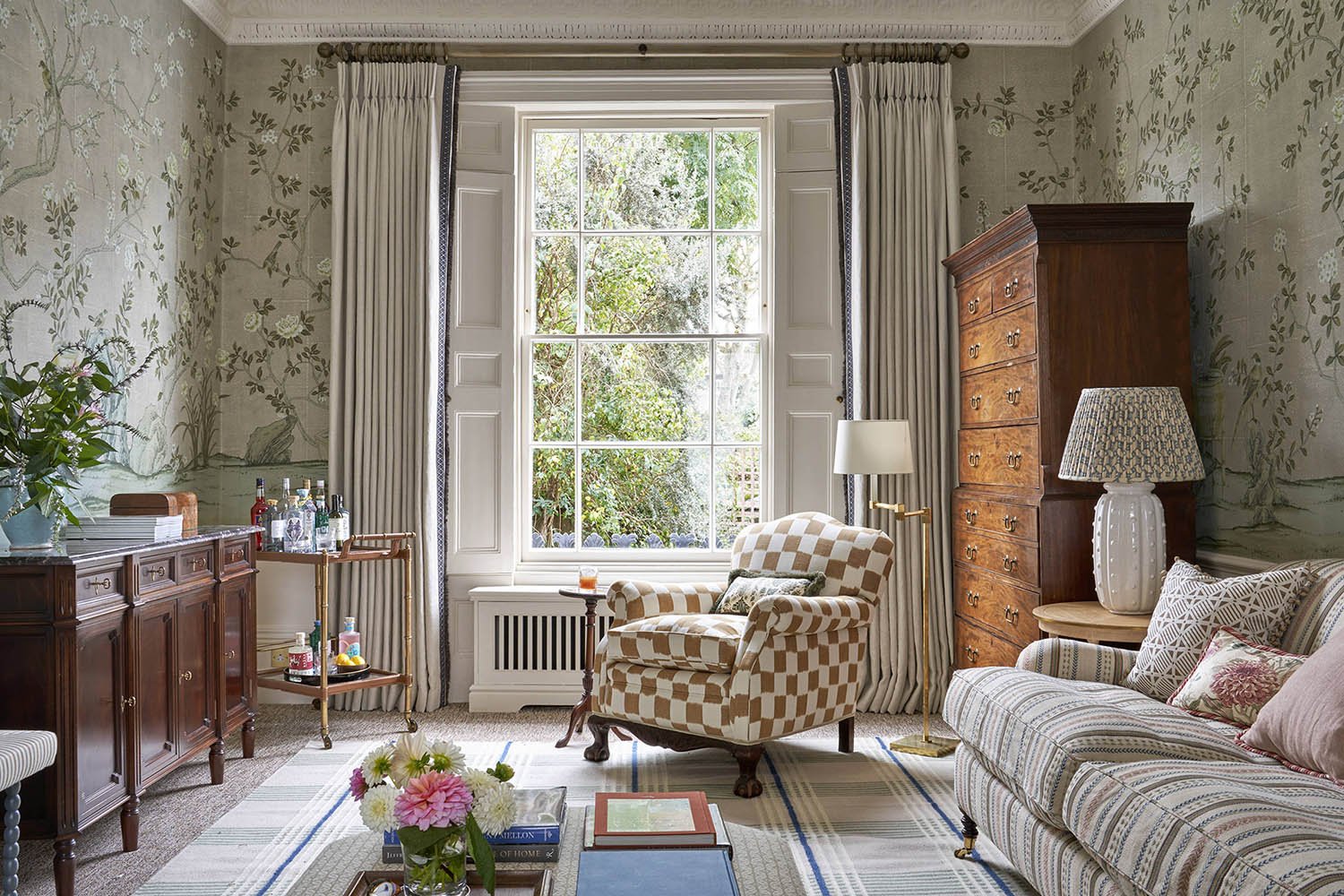
Vintage & Antique Furniture
Image courtesy of Sims Hilditch Design
9. Harnessing Natural Light
Maximizing natural light is the most effective way to elevate a country living room from “cozy” to “expansive.” By opting for sheer textiles or light-filtering window treatments, you allow the shifting outdoor light to become a living element of the decor, strengthening the connection between the hearth and the landscape.
The Aperture Rule: In country design, windows are your “moving art.” To enhance this, I recommend keeping window treatments simple and high-mounted. This draws the eye upward and ensures that the light doesn’t just enter the room—it washes the textures of your wood, stone, and fabric, revealing their true depth and color.
Analysis: Why This Room Works: This sunlit space by Anahita Rigby serves as a bright template for balanced elegance. By utilizing a rigorous eye for symmetry, Rigby uses the natural light to highlight a sophisticated mix of stripes and solids. The inclusion of a Murano chandelier is a brilliant “stylistic curveball”; it catches the daylight and provides a polished, refractive contrast to the organic greenery. The result is a room that feels both unconfined and deeply intentional.

Natural Light and Vintage Accessories
Image courtesy of Anahita Rigby
10. The Art of “Lived-in” Accessories
The final layers of a country living room are what transform a designed space into a sanctuary. By introducing high-texture elements like chunky-knit wool, botanical prints, and weathered decor, you provide visual cues that invite guests to sit down and stay. These “soft” finishing touches are the soul of the rustic aesthetic.
The Sensory Layer: To achieve an authentic look, avoid “store-bought” sets. Instead, look for accessories with varied finishes—matte stoneware, flickering candlelight, and organic floral arrangements. This diversity of surfaces ensures the room feels like a curated collection rather than a staged showroom, adding layers of interest that reveal themselves over time.
Analysis: Why This Room Works: In this refined interior, Heidi Caillier uses a gentle palette of moss green, cream, and rose to set a serene tone for tonal layering. The space succeeds because of its thoughtful “propping”: rustic pottery adds an earthy weight, while garden-style floral arrangements and stacks of books suggest a life of quiet leisure. By pairing these small-scale accessories with a rich mix of patterns and warm wood tones, the room achieves a sense of “quiet luxury” that remains approachable and comfortable.
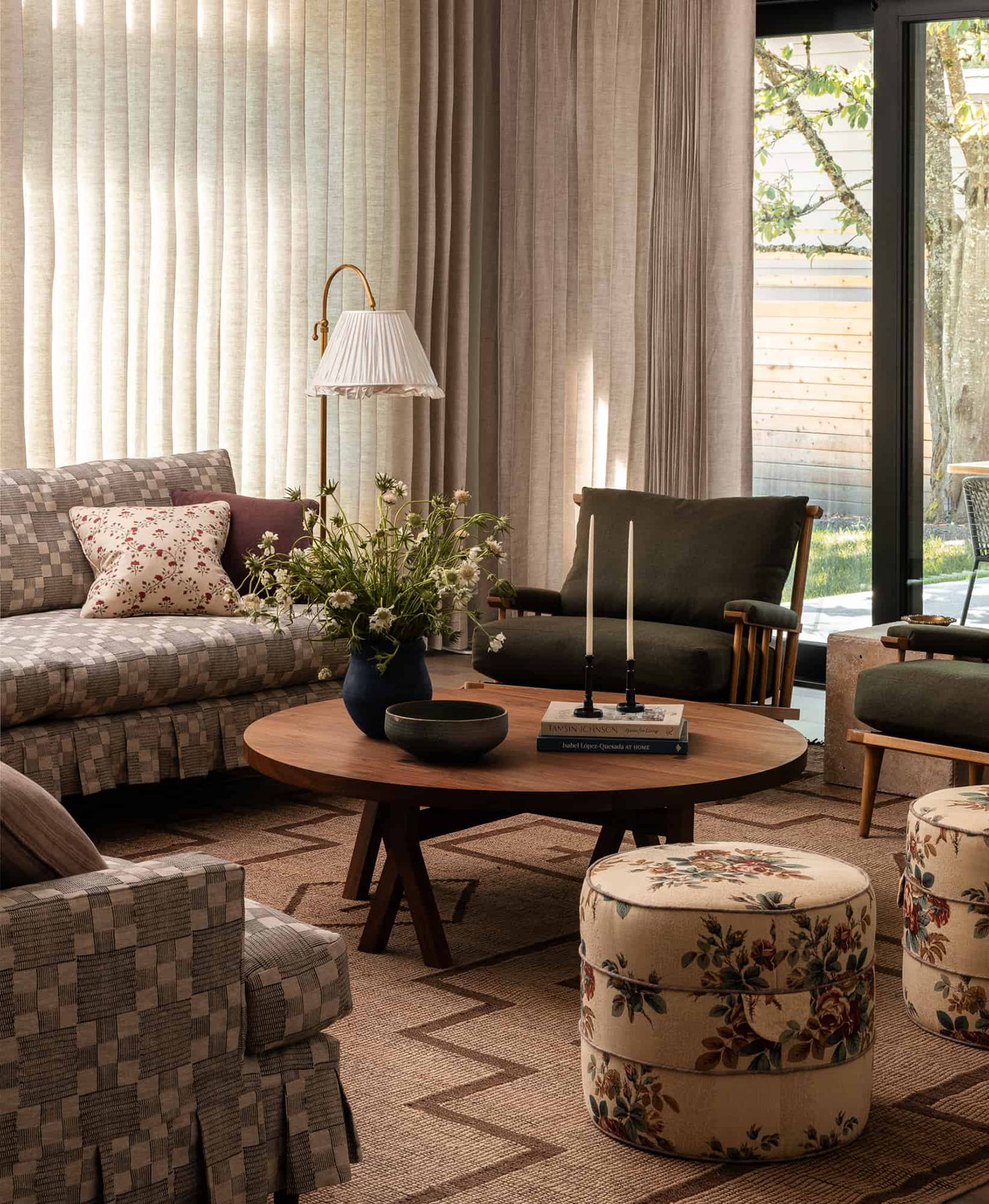
Cozy Accessories
Image courtesy of Heidi Caillier Design
11. The Timelessness of Distressed Leather
An oversized, distressed leather sofa or a pair of well-worn accent chairs are foundational “anchors” in a country living room. Unlike polished leather, a distressed finish celebrates the marks of time, offering a sense of nostalgia and rugged durability essential for a high-traffic family space.
The Material Foil: Leather acts as a vital texture stabilizer in rooms with a lot of fabric. If your space is dominated by soft linens or floral cottons, I recommend incorporating the smooth yet matte surface of leather, which adds the necessary “toughness” to prevent the design from feeling overly delicate or one-dimensional.
Analysis: Why This Room Works: In this dark and atmospheric living room by Becca Interiors, we see a striking demonstration of tonal depth. By pairing charcoal-gray walls with rich cognac-brown leather chairs, the designer creates a sophisticated, elevated space. The leather serves as a warm light-reflector against the moody walls, ensuring the room feels cozy rather than somber. This classic combination of dark pigments and organic wood furniture results in a timeless look that feels anchored in the present while honoring traditional aesthetics.

Country Living Room with Leather Chairs
Image courtesy of Becca Interiors
12. Vintage-Inspired Accent Chairs
Incorporate vintage accent chairs to inject personality and a sense of “curated history” into your country living room. Whether through intricate woodwork or nostalgic upholstery patterns, these pieces serve as the conversational heart of a room, bridging historical charm and modern comfort.
The Jewel-Tone Pivot: When working with a warm, rustic base—like brick or wood—look for accent chairs in deeply saturated tones. A velvet or heavy weave in a cool forest green or navy provides a “visual break” from the warmth of the room, adding a layer of sophistication that prevents the space from feeling too monochromatic.
Analysis: Why This Room Works: This interior by Jamie Haller provides a stunning reference for material luxury. By pairing a caramel-toned leather sofa with deep green velvet chairs, the design creates a vibrant tension against the rustic brick fireplace. The richness of the velvet serves as a contrast to the weathered wood surround, while the deep green tones pull the “outside in.” This intentional mix of smooth leather and plush fabric ensures the room feels diverse in texture and deeply rooted in a classic, European-country sensibility.

Vintage Accent Chairs
Image courtesy of Jamie Haller Design
13. The Utility of Weathered Wood
A weathered wood coffee table is the functional anchor of a country living room, offering a rugged surface that only improves with age. By selecting pieces with distressed finishes or reclaimed timber, you introduce a sense of “unpolished honesty” that makes the room feel approachable and authentically lived-in.
The Earth-to-Fiber Connection: A timber centerpiece serves as a textural bridge when placed on a natural fiber rug, such as sisal or jute. This pairing of raw wood and woven plant fibers creates a “grounding effect” in the center of the room, allowing you to be more playful or delicate with the surrounding furniture and accents.
Analysis: Why This Room Works: This neutral living room by Sims Hilditch serves as a brilliant model for rustic refinement. By placing a sturdy wood coffee table atop a sisal rug, the design creates a resilient foundation that allows for softer elements, like the plaid sofas and delicate pink accents, to shine. The presence of the raw wood provides a necessary “organic weight” that prevents the pastel tones from feeling too precious, resulting in a space that feels balanced, durable, and full of country charm.

Wood Coffee Table and Vintage Accessories
Image courtesy of Sims Hilditch Interiors
14. Layering Cozy Textiles
Layering a living room with expressive textiles is the most effective way to infuse a space with personality. Beyond mere comfort, elements like colorful throws and plaid pillows act as “visual pulses” throughout the room, breaking up solid blocks of color and providing the tactile warmth that defines the country aesthetic.
The Pattern Scale Rule: To successfully mix diverse prints, I strongly recommend varying the scale of the patterns. If you have a large-scale checkered sofa, pair it with a smaller, tighter stripe or a subtle geometric rug. This prevents the different motifs from “fighting” for the eye’s attention, allowing them to coexist as a rich, harmonious tapestry.
Analysis: Why This Room Works: This vibrant living room by Heidi Caillier serves as a compelling blueprint for confidently using pattern. By setting a bold red-and-white checkered sofa against pale blue walls, Caillier utilizes a classic “primary” contrast that feels nostalgic yet fresh. The black-and-white area rug adds a grounding, modern edge, while the striped accent chair introduces a secondary geometric rhythm. Because the color palette is strictly controlled, the mix of patterns feels cohesive and energetic rather than chaotic.

Cozy Textiles
Image courtesy of Heidi Caillier Design
15. Rustic Open Wood Shelving
Open, rustic shelving serves as a vertical gallery, allowing you to display a curated narrative of books, heirlooms, and vintage finds. Beyond its utility, weathered wood shelving introduces an architectural “texture” to the walls, creating a soulful focal point that grounds the seating area in a sense of history.
The “High-Low” Contrast: To achieve a sophisticated look on open shelves, mix your rugged wood with refined materials. Placing smooth ceramics or polished metal objects against a reclaimed timber shelf creates a textural tension that feels intentionally designed. This prevents the “rustic” elements from feeling too one-note and adds a layer of modern elegance.
Analysis: Why This Room Works: This seating area by Beth Webb serves as an exquisite benchmark for neutral sophistication. By utilizing a strict black, white, and tan color scheme, Webb allows the natural variations in the weathered wood shelving to become a primary design feature. The layered textures of the decor provide visual interest without loud colors, while the open shelving draws the eye upward, maximizing the room’s sense of volume. The result is a space that feels deeply tranquil, organized, and timelessly edited.

Country Living Room Ideas
Image courtesy of Beth Webb
16. Vintage-Inspired Lighting
Vintage-inspired lighting fixtures, such as wrought-iron chandeliers or industrial pendants, serve as the “architectural jewelry” of a country home. These pieces do more than illuminate; they provide a sculptural focal point that introduces old-world charm and a sense of historical weight to the upper third of the room.
The Patina Principle: When selecting lighting, I suggest looking for “living finishes”—materials like unlacquered brass or hand-forged iron that will age and develop a patina over time. This ensures that the fixture feels like an authentic heirloom rather than a modern reproduction, allowing it to harmonize with the weathered wood and antique furniture below.
Analysis: Why This Room Works: This interior by Heidi Caillier is a masterful primer on heritage integration. The elegant 6-light antique chandelier acts as a delicate overhead anchor, drawing the eye upward to appreciate the custom cabinetry. By pairing this formal fixture with a 20th-century Swedish flat-weave rug and floral upholstery, Caillier avoids a “themey” look. Instead, the lighting provides a sophisticated polish that balances the organic textures, resulting in a space that feels curated, intentional, and rich with European influence.
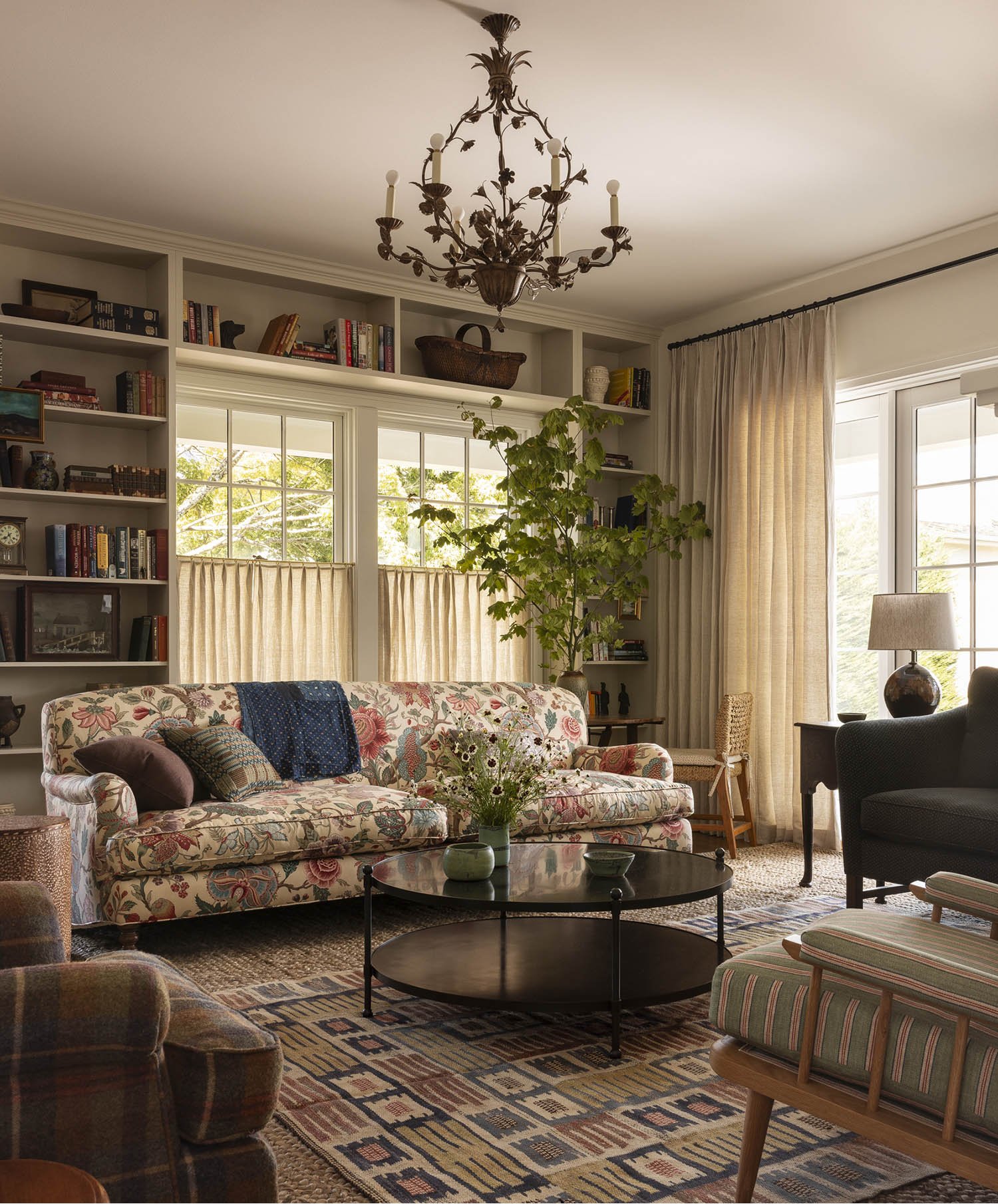
Vintage Lighting
Image courtesy of Heidi Caillier Design
17. Exposed Wood Beams
Exposed wood beams are the structural heartbeat of country architecture, offering a sense of “honesty” in design by revealing the home’s skeleton. Rather than concealing these elements, embracing their raw texture adds immediate vertical interest, grounding the room in history and craftsmanship.
The Contrast Ratio: A professional technique for timber ceilings is to play with tonal layering. By applying a slightly darker stain to the beams while keeping the ceiling boards lighter, you create a rhythmic contrast that makes the ceiling feel higher and more architecturally significant. This prevents the wood from feeling like a heavy “lid” on the room and instead makes it an expansive feature.
Analysis: Why This Room Works: In this country retreat by Marion Lichtig, the ceiling treatment serves as a sophisticated blueprint for structural balance. By contrasting darker beams against a light wood ceiling, Lichtig draws the eye upward without sacrificing the room’s luminous quality. This rugged overhead texture is perfectly balanced by the clean, white furniture and a woven wicker basket below. The result is a space that feels grounded and rustic, yet retains a crisp, “edited” clarity that is typical of high-end cottage design.

Exposed Wood Beams and Vintage Lighting
Image courtesy of Marion Lichtig Design
18. Reclaimed Wood Furniture
Integrating furniture crafted from reclaimed wood is the most direct way to introduce a sense of “provenance” into a living room. Because each piece of timber carries its own history through unique grain patterns and weather-worn marks, these items serve as one-of-a-kind sculptures that ground the room in organic authenticity.
The Tactile Counterpoint: Reclaimed wood is an essential thermal balancer in rooms with stone or tile flooring. While tile provides a cool, durable foundation, a reclaimed timber sideboard or coffee table introduces “visual heat” and a soft, matte texture, making the environment feel more hospitable and lived-in.
Analysis: Why This Room Works. This interior by Sims Hilditch provides a refined framework for mixing eras. By pairing a rugged, reclaimed wood coffee table with a regal armchair and a classic striped sofa, the designer balances “manor house” elegance with “cottage” grit. The choice of tile flooring adds a crisp, clean geometry, allowing the distressed texture of the wood to stand out as the primary feature. The result is a sophisticated, layered space that feels both high-end and entirely unpretentious.

Reclaimed Wood
Image courtesy of Sims Hilditch Design
19. Stone Accents
Incorporate stone accents—such as a floor-to-ceiling fireplace surround or a structural feature wall—to introduce an undeniable sense of organic richness. Stone acts as the “anchor” of the country living room, offering a tactile history and a raw, rugged beauty that modern materials simply cannot replicate.
The Architectural Anchor: Stone is the ultimate tonal stabilizer. Because it contains a spectrum of natural hues (grays, tans, and creams), it provides a “built-in” color palette for the rest of the room. I recommend pulling your paint colors directly from the mortar or the lighter flecks in the stone to create a space that feels unified and architecturally “honest.”
Analysis: Why This Room Works: In this living room by Beth Webb, the stone fireplace serves as a monumental anchor for the neutral palette. The design succeeds by echoing the stone’s ruggedness in the farmhouse-style furniture while contrasting its weight with dramatic, sweeping archways. The inclusion of striped throw pillows provides a necessary “linear rhythm” that cuts through the stone’s organic, irregular shapes. The result is a space that feels deeply grounded and permanent, yet remains sophisticated through its use of clean, architectural lines.

Country Living Room with Stone Fireplace
Image courtesy of Beth Webb
20. Natural Fiber Rugs as the Foundation
Natural fiber rugs, such as jute, sisal, or seagrass, are the unsung heroes of country design. They introduce a coarse, tactile coziness underfoot that immediately signals a connection to the outdoors. Beyond their durability, these rugs provide a “matte” foundation that allows the colors and patterns above them to pop without visual competition.
The Layering Canvas: A professional secret for using natural fibers is to treat them as a chromic base. Because jute and sisal exist in a range of “wheat” and “sand” tones, they harmonize perfectly with warm wood furniture. If a room feels too neutral, you can layer a smaller, high-pile wool or vintage rug on top of the fiber base to add a “plush” contrast and a secondary hit of color.
Analysis: Why This Room Works: In this interior by Heidi Caillier, the large-scale fiber rug acts as a stabilizer for eclectic layering. The rug’s organic, repetitive weave provides a calm “visual floor” that balances the height of the floor-to-ceiling window treatments and the complexity of the whimsical patterns. By grounding the space with such a raw material, Caillier ensures that the “depth and dimension” added by the furniture feel intentional rather than chaotic. The result is a room that feels breezy, rooted, and effortlessly curated.

Fibre Area Rugs
Image courtesy of Heidi Caillier Design
21. Woven Baskets
Woven baskets are essential for introducing organic richness into the smaller corners of a room. Beyond their utility as storage solutions, their irregular, hand-crafted shapes break up the rigid lines of cabinetry and flooring, offering a “human touch” that is vital to the country aesthetic.
The Softening Effect: Baskets act as a textural bridge when placed against “cool” materials like stone or plaster. By grouping varied sizes together, you create a cluster of “visual warmth” that softens the transition between the floor and the walls. I recommend using them to store “loose” items like firewood or blankets, which adds a secondary layer of lived-in comfort to the display.
Analysis: Why This Room Works: In this quaint living room, the wicker baskets serve as a transition in materials. They pair seamlessly with the stone accent wall by echoing its natural, rugged quality while remaining lightweight and tactile. The interplay between the baskets and the pale pink hues creates a “sophisticated cottage” vibe—the earthiness of the weave prevents the floral fabrics and delicate colors from feeling too “sugary.” The result is a space that feels beautifully curated, highly functional, and deeply rooted in traditional country charm.

Country Living Room with Natural Elements and Vintage Fabrics
Image courtesy of Victoria Barker Design
22. Soft Overhead Lighting
Opting for soft overhead lighting—such as semi-flush mounts or discreet recessed fixtures—is essential for creating a radiant undercurrent that feels uniform and inviting. By prioritizing diffused sources over sharp, direct beams, you avoid harsh shadows and ensure that the room’s textures are bathed in a gentle, “candlelit” quality that lingers long after sundown.
The Leveling Strategy: In a room rich with detail, overhead lighting acts as a tonal equalizer. Rather than drawing the eye to a single bright point, soft ceiling lights should “lift” the overall brightness of the space, allowing the smaller lamps and wall sconces to provide the focused “mood” lighting. This multi-layered approach ensures the room remains functional for reading while maintaining its snug, retreat-like essence.
Analysis: Why This Room Works: This interior by Heidi Caillier stands as a prime example of pattern-lighting harmony. Because the Woodland Chorus wallpaper is so visually narrative, the eclectic assortment of light fixtures provides a soft, non-competing glow that lets the birch and bird motifs breathe. The blue-and-white striped rug provides a clean, geometric counterpoint to the organic walls, while the diffused lighting ensures that the diverse colors in the “medley” feel cohesive. The result is a space that feels intricately layered yet remarkably soothing.
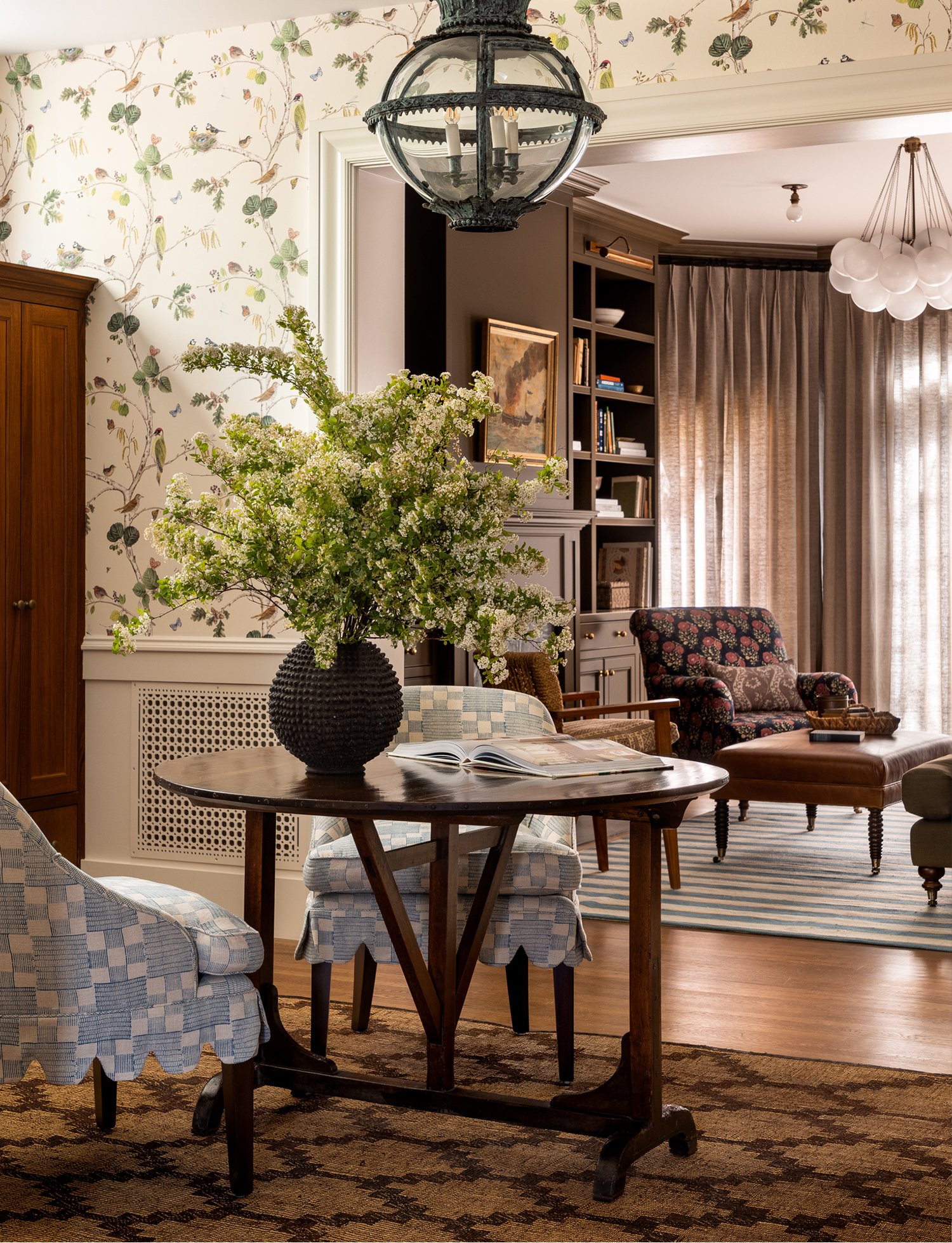
Overhead Lighting
Image courtesy of Heidi Caillier Design
23. Table and Floor Lamps
Layering table and floor lamps is the most effective way to introduce tactile coziness to your living room’s seating areas. Unlike overhead lights, portable lamps create “islands of light” that draw people together, providing a functional warmth that makes large rooms feel intimate and small rooms feel intentionally curated.
The Chromic Pop Strategy: Beyond their glow, lamps act as tonal anchors for your color story. A lamp base or shade is the perfect place to experiment with bold hues that might feel overwhelming on a wall. By using warm-toned bulbs (2700K or lower), you ensure that even the most vibrant colors feel “honeyed” and integrated into the room’s atmosphere rather than feeling cold or clinical.
Analysis: Why This Room Works: This design by SCW Interiors is a vibrant study in daring contrasts. By pairing two oversized table lamps featuring bright yellow shades with lush green curtains, the designer establishes a high-energy, maximalist take on country style. The yellow shades act as “sunlight simulators,” making the blue, orange, and pink accents throughout the room feel radiant even on a cloudy day. The result is a spirited, joyful space that uses lighting as a primary decorative tool rather than just a utility.

Table Lamps in a Country Living Room
Image courtesy of SCW Interiors
24. Candlelight
Incorporating candlelight is the ultimate way to introduce radiant undercurrents into a country living room. Unlike the static output of a bulb, the soft, rhythmic flicker of a flame adds a layer of “living texture” that feels both romantic and historic, transforming the room’s mood the moment it is lit.
The Multi-Level Glow: To maximize the impact of candlelight, utilize vertical layering. By placing candles at varying heights—on a low coffee table, a mid-level sideboard, and a high fireplace mantel—you create a “curtain of light” that draws the eye across the entire room. Choosing candle holders in varied materials, such as antiqued brass or weathered stoneware, ensures that the display feels like an organic collection rather than a matched set.
Analysis: Why This Room Works: In this traditional country cottage, Susie Watson provides a compelling template for atmospheric depth. By scattering candles across the coffee table and the mantel, the design ensures the light source is distributed rather than centralized. This echoes the room’s traditional roots, where fire was once the primary source of warmth and light. The flickering light softens the sharp edges of the furniture and makes the “traditional” elements feel warm and approachable rather than formal.
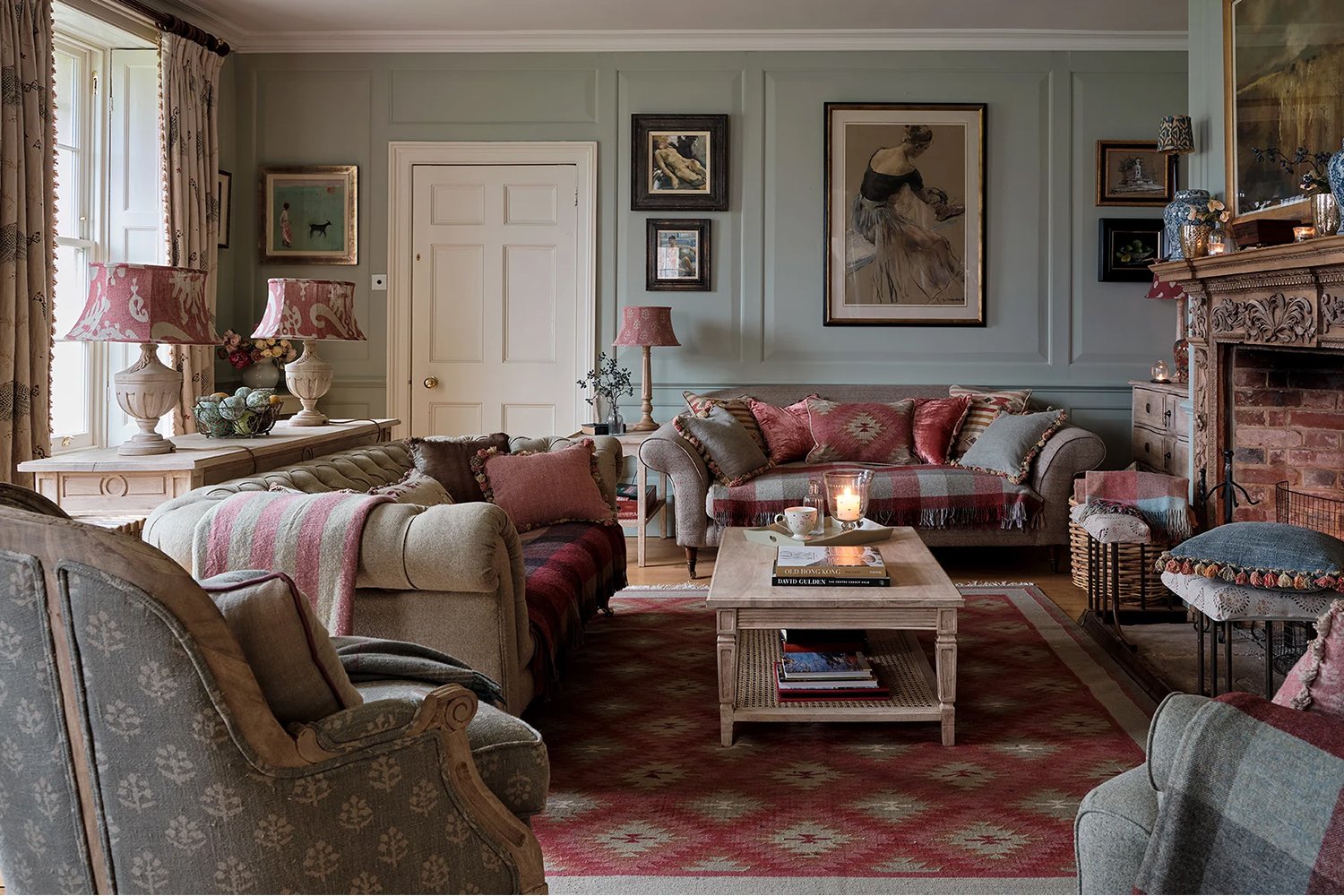
Candle Light
Image courtesy of Susie Watson Design
25. Accent Lighting
Accent lighting—such as picture lights over artwork or directional spots in bookshelves—is the key to introducing depth into your living room. By specifically illuminating your favorite objects, you create “visual pauses” that draw the eye toward the room’s most personal details, transforming a flat wall into a gallery of textures.
The Hierarchical Layer: To achieve a high-end look, think of your lighting as a spatial pyramid. Your chandelier provides the base “wash,” while your floor and table lamps provide the mid-level warmth. Wall sconces and picture lights act as the “peak,” providing the focused highlights that define the room’s architectural shape. This layering prevents the “flat” look of a single light source and ensures the space feels dynamic and multidimensional.
Analysis: Why This Room Works: This elegant living room by Caroline Harrowby serves as a sophisticated example of light layering. By incorporating a chandelier, floor lamps, and wall sconces, Harrowby ensures that no corner is left in shadow, yet each light source has a specific job. The wall sconces, in particular, act as a refined frame for the room’s architecture, adding a polished, “manor-house” feel that balances the softer, rustic elements. The result is a space that feels grand yet intimate, with a light quality that can be tuned to suit any time of day.

Country Home Designed by Caroline Harrowby
Image courtesy of House and Garden
26. Pattern Play
Mixing patterns is a foundational pillar of country interiors, injecting a room with tactile richness and a rhythmic energy. By layering diverse motifs like gingham, toile, and botanical prints, you move away from a “staged” look and toward a space that feels deeply personal and storied.
The Tonal Anchor Rule: To successfully mix high-contrast patterns like houndstooth and floral chintz, you must maintain a chromatic thread. Choose two or three core colors—such as sage green and dusty gold—and ensure every pattern in the room features at least one of these shades. This shared DNA allows a sharp herringbone to sit comfortably next to a soft, romantic floral, creating a “visual rhyme” that ties the room together despite the varied scales.
Analysis: Why This Room Works. This seating area featuring ILIV Textiles serves as a compelling blueprint for pattern coordination. By sticking to a nature-inspired palette of blue, green, and golden tones, the design layers curtains, cushions, and upholstery in distinct prints without overwhelming the eye. The white base in the fabrics acts as a “visual breather,” providing a clean backdrop that makes the intricate bird and leaf motifs pop. The result is a spirited, garden-like environment that feels energetic yet remarkably harmonious.
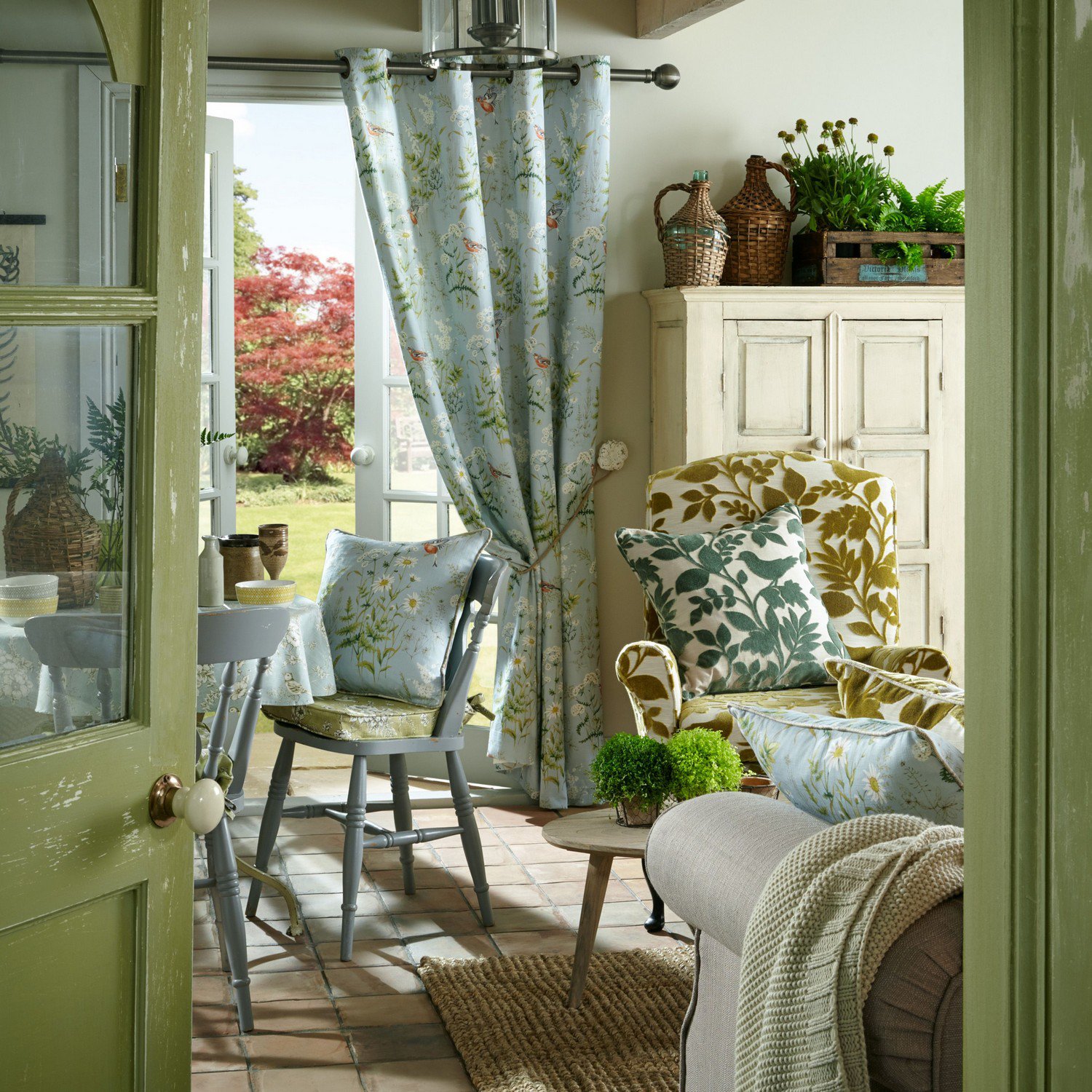
Pattern Play
Image courtesy of ILIV Interior Textiles
27. Antique Coffee Tables
Choosing an antique coffee table—whether it features delicate carvings or a rugged, distressed patina—is a powerful way to introduce tonal complexity and historical soul to the room. Unlike contemporary pieces, an antique carries a “built-in” narrative, serving as a sophisticated centerpiece that grounds the more modern elements of a country interior.
The Material Counterpoint: To keep an antique table from feeling too formal, play with textural opposites. If your table is a dark, hand-carved mahogany, pair it with a light, “unrefined” sisal rug. Conversely, if you opt for a whitewashed farmhouse-style table, introduce a “regal” touch nearby—such as a chair upholstered in rich velvet or a cushion in a detailed floral pattern. This juxtaposition ensures the room feels like a curated collection rather than a museum period-piece.
Analysis: Why This Room Works. This design approach serves to accomplish stylistic layering. By placing a weathered, antique table atop a neutral foundation, the designer creates a visual “weight” that anchors the seating area. The interplay between the table’s intricate details and the softness of nearby floral prints establishes a “high-low” balance that is quintessential to modern country style. The result is a space that feels elegant and elevated, yet entirely comfortable for everyday use.

Vintage Furniture in a Country-Style Living Room
Image courtesy of House and Garden UK
28. Vintage Artwork
Hanging vintage artwork is a definitive way to introduce pigmented richness and a sense of “lived-in” history. Whether you choose a sprawling oil landscape or delicate botanical illustrations, these pieces act as windows into another era, providing an intellectual and emotional focal point that modern prints often lack.
The Gallery Strategy: To prevent a collection of art from feeling cluttered, use thematic threading. Even if the frames are mismatched—ranging from gilded Victorian styles to simple raw wood—ensure the subjects share a similar “soul,” such as a series of 19th-century still-lifes or pastoral scenes. This creates a cohesive narrative across the wall, allowing the eye to travel smoothly from one piece to the next without feeling overwhelmed by the variety.
Analysis: Why This Room Works. This vibrant space is a striking example of chromatic confidence. By placing vintage artwork against pale orange walls and a red velvet coffee table, the designer uses the art to “absorb” the intensity of the colors. The aged pigments in the vintage paintings provide a saturated character that mirrors the warmth of the walls, while the eclectic decor and bookcase add layers of “visual quiet” to balance the bold furniture. The result is a spirited, maximalist environment that feels curated, worldly, and deeply comforting.
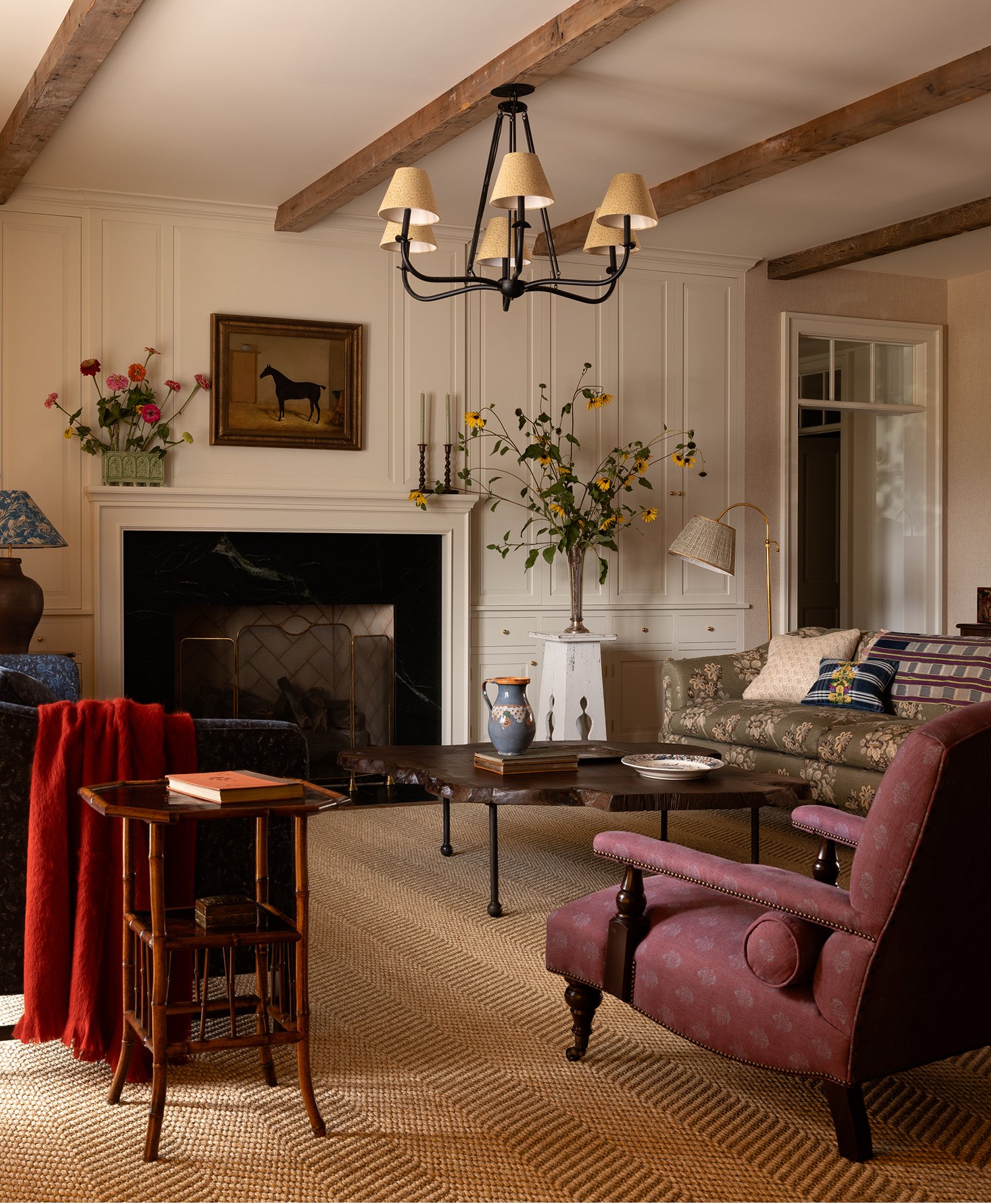
Vintage Artwork
Image courtesy of Heidi Caillier Design
29. Antique Accessories
Displaying antique accessories—such as weathered clocks, heirloom trays, or gilded picture frames—is an essential way to introduce tonal maturity into a living space. These smaller objects act as “tactile anchors” that invite closer inspection, moving the room beyond mere decoration and into the realm of personal storytelling.
The Rule of Three and Texture: When styling built-in shelves or mantels, utilize asymmetrical grouping. Instead of perfectly symmetrical rows, arrange objects in odd numbers and varying heights. Pair a smooth, glazed antique vase with the rough, matte edges of old books to create “textural tension.” This prevents a shelf from looking like a retail display and instead gives it the “curated patina” that defines high-end country homes.
Analysis: Why This Room Works The symmetrical layout of this room, with its fireplace and twin arched built-ins, provides a superb framework for balanced ornamentation. The designer uses the built-in shelving as a neutral stage, allowing the varied silhouettes of sculptures, trays, and antique vases to stand out. By incorporating a vintage chandelier, the space gains a “vertical soul” that echoes the history of the objects on the shelves. The result is a sophisticated, serene environment that feels anchored in tradition yet remains crisp and uncluttered.

Country Living Room Ideas
Image courtesy of Southern Living
30. Chunky Knit Blankets
Draping a chunky knit blanket over a sofa or armchair is the most immediate way to introduce tactile density to your seating arrangement. The oversized “loops” of a heavy knit create a high-relief texture that catches the light differently than flat fabrics, offering a sense of physical and visual weight that grounds the furniture.
The Structural Softener: A chunky knit acts as a visual equalizer for geometric patterns. If your furniture features sharp lines or repetitive prints like checks and stripes, the irregular, soft curves of a knit throw break up the “rigidity” of the design. Choosing a solid-colored knit—rather than another pattern—allows the eye a place to rest, ensuring the room feels cozy rather than visually frantic.
Analysis: Why This Room Works. This interior by Heidi Caillier is a great example of primary-color balance. By introducing a solid dark blue chunky throw onto a red-and-white checkered sofa, the designer uses the blanket to “quiet” the high-energy pattern. The weight of the knit provides a sophisticated counterpoint to the bright yellow accents elsewhere in the room. The result is a space that feels playful and bold, yet maintains the “cradled” comfort essential to a country home.

Knit Blankets
Image courtesy of Heidi Caillier Design
31. Plaid Pillows & Chairs
Incorporating plaid pillows or a statement accent chair is a definitive way to introduce structural charm and a sense of heritage. The repetitive, geometric nature of plaid acts as a “visual anchor,” providing a disciplined contrast to the more fluid shapes of floral prints or the irregular textures of natural stone and wood.
The Scale Strategy: To master the art of mixing plaids, focus on proportional variance. Pair a large-scale, wide-grid “windowpane” plaid on a chair with smaller, tighter “tartan” or “gingham” pillows. This difference in scale prevents the patterns from competing for attention, instead creating a “layered rhythm” that feels intentional and sophisticated rather than repetitive.
Analysis: Why This Room Works. This space by Heidi Caillier is a great example of material storytelling. By placing a plaid accent chair against the rugged, “earth-toned” backdrop of brick flooring and soft sage doors, the designer creates a bridge between the rustic and the refined. The crisp lines of the plaid provide a necessary “sharpening” effect against the soft, diffused texture of the linen window treatments. The result is a room that feels historically rooted yet remarkably fresh, with a balanced energy that is both cozy and composed.

Country Cottage Living Room
Image courtesy of Becca Interiors
32. Country-Style Sunroom
A country-style sunroom intentionally blurs the boundary between the garden and the home. By utilizing “outdoor” materials like wicker and rattan alongside indoor comforts, you create a high-energy retreat that feels both airy and structurally grounded.
The Saturation Strategy: In a room flooded with natural light, colors can often appear “washed out.” To counter this, use a high-contrast base, such as a crisp blue-and-white rug, which provides a “cool” foundation that allows warmer elements like wicker furniture and multicolored pillows to stand out. This ensures the room retains its visual “punch” even in the height of the midday sun.
Analysis: Why This Room Works. This sunroom by Ariel Okin is a vibrant study in textural density. By layering wicker plant stands and furniture, Okin introduces an organic, “woven” rhythm that echoes the garden outside. The “eclectic warmth” is achieved through a lively arrangement of throw pillows that break up the furniture’s larger surfaces. The blue-and-white rug acts as a “visual coolant,” balancing the “heat” of the natural textures and the bright sunlight. The result is a space that feels cheerful, curated, and deeply connected to the landscape.

Warm & Inviting Sunroom
Image courtesy of Ariel Okin
33. Natural Elements
Integrating natural elements—such as dried hydrangeas, birch branches, or pinecones—is the final step in achieving unrefined elegance. These organic touches move beyond traditional decor by introducing “found” textures that ground a room in the current season, providing a sense of time and place that manufactured accessories cannot replicate.
The Earthy Tonal Bridge: To make natural elements feel intentional rather than scattered. If you have warm wood flooring or furniture, a stack of natural firewood, or a vase of dried branches creates a “visual continuum” of that material. This repetition of wood in various states—from polished floorboards to raw timber—adds layers of “organic depth” that make the space feel deeply rooted and authentically country.
Analysis: Why This Room Works. This living room by Heidi Caillier is a compelling template for tonal grounding. The “weight” of the chocolate-brown built-in cabinets and olive-green velvet sofas is beautifully balanced by the light, ethereal quality of the sheer linen curtains. By placing a large floral arrangement on the coffee table and an antique brass firewood holder nearby, Caillier ensures that the room’s “luxurious” materials (velvet and brass) are constantly in conversation with the “humble” materials of the earth. The result is a space that feels incredibly rich and moody, yet remains approachable and alive.

Modern Country Living Room
Image courtesy of Heidi Caillier
Country-Style Living Room Design Ideas Conclusion
Creating a country living room that exudes effortless coziness is possible with the right ideas and inspiration. You can transform your living room into a rustic retreat by embracing warm and earthy color palettes, incorporating natural materials and textures, and adding vintage and antique pieces.
Whether you are looking for traditional or modern country living room ideas for your rural home, be sure to create a rustic feel with a variety of different furniture pieces that blend seamlessly together.
Remember to pay attention to the key elements of a country living room, such as warm colors, farmhouse decor, white shiplap walls, stone fireplaces, wood accents, soft furnishings, and vintage picture frames.
RELATED POSTS: Living Room Ideas
View Recent Posts
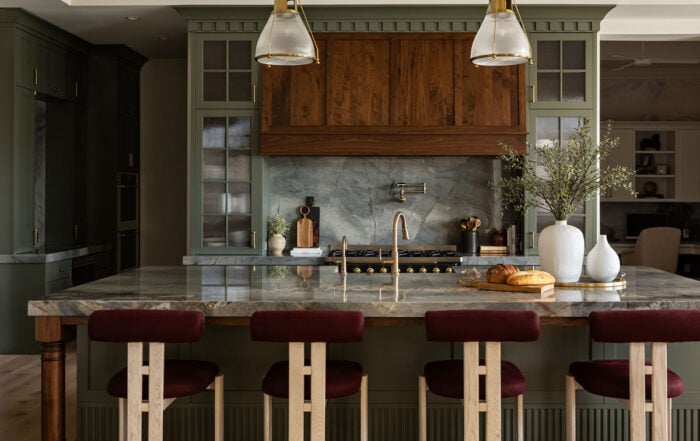
Stunning Range Hood Design Ideas
Range hood design ideas covering stone, wood, plaster, copper, and stainless steel — with designer tips on proportion, material selection, and installation.
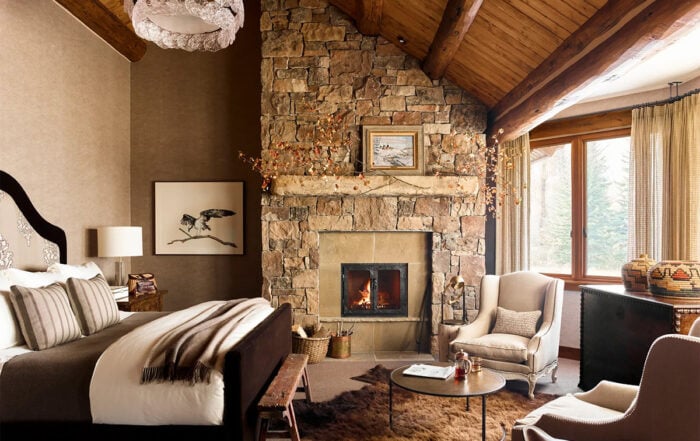
Rustic Bedroom Ideas
Rustic bedroom ideas covering natural materials, layered textiles, color palettes, and professional design strategies for log cabin, modern rustic, Scandinavian, and luxury retreat styles.
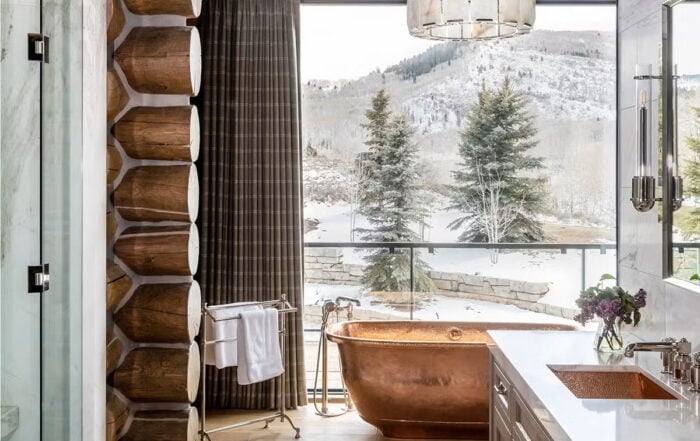
Rustic Bathroom Ideas
Rustic bathroom ideas — natural materials, vintage fixtures, earthy palettes, and designer tips for log homes, cabins, and mountain retreats.
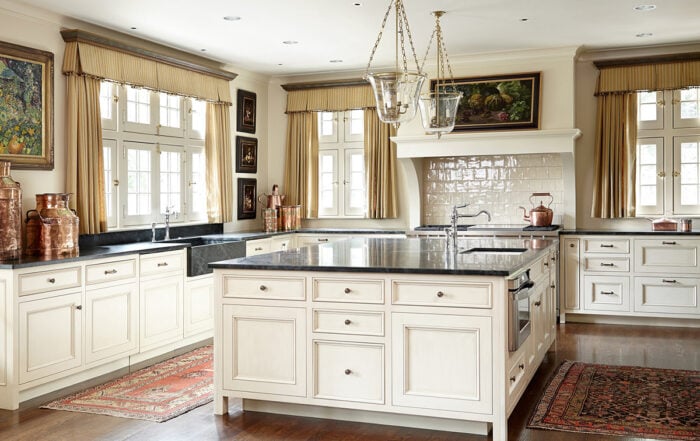
Cream Kitchen Cabinet Ideas
Cream kitchen cabinet ideas curated by interior designer Tracy Svendsen. Warmer than white and more versatile than beige, cream cabinets work beautifully across farmhouse, rustic, traditional, and modern kitchens.
Log Home Decorating Ideas
Log home decorating ideas covering color palettes, furniture selection, lighting, stone fireplaces, and modern approaches to handcrafted log home interiors.
Country Kitchen Ideas
Discover 43 country kitchen ideas featuring warm earth tones, natural materials, vintage accents, and expert guidance on cabinets, colors, and styling for an authentic country kitchen design.

