
Coastal Decorating Ideas for Your Beach Home
By Interior Designer TRACY SVENDSEN | Published on April 20, 2016 | Updated on July 15, 2026 |
Coastal decorating has evolved far beyond traditional nautical themes into a more refined, layered aesthetic rooted in natural materials, tonal color palettes, and relaxed architectural styling. Today’s modern coastal interiors focus on warmth, texture, and light — combining soft whites, sandy neutrals, muted blues, and organic finishes to create spaces that feel calm, sophisticated, and connected to nature.
As an interior designer living on the West Coast of British Columbia, I approach coastal spaces by building a tonal foundation of natural textures and architectural elements first, then layering in details that reflect the surrounding landscape — less about beach house themes and more about genuine calm and material warmth. Feature image courtesy of Elizabeth Krueger.
Key Takeaways: Coastal Decorating Ideas
- Modern coastal design connects to the sea through palette, natural materials, and light rather than through themed decoration — no shells, anchors, or lighthouse prints required.
- A narrow tonal palette of warm whites, sandy neutrals, soft blues, and gentle grays applied consistently across every room creates the cohesion that defines genuinely coastal interiors.
- Natural materials do the most work — linen, rattan, seagrass, light oak, stone, and woven textures layered together create the organic depth that paint and pattern alone never achieve.
- Scale matters more than most people realize — oversized furniture, floor-to-ceiling curtains, generous rugs, and large-scale artwork all suit the open, light-filled quality of coastal spaces far better than smaller, more tentative choices.
- The view outside is always the room’s most powerful design element — keep interior furnishings restrained and let the landscape do what no decoration can replicate.
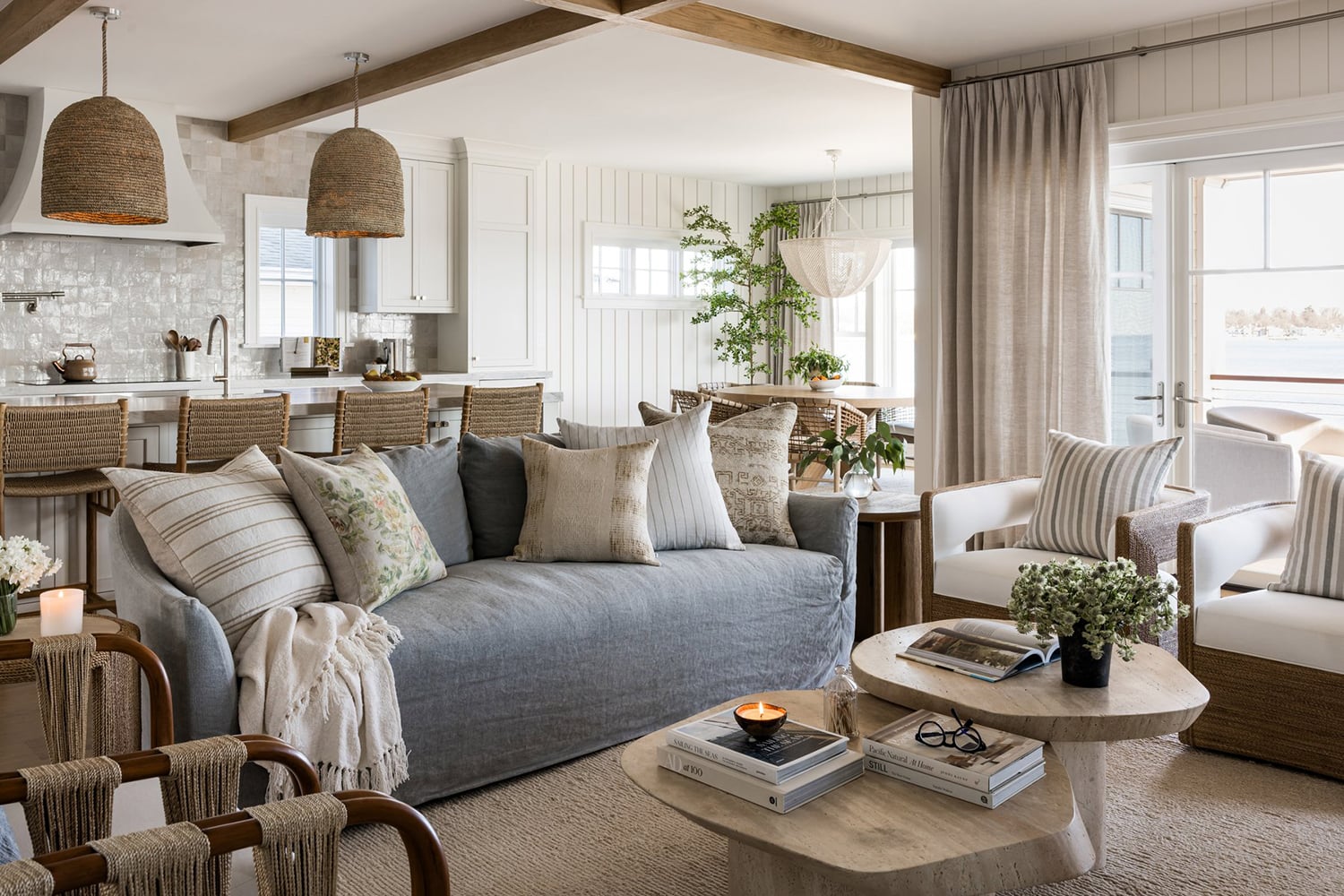
Coastal Living Room with Shiplap Walls and Light Wood Flooring
Image courtesy of Pure Salt Interiors
Designer Mood Board: Modern Coastal Design
This mood board captures the foundational palette and material direction used throughout modern coastal interiors, inspired by the layered aesthetic seen in projects by Pure Salt Interiors. The palette blends warm whites, sandy neutrals, soft blue accents, gentle grays, and natural wood tones to create a calm, balanced foundation.
Imagery across the board highlights the defining materials of the style — linen textiles, sisal rugs, woven lighting, rattan accents, shiplap detailing, and light oak flooring. A mix of woven fibers, organic finishes, and soft tonal fabrics introduces depth while keeping the overall look light, relaxed, and refined. By emphasizing material variation and subtle tonal contrast rather than bold color shifts, modern coastal interiors feel versatile and enduring — allowing each space to connect naturally to its surroundings while maintaining a cohesive design story throughout the home.
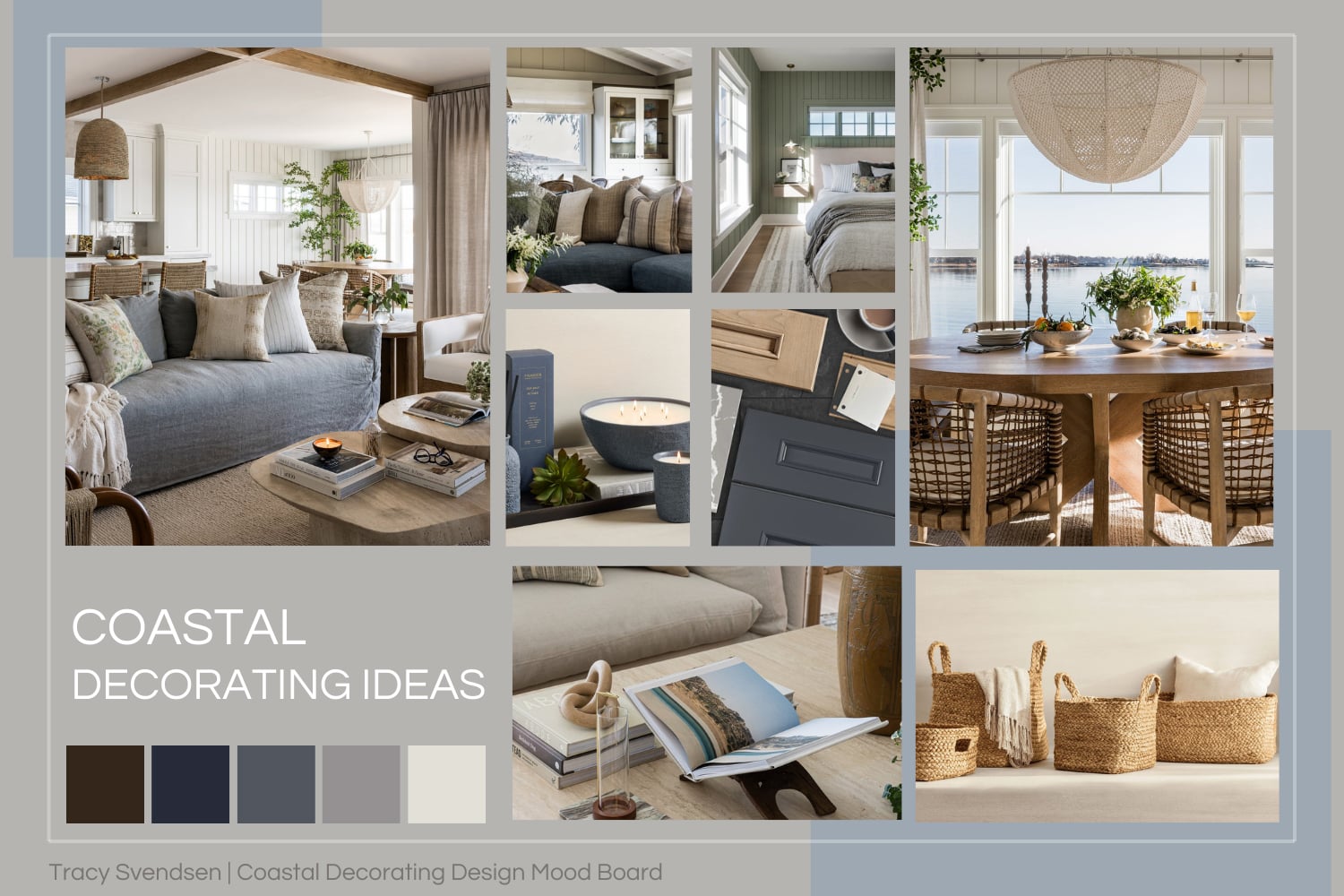
A modern coastal mood board by interior designer Tracy Svendsen, with layered textures, rattan lighting, shiplap walls and light oak flooring.
Modern Coastal Style in an Open-Plan Living Space
I wanted to share this image as one of the strongest examples of modern coastal design done well that I’ve come across — it illustrates everything the style does at its best before we get into the individual ideas. Open-plan living is where modern coastal design performs best — large expanses of glazing connecting interior to exterior do more to establish the coastal feeling than any decorative choice.
Black-framed windows and doors frame a view of a swimming pool and outdoor entertaining area — bringing the water reference inside without a single nautical motif. Warm wood ceiling beams, light oak flooring, and layered area rugs in cream and soft blue create the tonal foundation. Two white linen sofas with navy blue velvet pillows anchor the seating zone alongside navy accent chairs, while a light blue velvet coffee table with a light oak top bridges the upholstered softness with the natural wood running throughout. Every element connects to the same tonal palette, with nothing feeling out of place.

Modern Coastal Living Room With a Blue, Tan, and White Color Palette
Image courtesy of Pineapple House Interiors
The Natural Organic Influence on Coastal Design in 2026
The strongest direction in coastal decorating for 2026 is toward a more natural, organic interpretation — less nautical reference, more genuine connection to the materials and textures of the natural world. Handcrafted pieces, raw fibers, living botanicals, and unfinished surfaces are replacing the polished, overtly beach-themed aesthetic that previously defined the style.
This coastal dining room captures that direction precisely. White vertical shiplap walls, floor-to-ceiling linen curtains, and light oak flooring create a quiet, organic backdrop, while the Jeffrey Alan Marks Collection chairs — hardwood frames with a cerused off-white finish and hand-twisted natural jute rope woven through the back and sides — bring the kind of handcrafted quality that mass-produced furniture simply can’t replicate. A coco-beaded inverted-dome chandelier above the round light wood table adds organic texture at ceiling level, and a large potted tree with leafy branches on the table reinforces the botanical connection. The direct ocean view beyond the window makes the whole composition feel genuinely coastal — not because of any decorative motif, but because the landscape itself is part of the room.
Here are a few design tips to create a coastal-inspired home:
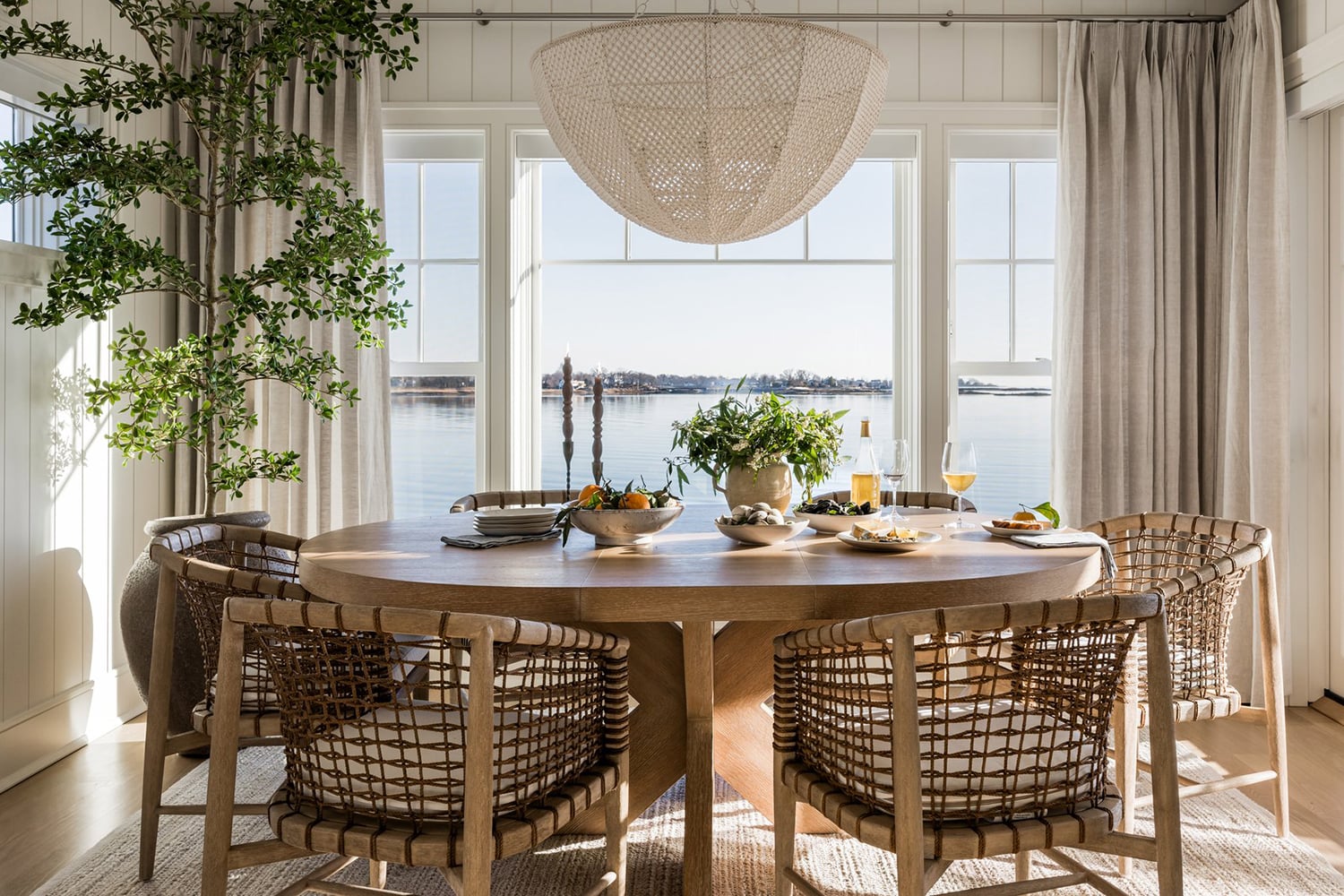
Coastal Dining Room with Shiplap Walls and Light Wood Flooring
Image courtesy of Pure Salt Interiors
1. Building a Coastal Color Palette
A soft, tonal color palette is the foundation of every successful coastal interior — the colors of the ocean, shoreline, and sun-washed sky translated into a narrow, cohesive range that holds the whole room together.
This coastal bedroom shows the approach at its most refined. Crisp white walls and a high ceiling reflect natural light from expansive ocean-facing windows, while light oak flooring introduces warmth at ground level. Paneled wall sections finished in subtle blue-gray seagrass wallpaper add gentle texture and reinforce the coastal influence without overpowering the space. Two twin beds in a gray-washed wood finish anchor the room, with paneled upholstered headboards echoing the soft neutrals throughout the bedding. Layers of pale blues, soft grays, and sandy browns create visual continuity, while textured white stools and a multi-toned area rug tie the palette together. Sheer floor-to-ceiling curtains soften the black window frames, and brass accents introduce a refined contemporary touch.
Designer Tip: I always start a coastal color palette by working within a narrow tonal range rather than introducing too many colors too quickly. Mixing soft blues, warm neutrals, and gentle grays — then repeating those exact tones across textiles, wall treatments, and natural materials — creates a balanced, cohesive result that makes a coastal interior feel genuinely calm rather than simply decorated. The restraint is the point: a palette of three tones done consistently throughout a room will always outperform six colors used tentatively.
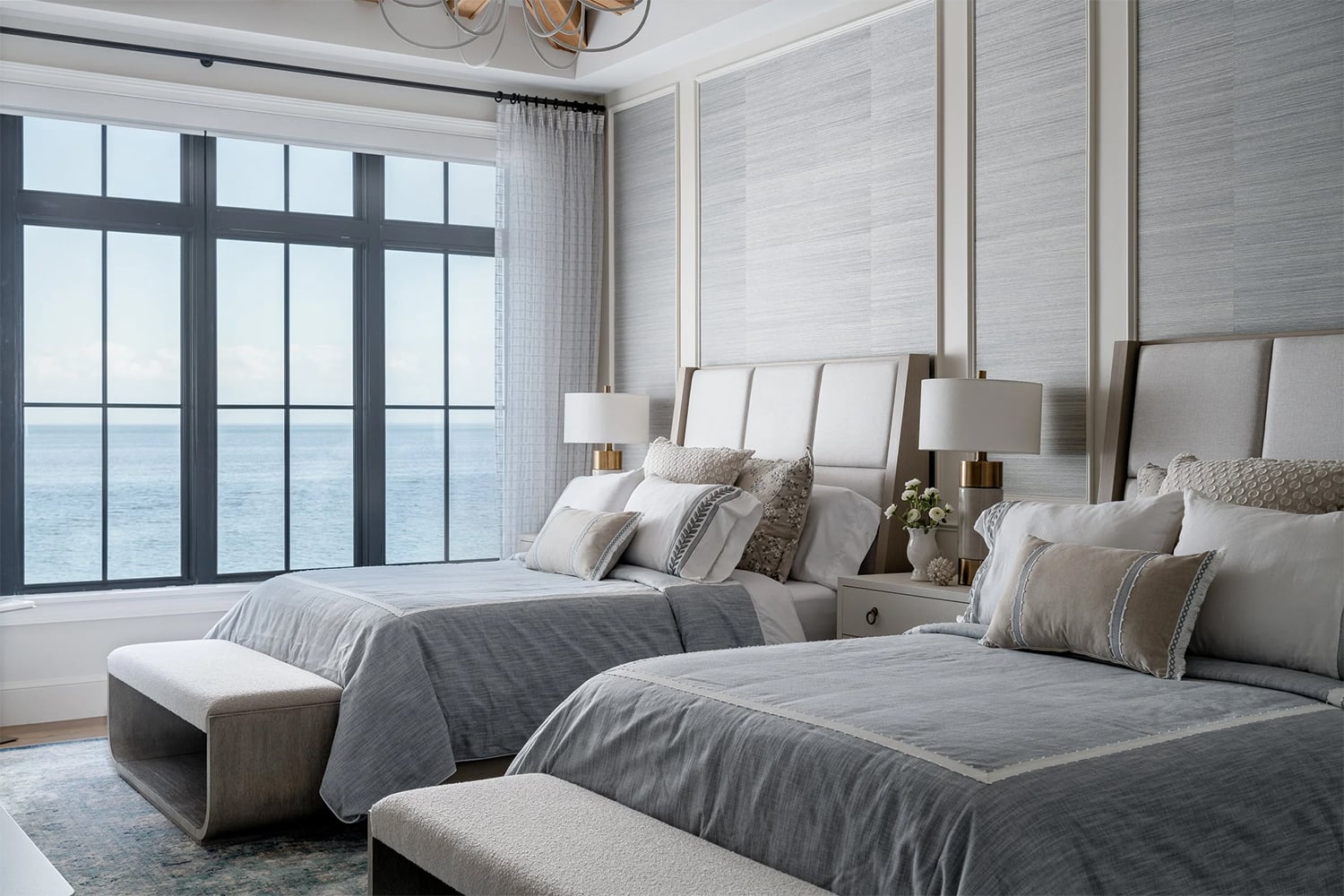
Coastal Bedroom with Ocean Views and a Gray, Brown, Blue, and White Color Palette
Image courtesy of Emily Moss Design
2. Include Organic Textures
This coastal kitchen and dining space demonstrates how organic materials add warmth and visual depth to a light, neutral palette. White cabinetry and light oak flooring create a clean architectural base, while a pale blue glossy backsplash introduces subtle coastal color. Layered natural elements—including woven baskets, linen textiles, and sculptural branches—bring softness and texture without adding visual heaviness.
A large woven pendant light anchors the dining area and reinforces the natural material story. The light wood dining table pairs with chairs featuring upholstered white seats and caramel-toned leather backs, blending refined finishes with organic shapes. Woven vases and handcrafted accents complete the layered look, creating a relaxed yet elevated coastal aesthetic.
Designer Tip: I always recommend combining multiple natural fibers — rattan, jute, seagrass, linen, and wood — rather than relying on bold color contrast to create interest. Repeating organic materials across lighting, furniture, and accessories is what gives a coastal interior its cohesive, intentionally layered quality. The tonal variation between a jute rug, a rattan pendant, and a linen sofa is subtle but cumulative — each layer adds depth without disrupting the calm palette.
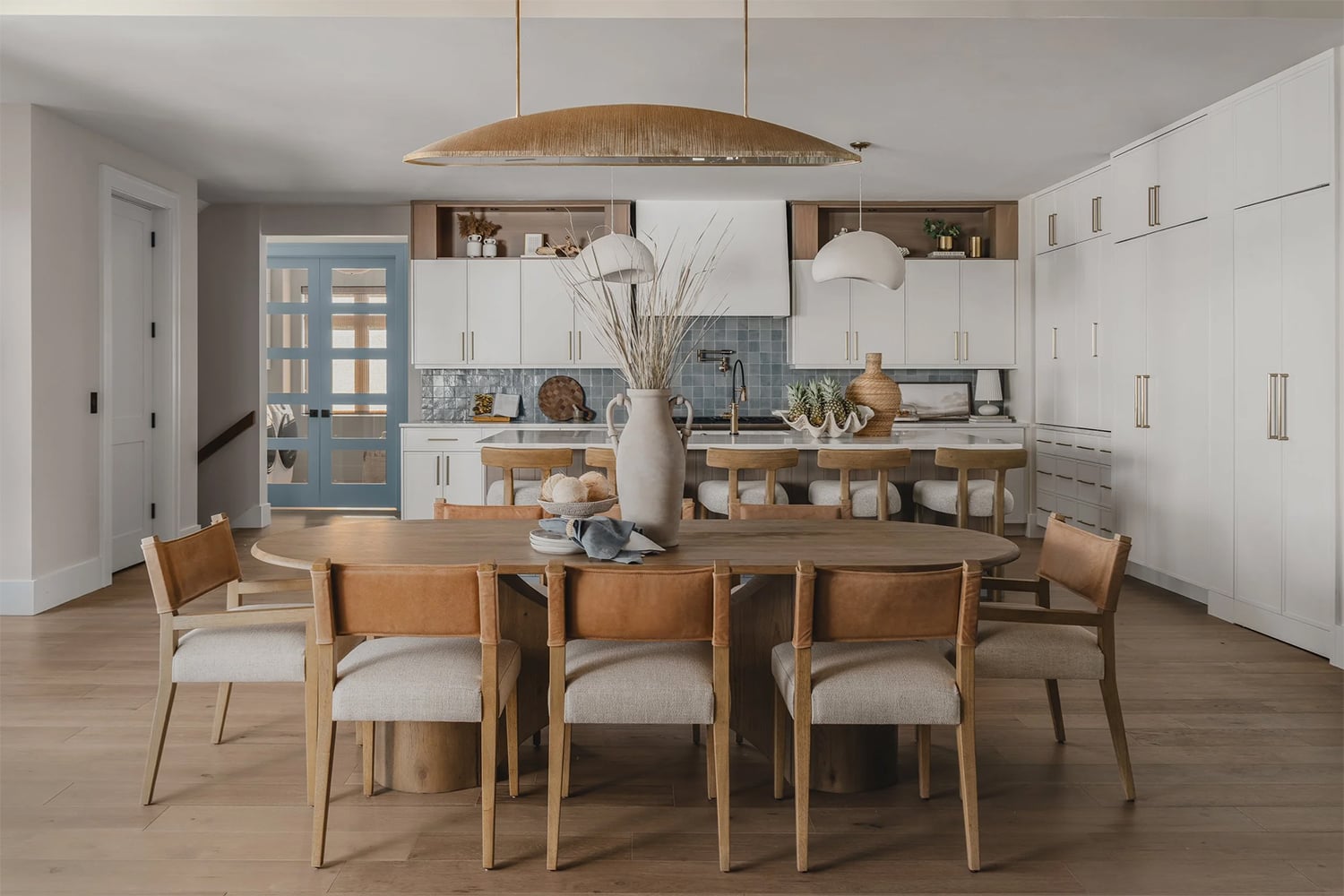
Modern Coastal Kitchen with Organic Textures
Image courtesy of Emily Moss Design
3. Choose Furniture that is Oversized, Casual & Comfortable
Scale is one of the most important and most underestimated decisions in a coastal living room. Large, relaxed furniture suits the open, light-filled quality of coastal spaces in a way that smaller, more formal pieces never quite achieve — the room naturally absorbs generous proportions, and the result feels genuinely comfortable rather than carefully arranged.
This sun-filled coastal living room clearly demonstrates the principle. Two white linen slipcovered sofas face each other across a wide-striped blue-and-white denim rug, layered with coastal-print pillows and flanked by floral and striped accent chairs that add subtle pattern variation without disrupting the palette. Shiplap walls, white-painted surfaces, and a brick fireplace provide texture and architectural interest at the perimeter, keeping the focus on the seating arrangement rather than the walls. Light oak floors and ceiling reinforce the warm, natural material foundation throughout.
Designer Tip: In my experience designing coastal interiors, clients consistently underestimate how much furniture a light-filled coastal room can hold. Go larger than feels comfortable on paper — a generous sofa that seems oversized in a showroom almost always looks right in a room with high ceilings and expansive windows. Layer pattern through pillows, rugs, and accent chairs rather than through the main upholstery pieces, which should stay neutral enough to anchor everything around them.

A Serene & Elegant Coastal Living Room
Image courtesy of Muskoka Living
4. Layering Textures and Pattern for Warmth
Layering is what separates a coastal room that feels genuinely warm from one that simply looks decorated. This modern coastal living room demonstrates the technique clearly — two white sofas dressed with striped, floral, and solid pillows in blues, white, and tan, alongside navy and soft blue accent chairs, a natural sisal rug, and floor-to-ceiling sheers that keep the space light. Dark wood floors, wood tables, and a slate gray fireplace provide the grounding elements that prevent the pale palette from feeling weightless. A floral arrangement on the coffee table adds the organic finishing touch.
Designer Tip: I recommend mixing at least three different textures within the same tonal palette — a natural fiber rug, soft upholstery, and a patterned pillow cover will do more for a coastal room than any single statement piece. The variety is what creates warmth; the consistent palette is what keeps it cohesive.

Beach Home with Textured Layers
Image courtesy of Bria Hammel Design
5. Wood as the Warm Foundation
Natural wood is the material that keeps a coastal interior from feeling cold — it bridges the blue-and-white palette with genuine organic warmth that no painted or upholstered surface can replicate.
This coastal living room shows woodworking at multiple levels simultaneously. Light warm wood flooring and a woven coffee table with a large wooden tray anchor the space, while a vintage wood end table adds character. A white linen sofa layered with navy pillows and a navy and white throw faces expansive ocean views, surrounded by four blue and white swivel accent chairs on a sisal rug. The ceramic lamp adds a subtle coastal accent without any obvious nautical reference.
Designer Tip: I recommend mixing wood tones rather than matching them — a whitewashed floor alongside a warmer vintage wood side table creates more visual interest than a single uniform wood throughout. In coastal interiors especially, the contrast between light and warm wood tones adds the depth that keeps a pale palette from feeling flat.

Coastal Design & Wood Flooring
Image courtesy of Jamie Merida Interiors
6. Stripes and Pattern in a Modern Coastal Interior
Stripes are one of the most versatile coastal pattern choices — used well, they add rhythm and visual movement without introducing the literal nautical theme that modern coastal design deliberately moves away from.
This Southampton dining room shows how to use pattern with confidence. Antique blue-and-white striped dining chairs, striped upholstery on light wood chairs, and a striped area rug on dark wood flooring layer the same motif at different scales. Sandberg Raphael botanical wallpaper in shades of blue adds the organic pattern note that lifts the room beyond a conventional coastal scheme, while custom white linen Roman shades with soft blue trim, a white reeded table, a coffered ceiling, and a brass pendant keep everything grounded in the same tonal palette.
Designer Tip: I find the most successful coastal pattern combinations use the same two or three colors across different motifs — stripes, botanicals, and solids in the same blue-and-white palette read as cohesive rather than busy. The variety is in the pattern type, not the color range.
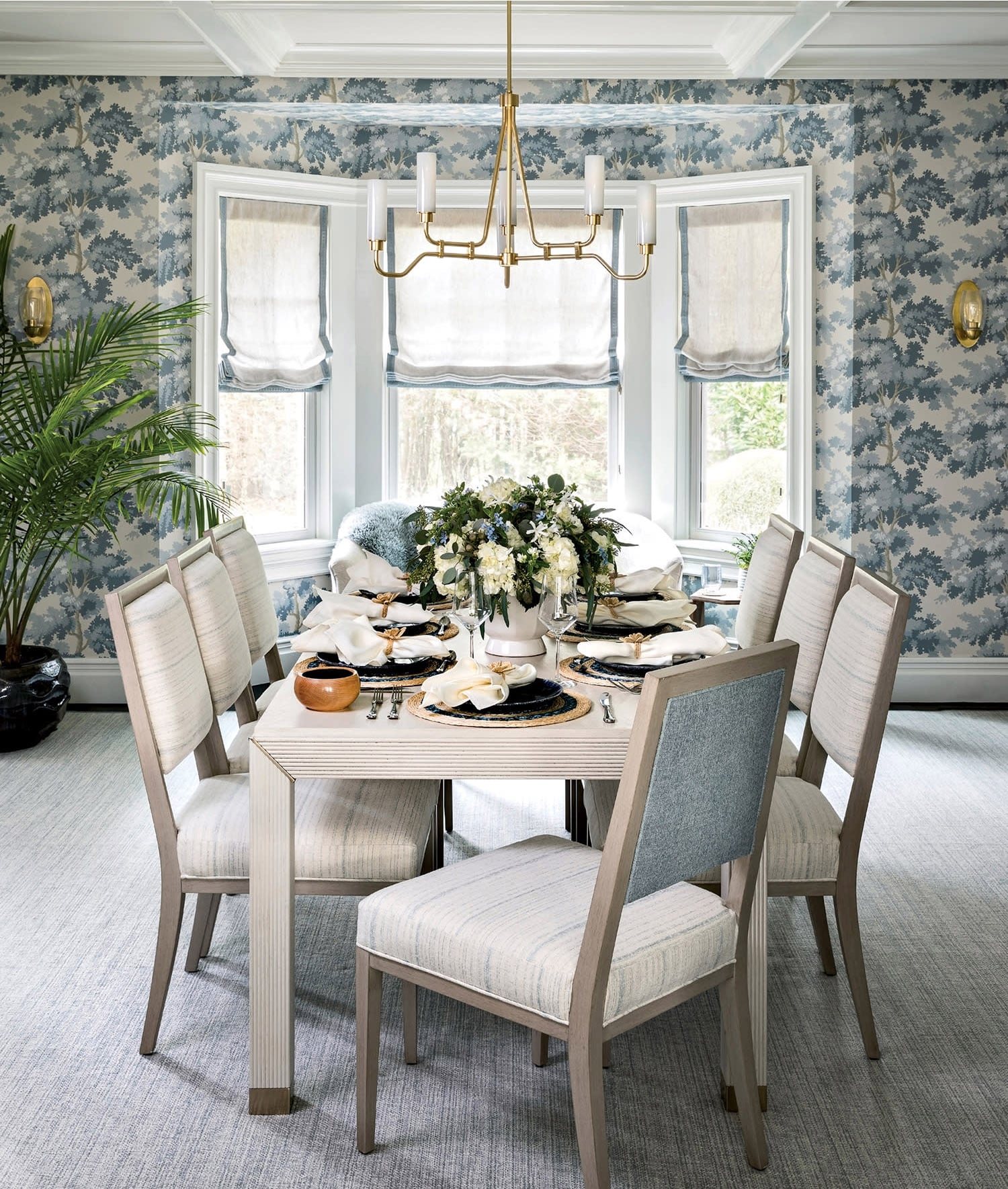
Using Stripes in Coastal Design
Image courtesy of Mabley Handler Design (Lesley Unruh Photography)
7. Floor-to-Ceiling Window Treatments for Light and Height
Light, flowing curtains are one of the most effective tools in a coastal interior — they soften architectural lines, filter natural light, and frame water or garden views without blocking them. Sheer or semi-sheer panels in whites, soft grays, or subtle stripes allow sunlight to fill the room while maintaining privacy.
This coastal living room features floor-to-ceiling white-and-gray striped curtains that complement the dark wood flooring and layered furnishings, balancing vintage and contemporary pieces throughout. The pulled-back panels highlight the ocean view — the curtains doing their best work when open rather than closed.
Designer Tip: I always specify curtains that run from ceiling to floor regardless of where the actual window sits — the extended height makes ceilings feel taller and rooms feel larger, which is particularly effective in coastal spaces where the goal is to maximize the sense of light and openness. Sheer fabrics in neutral tones create the soft backdrop that lets everything else in the room breathe.

White Window Treatments
Image courtesy of TOM Design
8. Let the View do the Work
In a coastal or lakeside home, the view outside is the room’s most powerful design element — and the interior’s job is to support it rather than compete with it. Soft neutral tones and warm earth shades inside echo the colors of the landscape outside, while architectural elements like vaulted ceilings and black-framed windows draw the eye directly toward the scenery.
This lakeside living room deliberately moves away from the traditional coastal color scheme — no blues, no nautical references. Instead, layered neutrals, warm textures, and natural materials create the coastal connection through material quality rather than color. A vaulted wood-paneled ceiling, white walls, and black-framed windows capture the autumn lakeside scene beyond, while light oak flooring, a warm stone fireplace, a contemporary teak coffee table, and a leather accent chair layer the natural material palette throughout.
Designer Tip: I often tell clients that the most powerful design decision in a room with a great view is restraint. Keep furnishings simple, layer natural textures, and let the scenery be the focal point. The interior should feel like a considered frame around what’s outside — not a distraction from it.

Rustic Coastal Living Room
Image courtesy of Tays & Co.
9. Maximizing Natural Light in a Coastal Interior
Natural light is the single most important ingredient in a coastal interior — it highlights textures, activates the palette, and creates the open, connected quality that defines the style. Large windows, skylights, and glass doors do more to establish a coastal atmosphere than any decorating choice.
This open-concept living space with lake views shows natural light working across multiple zones simultaneously. Warm wood flooring and exposed beams anchor the space while sunlight moves naturally through the living, kitchen, and dining areas. Two white sofas and tan accent chairs layered with pillows on a green, tan, and cream area rug provide the comfortable foundation, while floral arrangements and brass accents add warmth and personality without interrupting the light.
Designer Tip: I always recommend sheer curtains over blackout panels in coastal spaces — the filtered light they allow is softer and more flattering than direct sunlight, and it maintains the connection to the outdoors that makes coastal interiors feel genuinely alive. Mirrors and reflective surfaces placed opposite windows amplify that light further into the room.
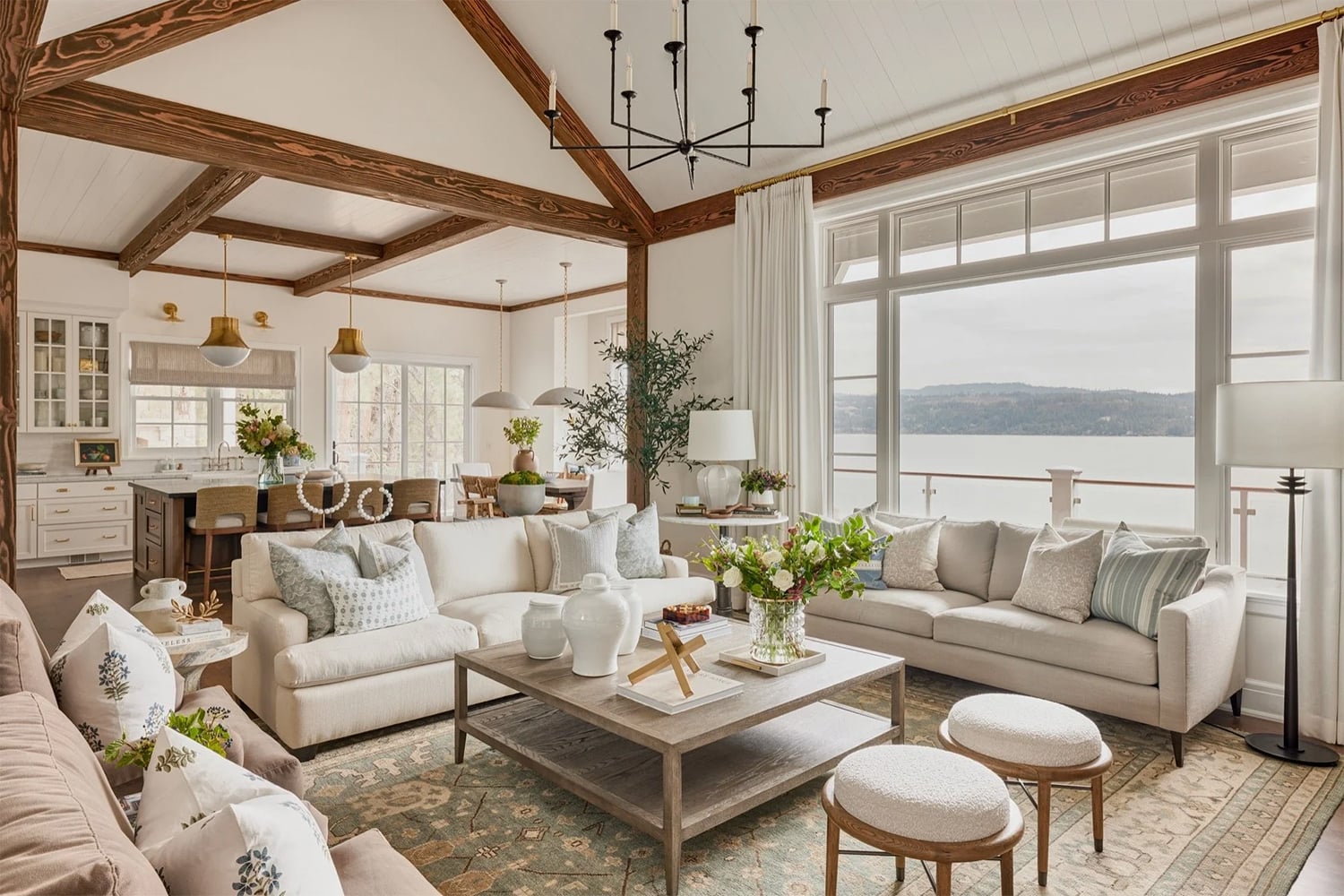
Natural Sunlight in a Coastal Living Room
Image courtesy of Lexi Westergard Design
10. Coastal Artwork That Doesn’t Feel Themed
Artwork is where coastal decorating most often goes wrong — shells in frames, lighthouse prints, and obvious beach motifs date quickly and undermine the sophisticated, material-led approach that modern coastal design depends on. The better direction is artwork that evokes the coast through color, abstraction, and organic form rather than literal subject matter.
As an artist myself, I’m currently working on coastal-inspired pieces for my own home — and the connection I find most interesting is between the specific quality of West Coast light and the blue, gray, and sandy neutral palette that defines the landscape here. Original artwork, whether your own or by a local artist, carries an authenticity that reproductions rarely achieve. The piece shown is a collection I recently created for my primary bedroom — nine 12″ circles painted on Yupo paper with acrylics, cut out and mounted to wood circles with an epoxy finish applied over each one.
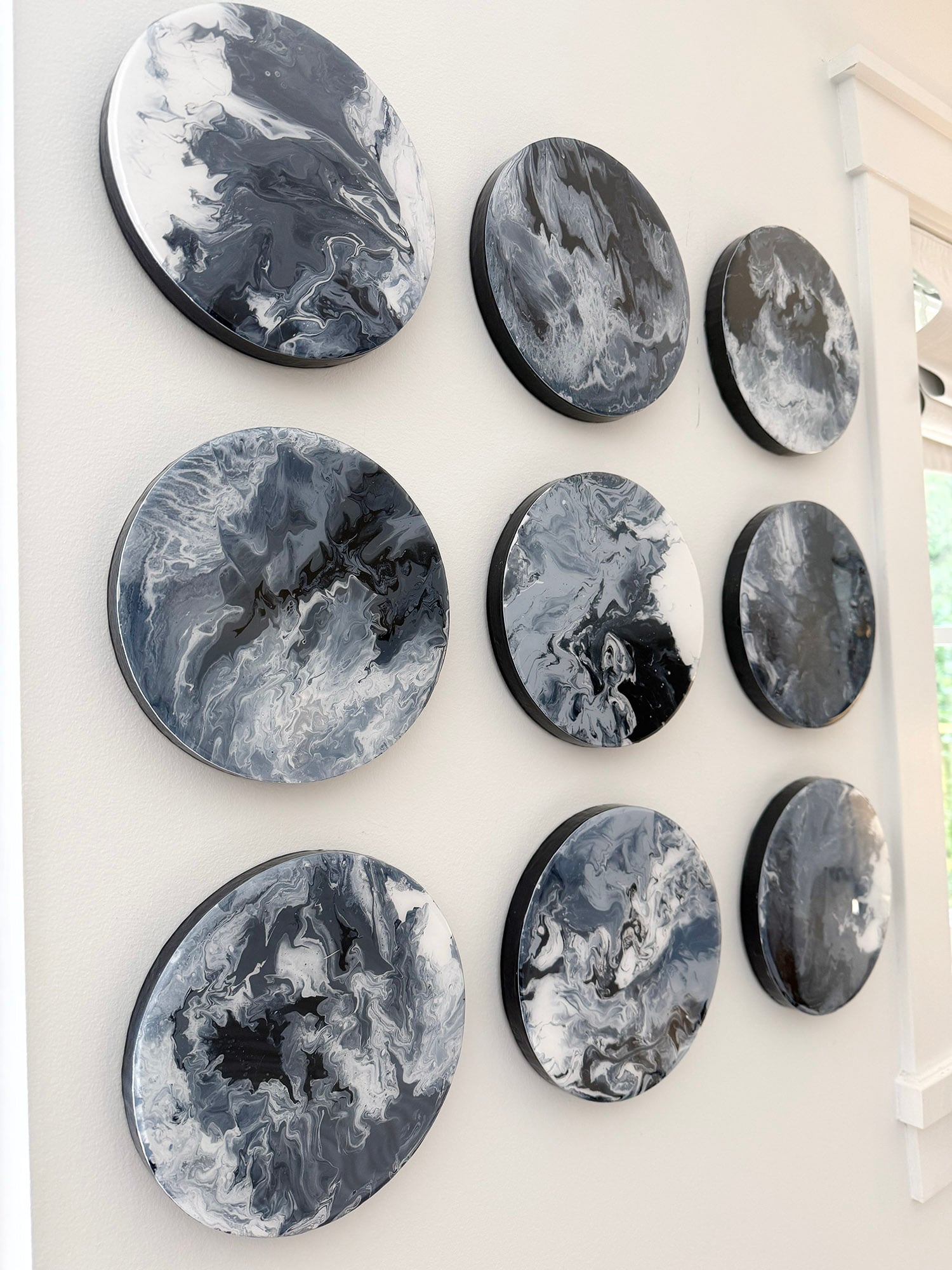
Modern Coastal Artwork by Tracy Svendsen
The modern coastal dining room below shows artwork used with restraint and purpose. Two ocean-themed prints on white walls complement the light wood table, white upholstered chairs with dark wood frames, and two high-back navy-and-white accent chairs at the ends. A brass rectangular pendant above the table and a console with a mirror and greenery complete the layered, considered composition.
Designer Tip: I always recommend choosing coastal artwork for its color harmony first, and its subject matter second. Abstract blues, sandy neutrals, and soft greens evoke the coast while remaining sophisticated — the viewer feels the reference without being told what to look at.

Displaying Coastal Artwork
Image courtesy of Jennifer Wundrow Interiors
11. My Own Modern Coastal Bedroom
Before purchasing a single piece for my primary bedroom, I created this mood board to establish the palette and material direction — a process I recommend to every client before committing to furniture or textiles. The starting point was a print by Angela Maritz titled Serenity, which I had framed in a large-scale, wide silver frame to hang above a blue dresser. That single artwork decision drove every subsequent choice in the room.
The area rug is a modern tonal blue with white curves, pulling the palette directly from the Serenity print. At the foot of the bed, a white boucle bench with solid wood ball-shaped legs in light oak sits beneath an acacia wood flush-mount ceiling fixture — the two pieces sharing the same warm wood tone, creating a cohesive material connection at that end of the room. Euro pillows and a throw in Pine Cone Hill Annie Selke Driftwood Stripe Denim — a navy-blue stripe — add a pattern layer that connects the deep blue of the dresser to the softer blues throughout the bedding. Sheer white curtains keep the room light despite the richness of the blue palette, and light oak flooring runs throughout, connecting the bench base, the ceiling fixture, and the natural wood accents in a single warm thread. Blue-toned vases in varying heights complete the layering — the same coastal palette extended into the accessories.
The custom artwork I created — nine acrylic circle paintings in coastal blues, grays, and sandy neutrals — was designed specifically to pull the colors of the Serenity print into an original piece that belongs uniquely to this room. I’ll be photographing the completed bedroom once the bench arrives and adding it to this section.
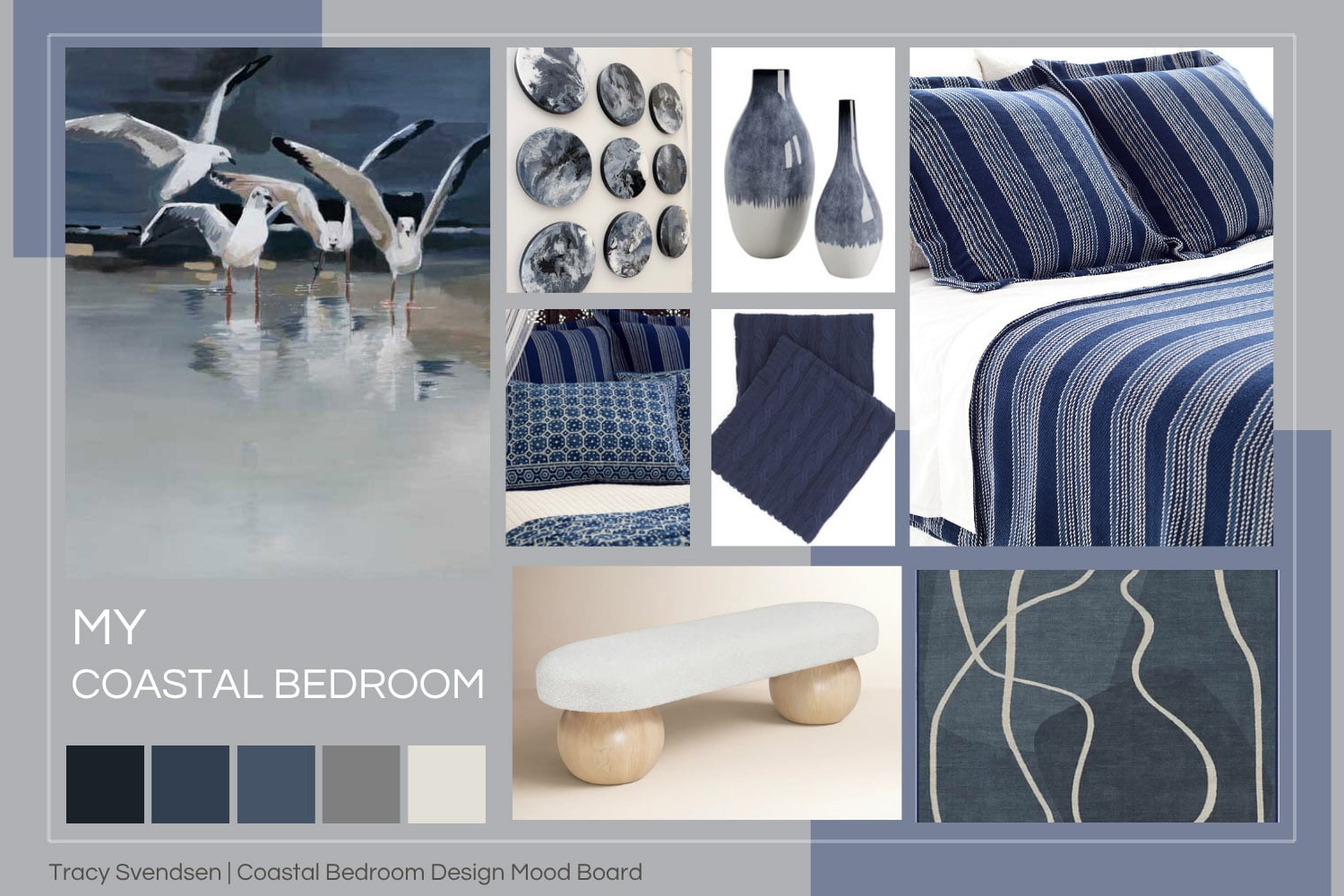
Modern Coastal Bedroom Mood Board by Tracy Svendsen
12. Coastal Entryway Ideas
The entryway sets the coastal tone immediately — natural materials, a soothing palette, and one strong focal point are all that’s needed before the rest of the home unfolds.
The first entry uses white leaf-print wallpaper as the backdrop, with a geometric white mirror above a rattan-detailed console holding a weathered wood lamp, plants, books, and candles — layered and personal without being busy. The second takes a more architectural approach: white vertical wood-slat walls create a linear rhythm and texture, with a rattan console, framed artwork, and a large pendant light above.
Designer Tip: I recommend one strong focal point in a coastal entryway — a statement mirror, a distinctive pendant, or artwork — and letting everything else support it.


Coastal Entryway Ideas
Image courtesy of Serena & Lily
13. Coastal Kitchen Ideas
A modern coastal kitchen succeeds through the same principles as the rest of the home — natural materials, a soft neutral foundation, and subtle color introduced through cabinetry or textiles rather than bold statements.
This open-concept kitchen shows the approach with real material sophistication. Cool-toned green lower cabinets ground the design while creamy neutral uppers draw the eye upward, and a natural white oak island adds warmth at the center. Honed Taj Mahal quartzite countertops extend across the island, backsplash, and integrated sink — a continuous surface that reads as architectural rather than decorative. Light oak flooring carries the warm wood tone through from the island, while counter stools with solid wood frames, natural cane backs, and white leather seats layer the organic materials at seating height. Cream-and-white-striped Roman shades complete the two-toned cabinet composition.
Designer Tip: I always recommend pairing painted cabinetry with at least one warm natural material — wood, stone, or woven fiber — to prevent a coastal kitchen from feeling too cool or clinical. The contrast between the painted surface and the natural material is what gives the kitchen its depth.
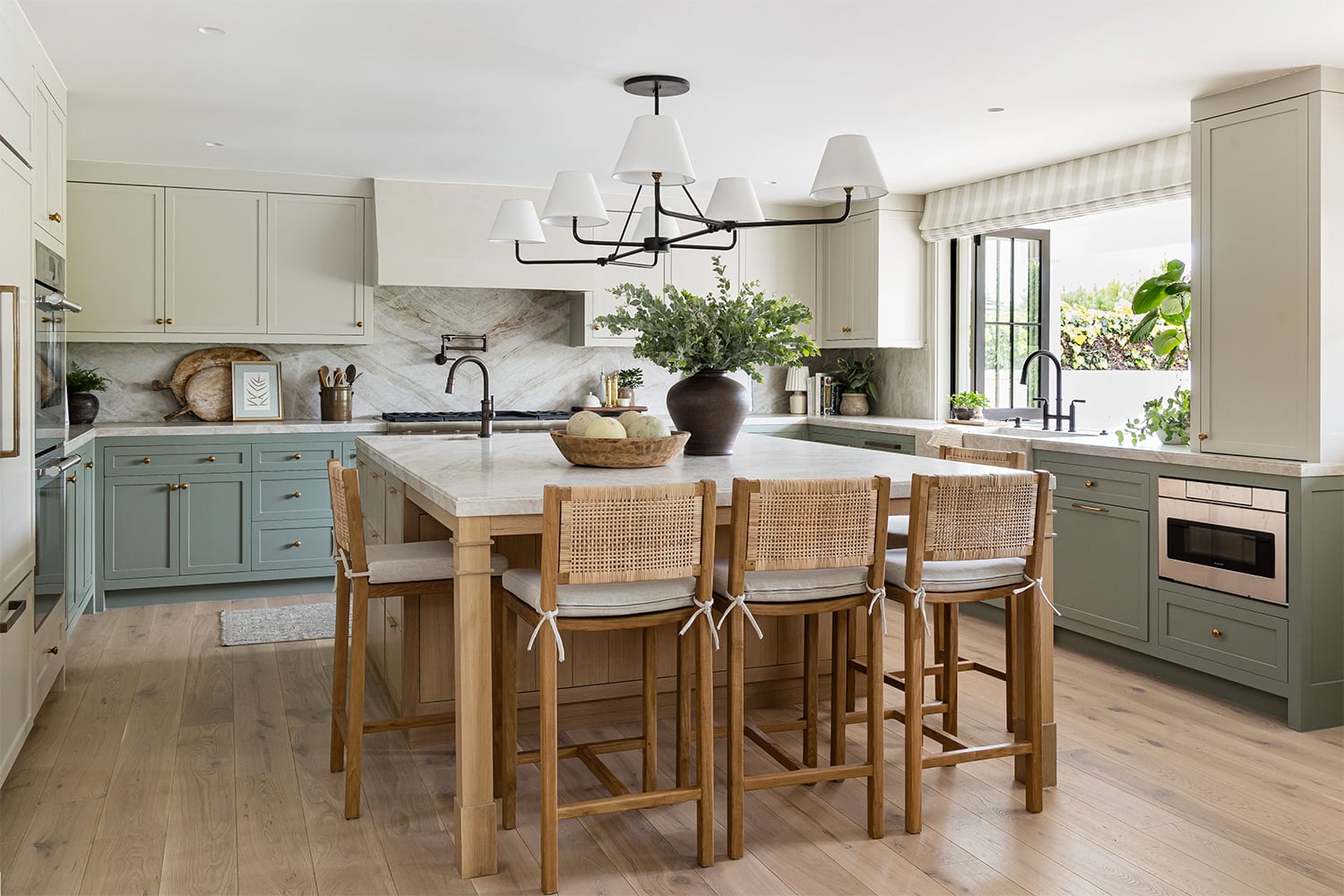
Modern Coastal Kitchen with Two-Tone Cabinets in Cream and Green
Image courtesy of Pure Salt Interiors
14. Layered Blue Accents in a Light-Filled Coastal Kitchen
Blue in a coastal kitchen works best when varied across materials rather than applied uniformly — the difference between a room that feels designed and one that feels themed.
This kitchen demonstrates exactly that. White cabinetry and warm wood flooring establish the neutral foundation, while skylights and expansive paneled windows flood the space with natural light. A blue metallic range hood becomes the room’s clear focal point, complemented by a large island topped with blue marble in varied shades of blue — the same color family as the hood but in a completely different material and finish. Black countertops add contrast and definition without disrupting the palette, and dark blue leather counter stools add richness and texture at the seating level. Three different expressions of blue — metallic, marble, leather — read as cohesive because the underlying tone stays consistent throughout.
Designer Tip: I recommend varying blue across at least two or three different materials in a coastal kitchen — painted finish, stone veining, and textile — rather than using a single material repeatedly. The tonal variation is what gives the palette its sophistication.
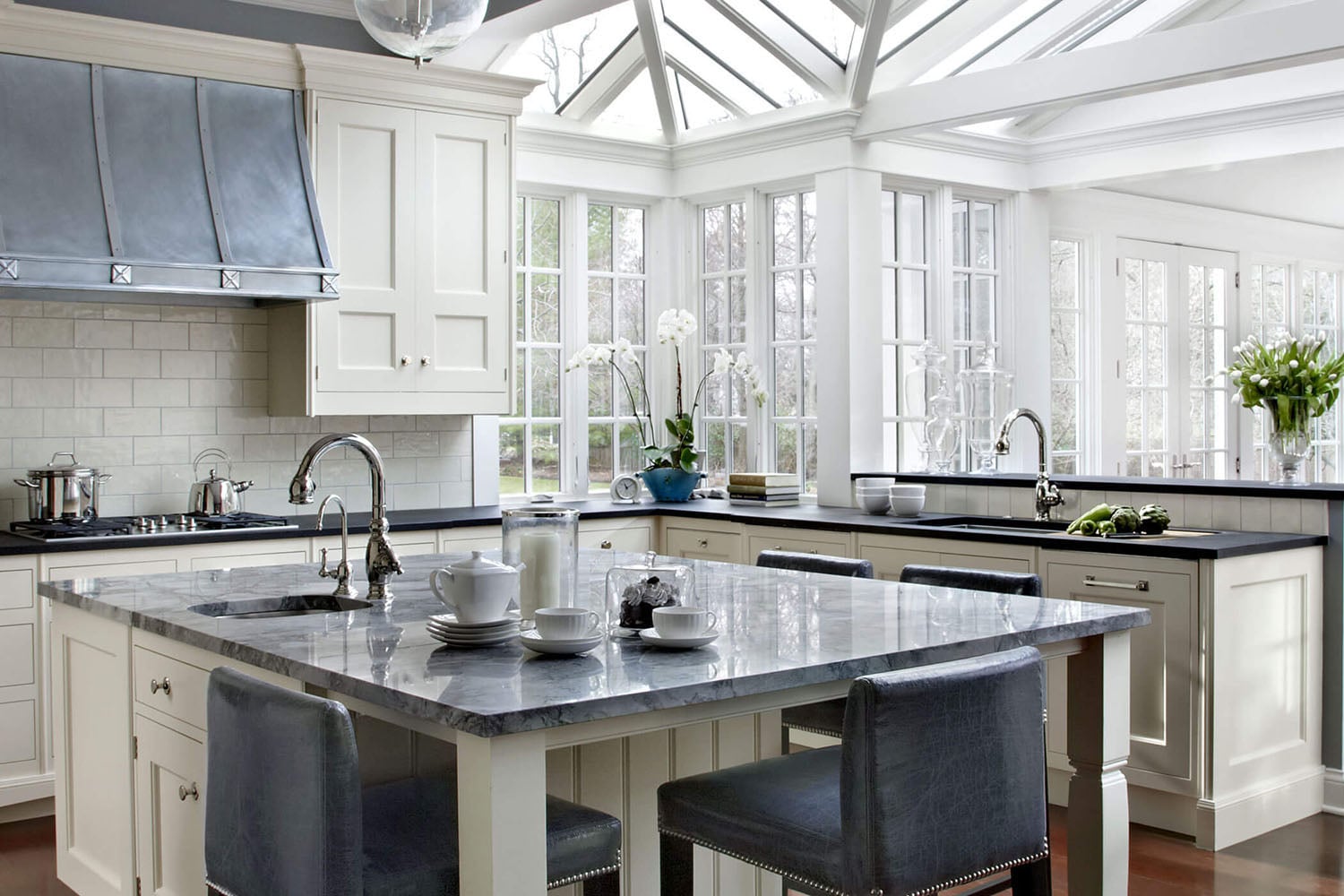
A Stunning Modern Coastal Kitchen in Contrasting White & Blue
Image courtesy of O’Brien Harris Fine Fitted Furniture
15. Collected Coastal Living Room with Layered Seating Areas
Large coastal living rooms present a specific design challenge — how to maintain the open, light quality of the style while preventing the space from feeling empty or disconnected. The answer is zoning: creating multiple distinct seating areas within the same room, each with its own rug and lighting anchor.
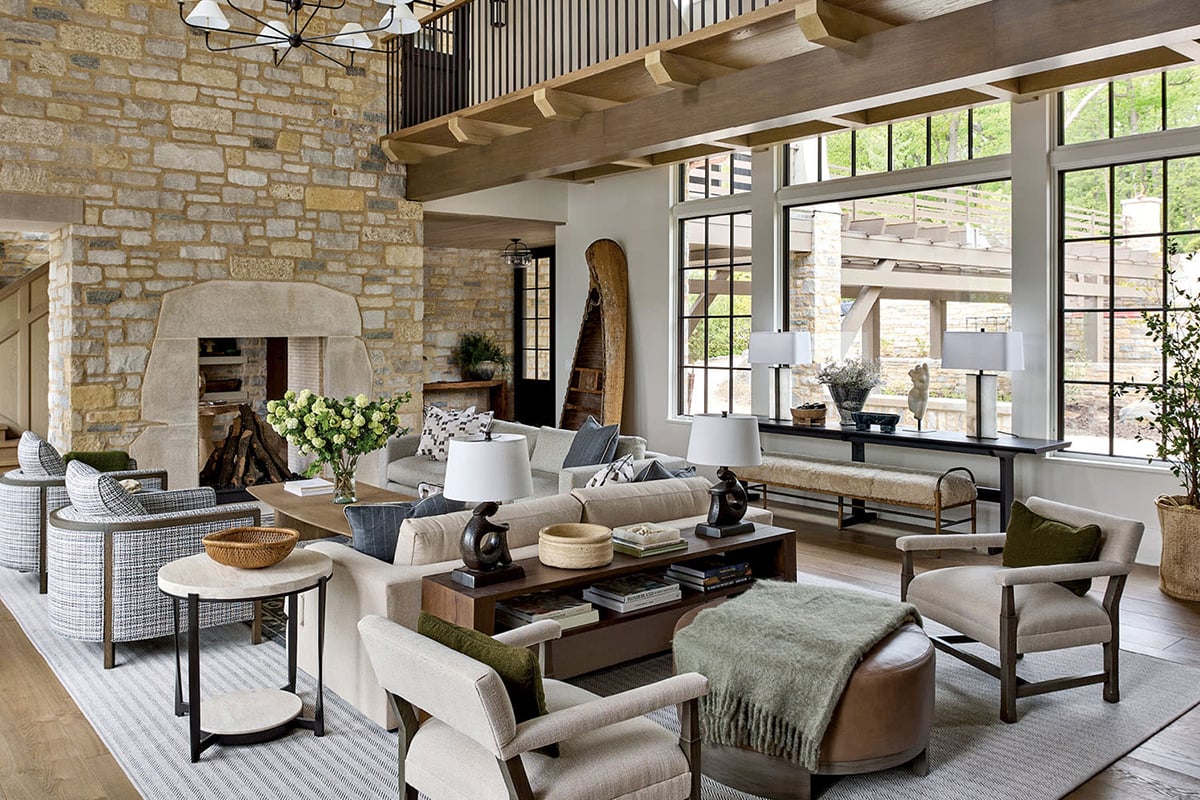
This double-height living room handles the challenge with real confidence. A wood-and-black-iron railing opens to the second floor above, enhancing the sense of scale, while black-framed windows introduce a subtle contrast against the light architectural backdrop. An earth-toned stone fireplace creates a strong focal wall that grounds the space and reinforces the connection to natural materials. Light oak flooring and a large tonal gray striped area rug define the primary seating zone, while two distinct groupings — one centered on the fireplace with a sofa and accent chairs, another arranged around a round leather coffee table — add functionality and a collected quality. Paired chandeliers visually anchor the room’s volume above, and layered pillows, throws, florals, and lamps complete the personal, lived-in character throughout.
Designer Tip: I always use rugs and lighting to define separate seating zones in a large coastal living room — each area should feel complete on its own while remaining visually connected to the whole. Two distinct zones make a large room feel inhabited rather than oversized.
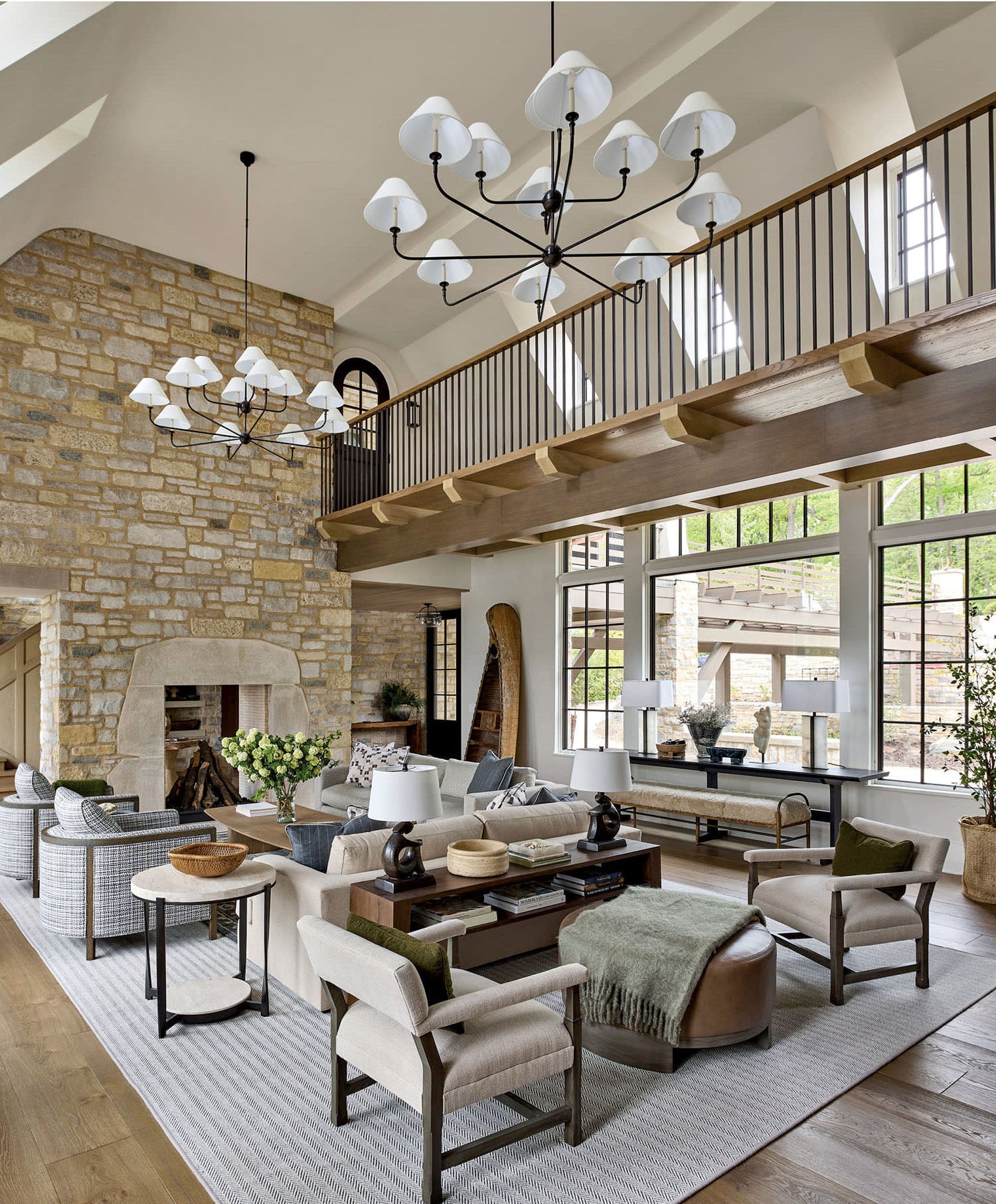
Coastal Living Room with Stone Accent Wall
Image courtesy of Elizabeth Krueger
16. Woven Textures in a Modern Coastal Dining Room
Woven textures are one of the most effective ways to create visual continuity across an open-plan coastal interior — repeating the same material in different forms connects spaces without requiring a uniform color scheme.
This open-concept dining room clearly demonstrates the principle. A large rectangular wooden dining table is paired with white upholstered accent chairs at each end and with side chairs featuring wood frames, woven backs, and white leather seats. The woven cane detail repeats across the dining chairs and extends to the kitchen’s six oversized barstools — a deliberate material thread that visually connects the two zones within the open layout. A palette of creamy ivories, deep blues, and rich walnut browns flows throughout, with warm gold touches in the twin brass light fixtures that anchor the dining area and define it within the larger space.
Designer Tip: I always look for a single material that repeats across multiple pieces in an open-plan room — woven cane, warm wood, or a consistent metal finish. Repetition creates the visual cohesion that makes a large space feel intentional rather than assembled from separate rooms.
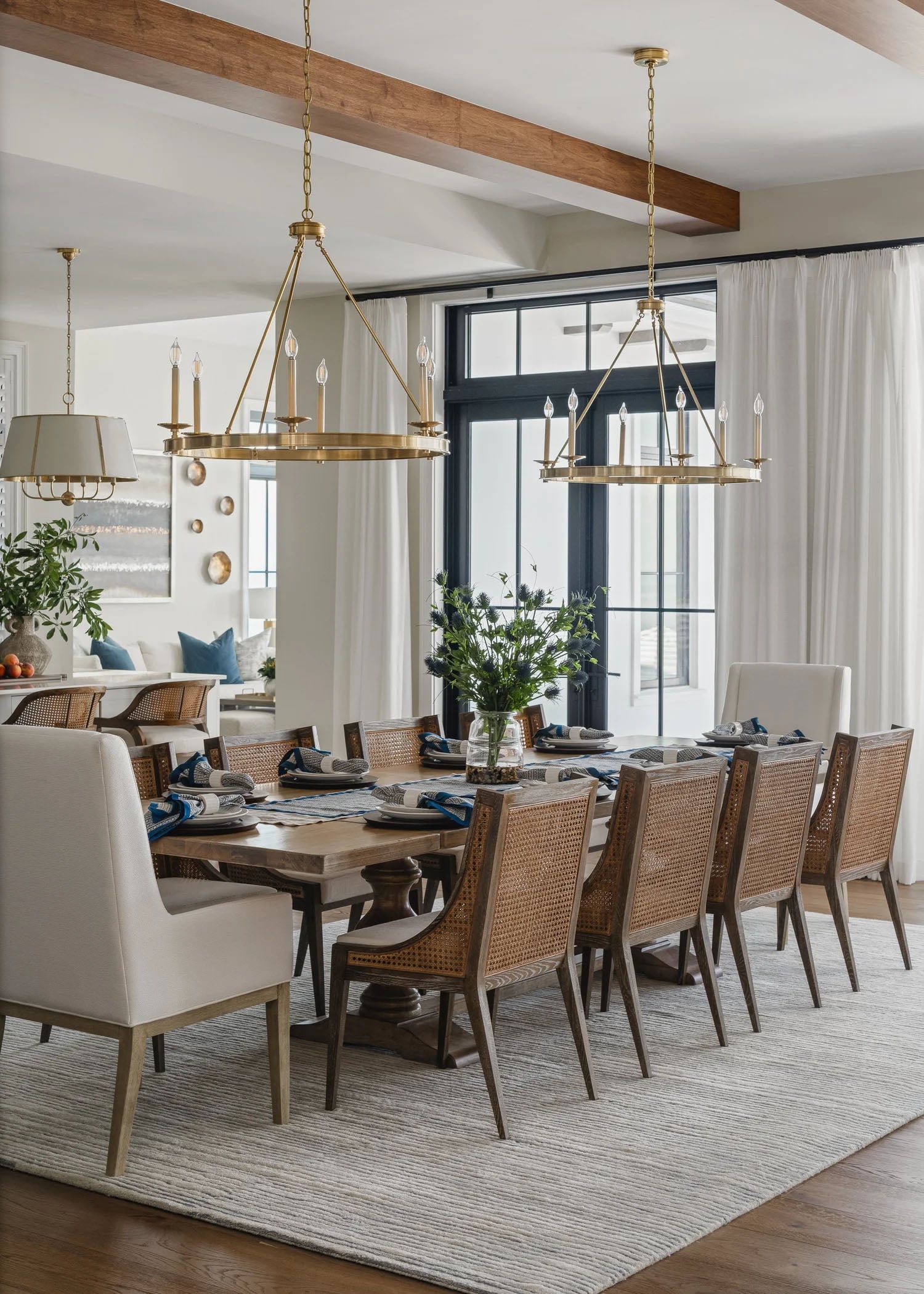
Elevated Coastal Dining Room
Image courtesy of Emily Moss Design
17. Serene Modern Coastal Primary Bedroom with Layered Neutrals
The primary bedroom is where modern coastal design has the most personal impact — it’s the room that should feel most connected to the landscape outside and most removed from the demands of the day.
This primary bedroom achieves that balance through layered neutrals and considered material choices. A statement canopy bed anchored in white bedding with soft blue accent pillows is the room’s clear focal point, with floor-to-ceiling curtains, a large gray and white area rug, and light wood flooring adding softness throughout. Double sliding doors in the ensuite frame views of the pool and beach beyond — the same principle of letting the view do the work that runs throughout this guide. A built-in desk and cabinetry area with a rattan chair introduces function without disrupting the aesthetic, while sculptural curved mirrors, woven decorative vases, and a chandelier complete the layered composition.
Designer Tip: I recommend pairing one structured statement piece — a canopy bed, an oversized mirror, a built-in — with organic textures and soft tonal layers around it. The contrast between the structured anchor and the softer surrounding elements is what gives a coastal bedroom its depth.
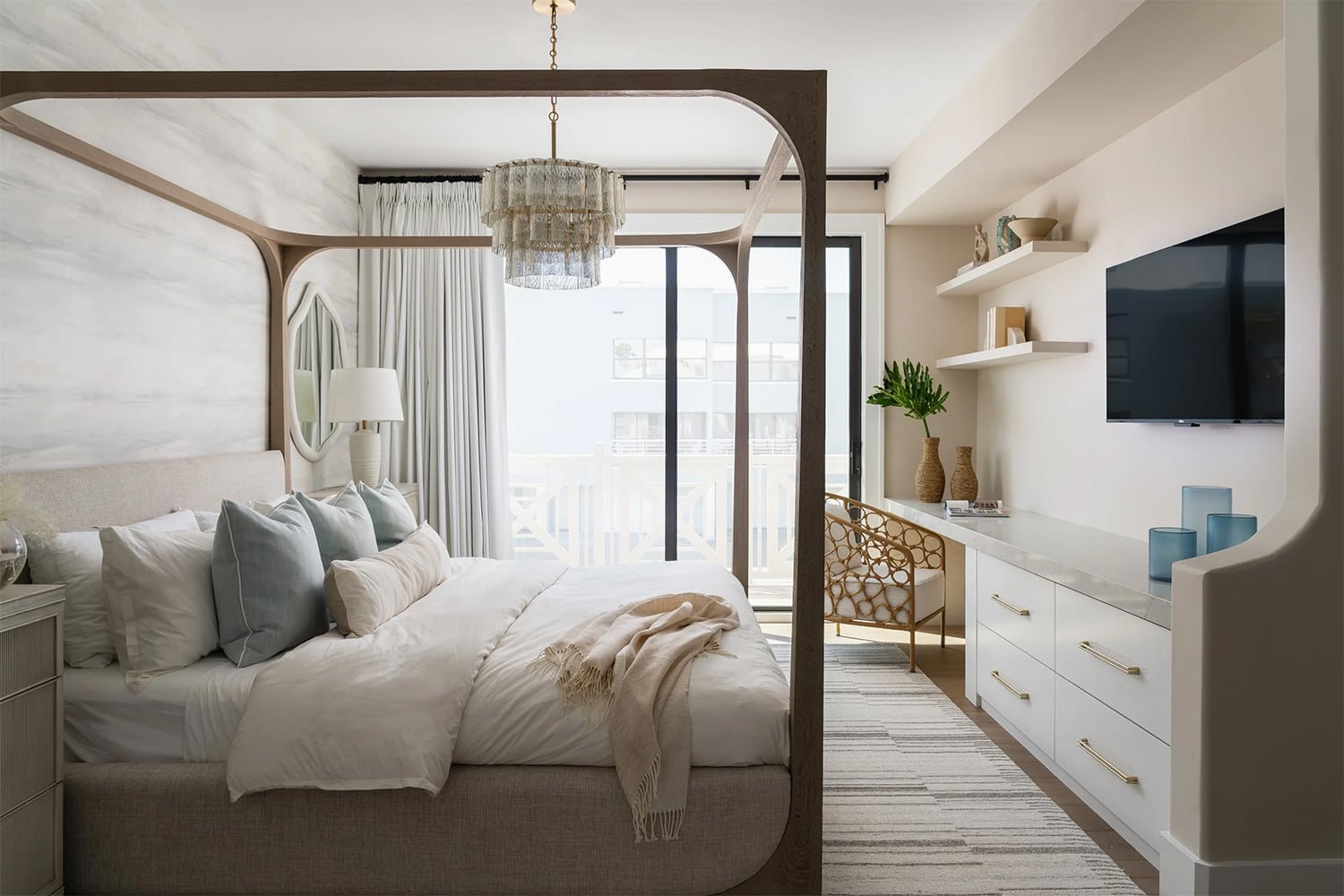
Sophisticated Modern Coastal Bedroom
Image courtesy of Emily Moss Design
18. A Coastal Home Office That Feels Like the Rest of the Home

Nautical-Inspired Home Office with Industrial Desk
Image courtesy of Lynn Holender Design
19. Coastal Bathrooms
A coastal bathroom succeeds through the same principles as the rest of the home — natural materials, a soft tonal palette, and texture doing the visual work rather than obvious beach references.
Wood, stone, and woven textures bring warmth and depth to a light, neutral foundation. Soft blues, muted greens, and crisp whites establish the palette without requiring any literal coastal motifs — towels, bathmats, and a shower curtain in layered coastal hues reinforce the direction subtly at the textile level.
Designer Tip: I always focus on texture over theme in a coastal bathroom — stone, wood, linen, and woven accents layered within a soft tonal range of blues, whites, and sandy neutrals create the right atmosphere without any single element announcing itself as “coastal.” The restraint is what keeps it feeling genuinely considered rather than decorated.


Coastal Bathrooms
Image courtesy of Serena & Lily
20. Shiplap Walls and Ceiling
Shiplap is one of the most effective architectural elements in a coastal interior — it adds subtle texture and warmth at the wall and ceiling level without introducing any color or pattern that might disrupt the tonal palette.
This coastal living room uses shiplap in two orientations simultaneously. A vaulted white shiplap ceiling with exposed trusses draws the eye upward and amplifies the sense of height, while vertical shiplap walls in a soft taupe-gray introduce gentle contrast against the white above. Light wood flooring establishes the warm foundation, balanced by a large blue-gray linen sectional layered with white and tan pillows in solid and striped patterns. Woven wood and rattan accent chairs alongside an oversized rattan pendant light reinforce the natural material direction, and a large upholstered square coffee table in warm tan softens the center of the room.
Designer Tip: I recommend varying shiplap orientation depending on what the room needs — horizontal for a classic coastal reading, vertical to visually heighten ceilings. Pair painted shiplap with warm wood tones and woven textures to keep the material feeling organic rather than purely decorative.

Coastal Living Room
Image courtesy of Pure Salt Interiors
21. Bold Pattern in a Modern Coastal Living Room
Pattern adds personality and visual movement to a coastal interior without disrupting the tonal palette — as long as the colors stay consistent across every pattern introduced.
This contemporary coastal living room demonstrates the principle confidently. A textured wallpaper feature wall in ocean blue sets the foundation, while colorful diamond-print artwork creates the room’s strongest visual statement. The patterns feel intentional rather than competing because the palette — blues, grays, and soft neutrals — stays consistent throughout. A gray sofa and two accent chairs styled with blue-and-white coastal pillows reinforce the color story, while dark wood flooring adds depth and contrast against the lighter palette above. A white concrete fireplace introduces a clean contemporary element, sheer linen blue curtains soften the natural light, and modern blue vases filled with branches echo the forested waterfront view beyond the windows. Wood ceiling beams and contemporary lighting complete the mix of organic and modern elements.
Designer Tip: I always recommend varying pattern scale when mixing prints in a coastal space — a large statement wallpaper or artwork alongside smaller, subtler pillow prints creates hierarchy rather than competition. The consistent color palette is what holds everything together.

Contemporary Coastal Living Room
Image courtesy of Valerie Grant
22. A Light Gray, White & Blue Coastal Bedroom
Pale gray, crisp white, and soft blue is one of the most enduring coastal bedroom palettes — the three tones work together because they share the same cool, natural undertone that connects them to the ocean and sky without any decorative effort.
This bedroom uses the palette across every surface and material simultaneously. Vertical shiplap walls and a vaulted shiplap ceiling with light wood beams introduce architectural texture, while white linen bedding layered with a textured white blanket forms the foundation. Gray and white euro pillows with blue accents add depth through layered pattern, and a tonal area rug anchors the color story underfoot. At the foot of the bed, two white slipcovered accent chairs surround a round white boucle table styled with a woven basket and floral arrangement — a seating moment that makes the bedroom feel like a complete room rather than just a sleeping space. Black-framed windows provide modern definition throughout.
Designer Tip: I recommend combining at least three different textures within a soft coastal bedroom palette — shiplap, linen, boucle, and natural wood each read differently under light, which creates the dimension that a single-texture room never achieves.

Coastal Bedroom
Image courtesy of Kate Marker Interiors
23. Coastal Sunroom
A sunroom is where coastal design has its most natural expression — three walls of windows, abundant natural light, and a direct visual connection to the landscape outside do most of the design work before a single piece of furniture is placed.
This coastal sunroom maximizes those advantages. Expansive windows on three sides flood the space with natural light, while tile flooring provides durability and a light foundation underfoot. A wood ceiling treatment introduces warmth and architectural interest above, and soft linen window treatments with custom white Roman shades filter light without obstructing the views. A plush white area rug, woven lighting, and natural wood furniture with white upholstered seating layer the organic textures throughout, while fresh greenery in the corners reinforces the connection to the landscape outside. Light wood-framed chairs and a sofa styled with an abundance of pillows complete the composition.
Designer Tip: I always recommend balancing the hard surfaces in a sunroom — tile, glass, and wood — with an equal weight of soft textiles. Without that balance, a sunroom can feel bright but cold; with it, the light becomes genuinely warm.

Coastal Sunroom
Image courtesy of Pure Salt Interiors
24. Built-In Cabinetry
Built-in cabinetry in a coastal living room does double duty — it provides practical storage while establishing the room’s color direction at architectural scale. Light blue built-ins read as part of the room’s structure rather than a decorative addition, which is what gives them their lasting impact.
This coastal living room by Mindy Gayer clearly illustrates the approach. Light blue built-in cabinets accented with white tile and light wood details anchor the wall, creating a cohesive backdrop for a linen sofa layered with blue and white pillows that echo the cabinet palette. Brass lighting fixtures add warmth and a refined metallic note, connecting the cool blue tones to something warmer throughout the room.
Designer Tip: I recommend built-in cabinetry as one of the highest-impact investments in a coastal living room — the color and material commitment at architectural scale creates a cohesion that no freestanding furniture arrangement can replicate. Light blue is particularly effective because it reads as both neutral and colorful depending on the light conditions throughout the day.

Living Room with Blue Built-In Cabinets
Image courtesy of Mindy Gayer
25. Seagrass Wallpaper
Seagrass wallpaper is one of the most effective wall treatments in a coastal interior — it adds organic texture at a scale that paint alone can’t achieve, while staying within the neutral, tonal palette that modern coastal design depends on.
This living room by Valerie Grant shows the material working across multiple layers simultaneously. Tan seagrass wallpaper covers the upper walls while white shiplap with a blue marble fireplace surround anchors the focal wall — the combination of the organic wallpaper texture and the veined marble creating a refined material contrast. A pale gray sectional grounds the seating zone on a white area rug, with a grasscloth-wrapped console behind it adding another layer of woven organic texture. Light oak flooring ties the warm natural tones throughout, and a slatted wood ceiling treatment completes the layered material story from floor to ceiling.
Designer Tip: I recommend seagrass wallpaper in coastal interiors specifically because it introduces texture without pattern — the tonal variation in the weave adds visual depth that a flat painted wall never achieves, while staying neutral enough to work with almost any palette. It also works beautifully as a backing behind built-in cabinetry or open shelving — the texture visible through the shelves adds warmth and depth to the display without competing with what’s on the shelves themselves.
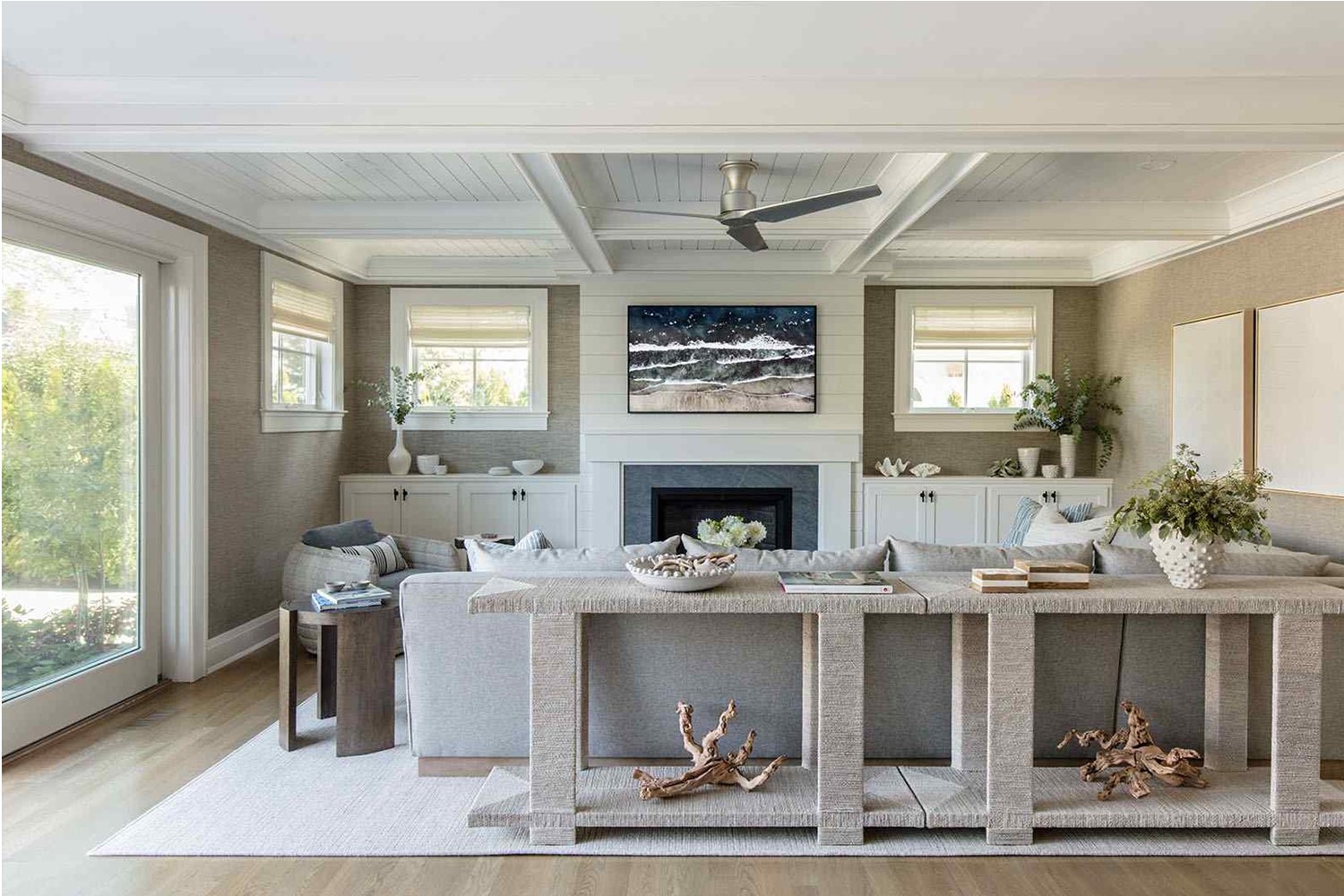
Seagrass Wallpaper
Image courtesy of Valerie Grant
26. Stone Fireplace
A natural stone fireplace anchors a coastal living room in a way that no other single element can — it introduces permanence, organic warmth, and genuine material character at the room’s most important focal point.
This lake house living room by Kate Marker features a fireplace set within a high-contrast coastal palette. A tall natural stone fireplace in warm earth tones rises through a white vaulted shiplap ceiling and vertical shiplap walls — the rough, organic texture of the stone reading as a deliberate counterpoint to the crisp painted surfaces surrounding it. Two denim-blue sofas and two white accent chairs establish the coastal color story, while high black-framed windows highlight the lake view beyond. Light oak flooring and a light oak coffee table pick up the warm tones in the natural stone — a material connection that ties the floor, the furniture, and the fireplace into a single cohesive palette without anything feeling forced.
Designer Tip: I always look for material connections between the fireplace stone and other natural elements in the room — when the wood flooring and the stone share the same warm undertone, the fireplace reads as part of the room’s foundation rather than a standalone feature.


Stone Fireplace in a Coastal Living Room
Image courtesy of Kate Marker Interiors
27. Wood Ceiling Beams
Wood ceiling beams are among the most effective architectural elements in a coastal home — they add warmth and structure at ceiling level, where paint and wallpaper can’t reach, and they connect the interior directly to the natural material palette of the landscape outside.
This Georgia home by Ashley Gilbreth draws its palette directly from the cerulean sky and rolling hills beyond the windows — creams, watery blues, and greens that move through the interior as naturally as the landscape moves outside. Light oak flooring, white walls, and white ceilings with light oak beams establish a warm neutral foundation, while light oak beams running vertically against the white walls and a light oak accent wall leading into the pantry extend the use of natural wood throughout the space. A large two-tiered black iron chandelier above a round black dining table introduces the high-contrast element that prevents the warm palette from feeling too soft — three black-and-white contemporary dining chairs alongside three pale blue-and-white linen slipcovered chairs complete the mix of structured and relaxed seating that defines the coastal dining direction.
Designer Tip: I recommend using wood beams consistently at both ceiling and wall level where the architecture allows — the repetition of the same warm wood tone at multiple heights creates a cohesive material envelope that makes the whole room feel considered rather than decorated.

Warm & Inviting Coastal Dining Room
Image courtesy of Ashley Gilbreath
28. Soft Hues in the Laundry Room
A coastal laundry and mudroom just steps from the sand deserves the same design attention as the rest of the home — it’s the first room you enter from the beach and the last you leave, which makes it both a functional necessity and a genuine opportunity.
This space by K & CO Living handles both with ease. White walls and vertical wood slat paneling on one wall establish the clean, organic foundation, while the Honeysuckle Collection terrazzo tile from Livden in Maui Blue covers both the floor and backsplash in a single continuous surface — its mid-century and art deco characteristics adding a contemporary quality that lifts the room well beyond a standard utility space. White cabinets provide practical storage, a towel rack on the shiplap wall holds pale blue and white towels within immediate reach of the beach exit, and a large wicker laundry basket on the floor adds the natural fiber texture that connects the space to the coastal material palette throughout the home.
Designer Tip: I recommend treating a coastal mudroom or laundry room as a transitional space rather than a purely functional one — the same palette and natural materials used throughout the home should carry through here, so the experience of moving between outdoors and indoors feels cohesive rather than abrupt. A statement tile is one of the most effective ways to achieve that in a small, high-traffic space.
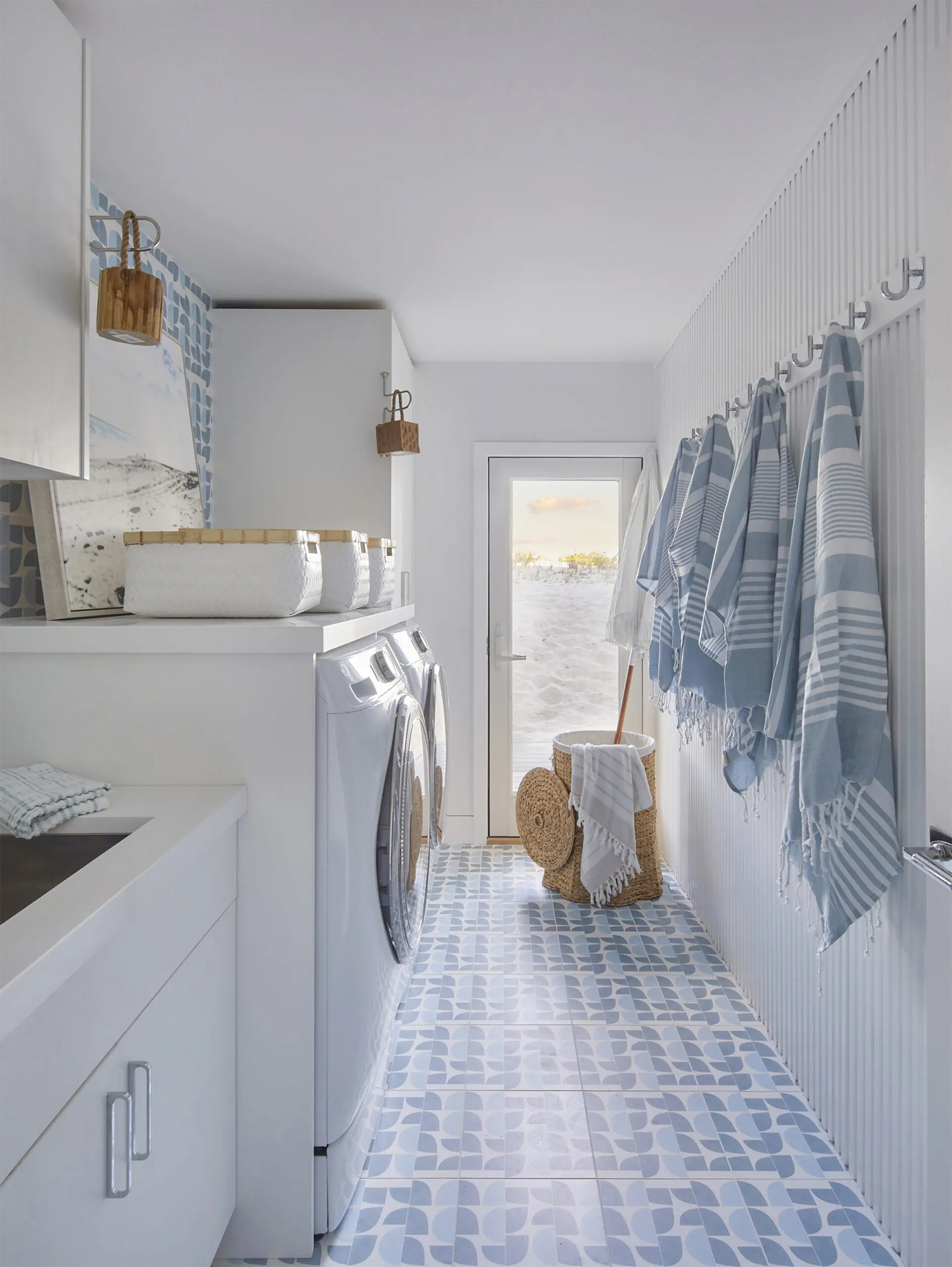
Coastal Laundry Room
Image courtesy of K & Co Living
29. Rattan Throughout a Coastal Interior
Rattan is one of the most versatile natural materials in a coastal interior — it adds organic texture and warmth across furniture, lighting, mirrors, and accessories without introducing any color that might disrupt the tonal palette. Its inherent flexibility allows it to be shaped into elegant curved forms — arched headboards, looped chair backs, sculptural pendants — that add movement and softness in a way that harder materials can’t replicate.
This open-concept living space shows rattan working at every level simultaneously. Light oak walls and island establish the warm natural foundation, while soft gray and white tiled floors provide a calm base. Curved upholstered rattan accent chairs bring the organic material into the seating zone, a scalloped wave-like rattan chandelier anchors the ceiling with a sculptural coastal reference, and rattan stools and table lamps extend the material throughout — woven textures, soulful antiques, and custom woodworking layered together in a space where every element evokes the sand and sea without a single literal nautical motif.
Designer Tip: I recommend using rattan across at least three different pieces in a coastal room — a chair, a pendant, and a smaller accent like a mirror or lamp. The repetition of the material at different scales creates the cohesive, layered quality that makes rattan feel intentional rather than decorative.

Rattan in Coastal Homes
Image courtesy of Brian Wetzel Photography (Bergman Vass Design)
30. An Open-Concept Modern Coastal Home in Pale Blues and White
The most restrained coastal interiors are often the most effective — a palette of pale gray, soft blue, and crisp white, applied consistently across every surface, creates a cohesion that more varied approaches rarely achieve.
This open-concept kitchen, dining, and living area by Muskoka Living demonstrates that restraint at full scale. Light oak flooring and ceiling establish the warm natural foundation, while white vertical wall paneling, white sofas, white dining table, and white kitchen cabinets create a unified backdrop throughout. Windows and doors framed in light blue introduce the coastal color note at the architectural level — subtle enough to read as part of the structure rather than a decorative addition. Pale blue throw pillows and pale gray dining chairs carry the tonal palette into the furnishings, and a geometric brass chandelier above the dining table provides the warm metallic anchor that prevents the all-white palette from feeling cold. Panoramic lake views beyond the windows complete the composition — the landscape doing what no interior element could replicate.
Designer Tip: I find the most successful modern coastal interiors commit fully to their palette rather than introducing too many variations. White, pale blue, and warm wood applied consistently throughout an open plan read as genuinely architectural — the color becomes the design rather than something added to it.
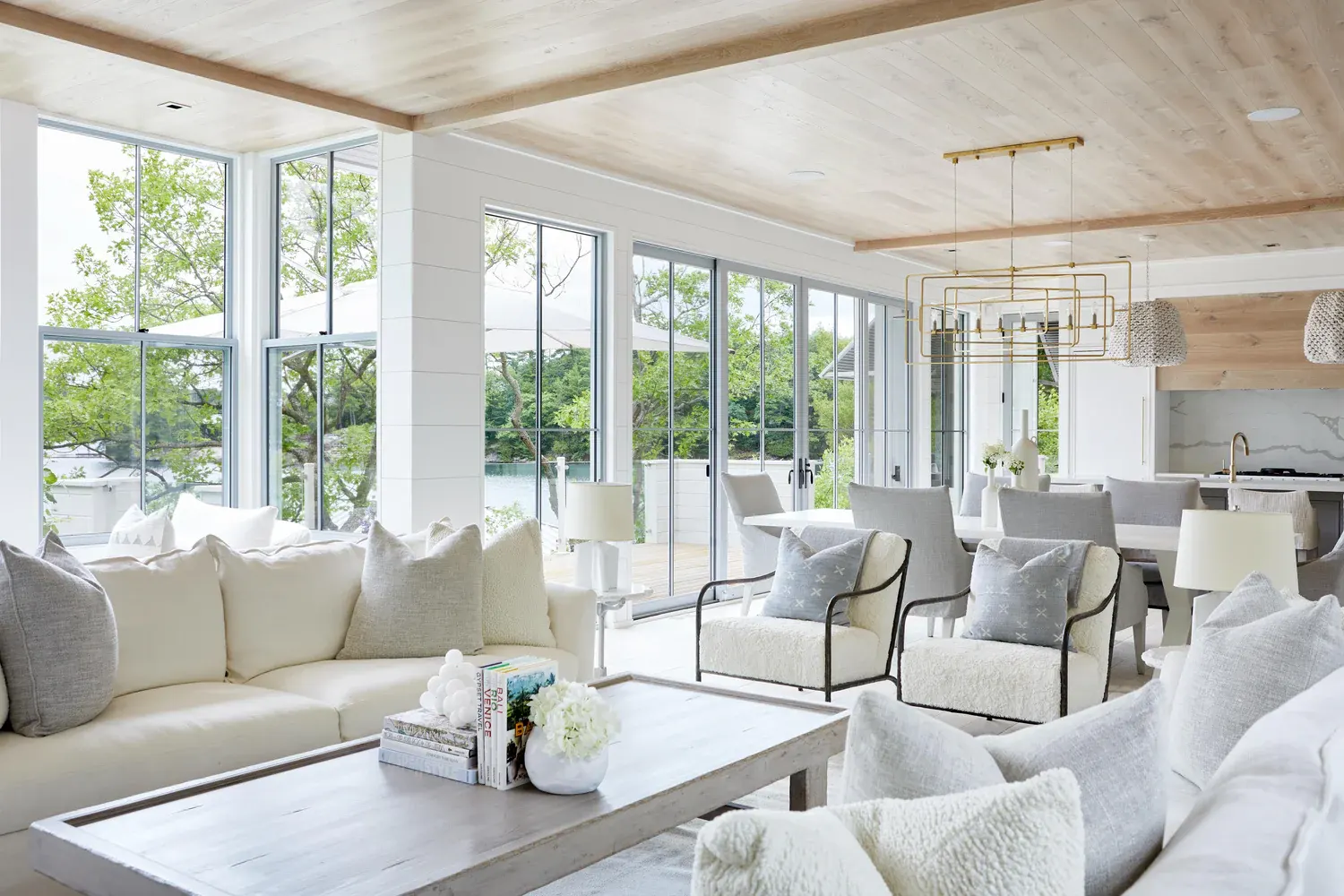
Coastal Living Room
Image courtesy of Muskoka Living
31. Shades of Gray
Gray is one of the most underused tones in coastal design — it adds sophistication and depth to a blue-and-white palette without introducing any warmth that might disrupt the cool, coastal quality of the scheme.
This primary bedroom by Stephanie Gamble shows the combination at its most considered. White walls and light oak flooring establish the neutral foundation, while black accents — a black iron four-poster bed, black-framed windows, and black curtain rods — introduce the high-contrast element that gives the room its contemporary edge. White and gray bedding, light gray linen curtains, and a light gray area rug layer the gray tones at every level, while two pale blue accent chairs introduce the coastal color note without overwhelming the restrained palette. The weathered wood quality of the four-poster adds organic character that prevents the gray and white combination from feeling too clinical.
Designer Tip: I recommend using black as an accent in coastal bedrooms more readily than most designers do — black iron bed frames, black window frames, and black curtain hardware provide the definition and contrast that a pale coastal palette needs to feel designed rather than simply light.

Shades of Gray
Image courtesy of Stephanie Gamble Interiors
32. Breakfast & Dining Nooks
A casual dining nook brings a relaxed, personal quality to a coastal home that a formal dining room rarely achieves — it’s the space where the household actually gathers for everyday meals, which makes it worth designing with the same care as the more prominent rooms.
This dining nook by Ashley Gilbreth centers on a long pale blue upholstered bench positioned in front of a large window with white sheer curtains — the bench color echoing the coastal palette while the sheers keep the natural light filtering softly into the space. A warm wood dining table paired with wood chairs in soft green and white stripes adds natural-material warmth and subtle pattern variation that define the breakfast nook direction. A large vase of leafy greens on the table brings the organic botanical element, and a beaded chandelier above anchors the space with coastal texture at ceiling level. Shiplap walls and warm wood flooring complete the material foundation.
Designer Tip: I always recommend an upholstered bench along one side of a casual dining table in a coastal nook — it creates a more relaxed, gathered seating arrangement than chairs alone, and it allows more flexibility in how many people can sit comfortably.
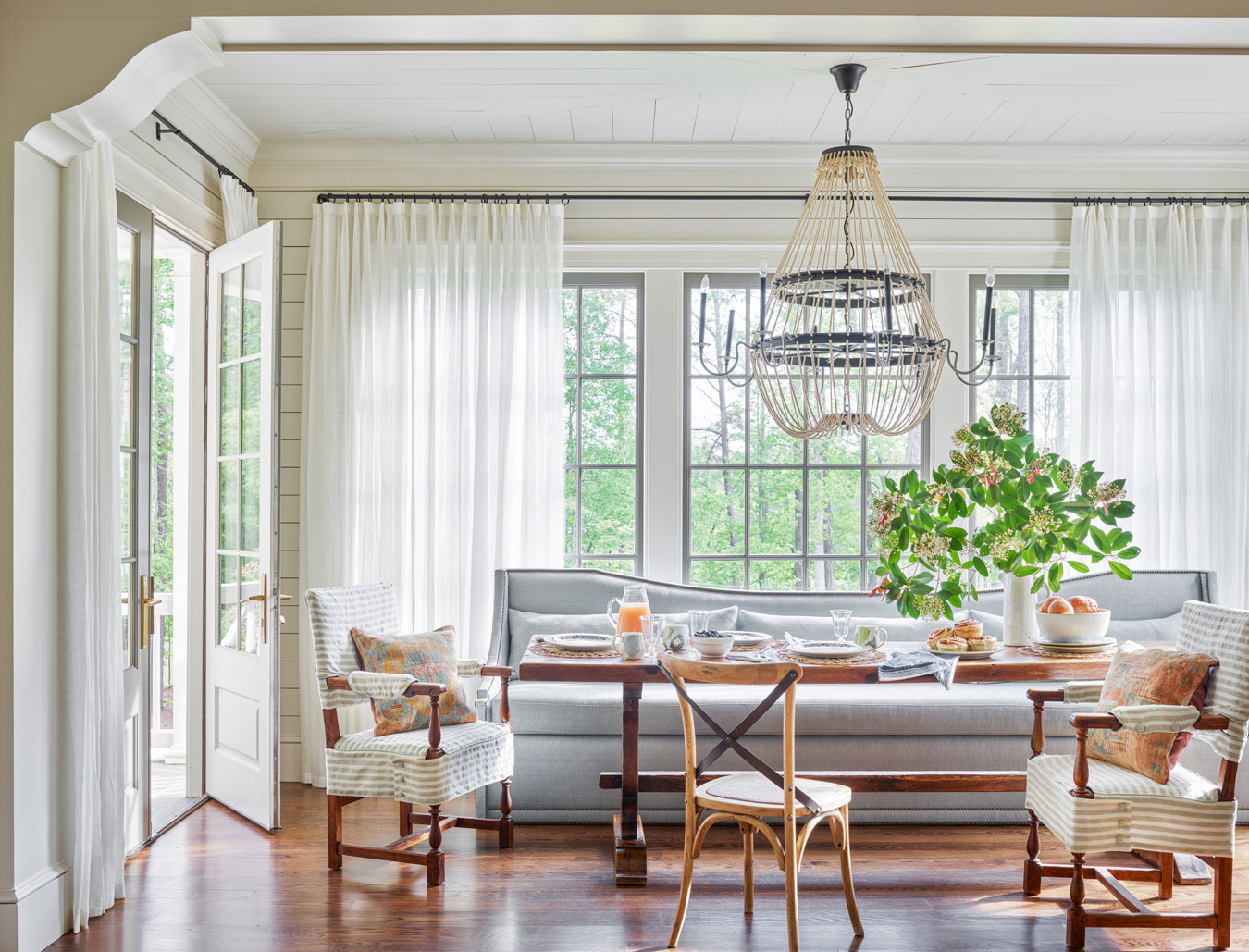
Coastal Dining Nook
Image courtesy of Ashley Gilbreath
33. Buttery Shades of Yellow
Yellow is an unexpected but genuinely effective accent in a coastal interior — it introduces warmth and energy into a blue and white palette without disrupting the cool, natural quality of the scheme. Buttery, muted yellow reads as sunlight rather than color, which is exactly the right register for a coastal room.
This living room by Katie Davis shows the palette working across a generous, multi-zone space. Two pale blue linen sofas sit back to back with a console and two lamps between them — an arrangement that creates two distinct seating areas from a single central anchor. On either side, two separate seating groupings extend the space further, each styled with the same eclectic mix of stripes, solids, and florals in the blue, yellow, white, and tan palette. Sisal area rugs ground each zone, white walls and a large expanse of windows keep the space light throughout, and the consistent color story running across all the pattern variations holds the whole composition together.
Designer Tip: I recommend yellow as a coastal accent color, specifically in rooms with generous natural light — the warm tone amplifies sunlight in a way that reads as genuinely luminous rather than simply bright. Keep it in accessories and textiles rather than on walls or large upholstery pieces, and let the blue-and-white palette carry the overall coastal direction.

Coastal Living Room with Soft Yellow Hues
Image courtesy of Katie Davis Design
34. Coastal Backsplash in the Kitchen
The backsplash is where a coastal kitchen can make its most distinctive material statement — and this kitchen by K & Co. makes the most of it with a glass mosaic tile in blues, grays, and whites arranged in a rhythmic triangular pattern that catches light the way water does.
The “sand and shore” palette runs consistently throughout the open-concept space. White kitchen cabinets and a pale blue island establish the color foundation, while light oak flooring adds the warm natural material base. The Artistic Tile backsplash in glass mosaic sits beautifully against white and gray veined marble surfaces — the tile’s movement and reflectivity complementing the stone’s organic veining in a way that two matte surfaces never would. Two pendant lights in layered petal-like shapes — first in vintage gold leaf then in capiz shell — bring a warm organic glow above the island, the capiz shell connecting the lighting directly to the coastal material palette. Counter stools in a warm sandy tone complete the “sand and shore” color story.
Designer Tip: I recommend glass tile in a coastal kitchen specifically for its reflective quality — in a room designed to maximize natural light, a glass backsplash amplifies that light further into the space in a way that ceramic or stone tile simply doesn’t.

Coastal Hues in Tiling
Image courtesy of K & Co Living
35. Coastal Guest Bedroom
A coastal guest bedroom should feel like the most considered room in the house — a space that signals genuine care for the people staying in it through the same layered material attention as the primary bedroom.
This guest bedroom achieves that through a careful accumulation of coastal detail. Tan seagrass wallpaper establishes the organic texture at the wall level, providing a warm backdrop for a white wood bed frame with woven cane details and white bedding with blue accent pillows. A white wood-and-rope bench at the foot of the bed and white nightstands keep the furniture palette consistent, while a light blue chevron area rug introduces a coastal color note and pattern at floor level. A large beaded chandelier in rattan and shells anchors the ceiling with organic coastal texture — the shell detail adding a genuine material reference to the sea without feeling themed. Coastal artwork completes the layered composition.
Designer Tip: I recommend seagrass wallpaper in a guest bedroom specifically — it adds the organic warmth and texture that makes a guest feel genuinely welcomed rather than simply accommodated, and it requires no maintenance or seasonal updating.
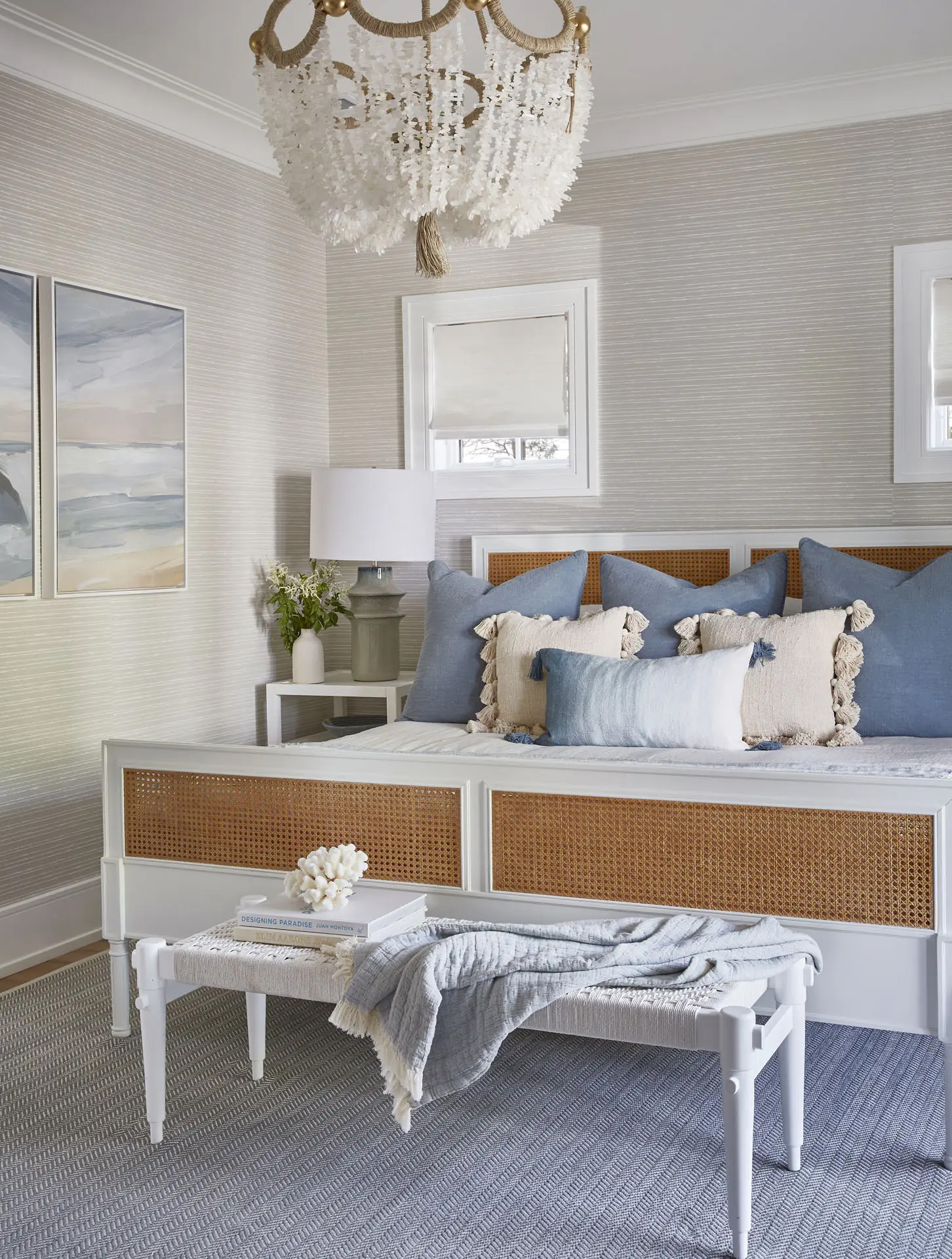
Coastal Hues in Tiling
Image courtesy of K & Co Living
36. Kids’ Coastal Bedrooms
A coastal kids’ bedroom can carry the home’s design direction while still feeling genuinely playful — the key is choosing coastal references that are age-appropriate and fun without resorting to obvious nautical clichés.
The first bedroom by K & Co. commits fully to the coastal palette. Denim-blue seagrass wallpaper covers the walls, providing a rich textural backdrop for twin beds with white wooden frames. Wooden oars in blue, white, and natural wood tones mounted above each bed are the room’s defining detail — a coastal reference that’s genuinely decorative rather than themed, and scaled perfectly for a children’s space. A navy blue area rug and navy, white, and gray bedding anchor the deep blue palette throughout.
The second takes a lighter, more expansive approach — a bunk room with four white-framed beds in a tan wallpaper space with light oak flooring. Light blue and white bedding with cream chunky-knit throws creates the layered, inviting quality that makes a shared children’s room feel genuinely considered. The lighter palette suits the bunk room format well — with four beds, the room needs breathing room that a darker palette wouldn’t allow.
Designer Tip: I recommend seagrass wallpaper in coastal kids’ bedrooms for the same reason as adult spaces — it adds warmth and organic texture that painted walls can’t replicate, and it’s durable enough to handle the demands of a children’s room.


Kid’s Coastal Bedroom
Image courtesy of K & Co Living
37. Coastal Outdoor Areas
A coastal outdoor entertaining area extends the interior design language outside — the same palette, natural materials, and relaxed approach that defines the indoor spaces should carry through to the deck, patio, or garden.
This coastal outdoor space shows the transition done well. Light gray-blue shingles on the exterior establish the coastal color direction before stepping onto the light wood deck, where four outdoor lounge chairs with cane rounded arms and backs surround a round stone fire pit — the cane detail connecting directly to the rattan and woven textures used throughout the interior. Denim-blue cushions on the loungers echo the coastal palette, while a white dining table with light-blue-and-white striped chairs creates a separate outdoor dining zone. Ocean views beyond the frame frame the whole composition — the most powerful design element in any coastal outdoor space, requiring no design intervention at all.
Designer Tip: I recommend choosing one outdoor material — cane, teak, or woven resin — and using it consistently across all the seating pieces on a coastal deck. The repetition of material creates the same cohesion outdoors as it does indoors, and it prevents the space from feeling like a collection of mismatched pieces.

Casual & Comfortable Outdoor Seating Area
Image courtesy of K & Co. Living.
Creating Your Coastal Home
Coastal decorating works because it draws from something real — the specific quality of light near water, the natural materials of the shoreline, and the instinct to slow down that the coast itself produces. Done well, it doesn’t require a single seashell or anchor motif to feel genuinely connected to the sea.
Living on the West Coast of British Columbia, I find that the most authentic coastal interiors are the ones that reflect the specific landscape surrounding them — whether that’s the Pacific, a lake, or a river — rather than a generic idea of what “coastal” should look like. The palette, the materials, and the light are already there. The design work is simply learning to bring them inside.
Whether you’re drawn to the layered neutrals of a modern coastal living room, the deep blues of a lake house bedroom, or the organic textures of a rattan and seagrass interior, the ideas in this guide give you a genuine starting point. The coast is the inspiration — your home is where it lands.
Frequently Asked Questions About Coastal Decorating Ideas
How can I decorate my house in a coastal style?
Start with a soft, tonal palette of warm whites, sandy neutrals, muted blues, and gentle grays — the colors of the ocean, shoreline, and sky translated into a cohesive interior foundation. Natural materials do the most work in a coastal home: linen upholstery, rattan and woven textures, light oak flooring, seagrass wallpaper, and stone surfaces all establish the organic quality that defines the style. Avoid obvious nautical motifs — shells in frames, anchor prints, and lighthouse references date quickly and undermine the sophisticated, material-led approach that modern coastal design depends on. Instead let the connection to the coast come through color, texture, and natural light. Large windows that frame water or garden views, sheer curtains that filter light softly, and a consistent palette carried through every room create the genuine coastal atmosphere that themed decoration rarely achieves.
What is the 3-5-7 rule of decorating?
The 3-5-7 rule is a guideline for grouping decorative objects in odd numbers to create visual interest and natural balance. Rather than placing items in pairs or even groupings — which can feel static and symmetrical — odd-numbered arrangements create a sense of movement and hierarchy. In a coastal interior, this might mean a vignette of three elements on a console (a tall vase, a lower bowl, and a candle), or a gallery wall built around five carefully chosen coastal prints rather than four or six. The rule isn’t rigid, but the underlying principle — that odd groupings feel more dynamic and collected than even ones — holds consistently across most decorating contexts, and particularly in coastal interiors where the goal is a gathered, personal quality rather than a coordinated showroom look.
What are some common mistakes to avoid when decorating a coastal living room?
The most common mistake is over-theming — filling the room with shells, anchors, nautical rope, and lighthouse prints until the space feels like a souvenir shop rather than a genuinely designed interior. Modern coastal design works through subtlety: the connection to the coast should come through palette, natural materials, and light rather than decorative references. A second common mistake is using too many shades of blue without a sufficient neutral base — blues need warm whites, sandy beiges, and natural wood tones to anchor them, otherwise the room feels cold rather than coastal. A third mistake is choosing furniture that’s too small for the space — coastal rooms typically have generous proportions and high ceilings, and undersized furniture makes them feel empty rather than relaxed. Finally, neglecting texture is a frequent error: a coastal room built on color alone without layered natural fibers, woven accents, and organic materials will always feel flat regardless of how well the palette is chosen.
What are the coastal interior design trends for 2026?
The strongest coastal direction for 2026 is toward a more natural, organic interpretation — less nautical reference and more genuine connection to the materials and textures of the natural world. Handcrafted pieces, raw fibers, living botanicals, and unfinished surfaces are replacing the polished, overtly beach-themed aesthetic of previous years. Rattan is appearing in increasingly varied and sculptural forms — arched headboards, scalloped pendants, looped chair backs — moving well beyond the basket-and-tray applications of earlier coastal trends. Seagrass wallpaper continues to grow as a wall treatment choice, valued for its organic texture and tonal neutrality. The color palette is shifting toward warmer, earthier coastal tones — sandy terracottas, warm greiges, and muted sage greens alongside the traditional blues and whites — reflecting a broader move toward interiors that feel connected to the land as much as the sea. Original and locally sourced artwork is increasingly preferred over mass-produced coastal prints.
What is the difference between coastal and modern coastal decorating?
Traditional coastal decorating tends to rely on obvious beach references — nautical stripes, shell collections, driftwood accents, and a palette of bright navy, coral, and crisp white. It’s a style that signals the coast through decoration and motif. Modern coastal decorating takes a fundamentally different approach: the connection to the sea comes through palette, material, and light rather than through themed objects. Soft tonal blues, sandy neutrals, warm whites, and organic materials like linen, rattan, seagrass, and light oak create the coastal atmosphere without any literal reference to the beach. Modern coastal also embraces a more eclectic material mix — darker wood tones, black metal accents, and contemporary furniture silhouettes sit comfortably alongside the natural textures, creating a layered, sophisticated result that feels current rather than themed. The distinction matters most when choosing between a look that reads immediately as “beach house” and one that simply feels calm, natural, and deeply connected to the landscape surrounding it.
View Recent Posts
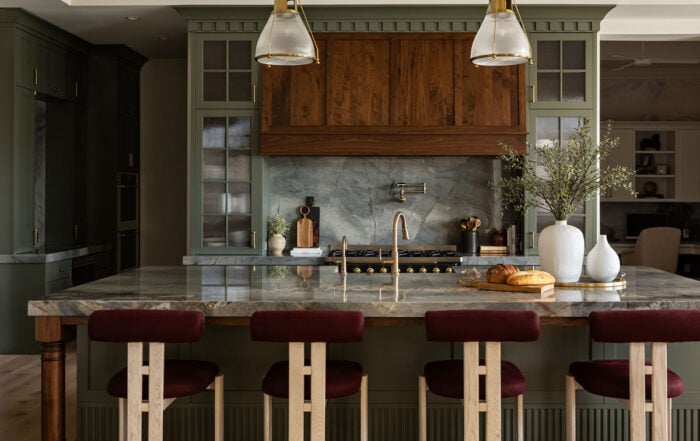
Stunning Range Hood Design Ideas
Range hood design ideas covering stone, wood, plaster, copper, and stainless steel — with designer tips on proportion, material selection, and installation.

Fireplace Design Ideas
45 fireplace design ideas, from ceiling-high stone and fluted plaster to wood paneling and black tile, with a designer’s tips on materials, scale and color.
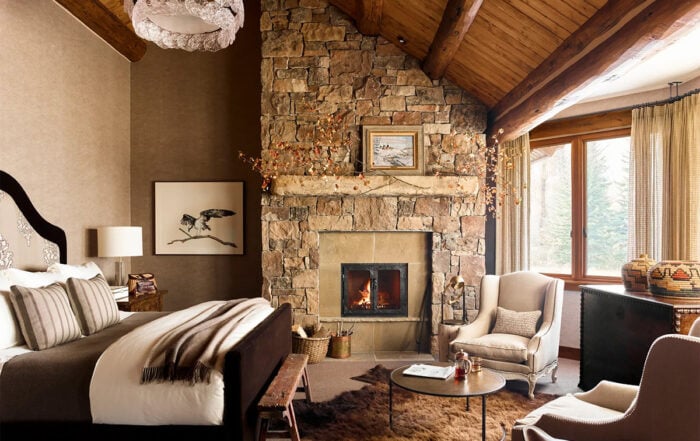
Rustic Bedroom Ideas
Rustic bedroom ideas covering natural materials, layered textiles, color palettes, and professional design strategies for log cabin, modern rustic, Scandinavian, and luxury retreat styles.
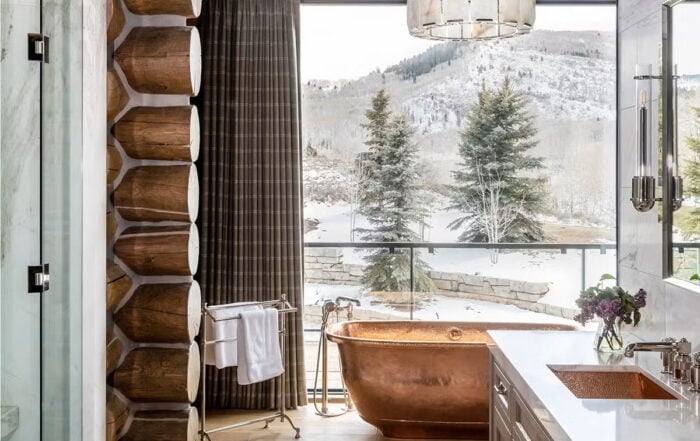
Rustic Bathroom Ideas
Rustic bathroom ideas — natural materials, vintage fixtures, earthy palettes, and designer tips for log homes, cabins, and mountain retreats.
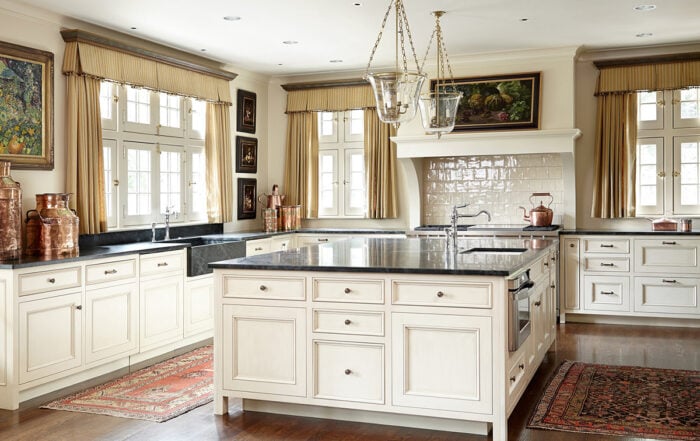
Cream Kitchen Cabinet Ideas
Cream kitchen cabinet ideas curated by interior designer Tracy Svendsen. Warmer than white and more versatile than beige, cream cabinets work beautifully across farmhouse, rustic, traditional, and modern kitchens.
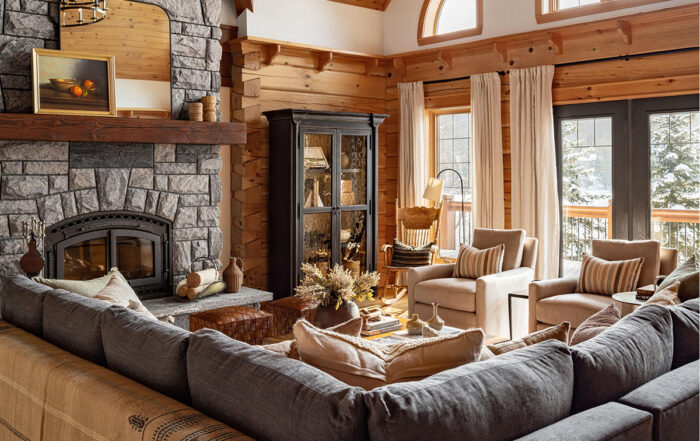
Log Home Decorating Ideas
Log home decorating ideas covering color palettes, furniture selection, lighting, stone fireplaces, and modern approaches to handcrafted log home interiors.
Frequently Asked Questions About Coastal Decorating Ideas
How can I decorate my house in a coastal style? Start with a soft, tonal palette of warm whites, sandy neutrals, muted blues, and gentle grays — the colors of the ocean, shoreline, and sky translated into a cohesive interior foundation. Natural materials do the most work in a coastal home: linen upholstery, rattan and woven textures, light oak flooring, seagrass wallpaper, and stone surfaces all establish the organic quality that defines the style. Avoid obvious nautical motifs — shells in frames, anchor prints, and lighthouse references date quickly and undermine the sophisticated, material-led approach that modern coastal design depends on. Instead let the connection to the coast come through color, texture, and natural light. Large windows that frame water or garden views, sheer curtains that filter light softly, and a consistent palette carried through every room create the genuine coastal atmosphere that themed decoration rarely achieves.
What is the 3-5-7 rule of decorating? The 3-5-7 rule is a guideline for grouping decorative objects in odd numbers to create visual interest and natural balance. Rather than placing items in pairs or even groupings — which can feel static and symmetrical — odd-numbered arrangements create a sense of movement and hierarchy. In a coastal interior, this might mean a vignette of three elements on a console (a tall vase, a lower bowl, and a candle), or a gallery wall built around five carefully chosen coastal prints rather than four or six. The rule isn't rigid, but the underlying principle — that odd groupings feel more dynamic and collected than even ones — holds consistently across most decorating contexts, and particularly in coastal interiors where the goal is a gathered, personal quality rather than a coordinated showroom look.
What are some common mistakes to avoid when decorating a coastal living room? The most common mistake is over-theming — filling the room with shells, anchors, nautical rope, and lighthouse prints until the space feels like a souvenir shop rather than a genuinely designed interior. Modern coastal design works through subtlety: the connection to the coast should come through palette, natural materials, and light rather than decorative references. A second common mistake is using too many shades of blue without a sufficient neutral base — blues need warm whites, sandy beiges, and natural wood tones to anchor them, otherwise the room feels cold rather than coastal. A third mistake is choosing furniture that's too small for the space — coastal rooms typically have generous proportions and high ceilings, and undersized furniture makes them feel empty rather than relaxed. Finally, neglecting texture is a frequent error: a coastal room built on color alone without layered natural fibers, woven accents, and organic materials will always feel flat regardless of how well the palette is chosen.
What are the coastal interior design trends for 2026? The strongest coastal direction for 2026 is toward a more natural, organic interpretation — less nautical reference and more genuine connection to the materials and textures of the natural world. Handcrafted pieces, raw fibers, living botanicals, and unfinished surfaces are replacing the polished, overtly beach-themed aesthetic of previous years. Rattan is appearing in increasingly varied and sculptural forms — arched headboards, scalloped pendants, looped chair backs — moving well beyond the basket-and-tray applications of earlier coastal trends. Seagrass wallpaper continues to grow as a wall treatment choice, valued for its organic texture and tonal neutrality. The color palette is shifting toward warmer, earthier coastal tones — sandy terracottas, warm greiges, and muted sage greens alongside the traditional blues and whites — reflecting a broader move toward interiors that feel connected to the land as much as the sea. Original and locally sourced artwork is increasingly preferred over mass-produced coastal prints.
What is the difference between coastal and modern coastal decorating? Traditional coastal decorating tends to rely on obvious beach references — nautical stripes, shell collections, driftwood accents, and a palette of bright navy, coral, and crisp white. It's a style that signals the coast through decoration and motif. Modern coastal decorating takes a fundamentally different approach: the connection to the sea comes through palette, material, and light rather than through themed objects. Soft tonal blues, sandy neutrals, warm whites, and organic materials like linen, rattan, seagrass, and light oak create the coastal atmosphere without any literal reference to the beach. Modern coastal also embraces a more eclectic material mix — darker wood tones, black metal accents, and contemporary furniture silhouettes sit comfortably alongside the natural textures, creating a layered, sophisticated result that feels current rather than themed. The distinction matters most when choosing between a look that reads immediately as "beach house" and one that simply feels calm, natural, and deeply connected to the landscape surrounding it.

