
Coastal Living Room Ideas: A Modern, Layered Approach
By Interior Designer TRACY SVENDSEN | Published on January 31, 2024 | Updated on February 21, 2026 |
Coastal design has changed more than almost any other style I work in. The nautical clichés — rope accents, anchor motifs, navy-and-white stripes everywhere — have given way to something far more livable: light-filled rooms built around natural materials and a genuinely calming palette. I’ve found this shift makes coastal style work in far more homes than it used to, including plenty that aren’t anywhere near water.
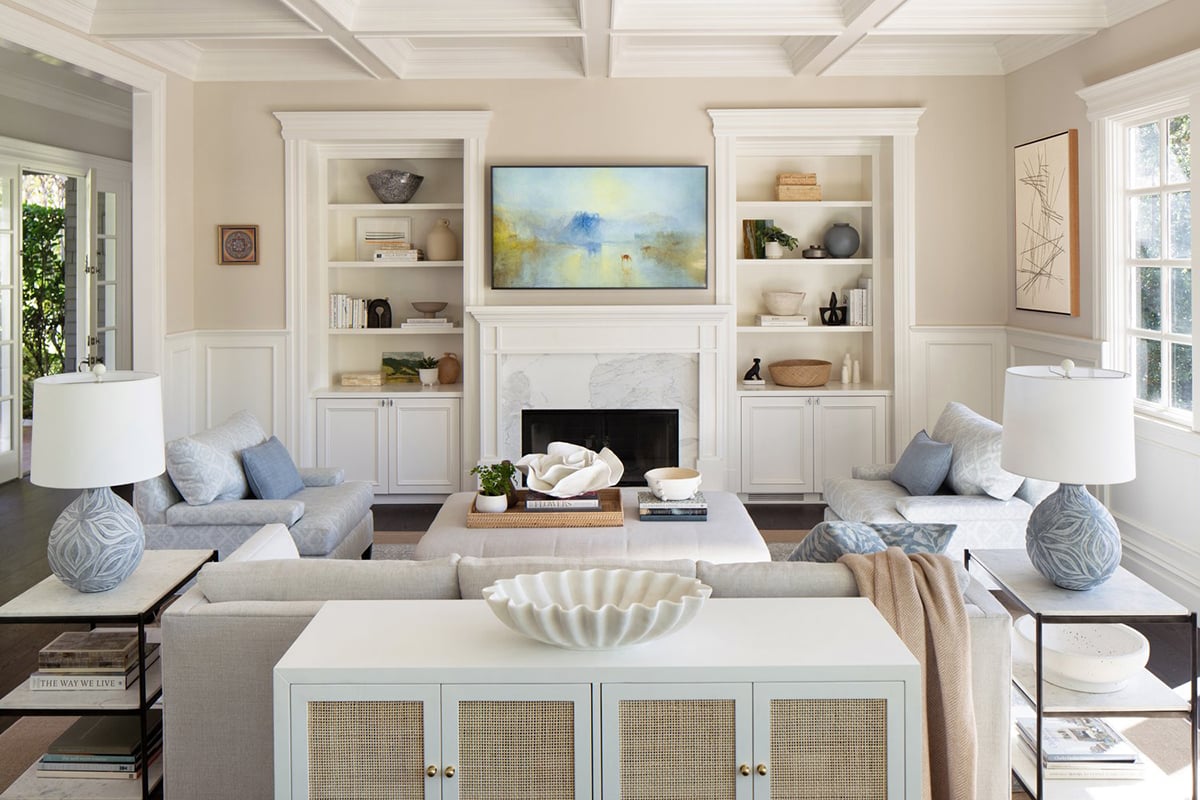
Today’s modern coastal living rooms lean on warm whites, sandy neutrals, soft blues, and natural wood tones rather than overt theme. Layered textures — linen upholstery, woven accents, subtle architectural details like shiplap — add depth while keeping the space feeling airy rather than cluttered. According to House Beautiful, this understated, organic direction is where coastal design is headed through 2026 — and it’s consistent with what I’ve been specifying for clients regardless of whether their home is on the coast. The ideas below show how thoughtful material and color choices can turn a living room into a calm, welcoming retreat. Image courtesy of Jennifer Wundrow Interiors.
Key Takeaways: Modern Coastal Living Rooms
-
Bright & Airy Spaces – Maximize natural light with large windows, light walls, and sheer curtains. Open layouts enhance the airy, relaxed coastal feel.
-
Layered Textures for Depth – Combine linen, woven rattan, soft upholstery, and natural wood to create a visually rich space without overcrowding it.
-
Neutral Palette with Subtle Accents – Soft whites, sandy beiges, pale blues, and muted greens form a calming base. Pops of color in pillows, rugs, or artwork add interest without overwhelming.
-
Curated Decor for Personality – Use art, pottery, sculptural objects, and plants thoughtfully to create a coastal look that feels refined, intentional, and personalized.
-
Comfortable, Stylish Furniture – Oversized sofas, slipcovered chairs, and layered pillows make your living room cozy, functional, and visually inviting while keeping a modern coastal aesthetic.

Bright and Airy Coastal Living Room
Image courtesy of Bria Hammel Design
Designer Mood Board: Coastal Living Rooms
In this designer mood board, I focused on how modern coastal living rooms achieve a relaxed, light-filled atmosphere through layered textures and soft neutral palettes rather than overt nautical themes. Inspired by coastal interiors from Pure Salt Interiors, the spaces emphasize simplicity, natural materials, and thoughtful tonal variation.
White walls and abundant natural light create an airy foundation, while light wood flooring introduces warmth and organic texture. Subtle architectural details such as shiplap accent walls add coastal character without overwhelming the clean, modern aesthetic.
A neutral base palette is layered with soft blues and muted grays to reflect coastal tones in a refined way. Textiles—including linen sofas, wool throws, and bouclé accent chairs—bring tactile softness, while wicker baskets and natural fibers reinforce the relaxed, organic feel.
Rather than relying on obvious coastal motifs, this approach demonstrates how texture layering, understated color variation, and natural materials create a sophisticated coastal living room that feels calm, modern, and timeless.
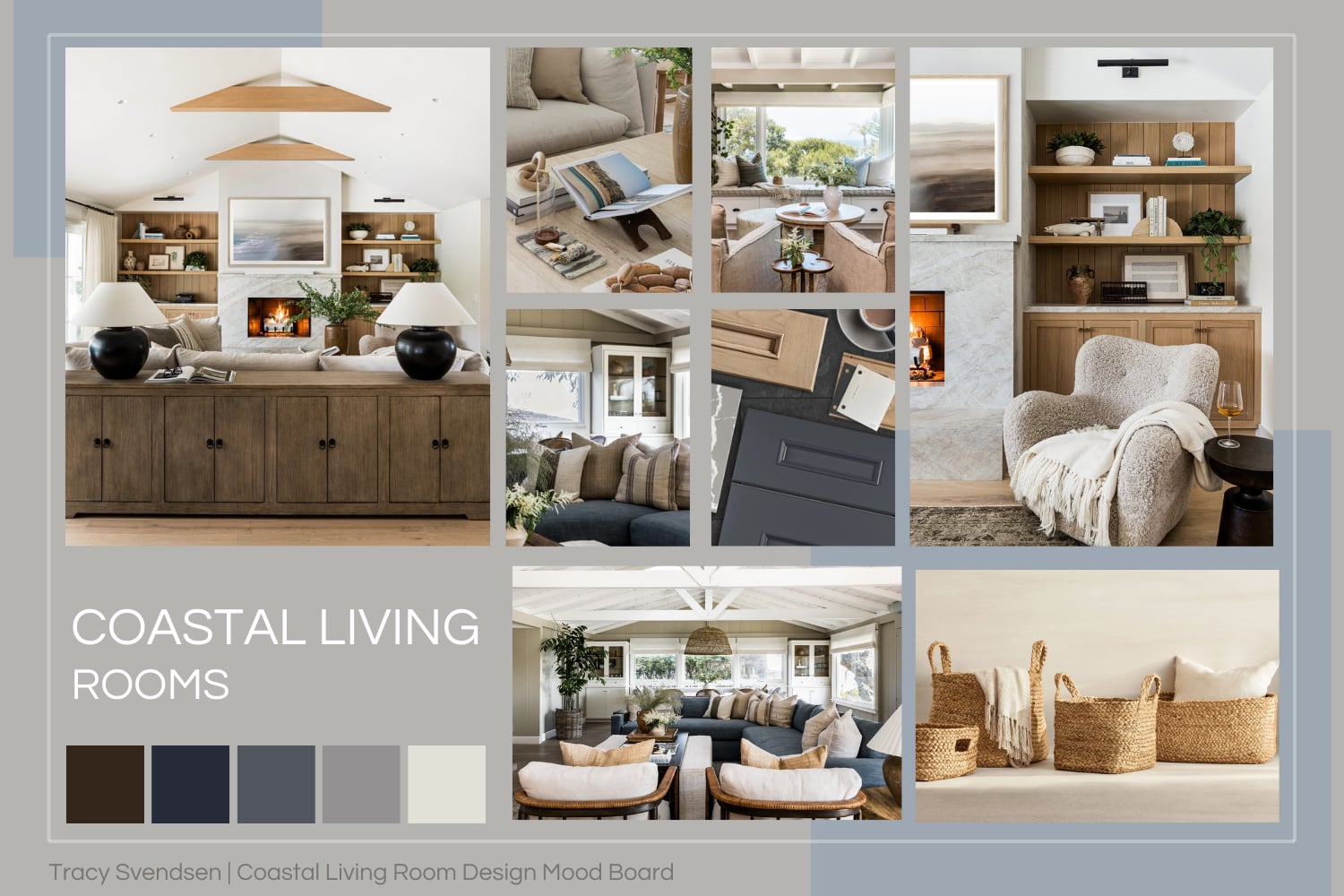
Coastal living room mood board by Tracy Svendsen featuring soft neutrals, natural materials, and layered textures for a modern coastal aesthetic.
How to Design a Modern Coastal Living Room (Designer Guidelines)
When designing a coastal living room, I focus less on themed décor and more on how materials, light, and color work together to create a relaxed, layered environment. Modern coastal interiors are defined by subtle texture contrasts and soft tonal variation rather than obvious nautical elements. These core design principles help guide the coastal living room ideas shown below:
Rustic Coastal Living Room
Image courtesy of Lexi Westergard Design
1. Layered Textures in a Light Coastal Palette
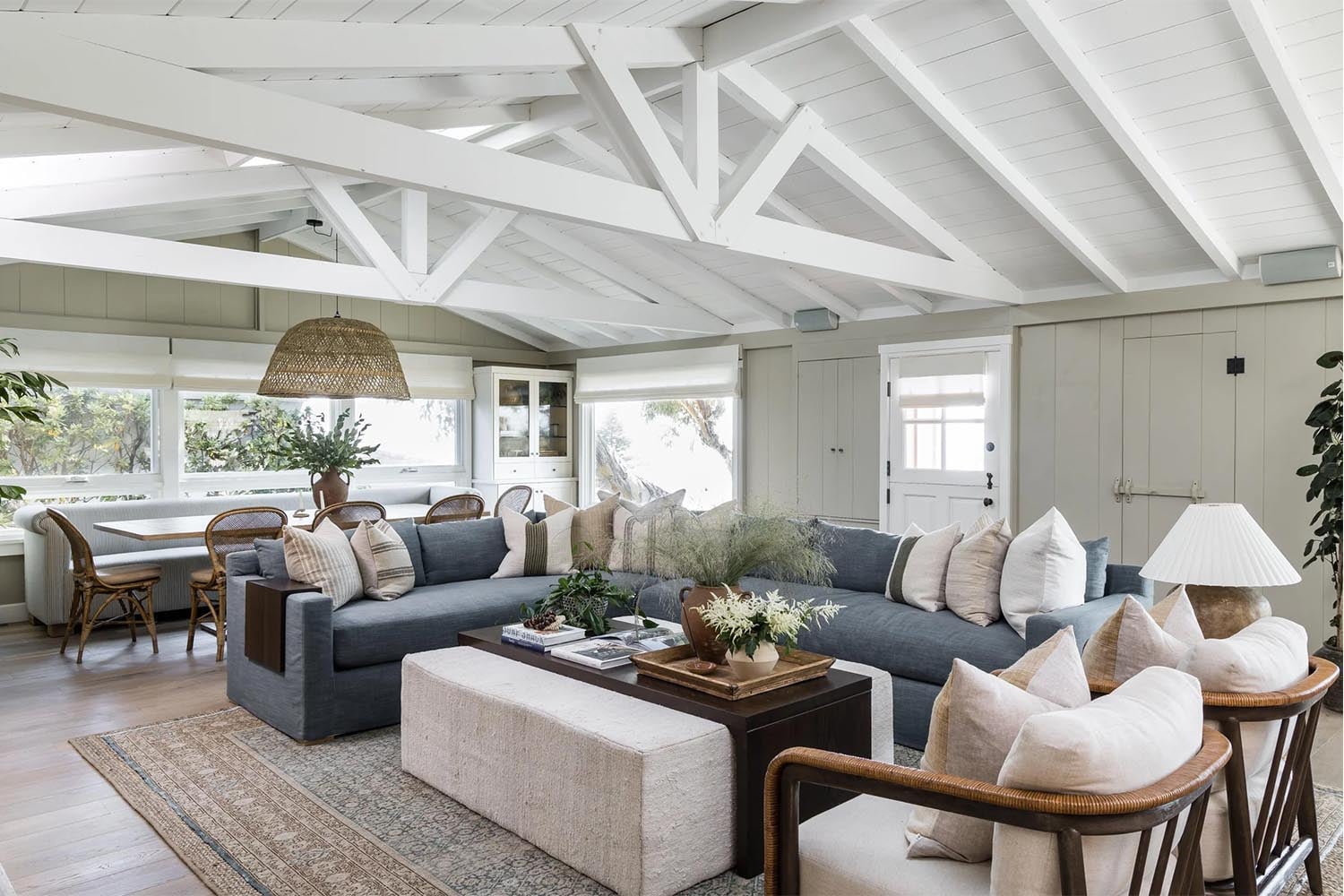
This coastal living room demonstrates how layered textures and soft tonal variation create depth while maintaining an airy, relaxed aesthetic. Light oak flooring and a vaulted ceiling with white-painted wood slats and exposed trusses establish an architectural framework that keeps the space feeling open and bright.
A gray-blue linen sectional anchors the room, layered with a mix of striped and solid pillows to introduce subtle pattern variation. Woven accent chairs and a textured area rug reinforce the natural coastal palette, while the oversized upholstered coffee table adds softness and balance against the wood flooring.
Designer Tip: When working with a neutral coastal palette, combine multiple textures—linen, woven fibers, soft upholstery, and natural wood—to create visual interest without relying on bold color contrasts.
Coastal living room featuring layered textures and a soft, neutral color palette.
Image courtesy of Pure Salt Interiors
2. Make the Most of Ocean Views
This living room demonstrates how a neutral, sandy palette can frame and enhance stunning ocean views. Floor-to-ceiling windows bring in natural light while providing uninterrupted sightlines to the sky and water, creating a serene backdrop for daily living.
A large, comfortable sectional in warm sandy tones anchors the space, layered with contemporary white and tan pillows. A whitewashed, circular coffee table adds a sculptural element, while black accents, such as a glossy vase, provide visual contrast. Textured throws, a faux fur tonal rug, and layered accessories echo the beach’s natural warmth without competing with the view.
Designer Tip: To highlight ocean views, keep interior colors soft and natural, and use low-profile furniture to keep sightlines open. Incorporate subtle textures and layered accents to add depth while keeping the scenery the focal point.
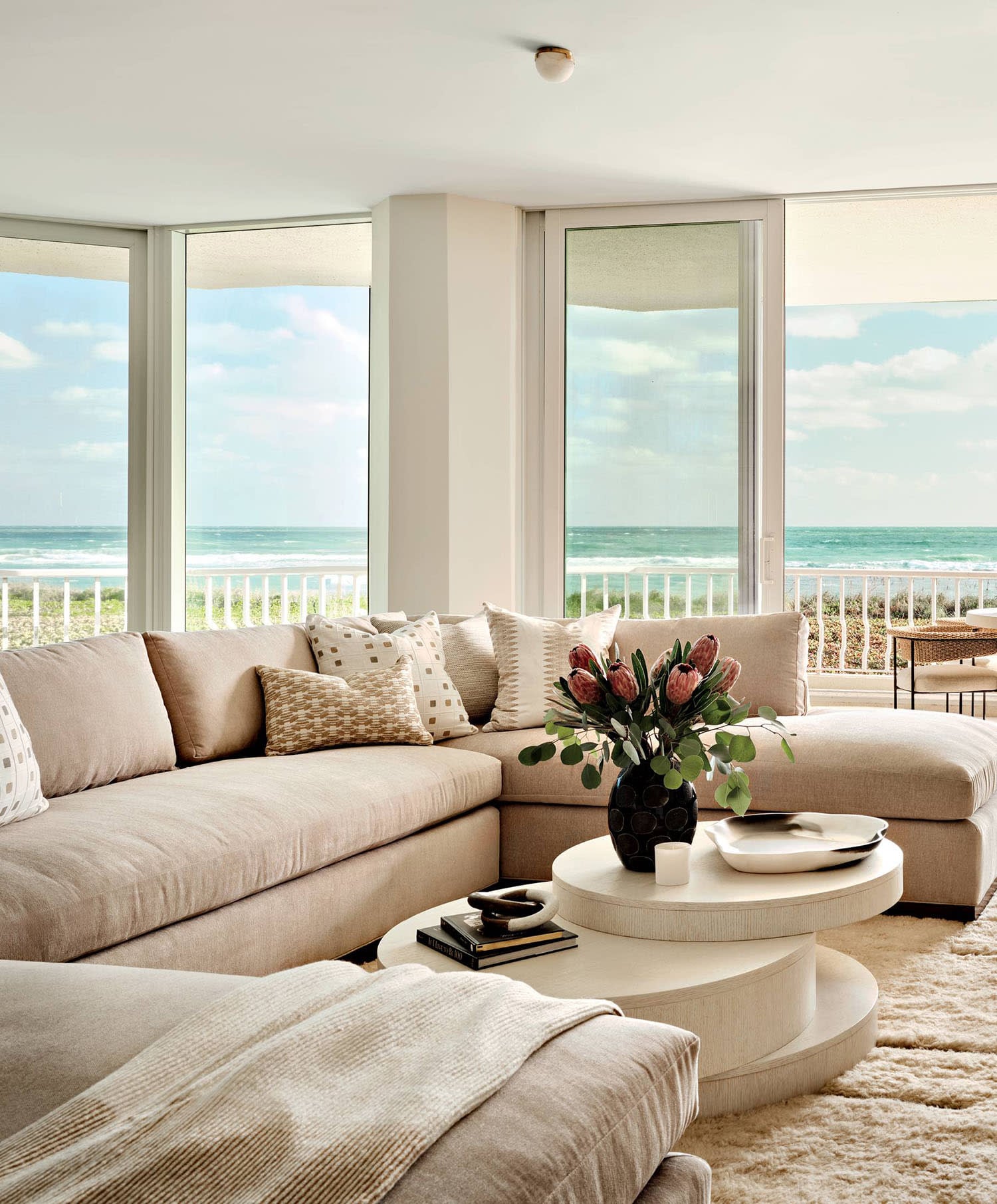
Modern Coastal Living Room Highlighting Neutral Tones That Contrast with Ocean Views
Image courtesy of Fire Finish Interiors
3. Natural Materials for a Warm Coastal Layering
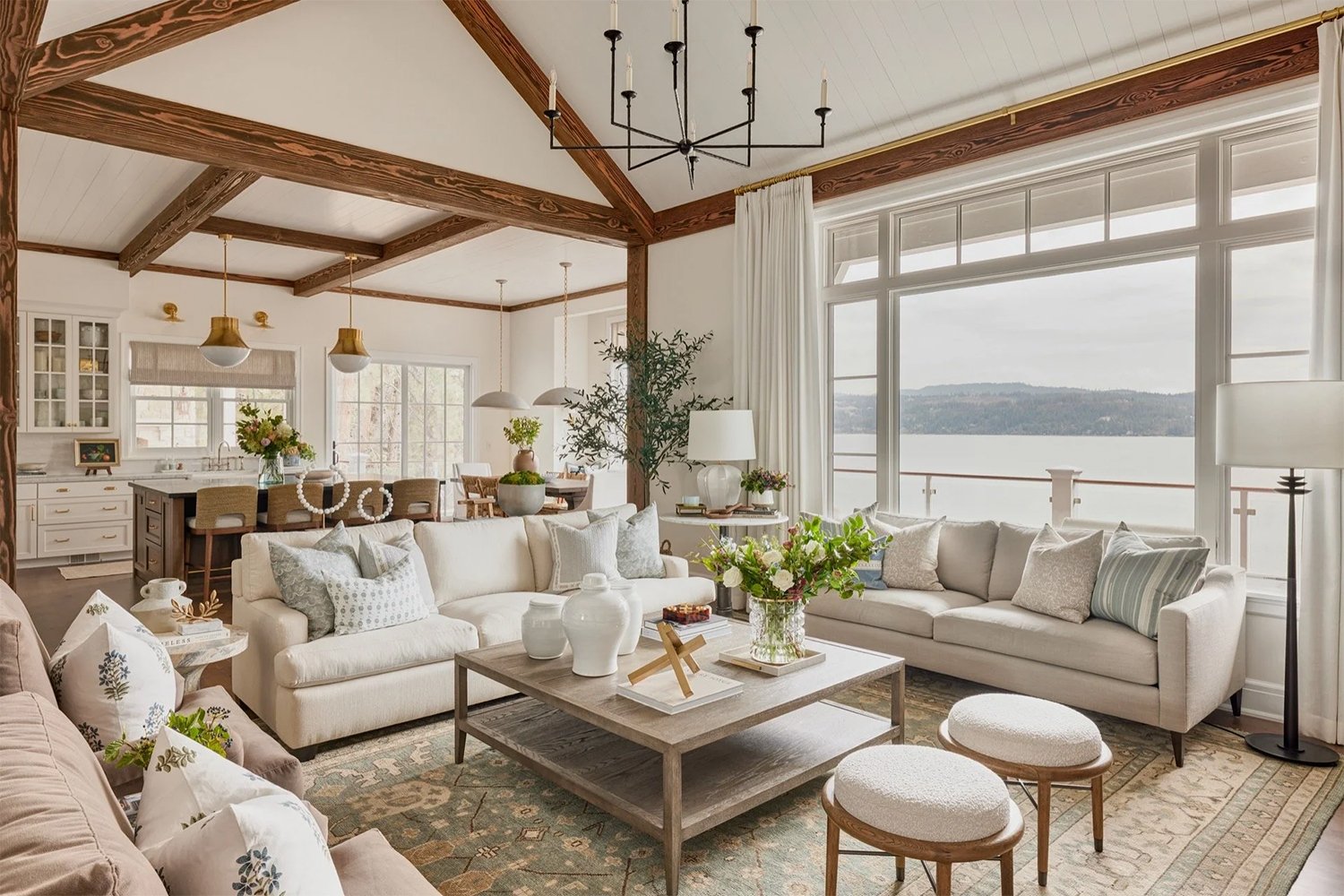
This open-concept coastal living room highlights how natural materials can create a relaxed, organic feel while maintaining a light, cohesive palette. White vertical shiplap walls and warm wood ceiling beams add architectural texture, while light wood flooring and rattan accents introduce warmth and tonal balance.
A gray slipcovered linen sofa layered with striped, floral, and solid pillows softens the space, complemented by upholstered rattan chairs and a sculptural wood coffee table. Textured textiles, greenery, and woven lighting continue into the adjacent kitchen and dining areas, reinforcing a seamless connection between natural materials and coastal design.
Designer Tip: To create a cohesive coastal look in open concept spaces, repeat natural materials—such as wood, linen, and rattan—across furniture, lighting, and accessories to maintain visual flow without relying on strong color contrasts.
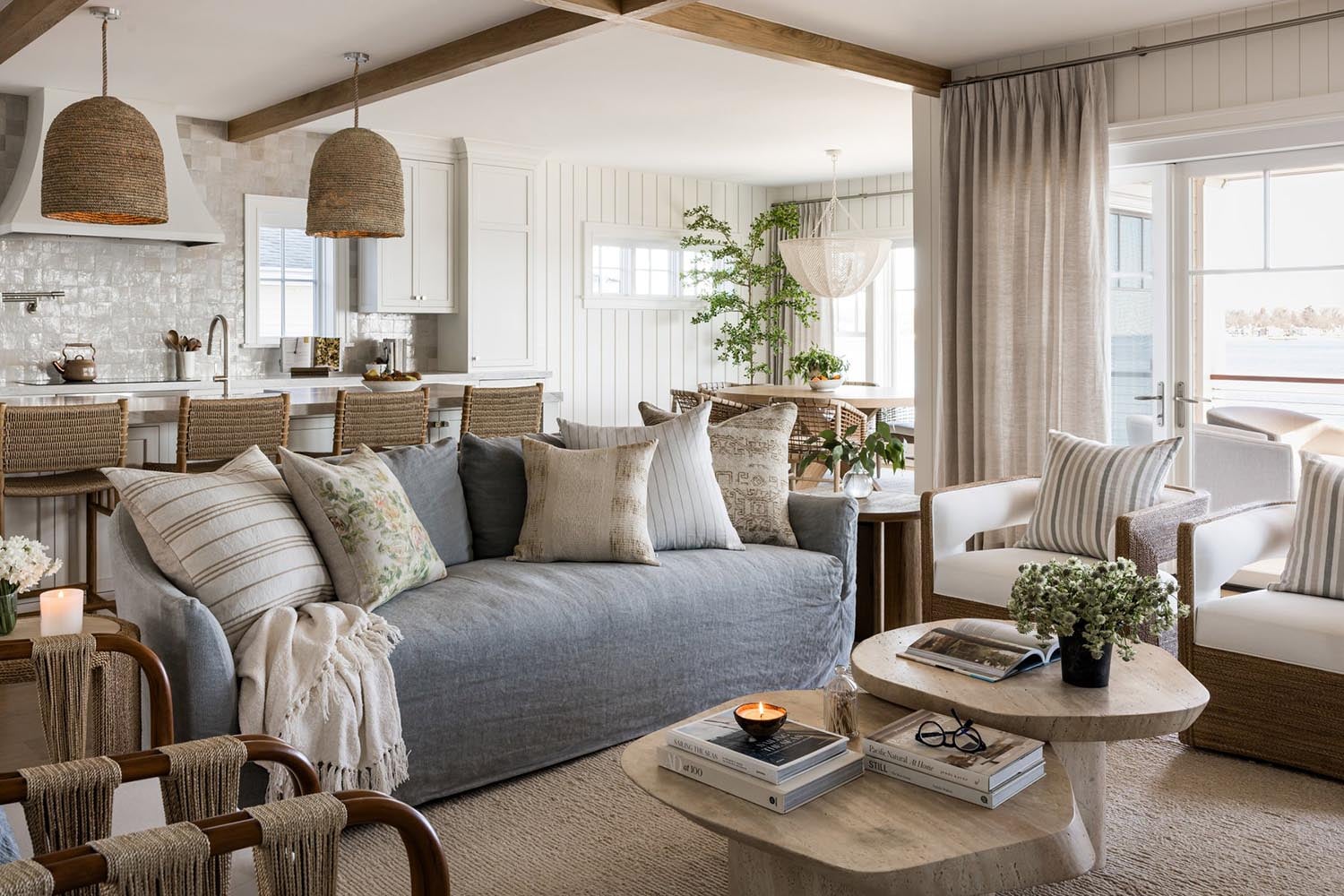
Cozy Coastal Living Room with Layered Textures & Natural Elements
Image courtesy of Pure Salt Interiors
4. Soft Blues and Natural Light
This contemporary coastal living room shows how color, material, and light can establish serenity without relying on overt coastal symbols. Pale blue sectional seating paired with striped and geometric pillows layers subtle patterns, while a white textured area rug and lacquered drum coffee table reinforce a soft, cohesive palette. Light oak flooring, tall windows, and sheer white curtains fill the space with natural light, balancing the deeper gray walls and keeping the room airy.
Designer Tip: Focus on how materials and colors interact with architecture to promote calmness. Soft blues, pale neutrals, and natural textures should highlight the room’s lines and function rather than compete with them, creating a peaceful, intentional coastal environment.

Coastal Living Area in Soft Blues and Whites
Image courtesy of Kara Miller Interiors
5. Moody Neutrals with Layered Textures
This open-concept living room demonstrates how a neutral base can feel warm, sophisticated, and inviting. Light oak flooring and ceiling beams establish natural warmth, while floor-to-ceiling deep gray curtains frame ocean views and complement black-framed windows. White and soft blue slipcovered sofas and accent chairs are layered with pillows and throws in subtle stripes and wool textures, creating depth without overwhelming the space.
A gray-toned wood coffee table anchors the seating area, styled with black vases and leafy greenery. The dining area continues the neutral palette with a round light-wood table and pale-blue upholstered chairs, and a rustic iron-and-wood chandelier connects the two spaces. A large sisal area rug grounds the room, reinforcing texture and visual cohesion.
Designer Tip: In rooms with a moody neutral palette, I recommend layering varied textures—linen, wool, sisal, and wood—across seating, tables, and décor to maintain depth and interest while keeping the color scheme understated.

Coastal Living Room in Sandy Hues
Image courtesy of M.Elle Design
6. High Ceilings and Layered Warmth
This bright, modern living room shows how architectural scale, materials, and color work together to create a welcoming, layered space. White walls and soaring ceilings emphasize openness, while a massive stone accent wall and fireplace in warm golden, gray, and tan tones bring texture and natural warmth. Light oak flooring grounds the room, complemented by a gray sofa, a white sofa, and two curving blue-and-white accent chairs arranged around a round leather table.
Two large black metal chandeliers with multiple white shades introduce visual drama, while mid-toned wood furniture, striped area rugs, and soft textiles, such as a green wool throw, add balance and comfort. Floral arrangements, plants, and a tree in a wicker basket reinforce organic texture and visual interest throughout the space.
Designer Tip: Combine architectural elements like high ceilings and large-scale fireplaces with layered furniture, textiles, and natural accents to maintain intimacy and warmth in a spacious living area.
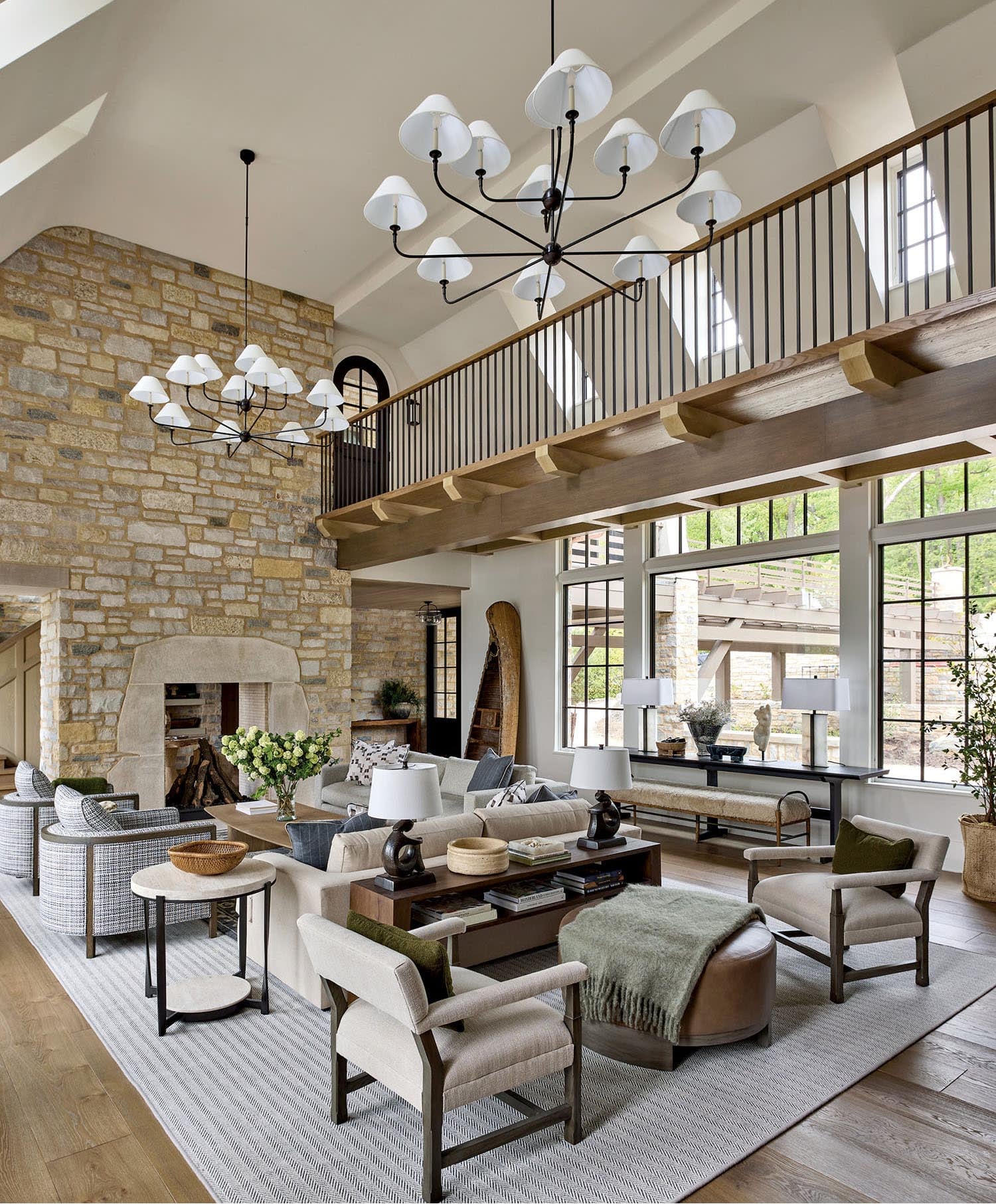
Modern Coastal Lake House Living Room with a Stone Fireplace
Image courtesy of Elizabeth Kruegar
7. Rich Wood Tones and Earthy Contrast
This living room departs from traditional light-and-blue coastal palettes, embracing warmth, texture, and natural contrast. Dark-stained wood flooring and ceiling beams anchor the space, while warm cream walls and ceilings maintain a light, inviting atmosphere. A stone fireplace with earthy tones, a tan concrete surround, and a wood mantle with candles and a rustic vase adds sculptural interest and texture.
White sofas and two curving upholstered accent chairs are layered with a diamond-print tonal rug in brown and cream, complementing the natural wood and stone elements. The wood coffee table, combined with abundant natural light and a lake-and-tree view, reinforces a connection to nature while creating a modern, textural aesthetic.
Designer Tip: When moving away from pale, washed-out palettes, balance richer wood tones with soft neutrals and organic shapes to maintain lightness and harmony while introducing depth and contrast.
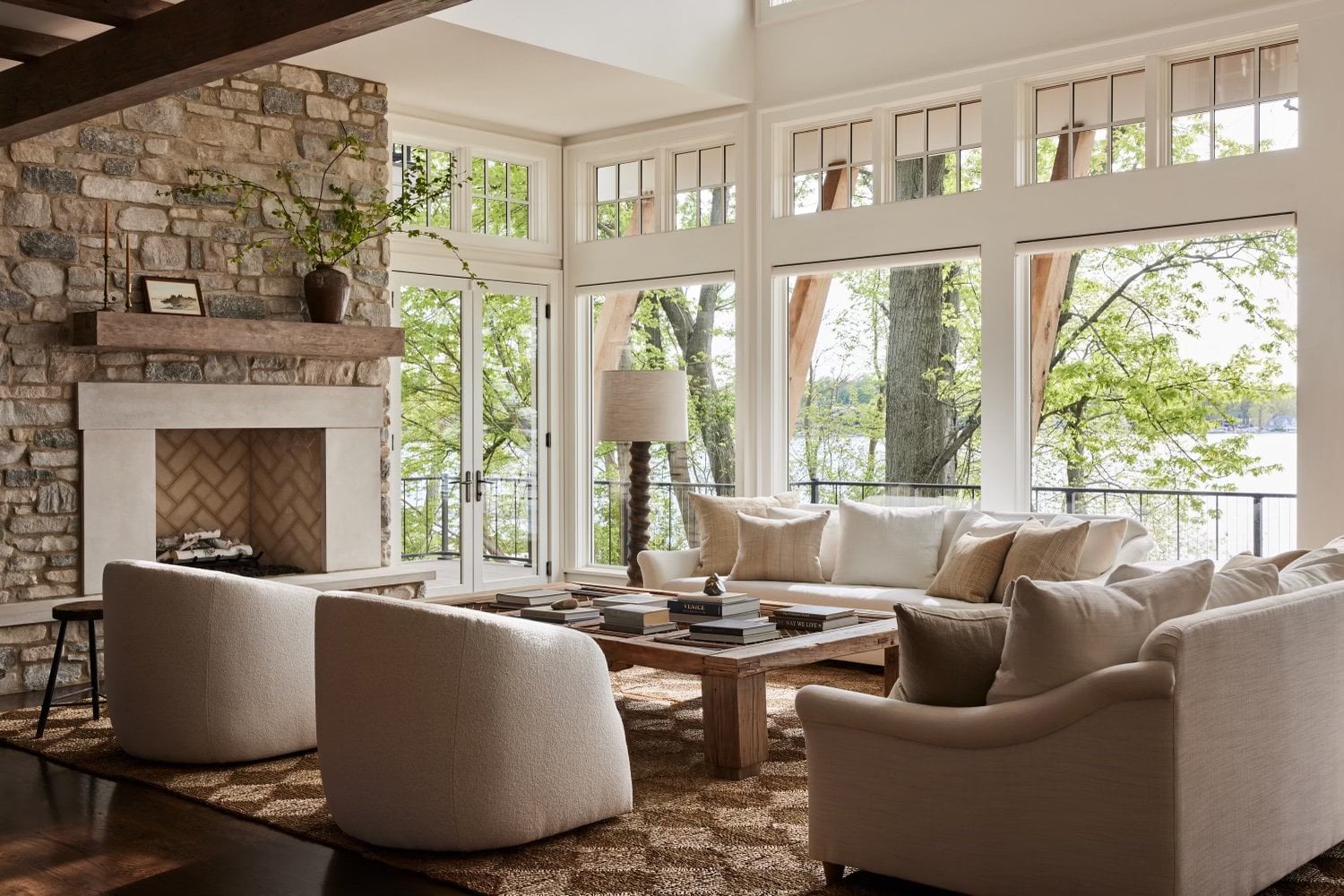
Modern Coastal Living Room Pairing Shades of Browns and Creams
Image courtesy of Of Place Studio
8. Braided Wicker and Rattan for Texture and Warmth.
This bright, tropical-inspired living room demonstrates how natural weaving techniques can bring texture, warmth, and subtle coastal influence to a modern space. Two braided swivel lounge chairs, crafted from woven materials and upholstered in pale blue fabric, provide both comfort and visual interest. The clear acrylic coffee table features rattan-wrapped corners, styled with a rattan tray holding palm branches in a contemporary white vase.
White woven rugs, cream-toned curtains, and a soft-toned fireplace surround maintain a light, airy base, while light wood built-in cabinetry and upholstered stools add functional texture. The combination of natural fibers and thoughtful layering creates a breezy, casual atmosphere that feels intentional and refined.
Designer Tip: Use woven furniture and accessories—rattan, wicker, and braided fibers—to introduce tactile interest and warmth without relying on overtly themed décor. Pair with light-colored textiles to keep the room open and airy.

Coastal Palm Beach Home
Image courtesy of Morgan Harrison Home
9. Coastal Furniture: Oversized Seating for Comfort and Flow
This open-concept living room shows how large, soft seating can anchor a space while maintaining lightness and balance. A cream-toned linen sofa paired with pale blue and light gray accent chairs provides ample, comfortable seating, complemented by a large square upholstered coffee table. Blue-gray pillows and a caramel-toned throw add subtle pops of color, layered atop a gray area rug that grounds the arrangement.
Warm wood flooring and white walls maintain an airy base, while the coffered ceiling and adjacent kitchen with white cabinetry and woven counter stools create a cohesive, open layout. The combination of scale, texture, and thoughtful placement ensures the seating feels inviting without overwhelming the space.
Designer Tip: In open layouts, oversized sofas and chairs should be balanced with layered rugs, accent chairs, and proportioned tables to create zones while maintaining a light, airy feel.
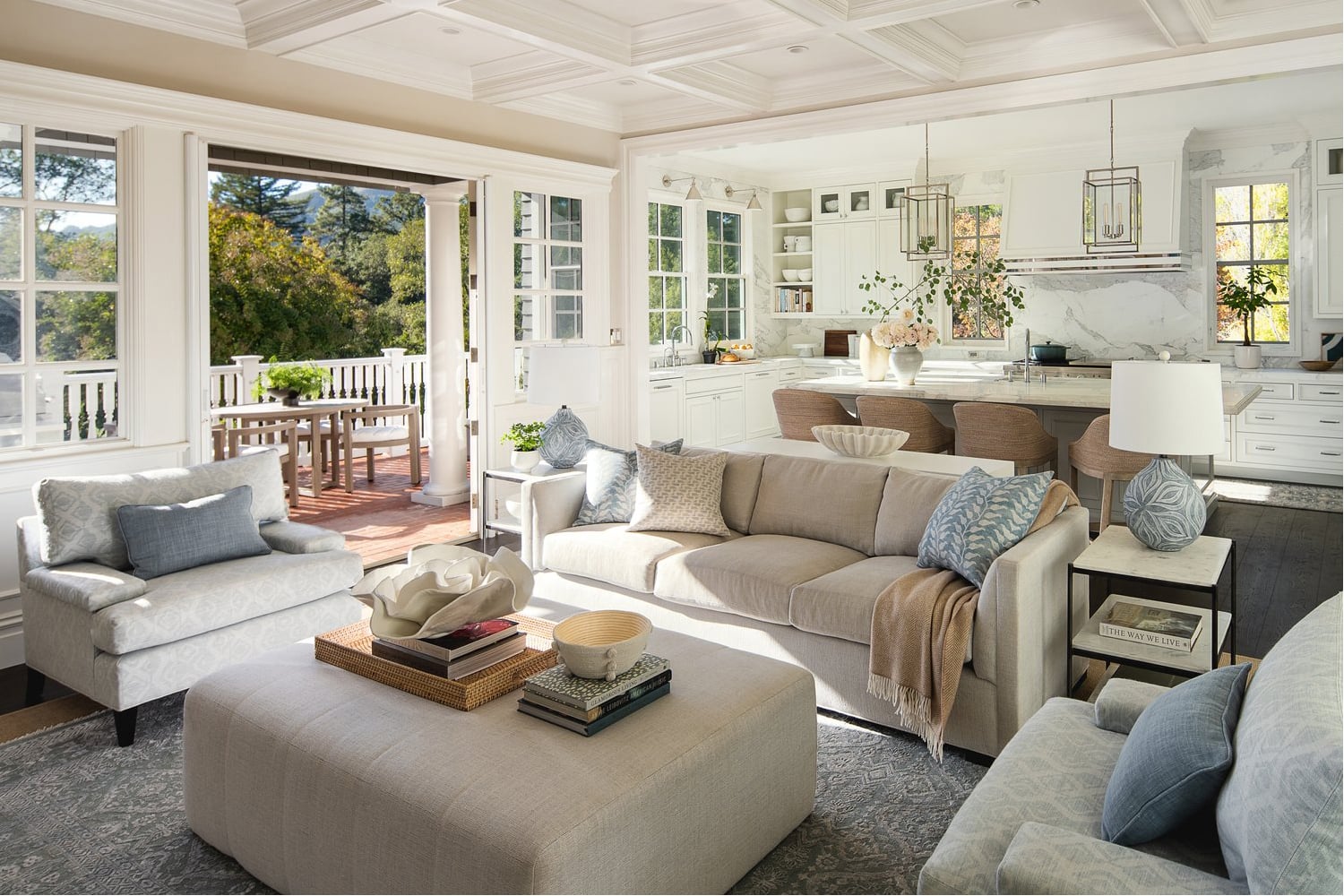
Coastal Furniture Ideas: Large, Comfortable & Oversized
Image courtesy of Jennifer Wundrow Interiors
10. Slip-Covered Sofas and Chairs
Slip-covered sofas and chairs are a practical choice for bright, airy living rooms, offering both comfort and easy maintenance. In this space, pale blue linen slipcovers create a soft, relaxed atmosphere that complements the light oak flooring and natural textures throughout the room.
Two back-to-back slipcovered sofas define separate seating areas while maintaining an open layout. Accent chairs in white, blue, and buttery yellow with subtle floral patterns add personality and layered texture. Wicker baskets, sisal rugs, and fresh floral arrangements reinforce the natural, beach-inspired aesthetic without overwhelming the room’s clean, modern lines.
Designer Tip: When working with slipcovers, choose light, neutral fabrics and layer in pillows and throws to add color, texture, and visual interest while keeping the space feeling effortless and relaxed.
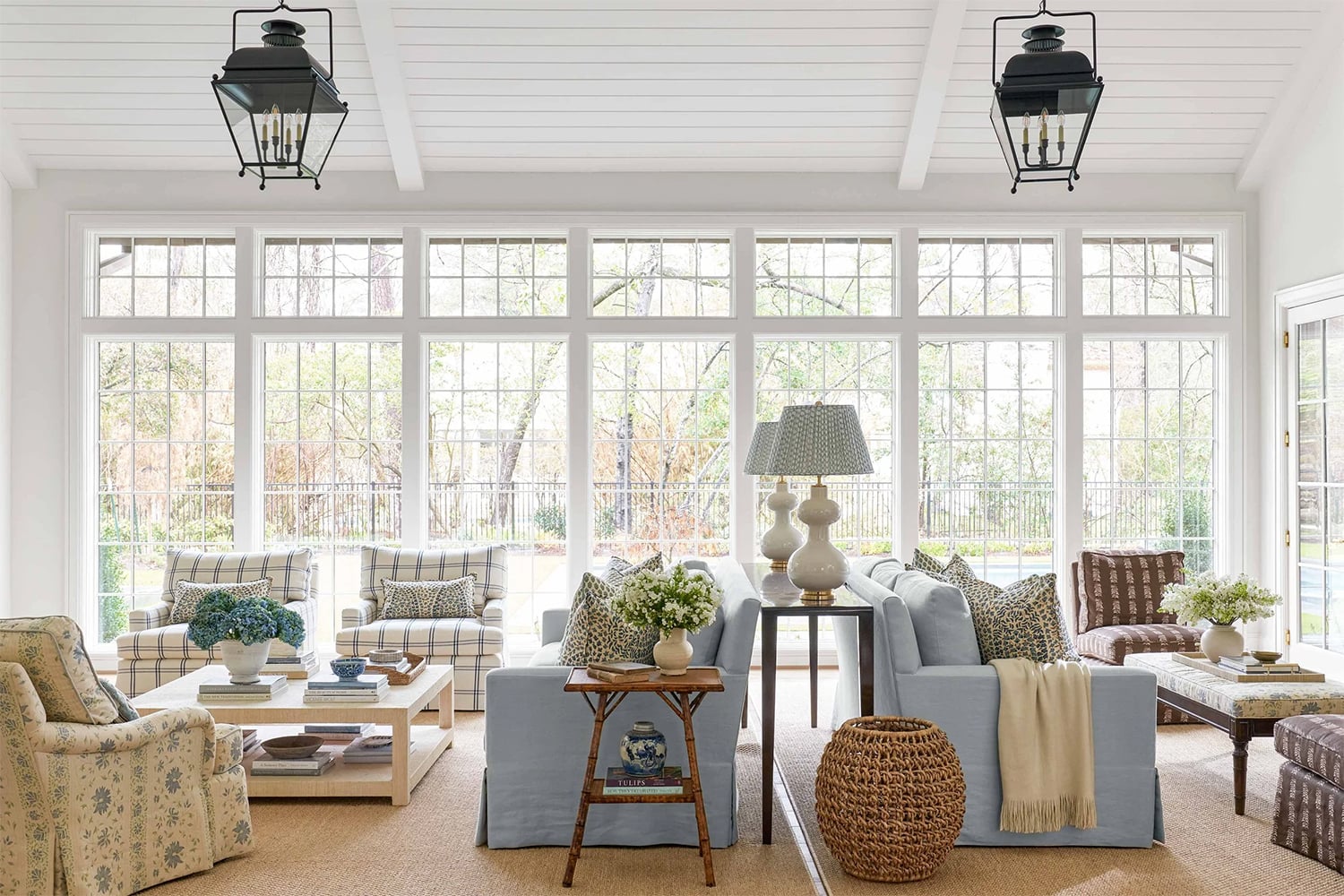
Living Room with Slipcovered Sofa
Image courtesy of Katie Davis Design
11. Open-Concept Modern Coastal Living Room
This open-concept living room and kitchen demonstrates how modern coastal interiors balance clean lines with soft, layered textures. Light oak flooring and ceiling create warmth, while wide white shiplap walls add subtle architectural interest. Large windows framed in soft blue-gray bring in natural light and provide a serene backdrop.
Two creamy white linen sofas and matching accent chairs anchor the seating area, with tonal pillows in pale blues, whites, and grays adding softness and cohesion. A white-washed wood coffee table and area rug maintain a light, airy feel, while contemporary brass lighting over the dining table introduces understated metallic elegance.
Designer Tip: In modern coastal interiors, use neutral, light-colored upholstery and simple furniture lines to keep spaces airy, then layer in soft textures, tonal accents, and metallic details to add warmth and personality without detracting from the natural light.
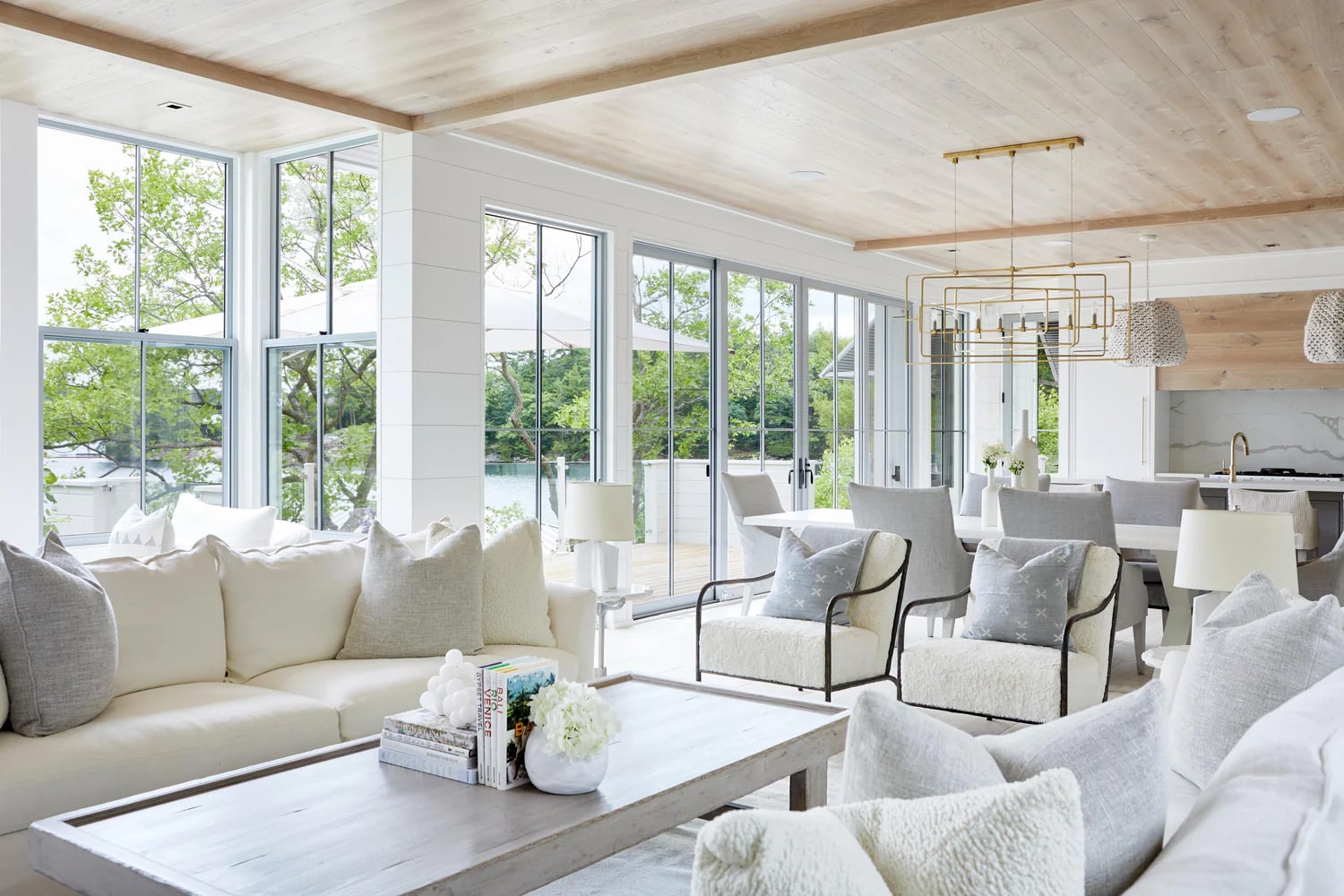
Modern Coastal Living Room
Image courtesy of Muskoka Living
12. Statement Coffee Table Anchoring the Space
A large, well-chosen coffee table can define a living room’s layout while adding both function and style. In this vaulted coastal living room, a substantial wooden table anchors the seating area, complementing the warm wood flooring and vaulted white shiplap ceiling.
The symmetrical arrangement—white sofa, two accent chairs, and a caramel leather sectional—creates balance, while the coffee table surface displays layered accessories, including books, floral arrangements, and draped wood beads, adding visual interest and texture. A vintage brass chandelier overhead introduces warmth and subtle metallic contrast, tying together the neutral, layered palette.
Designer Tip: In spacious or vaulted rooms, select a coffee table that’s proportionate to the seating arrangement and allows for decorative styling without cluttering the space. Layer accessories to add depth, texture, and cohesion to your design.

Large, Oversized Coffee Table
Image courtesy of Jennifer Wundrow Interiors
13. Artful Nautical Accents with Intentional Design
This modern coastal living room shows how nautical-inspired details can elevate a space when thoughtfully curated. Creamy walls and ceilings, light oak flooring, and exposed ceiling beams provide a warm, neutral backdrop for sandy-toned sofas, a striped accent chair, and pale blue pillows.
Nautical elements—such as white coral in a stone bowl, a piece of driftwood on a console, and sculptural beaded chains on a wicker coffee table—feel deliberate and artful rather than decorative or thematic. Two hand-woven natural cotton hassocks and a multi-tiered chandelier featuring white wooden dowels on curved iron arms add texture, scale, and visual interest.
Designer Tip: When using coastal or nautical accents, prioritize craftsmanship and context. High-quality shells, rope, or driftwood pieces can become sculptural and bespoke, elevating the room from a cliché “beachy” feel to a refined, sophisticated coastal interior.

Nautical, Beachy Accents
Image courtesy of K & Co. Living
14. Bold Feature Wall and Contemporary Coastal Accents
This contemporary coastal living room demonstrates how a statement feature wall can elevate a neutral, light-filled space. A large-scale blue abstract wallpaper contrasts with the white ceiling, creating visual drama while complementing the dark, warm wood flooring and exposed ceiling beams.
Seating includes a gray sofa and contemporary accent chairs, layered with blue-and-white pillows, arranged around a modern oval white stone coffee table with a black base. Dark blue curtains frame expansive windows and doors that open to a lake-view deck, bringing the outdoors in. White concrete fireplace, vibrant artwork, and ceramic vases with greenery add layers of color, texture, and sophistication to the room.
Designer Tip: Use a bold wall treatment to anchor an open, light-filled coastal living space. Balance the drama with neutral or natural tones in furniture, flooring, and textiles to maintain a refined, contemporary aesthetic.
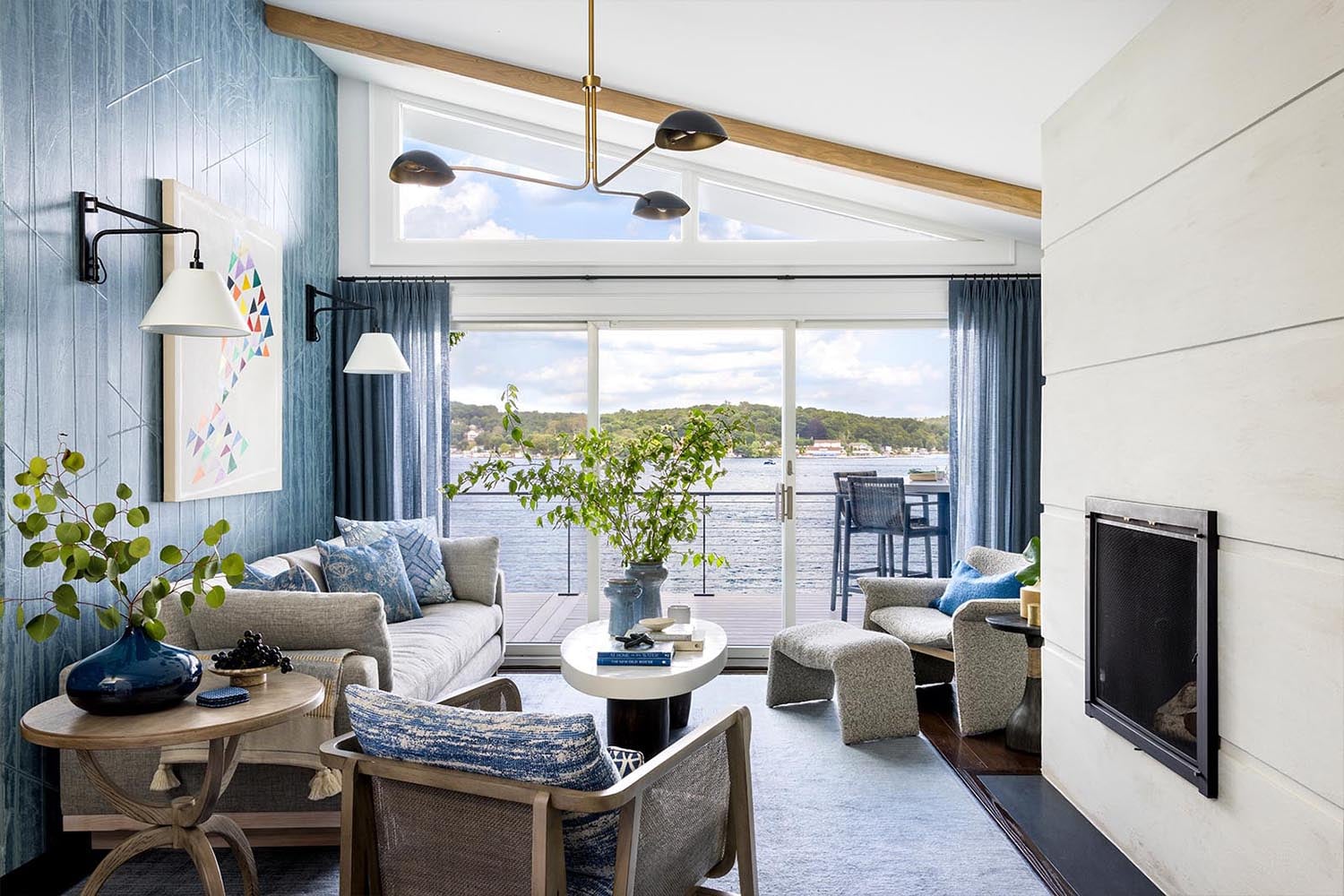
Coastal Living Room Decorating Tip: Feature Accent Wall
Image courtesy of Valerie Grant Interiors
15. Layered Pillows and Textiles for Color and Depth
Layering pillows and throws is one of the most effective ways to introduce color and texture while maintaining a cohesive palette. In this open-concept living room, white sofas are styled with pillows in navy, light blue, and soft neutrals, creating contrast against the light oak flooring and warm wood ceiling beams. Black-framed windows and poolside views reinforce the clean, architectural backdrop.
A combination of patterned and textured rugs—featuring cream, tan, and pale blue tones—adds depth beneath a pale blue upholstered coffee table with a light wood frame. Navy velvet armchairs echo the darker pillow accents, helping balance the lighter elements throughout the space.
Designer Tip: When mixing pillows and textiles, stay within a consistent color palette while varying pattern scale and fabric texture. Combining linen, velvet, and woven materials helps create dimension without overwhelming the room.
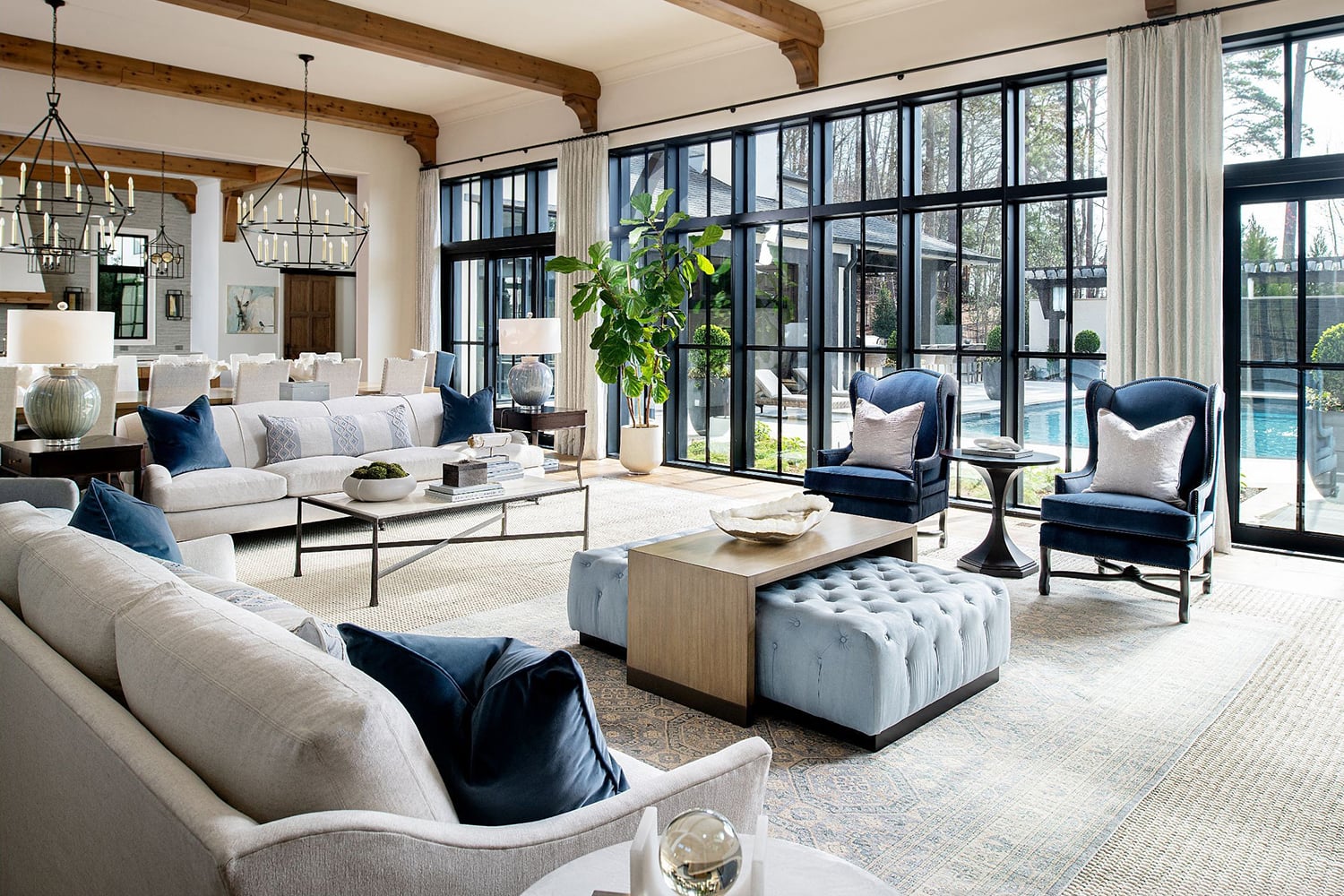
Coastal Living Room Decorating Tips with Pillows & Throws
Image courtesy of Pineapple House Interiors
16. Cozy Layered Textures in an Intimate Seating Nook
This inviting seating area highlights how layered neutral textures can create a warm, intimate retreat within a living space. A built-in window bench styled with natural linen bedding and tonal pillows in solids, stripes, and subtle windowpane patterns establishes a soft, relaxed foundation. Vertical white shiplap walls and abundant natural light enhance the airy feel while maintaining a cozy scale.
Two striped upholstered accent chairs and a round tan upholstered coffee table define the seating arrangement, complemented by light oak flooring and a woven neutral area rug. Rattan pendant lights add warmth and texture, while simple accessories—such as a wood bowl, candle, and white florals—keep the styling understated and serene.
Designer Tip: To create a cozy reading nook or secondary seating area, layer soft neutral textiles and natural materials. Vary subtle patterns and textures within a consistent palette to add depth without overwhelming the space.
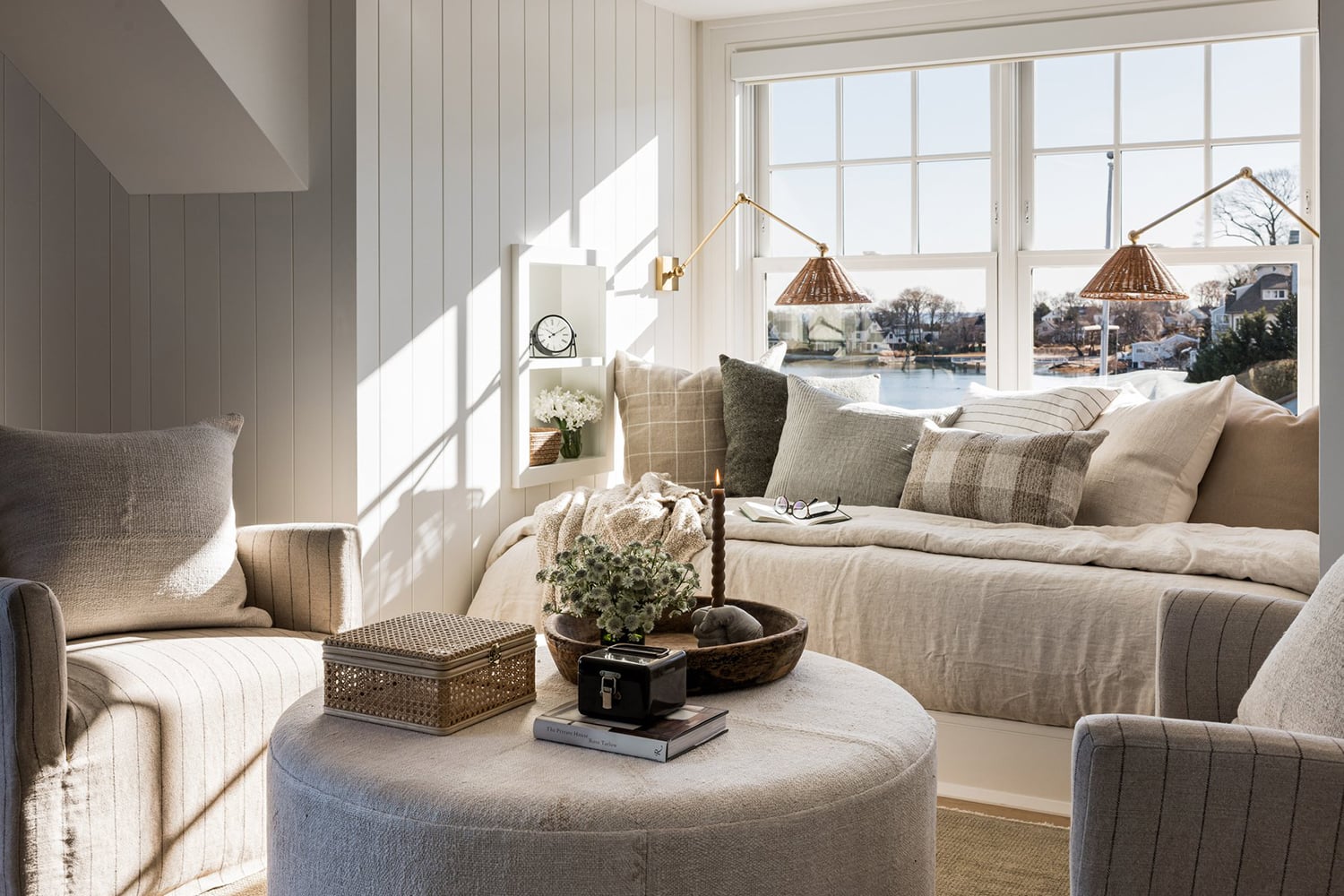
Modern Coastal Living Room with a Neutral Color Scheme and Shiplap Walls
Image courtesy of Pure Salt Interiors
17. Refined Coastal Living Room with Warm Transitional Layers
This luxury coastal-modern living room demonstrates how a layered transitional approach can elevate a waterfront interior while maintaining a relaxed, natural feel. Expansive black-framed windows capture uninterrupted bay views, creating a seamless connection between indoor and outdoor living. Cream-toned paneled walls with a central fluted detail add architectural refinement, complemented by warm wood ceiling beams and light oak flooring.
Two white sofas styled with soft blue pillows anchor the seating area, paired with woven accent chairs that introduce organic texture. A low-profile woven coffee table reinforces the natural palette, while a dramatic waterfall chandelier in antique burnished brass with fractured glass trim creates a sculptural focal point. White curtains and warm metallic accents complete the sophisticated, layered aesthetic.
Designer Tip: For an upscale coastal look, combine warm wood tones, subtle architectural paneling, and statement lighting. Keeping the palette neutral while layering natural textures and refined finishes helps create a timeless, waterfront-inspired interior.
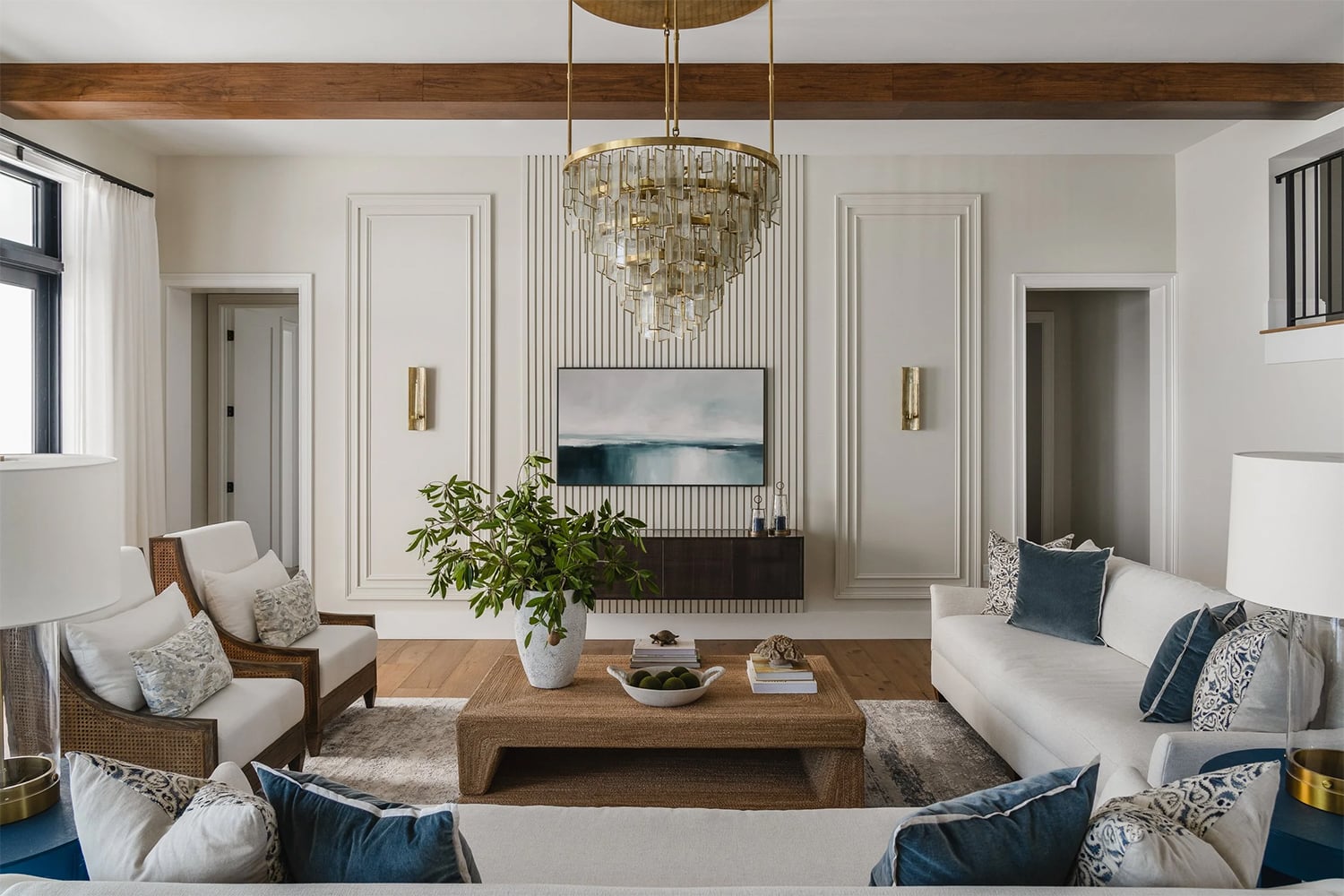
Luxury Coastal Living Room With a Statement Chandelier
Image courtesy of Emily Moss Design
18. Architectural Focal Points with Layered Decor
This modern coastal living room illustrates how strong architectural elements can serve as the primary focal point while layered décor enhances the overall design. A contemporary cream-toned stone fireplace extending to the ceiling creates vertical impact, framed by narrow bands of warm honey-brown tile that introduce contrast and warmth against soft gray walls.
High coffered ceilings and elevated windows with natural woven shades allow light to flow throughout the space, complementing the light oak flooring and neutral palette. Two white sofas styled with blue and neutral pillows surround a textured gray-and-white area rug, while striped ceramic vases, white florals, and contemporary accents add subtle pattern and visual interest. A crystal chandelier adds a refined touch to the space.
Designer Tip: When a room features strong architectural elements—such as a floor-to-ceiling fireplace—keep furnishings neutral and layered. This approach allows the structure to anchor the space while accessories introduce texture, softness, and personality.
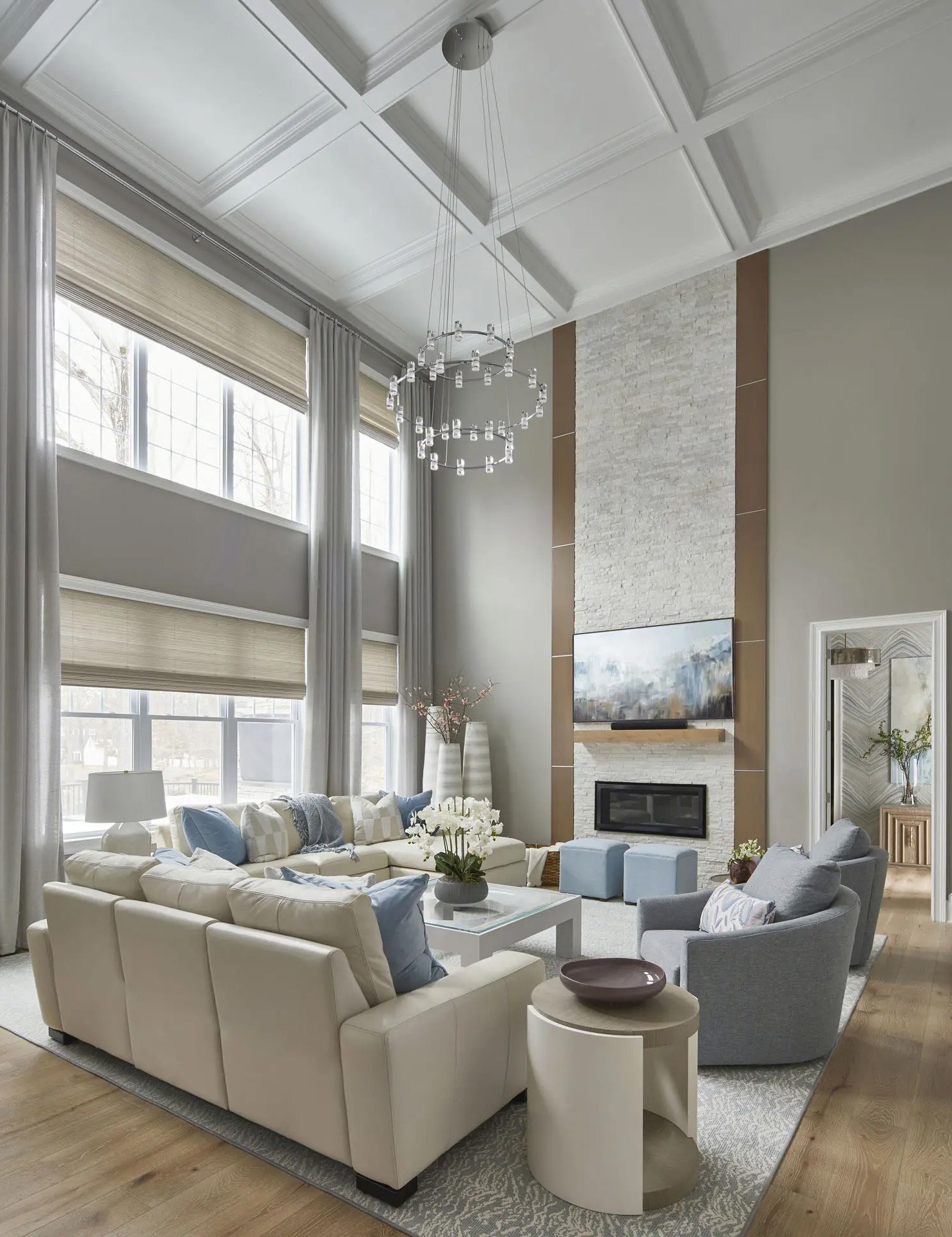

Coastal Living Room Ideas
Image courtesy of K & Co. Living
19. Contrasting Dark Upholstery Against Light Architectural Finishes
This living room highlights how strong contrast can bring balance to a light-filled interior. A floor-to-ceiling stone fireplace in warm earth tones draws the eye upward to a vaulted white shiplap ceiling, while vertical shiplap walls and light oak flooring keep the space bright and cohesive.
Navy linen sofas anchor the seating arrangement, providing depth against the lighter architectural backdrop. White accent chairs soften the palette, while a light wood coffee table with a black base ties in the black-framed windows, the iron chandelier, and the railing details. A textured gray-and-white area rug and coastal-inspired pillows complete the layered, balanced look.
Designer Tip: When working with bright architectural finishes, introduce darker upholstery or accents to ground the space. Repeating darker tones in lighting or window frames helps create cohesion without overpowering the overall design.
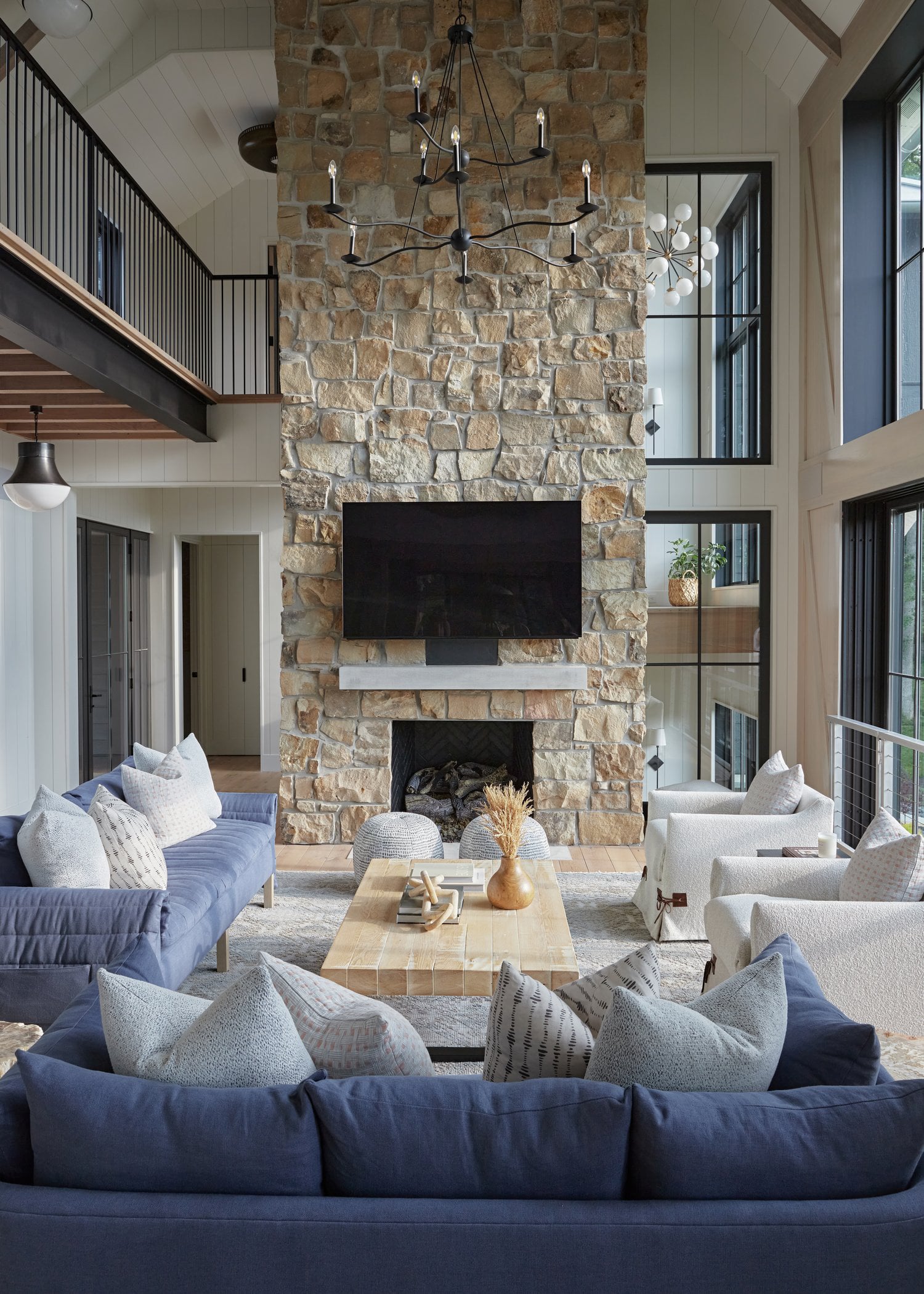
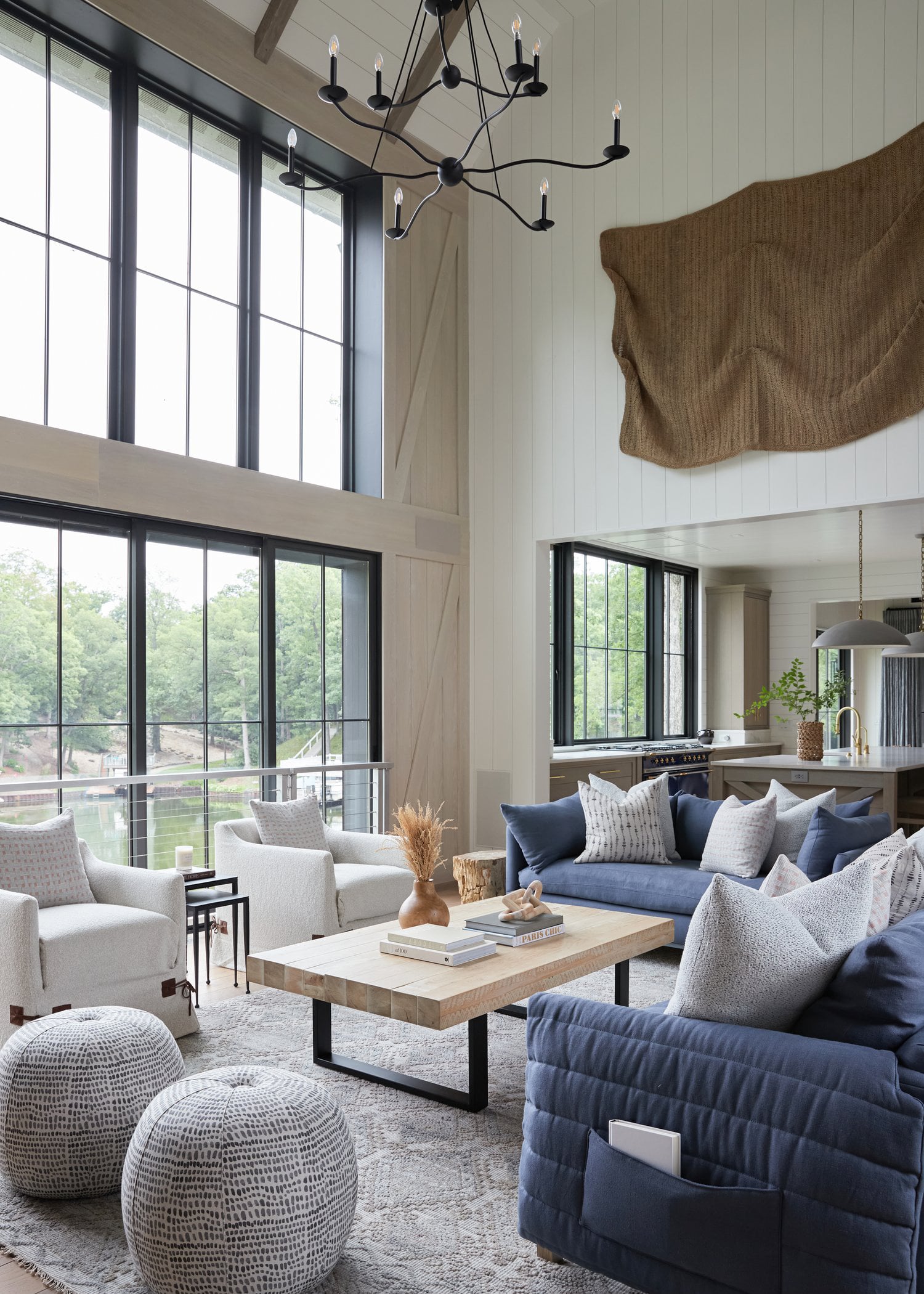
Modern Coastal Living Room with Stone Fireplace and Vertical Shiplap Walls
Image courtesy of Kate Marker Design
20. Layered Tile and Marble Fireplace Finishes
This living room demonstrates how a thoughtfully designed fireplace can anchor a space while reinforcing a soft, cohesive palette. The upper portion of the fireplace features white and gray marble, while the surround incorporates delicate tiles in layered shades of blue, gray, and white that reflect the tones found throughout the room.
Large windows bring in natural light, enhancing the white oak flooring and the serene mix of pale blue and soft tan furnishings. A light blue sofa, striped area rug, and textured accessories create subtle movement, while a white stump side table introduces an organic element. The adjacent kitchen island in pale blue with marble countertops continues the palette, creating visual flow between spaces.
Designer Tip: When designing a fireplace in an open-concept layout, repeat tile or stone colors in nearby furnishings and finishes. This approach helps create a calm, connected look while allowing the fireplace to remain a refined focal point.

Coastal Fireplace Design
Image courtesy of K & Co. Living
21. Curated Styling for a Refined Coastal Living Room
Curated styling plays an essential role in elevating a coastal living room from casual to sophisticated. Thoughtfully arranged decorative objects—such as stacked books, sculptural accents, greenery, and artisanal pottery—add personality while maintaining a clean, intentional aesthetic. In the first image, a light oak coffee table is styled with an open seascape book, leafy branches in a vase, stacked design books, and sculptural wood chain links, creating a layered yet uncluttered focal point.
The second image expands on this approach, offering a full view of the living room where styling is repeated across multiple surfaces. A console placed behind the sofa features balanced table lamps with dark bases, while built-in open shelving with a wood slatted backdrop flanking the fireplace provides space for a curated collection of books, artwork, woven baskets, plants, candles, and sculptural objects.
Designer Tip: Decorating surfaces in a consistent, intentional way helps create a visual rhythm throughout the room. Mixing organic textures with meaningful decorative pieces ensures the space feels personal, refined, and connected to the overall coastal design story.
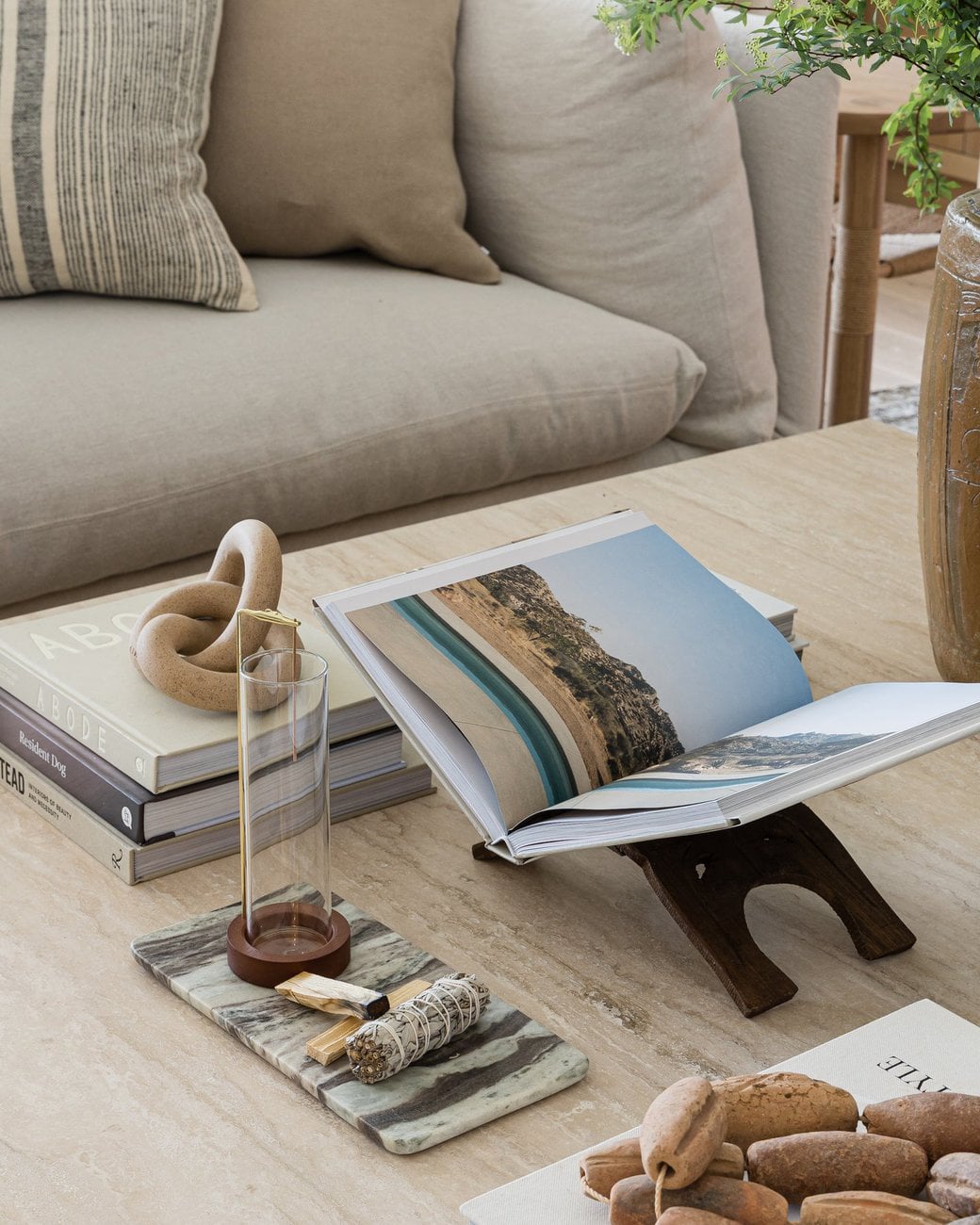
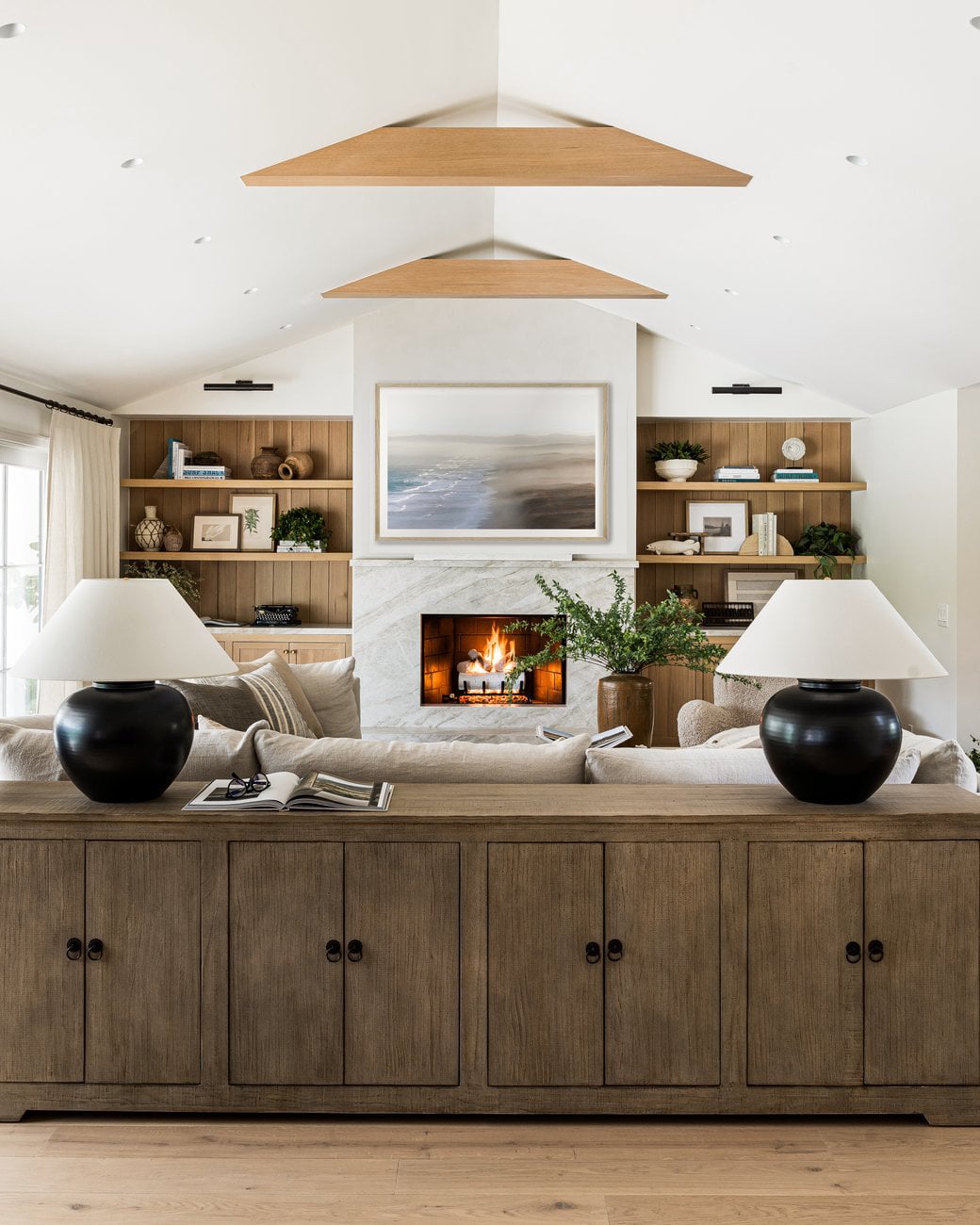
Styling Open Shelving and Coffee Tables in Coastal Living Rooms
Image courtesy of Pure Salt Interiors
22. Large Windows to Allow Natural Light
Large windows are a defining feature of coastal living rooms, allowing natural light to flood the space while showcasing beautiful ocean or waterfront views. Keeping window treatments minimal—such as sheer panels or natural woven shades—helps maintain an open, airy atmosphere while still providing texture.
In this living room, expansive windows frame close-up views of the ocean, creating a strong connection between the indoors and the coastal landscape. White walls and light oak flooring enhance the brightness of the space, while natural bamboo Roman shades add warmth and organic texture. A gray sofa faces the view, complemented by built-in upholstered bench seating layered with pillows for a relaxed, inviting feel.
Additional coastal accents—including a blue accent chair, a navy-and-white tiled fireplace, and a large white area rug—reinforce the serene color palette while keeping the room light-filled and balanced.
Designer Tip:
When designing a coastal living room around natural light, arrange seating to face the windows whenever possible to emphasize the view as the focal point. Layer soft textures—such as woven shades, linen upholstery, and light-toned rugs—to prevent the space from feeling stark while still maintaining a bright, airy coastal aesthetic.

Coastal Living Room Ideas
Image courtesy of Lauren Nelson Design
23. Rustic Coastal Living Room with Natural Wood and Stone
Blending rustic elements into a coastal living room introduces warmth, texture, and a sense of craftsmanship. Natural materials such as wood, stone, and woven accents help soften the airy coastal palette while adding depth and character.
This living room showcases a handcrafted log home setting, where a traditional gray stone fireplace creates a strong focal point against the rich wood tones of the structure and flooring. A large gray linen sectional keeps the space comfortable and relaxed, while tan accent chairs with striped pillows reinforce the casual coastal influence. Woven leather ottomans and antique furniture pieces add texture and a collected, timeless feel. Vintage accents and layered materials balance rustic architecture with coastal softness, creating a space that feels both grounded and inviting.
Designer Tip:
To achieve a rustic coastal look, combine structured natural materials—such as stone and exposed wood—with softer textiles, like linen and cotton, and subtle stripes. This contrast keeps the room from feeling too heavy while preserving the relaxed, breezy character of coastal design.

Lake House Living Room
Image courtesy of West of Main Design
24. Layered Lighting with Rattan and Natural Materials
Rattan and woven pendant lights add texture, warmth, and a subtle coastal influence to a living space. Their natural materials and hand-crafted details create a soft, inviting glow while reinforcing the layered, tactile quality of modern coastal interiors.
This lakefront living room features a tiered chandelier with hand-cut wooden beads strung along an abaca-wrapped frame, introducing a rustic yet refined element. A cream-colored coffee table crafted from fossilized clam shell adds texture and a nod to coastal design. Two navy-and-white striped accent chairs complement the soft color palette, while a sisal area rug and light oak flooring ground the space. Wicker baskets with throws and plants add casual warmth, and the coffee table is styled with books, florals, and a sculptural white coral. Large windows open to a deck with white wicker furniture, maintaining the connection to the outdoors.
Designer Tip:
When layering lighting in coastal interiors, mix textures—such as rattan, wood, and natural fibers—to create depth and visual interest. Combine functional illumination with sculptural pieces to highlight key areas while keeping the space airy and organic.

Coastal Living Room with Wooden-Bead Chandelier
Image courtesy of Serena & Lily
25. Bright Flooring to Anchor Coastal Interiors
Light-toned hardwood or tile flooring provides the perfect foundation for a coastal-inspired living room. The natural texture and warm hues mimic sandy beaches, keeping the space airy while grounding furniture and décor.
In this modern coastal living room, light oak flooring flows throughout, paired with crisp white walls and a white coffered ceiling. Floor-to-ceiling white and gray curtains on brass rods frame the windows, enhancing the bright, open feel. A tan sofa and light blue accent chairs sit atop a soft gray, blue, and white area rug, complemented by two light gray upholstered coffee tables. Brass accents throughout add subtle warmth and refinement.
Designer Tip:
Choose flooring with subtle grain and variation to create visual interest and anchor layered textures in coastal interiors. Light tones allow natural sunlight to reflect, keeping the room fresh and inviting.

Light Hardwood Flooring
Image courtesy of Morgan Harrison Home
26. Open Layout to Maximize Light and Views
An open layout enhances a coastal living room’s sense of space, flow, and connection to the outdoors. By minimizing visual barriers, natural light floods the interior, highlighting soft textures, neutral palettes, and airy furnishings.
This contemporary coastal living room opens seamlessly to an outdoor area through large glass sliding doors, creating a strong indoor-outdoor connection. White coffered ceilings and pale gray walls reflect sunlight, while soft blue accents echo the surrounding lake and sky. Modern furniture keeps the space uncluttered, allowing the architecture and views to take center stage.
Designer Tip:
Use an open plan to visually extend the interior into outdoor areas. Keep furnishings low and streamlined to maintain sightlines and reinforce the calming, breezy aesthetic.

Coastal Living Room Ideas
Image courtesy of Morgan Harrison Home
27. Layered Natural Fiber Rugs for Texture and Warmth
Natural fiber rugs such as sisal or jute bring an organic touch to a coastal living room while adding texture and warmth underfoot. They complement light-colored furnishings and neutral palettes, creating a relaxed, grounded environment.
This sun-filled living room features white walls and light oak flooring. A white textured area rug anchors the space, layered with natural fiber elements like a round rattan coffee table and curved rattan accent chairs with upholstered white cushions. A small white linen sofa with navy and white pillows adds comfort and contrast, completing the airy, tactile aesthetic.
Designer Tip:
Layer natural fiber rugs to define seating areas and introduce subtle texture without overwhelming a light, coastal-inspired palette.

Small Coastal Living Room with a Natural Fiber Rug
Image courtesy of Zoe Feldman Design
28. Bold Striped Area Rugs for a Statement Look
Striped rugs are a timeless way to add visual interest and a classic coastal touch. Wide stripes in navy and white or beige and white create a focal point, while pairing different stripe widths with solid patterns adds depth and sophistication.
This living room features natural seagrass wallpaper and a round rattan mirror. A wide-striped navy-and-white rug anchors the space, complemented by a narrow-striped navy-and-white sofa and a white accent chair. The navy coffee table is topped with a round rattan tray holding white florals. The rug serves as a striking design element, setting the tone for the room’s coastal-inspired palette.
Designer Tip:
Mix stripe sizes and combine them with solids to keep the space dynamic and visually balanced without overwhelming the room.

Coastal Living Room Ideas
Image courtesy of Serena & Lily
29. Playful Mix of Patterns and Prints
Mixing prints adds energy and personality to a coastal living space, creating a dynamic, layered look. Stripes, florals, and geometrics can coexist when balanced with solids and neutral tones, preventing the room from feeling chaotic.
In this corner of a sunlit living room, a blue-and-white striped sectional is layered with navy, denim, light blue, and white pillows, featuring a variety of patterns paired with solids. A textured woven area rug in blues and tans grounds the space, while a light oak coffee table with sculptural white objects adds modern sophistication.
Designer Tip:
Use a consistent color palette across patterns to unify the space, and vary textures to keep the room feeling layered and tactile without overwhelming the eye.

Combining Different Coastal Patterns for a Cohesive Design
Image courtesy of Serena & Lily
30. Shiplap Ceilings and Wood Beams
A shiplap ceiling—whether painted white or left in natural wood—adds architectural interest and depth to a coastal living room. Pairing it with exposed beams or tongue-and-groove panels enhances the layered, airy feel typical of modern coastal interiors.
This modern living room features an angled white shiplap ceiling with warm wood beams, cream-toned sofas, and a striped accent chair. Blue pillows and a white textured area rug add softness, while the warm wood flooring grounds the space.
Designer Tip:
To emphasize a light, airy coastal vibe, contrast the ceiling with soft, neutral walls and layer in subtle textures through furniture and textiles.

Shiplap Ceiling
Image courtesy of K & Co. Living
Conclusion: Bringing the Coast Home
Designing a coastal living room is all about creating a serene, layered, and light-filled space that feels effortlessly connected to nature. From incorporating natural materials, soft textures, and light wood tones to thoughtfully curated accents, each element works together to evoke the calm, relaxed vibe of the coast.
Whether you’re highlighting ocean views, layering soft coastal textiles, or adding sculptural furniture and statement lighting, the key is balance and intention. Modern coastal design moves beyond clichés, favoring timeless palettes, textural depth, and spaces that feel both lived-in and elevated.
By combining these strategies—natural light, airy layouts, curated accents, and a cohesive color palette—you can transform your living room into a welcoming coastal retreat that’s stylish, comfortable, and deeply personal.
Focus on layering textures, incorporating natural materials, and keeping the color palette light and cohesive. Subtle details and carefully chosen statement pieces will ensure your coastal living room feels intentional, luxurious, and effortlessly serene.
RELATED POSTS: Living Room Ideas
Shiplap Ceiling
Image courtesy of K & Co. Living
Frequently Asked Questions About Coastal Living Room Design
How do I style a coastal living room?
Focus on natural light, airy spaces, and layered textures. Use neutral bases like whites, creams, and sandy tones, then add subtle pops of blue, green, or coral. Incorporate natural materials like wood, rattan, linen, and woven textiles. Curate artwork, accessories, and statement furniture to create a cohesive, sophisticated coastal vibe without relying on overly nautical motifs.
How can I add warmth to a coastal living room?
Introduce warmth with wooden furniture and flooring in light to medium tones, woven rugs, and layered textiles like wool or linen throws. Metallic accents in brass or copper, along with soft lighting and natural greenery, can also make a space feel inviting while keeping it bright and airy.
What are coastal interior design trends for 2026?
2026 coastal trends emphasize understated, organic spaces with layered textures, soft tonal variation, and high-quality materials. Designers are moving away from beachy clichés, favoring curated art, statement lighting, natural fiber furnishings, and neutral palettes accented with subtle colors inspired by sand, sky, and water. Open layouts and large windows to maximize natural light are also key trends.
What is the difference between coastal and beachy decor?
Coastal decor is refined, sophisticated, and rooted in natural materials, light tones, and texture. Beachy decor is often more literal, featuring shells, anchors, stripes, or overt nautical motifs. Coastal style focuses on mood, materiality, and subtle references to the ocean, whereas beachy style leans into playful or themed design elements.
What furniture works best in a coastal living room?
Oversized, slipcovered sofas in linen or performance fabric are the foundation — comfortable enough for everyday use and casual enough to suit the relaxed coastal feel. Rattan, wicker, or light wood accent chairs add texture without weight, and a substantial coffee table in light wood or a woven base grounds the seating area. Layered pillows in natural textures — bouclé, linen, wool — bring softness without resorting to nautical patterns. The furniture that works best shares one quality: it photographs as comfortable and lived-in rather than staged, which is part of what separates a genuinely coastal living room from one that simply has beach-themed accessories.
View Recent Posts
Stunning Range Hood Design Ideas
Range hood design ideas covering stone, wood, plaster, copper, and stainless steel — with designer tips on proportion, material selection, and installation.

Fireplace Design Ideas
Discover fireplace design ideas that range from rustic to modern, country, traditional, Scandinavian and farmhouse with stunning photos.
Rustic Bedroom Ideas
Rustic bedroom ideas covering natural materials, layered textiles, color palettes, and professional design strategies for log cabin, modern rustic, Scandinavian, and luxury retreat styles.

Rustic Bathroom Ideas
Rustic bathroom ideas — natural materials, vintage fixtures, earthy palettes, and designer tips for log homes, cabins, and mountain retreats.
Cream Kitchen Cabinet Ideas
Cream kitchen cabinet ideas curated by interior designer Tracy Svendsen. Warmer than white and more versatile than beige, cream cabinets work beautifully across farmhouse, rustic, traditional, and modern kitchens.
Log Home Decorating Ideas
Log home decorating ideas covering color palettes, furniture selection, lighting, stone fireplaces, and modern approaches to handcrafted log home interiors.
Sources
Gold, Wendy Rose. The “Beachy” Aesthetic Is Dead—Designers Reveal the New Trends in Coastal Design. House Beautiful. February 18, 2026.

