

Dining Room Decorating Ideas from Casual to Formal
By Interior Designer TRACY SVENDSEN | Published on September 08, 2023 | Updated on July 07, 2026 |
The dining room is one of the most personally expressive spaces in a home — it’s where everyday meals and special occasions share the same table, which means it needs to work beautifully for both. The dining room shown above is my own — designed around a white raw-edge table and charcoal velvet chairs from Mitchell Gold + Bob Williams, with the Eurofase Paget LED pendant as the room’s defining moment. The cascading handmade glass pendants are one-of-a-kind pieces that refract warm light throughout the space in a way no standard fixture can replicate. Original black-and-white epoxy artwork I designed myself anchors the walls, and a large arched mirror at the end of the table doubles the room’s visual depth.
Whether you’re designing a formal entertaining space or a casual everyday dining room, the decisions that matter most are the same — the right table scale, a lighting fixture with genuine presence, and a palette that connects to the rest of your home. These dining room ideas cover the full range of styles and budgets, from country and bohemian to coastal and contemporary, with practical guidance on furniture, lighting, color, and accessories throughout. Feature image courtesy of Mark Scheifner Photography.
Key Takeaways: Dining Room Decorating Ideas
- Start with the two decisions that anchor everything else — the right table scale for the space and a lighting fixture with genuine presence above it. Every subsequent choice builds from these two.
- Proportion matters more than style — allow at least 36 inches of clearance around the table, hang curtains close to the ceiling and let them fall to the floor, and size your lighting fixture generously rather than conservatively.
- A dimmer switch on your dining room lighting is one of the most practical upgrades available — the same room reads completely differently at different light levels, shifting from functional to intimate with a simple adjustment.
- Personal details — original artwork, a lighting fixture you had to search for, a centerpiece that changes with the season — are what separate a well-furnished dining room from one that feels genuinely yours.
- Balance style and function equally: upholstered seating for comfort, storage that keeps clutter out of sight, window treatments that control light without blocking it, and a color palette that connects the dining room to the spaces around it.

Dining Room Decorating Ideas | Vibrant & Eclectic Dining Room
Image courtesy of Jake Arnold Design.
What Makes a Dining Room Work
A dining room does more than provide a place to eat — it’s where the rhythm of daily life slows down enough for real conversation. In my experience, the dining rooms that feel most successful aren’t necessarily the most elaborate ones; they’re the ones where every decision — the table scale, the lighting height, the chair comfort — was made with the space’s actual use in mind.
The foundation of any well-designed dining room is proportion. The table should fit the room with enough clearance for chairs to pull out comfortably (at least 36 inches from table edge to wall), and the lighting fixture should be sized generously rather than conservatively — a pendant or chandelier that’s too small for the space will always look like an afterthought. Everything else — storage, decor, color — builds from those two decisions.

Modern Farmhouse Dining Room Decorating Ideas
Image courtesy of Our Luxury Rooms

Modern Farmhouse Dining Room
Image courtesy of Katie Hodges Design
Getting the Layout Right
Dining room layout is less complicated than most people think — it comes down to two measurements that matter more than anything else. First, allow at least 36 inches between the edge of the table and any wall or piece of furniture, so chairs can pull out fully without feeling cramped. Second, position the table so traffic flows naturally between the kitchen and living room rather than through the seating area.
For smaller spaces, a drop-leaf or extendable table is one of the most practical investments available — it gives you the flexibility of a larger surface when needed without dominating the room day-to-day. A well-placed mirror on one wall visually expands the space and adds depth, which is particularly effective in rooms without natural light on multiple sides. Sideboards and display cabinets work best positioned along a wall rather than between the table and a doorway — storage should never interrupt the living room-to-kitchen flow.

This Newly Designed Dining Room Addition Brings Flow and Calm to a Minneapolis Home
Image courtesy of Architectural Digest
Before selecting furniture, lighting, or accessories, it helps to identify the overall design direction you want the room to take. A dining room that feels genuinely considered usually has a clear stylistic foundation — even if it blends two or three influences, there’s a dominant aesthetic that holds everything together.
The most popular dining room styles each bring a distinct material palette and atmosphere. Traditional dining rooms lean into rich wood tones, upholstered seating, and formal symmetry. Scandinavian and coastal approaches favor lighter palettes, natural materials, and a more relaxed sensibility.
French country and Mediterranean styles introduce pattern, warmth, and a sense of history through antique or vintage-inspired pieces. Bohemian and country cottage directions are the most eclectic — pattern mixing, collected objects, and an intentionally relaxed approach to formality.
Once the style direction is clear, every subsequent decision — the lighting fixture, the artwork, the table linens — becomes easier because you have a framework to evaluate choices against. A statement chandelier that suits a traditional dining room will look out of place in a Scandinavian one, and vice versa. The style decision comes first; everything else follows from it. For a deeper look at specific styles, explore my popular interior design styles guide.

Cottage Country Dining Room
Image courtesy of Heidi Caillier Design
Color and Textiles: Building the Room’s Foundation
Color selection is where I always start with a dining room client — it sets the emotional tone for every subsequent decision. In my own dining room, I worked with a largely neutral palette of white, warm gray, and light oak, then let the olive green island in the adjacent kitchen and the charcoal velvet chairs provide the depth and contrast. The quartz countertop’s subtle gray veining became the thread that connected the curtain color, the chair upholstery, and the tabletop — a technique I use consistently to create cohesion in open-concept spaces.
For smaller dining rooms, lighter neutrals — white, cream, soft gray — expand the perceived space by reflecting rather than absorbing light. A single accent wall in a deeper tone adds drama without committing the whole room to a bold color. For rustic or organic-modern dining rooms, an earth-tone palette of warm browns, muted greens, and sandy beiges creates an immediate sense of warmth. Larger rooms can handle more saturated color throughout — complementary combinations like deep blue with warm amber, or forest green with natural wood, create the kind of visual energy that makes a dining room feel genuinely designed.
Textiles reinforce the color story at the human scale — where people actually sit and touch. Upholstered dining chairs in velvet or linen add both visual richness and comfort, while floor-length curtains in a coordinating fabric soften the room’s edges and add the vertical element that dining rooms often lack. The key is maintaining a consistent undertone across all textiles so the room feels composed rather than assembled.

Dining Room Decorating Ideas | Neutral Dining Room
Image courtesy of Suzanne Kasler Design
The Table and Chairs: Where Every Decision Starts
The dining table is the most important single purchase in the room — everything else arranges itself around it. For my own dining room, I chose a white, raw-edged contemporary table with a chrome base, paired with charcoal velvet chairs that provide a strong contrast against the light palette. The raw edge detail adds an organic, slightly unexpected quality to an otherwise clean-lined contemporary room — that tension between refined and natural is something I look for in almost every dining room I design.
Scale is the first consideration. Measure your space and confirm at least 36 inches of clearance on all sides before committing to a table size — a table that fits on paper but crowds the room in practice is one of the most common and costly dining room mistakes. Round tables work particularly well in smaller rooms since they eliminate corners and allow more flexible seating, while rectangular tables suit longer rooms and larger gatherings.
Beyond scale, the table material and finish should connect with the room’s broader palette. Solid wood brings warmth and character; marble and stone add drama and formality; raw-edge and live-edge pieces introduce an organic quality that suits rustic and organic-modern directions equally well. Chair comfort matters as much as appearance — upholstered seating in velvet, leather, or performance fabric makes a dining room genuinely inviting rather than simply good-looking, and it’s worth investing in quality construction that holds up to daily use.

Dining Room Furniture Ideas
Image courtesy of Sean Anderson Design
Making the Dining Room Feel Genuinely Lived-In
The difference between a dining room that feels designed and one that feels genuinely personal comes down to the details that can’t be purchased as a set. In my own dining room, the original black-and-white epoxy artwork I created does more to establish the room’s character than any furniture purchase — it signals that the space belongs to a specific person rather than a style category.
Comfort is the practical side of this. Upholstered dining chairs with adequate back support make the difference between a meal that ends when the food is finished and one that continues into a long evening of conversation. A rug underneath the dining table defines the zone within a larger open-plan space and adds the tactile warmth that hard flooring alone can’t provide — it also significantly improves acoustics, which matters more in dining rooms than most people realize.
Lighting sets the mood more effectively than any other single element. Dimmable pendant lights or a chandelier on a dimmer switch allow the room to shift from bright and functional during everyday meals to warm and intimate for entertaining — the same room reads completely differently at different light levels. Personal objects — artwork, a meaningful centerpiece, flowers from the garden — complete the picture. These are the details that make a dining room feel like it belongs to its users.

Beautiful Dining Room With Wood Table & Tonal Window Treatment
Image courtesy of Luxe Source
Lighting: The Most Transformative Decision in a Dining Room
Of all the decisions in a dining room, lighting has the highest impact relative to its cost — the right fixture above the table transforms the entire character of the space in a way that new furniture or paint rarely does. In my own dining room, the LED linear light was the decision I was most deliberate about. Each pendant is handmade — multiple layers of monochrome sugar glass ripples encased in clear glass plates, no two pieces identical — and the way the warm LED light refracts through the layered glass creates an effect that changes throughout the day.
It’s the kind of fixture that makes guests stop and ask about it before they’ve even sat down. I also had a dimmer switch installed to create the flexibility to shift the room from bright and functional during everyday meals to warm and intimate for entertaining — the same room reads completely differently at different light levels, and it’s one of the most practical upgrades available in any dining room.
A chandelier or statement pendant above the dining table is the starting point for most dining rooms — sized generously rather than conservatively, hung so the bottom of the fixture sits approximately 30-34 inches above the tabletop. Beyond the statement fixture, layering matters: wall sconces at a lower level create warmth along the perimeter, and a dimmer switch on the main fixture lets the room shift from bright and functional for everyday meals to intimate and atmospheric for entertaining.
Recessed lighting works well as a secondary layer but rarely as a primary source — it tends to flatten a dining room rather than creating the depth and warmth that pendant and sconce lighting achieve. Buffet lamps on a sideboard add a third layer of warm light at a lower level, which is particularly effective in rooms where the dining table sits away from the walls.

Dining Room Decorating Ideas & Light Fixtures
Image courtesy of Suzanne Kasler Design
Storage that Earns Its Place
A sideboard or buffet is the hardest-working piece of furniture in a dining room — it handles storage for table linens, serving pieces, and dinnerware while providing a dedicated surface to style with the kinds of objects that make a room feel personal. In a dining room that’s already doing a lot visually, a sideboard with closed cabinet storage below keeps everyday clutter out of sight while the top surface remains available for a vase, artwork, or a pair of table lamps.
Floating shelves or wall-mounted cabinets work particularly well in smaller dining rooms where floor space is limited — they provide display and storage without adding visual weight at the lower level where the furniture already sits. The key to open shelving in a dining room is ruthless editing: a few well-chosen pieces displayed with breathing room will always read better than shelves packed with mismatched items.
A bar cart is worth considering if you entertain regularly — it keeps wine, glassware, and bar tools organized and accessible without requiring a dedicated bar area, and it can be moved to wherever it’s most useful during a gathering. Position it near the sideboard to create a cohesive service zone along one wall, which keeps the flow of the room clean during meals.

Well-Designed Dining Room with Shelving
Image courtesy of Linye Galloway Design
Window Treatments: Light, Privacy, and Proportion
In my own dining room, I chose sheer pale gray floor-to-ceiling curtains — a decision driven as much by the quartz countertops and backsplash as by the windows themselves. The quartz is white with soft gray veining throughout, and the curtain color picks up that gray tone and carries it vertically up the wall, creating a visual connection between the two spaces that makes the open-concept layout feel cohesive rather than divided. It’s a small detail that most people wouldn’t consciously notice, but it’s exactly the kind of material threading that makes a room feel professionally designed.
The most impactful curtain decision is the height and length — hang the rod as close to the ceiling as possible and let the curtains fall to the floor, regardless of where the window actually sits. This creates the illusion of taller windows and a grander room, and it’s one of the simplest interventions available in any dining room — no structural changes, no contractor required. For rooms with beautiful views, sheer or lightweight fabrics allow the scenery to remain visible while softening the light and providing a degree of privacy. For more formal dining rooms, floor-length panels in linen, velvet, or silk add the drama and weight that the space calls for.
Blinds and shades work well as a practical layer behind curtains — they handle the functional privacy and light control while the curtains provide the softness and height. In a dining room specifically, the ability to fully open window treatments during the day and close them for evening entertaining makes a significant difference in how the room feels across different occasions.

Dining Room Decorating Ideas | Elegant & Sophisticated Dining Room
Image courtesy of Luxe Source
The Modern Dining Room
A modern dining room succeeds through contrast — smooth surfaces against textured ones, dark accents against a light palette, sculptural lighting against clean architectural lines. The restraint is deliberate: in a well-executed modern dining room, every piece earns its place, and nothing is included purely for decoration.
Furniture should have clean lines and minimal ornamentation as its defining quality — materials that speak for themselves rather than relying on decorative detail. A glass, marble, or raw-edged table with metal legs, paired with chairs upholstered in a neutral fabric or leather, establishes the foundation.
The color palette typically centers on a neutral base — white, gray, or black-and-white — with a single saturated accent color introduced through artwork, a rug, or upholstery rather than distributed throughout the room. This concentration of color is what gives modern dining rooms their visual impact without tipping into maximalism.
Decorative elements work best when they’re few and deliberate. A large statement mirror, a gallery wall of abstract or original artwork, or a single sculptural centerpiece does more for the room than multiple smaller pieces competing for attention. Bold wallpaper or a geometric patterned rug can introduce pattern and texture without disrupting the overall restraint — as long as everything else in the room stays calm around it. Edit consistently — in a modern dining room, what you leave out matters as much as what you put in.

Modern Dining Room Decorating Ideas
Image courtesy of Elizabeth Krueger
Dining Room Walls
Dining room walls have more design potential than most rooms because you’re typically looking at them across a table rather than past furniture placed against them. Paint and wallpaper are the foundational decisions — lighter neutrals expand smaller rooms visually, while deeper tones add drama in larger spaces with good natural light. A single wallpaper feature wall can define the room’s character without committing every surface to a strong statement.
A large mirror on one wall doubles the light and visual depth, particularly effective in rooms without windows on multiple sides. Artwork works best when edited rather than accumulated — a single large-scale piece above a sideboard creates a stronger focal point than multiple smaller pieces competing for attention. Open shelving adds both storage and display opportunity, but only when the objects on it are chosen carefully and given room to breathe.

Dining Room with Eclectic, Moss Green Wallpaper
Image courtesy of Luxe Source
The Formal Dining Room
A formal dining room earns its place in a home by doing one thing exceptionally well — making guests feel that the occasion matters. The furniture scale, lighting quality, and material choices all work together to signal that this is a room designed for memorable meals rather than everyday convenience.
The table sets the tone. A large, solid-wood or marble-topped table with enough surface area for proper place settings, serving pieces, and a centerpiece without feeling crowded is the starting point. High-backed upholstered chairs with armrests — in velvet, leather, or a woven fabric — add the comfort that keeps guests at the table long after the meal is finished, and the visual weight that a formal room requires.
A chandelier above the table is non-negotiable in a truly formal dining room — sized generously, hung at the right height, and on a dimmer so the light level can shift with the occasion. Floor-length drapes in a substantial fabric — linen, velvet, or silk — frame the room and add the vertical softness that formal spaces depend on. The finishing details matter here more than anywhere else: a proper table runner, a considered centerpiece, and quality dinnerware complete the room and signal to guests that the effort was intentional.

Formal Dining Room
Image courtesy of Luxe Source
The Modern Farmhouse Dining Room
Modern farmhouse style works in a dining room because the underlying principles — natural materials, a relaxed approach to formality, and a mix of old and new — translate directly into how people actually use the space. It’s one of the most requested directions I work with, precisely because it’s approachable without being bland.
Natural materials are the foundation: a solid wood farmhouse table, metal chairs or bench seating, and stone or brick accents where the architecture allows. The mix of wood and metal is particularly effective — the warmth of the timber against the cooler industrial quality of metal creates the tension that gives modern farmhouse its character. A neutral palette of beige, gray, and warm white keeps the space feeling light and current rather than overly rustic.
Vintage and antique pieces do the most to distinguish a well-designed modern farmhouse dining room from a generic one. A vintage rug, an antique quilt used as a table runner, or mismatched vintage chairs paired with a new table add the collected, layered quality that the style depends on — the sense that the room has been added to gradually rather than purchased as a set. This same principle extends throughout a modern farmhouse interior — no single room should look too coordinated.

Dining Room Decorating Ideas | Modern Farmhouse Dining Room
Image courtesy of Kelsey Leigh Design
Creating a Dining Room That Feels Like Yours
A well-designed dining room doesn’t require a large budget or a complete renovation — it requires thoughtful decisions made in the right order. Start with the table scale and lighting fixture, build the color palette from there, and let the textiles, storage, and accessories follow. Every element covered in this guide serves that same underlying goal: a dining room that works beautifully for everyday meals and rises to the occasion when it matters.
The rooms that stay with people longest are rarely the most elaborate ones — they’re the ones that feel genuinely personal. Whether that means an original piece of artwork, a lighting fixture you had to search for, or a table that’s been in the family for years, those details are what transform a well-furnished room into one that actually feels like home.
RELATED POSTS: Dining Room Ideas
Frequently Asked Questions About Dining Room Decorating Ideas
How should I decorate my dining room?
Start with the two decisions that everything else builds from — the right table scale for the space and a lighting fixture with genuine presence above it. From there, establish your color palette, choose upholstered seating for comfort, and layer in textiles through curtains, a rug, and table linens. Storage, artwork, and accessories come last. The rooms that feel most considered are the ones where these decisions were made in sequence rather than all at once — each choice informed by the one before it.
What is the 3-5-7 rule of decorating?
The 3-5-7 rule is a guideline for grouping decorative objects in odd numbers to create visual interest and natural balance. Rather than placing items in pairs or even groupings — which can feel static and symmetrical — odd-numbered arrangements create a sense of movement and hierarchy. In a dining room, this might mean a centerpiece arrangement of three elements (a tall vase, a lower bowl, and a candle), or a gallery wall built around five or seven pieces rather than four or six. The rule isn’t rigid, but the underlying principle — that odd groupings feel more dynamic and collected than even ones — holds consistently across most decorating contexts.
What should I put in the middle of my dining table?
The most effective dining table centerpieces are those that create visual interest without blocking conversation across the table — which means keeping the height low or using a single tall sculptural element rather than a wide, dense arrangement. A sculptural vase filled with branches or seasonal stems is one of my most consistent recommendations — it adds height and organic warmth without the maintenance of fresh flowers. Candles grouped in varying heights, a decorative bowl filled with seasonal fruit, or a low arrangement of foliage and botanicals all work well. The key is choosing one clear focal point rather than clustering multiple competing objects, and ensuring whatever you choose can be easily moved when the table is fully set for a meal.
What are the latest trends in dining room design for 2026?
The clearest direction in dining room design for 2026 is toward a more considered, less trend-driven aesthetic — fewer pieces, better quality, and a stronger emphasis on materials that improve with age. Curved furniture silhouettes continue to gain ground alongside the clean-lined contemporary direction, softening dining rooms that might otherwise feel too rigid. Statement lighting remains the highest-impact single investment, with sculptural pendants and linear suspensions in handcrafted or artisanal materials leading over mass-produced fixtures. Darker, moodier color palettes — deep greens, charcoal, rich terracotta — are appearing more frequently alongside the traditional neutral base, particularly in rooms with good natural light. Original artwork, including commissioned and locally sourced pieces, is increasingly preferred over mass-produced prints as homeowners invest in spaces that feel genuinely personal.
How do I choose the right dining table size?
Allow at least 36 inches of clearance between the edge of the table and any wall or piece of furniture — this ensures chairs can pull out fully and guests can move around the table comfortably. For seating capacity, allow approximately 24 inches of table width per person. A rectangular table suits longer rooms and larger gatherings, while a round table works particularly well in smaller or square dining rooms since it eliminates corners and allows more flexible seating. When in doubt, size up rather than down — a table that’s slightly larger than necessary feels generous and appropriate for entertaining, while one that’s too small feels cramped regardless of how well everything else is designed.
View Recent Posts
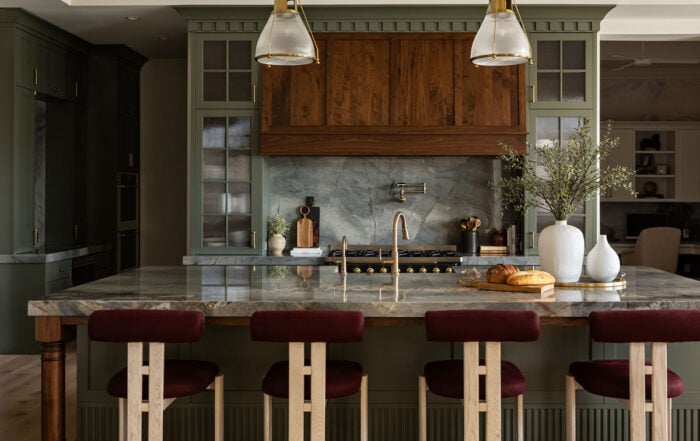
Stunning Range Hood Design Ideas
Range hood design ideas covering stone, wood, plaster, copper, and stainless steel — with designer tips on proportion, material selection, and installation.

Fireplace Design Ideas
Discover fireplace design ideas that range from rustic to modern, country, traditional, Scandinavian and farmhouse with stunning photos.
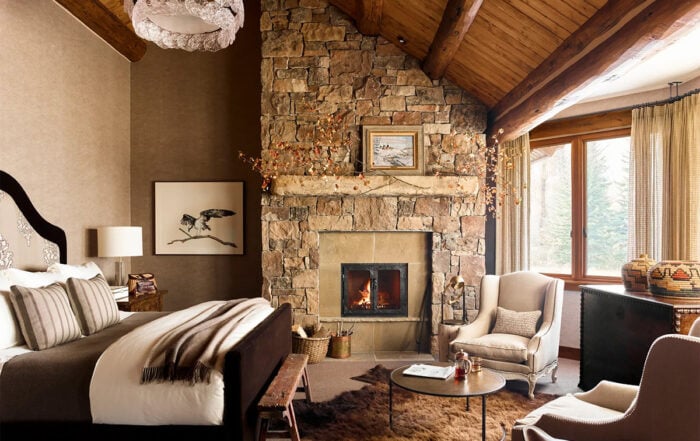
Rustic Bedroom Ideas
Rustic bedroom ideas covering natural materials, layered textiles, color palettes, and professional design strategies for log cabin, modern rustic, Scandinavian, and luxury retreat styles.
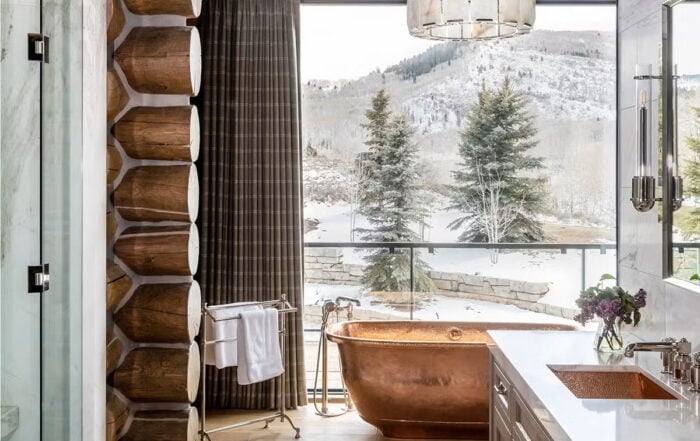
Rustic Bathroom Ideas
Rustic bathroom ideas — natural materials, vintage fixtures, earthy palettes, and designer tips for log homes, cabins, and mountain retreats.
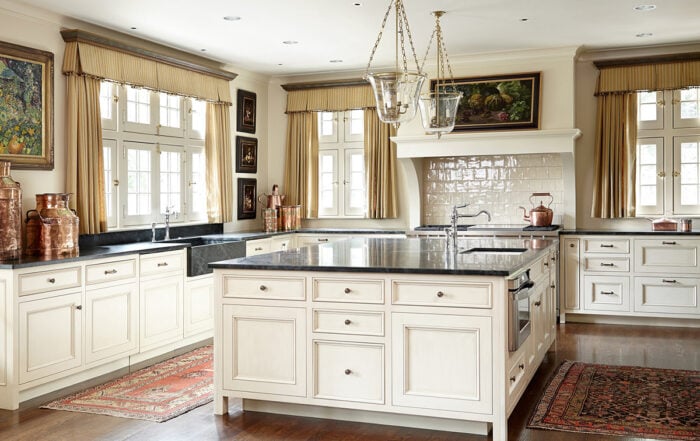
Cream Kitchen Cabinet Ideas
Cream kitchen cabinet ideas curated by interior designer Tracy Svendsen. Warmer than white and more versatile than beige, cream cabinets work beautifully across farmhouse, rustic, traditional, and modern kitchens.
Log Home Decorating Ideas
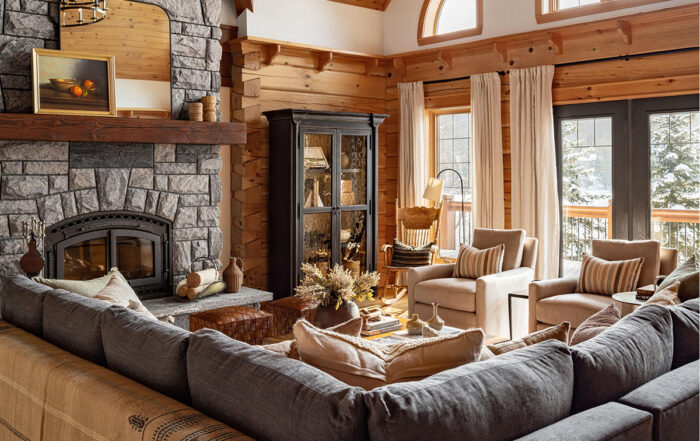
Log home decorating ideas covering color palettes, furniture selection, lighting, stone fireplaces, and modern approaches to handcrafted log home interiors.

