
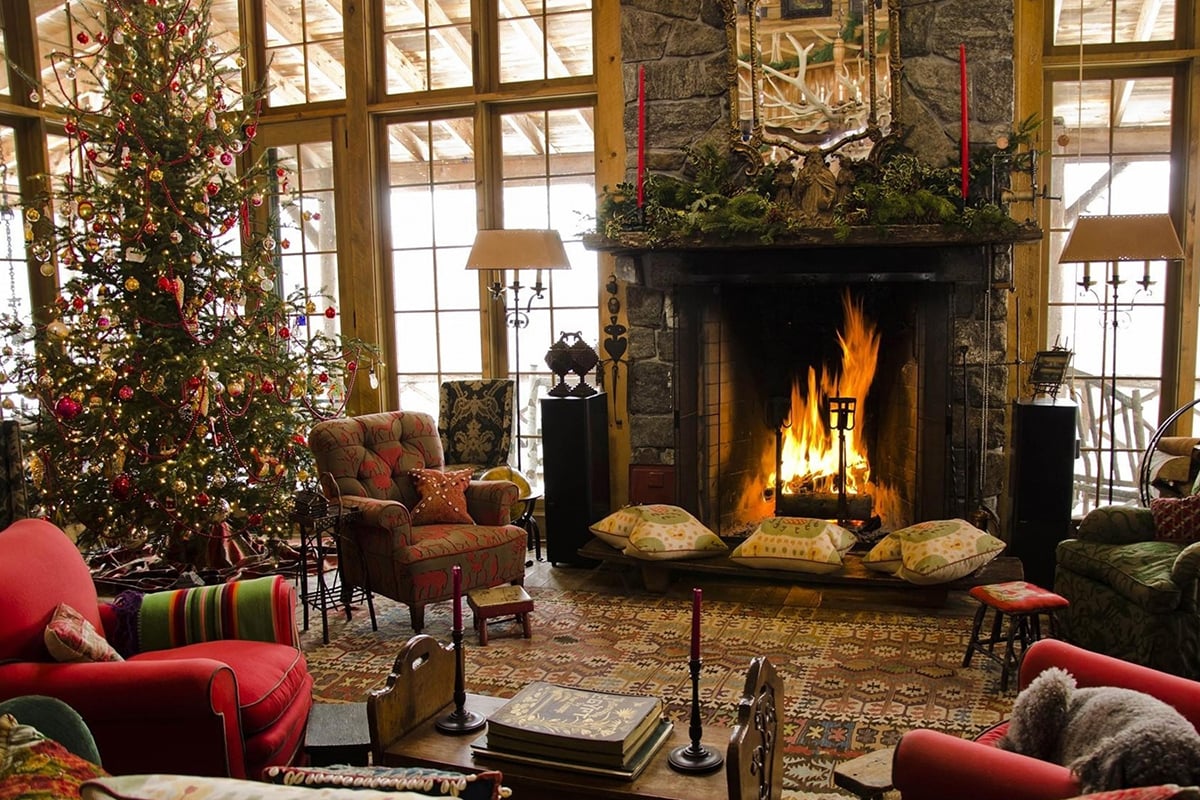
Rustic Christmas Ideas: Natural Materials and Warmth
By Interior Designer, Tracy Svendsen | Published on July 09, 2026 |
Christmas is the season where rustic design finds its fullest expression — natural materials, candlelight, handcrafted details, and the kind of warmth that feels genuinely earned rather than decorated. As an interior designer who has spent decades working with log homes, cabins, and mountain retreats, I find rustic Christmas the most naturally cohesive of all holiday decorating directions. The materials that define rustic interiors year-round — wood, stone, wool, copper, aged metals — translate directly into Christmas decor without requiring anything contrived.
The ideas in this guide span the full range of rustic holiday themes — from the warmth of traditional red and green interpreted through natural materials like wool, berries, and handcrafted ornaments, to the more contemporary approach of copper, white, black, and gold. Simple natural holiday accents — a glass bowl filled with pinecones, seasonal fruits, and greenery, or branches of evergreen gathered from the garden — often do more to establish a rustic Christmas feel than any purchased decoration. Whether you’re decorating a log cabin, a farmhouse, or a contemporary home that wants a warmer, more organic holiday feel, these ideas cover everything from mantel styling and wreaths to tablescapes, outdoor displays, and the modern rustic direction — including my own Christmas tree, shown in the trends section below. Feature image courtesy of Vogue (Clairborne Swanson Frank Photography).
Rustic Christmas Ideas: Key Takeaways
- Rustic Christmas decorating works best as a natural extension of the home’s existing material character — wood, stone, natural fiber, and aged metals that define the style year-round translate directly into the holiday season without anything feeling forced or contrived.
- Natural materials are the foundation of every rustic Christmas scheme — evergreen boughs, pinecones, dried botanicals, birch branches, and cinnamon sticks connect the interior to the season outside more effectively than any purchased decoration.
- Palette cohesion matters more than individual pieces — whether you choose earth tones, winter whites, deep jewel tones, or the Ralph Lauren-inspired forest green and oxblood direction, committing to a consistent color story across the tree, mantel, table, and wrapped presents creates the unified result that defines professional holiday decorating.
- The fireplace mantel and Christmas tree are the two highest-impact decorating surfaces in a rustic home — invest the most time and thought in these two elements and the rest of the room follows naturally.
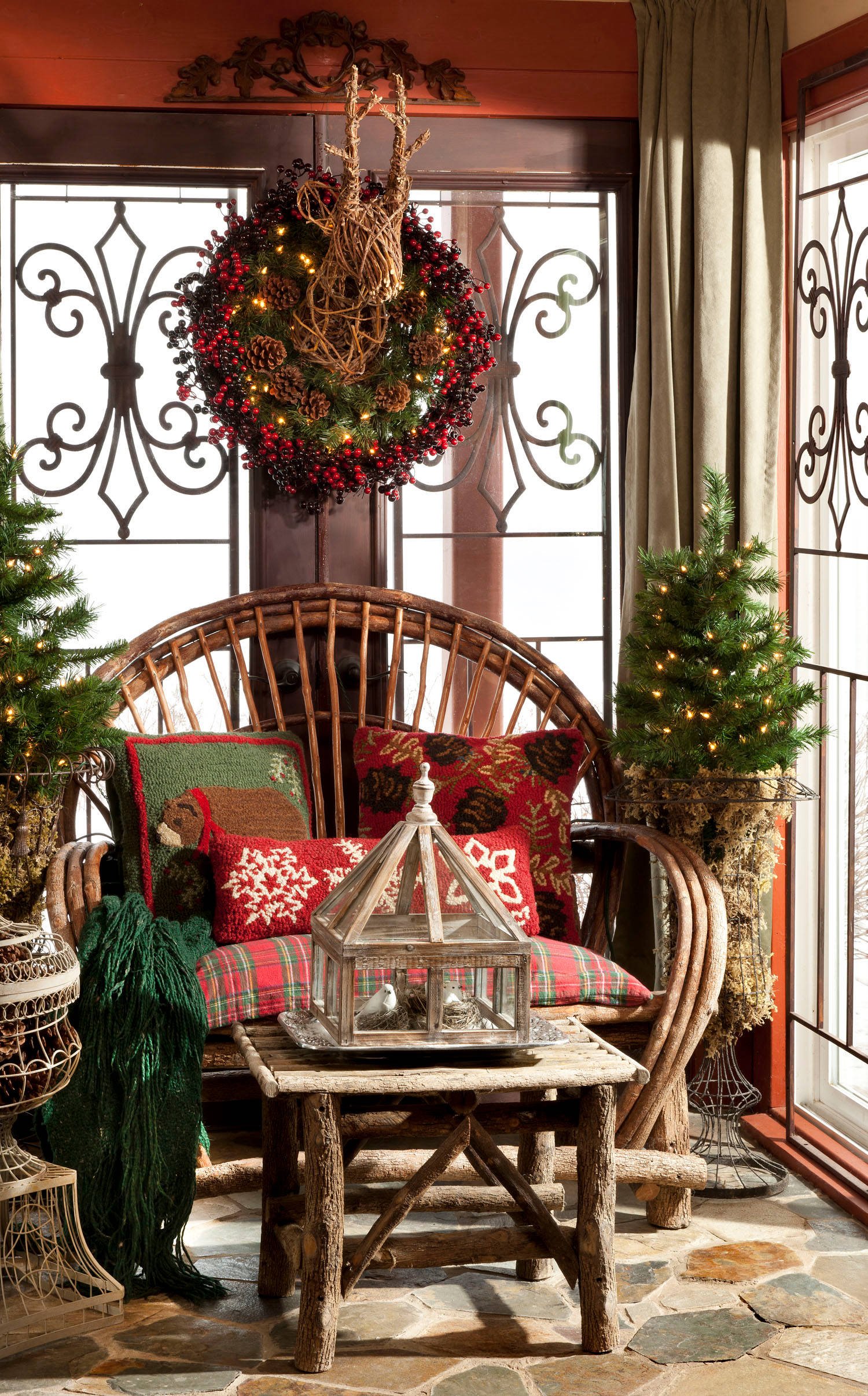
Front Porch with Rustic Throw Pillows
Image courtesy of Polson Furniture & Accessories
The Natural Appeal of Rustic Christmas
Rustic Christmas decor succeeds because it draws from the same material vocabulary the style uses year-round — wood, stone, natural fiber, aged metals — which means holiday decorating feels like a natural extension of the home rather than a seasonal overlay. There’s no tension between the Christmas decor and the room it sits in, which is what gives rustic and country Christmas interiors their cohesive, unhurried quality.
The first image shows this beautifully — a Christmas tree decorated with olive-green leaf branches, cream and bronze ornaments with velvet and paper textures, and a palette that reads as genuinely organic rather than festive in the traditional sense. Green tones dominate, connecting the tree directly to the natural world outside. The second takes the same earth-tone foundation into the living room — a caramel velvet sofa layered with faux fur pillows and blankets, a coffee table with candles on wood stands and antlers, a fireplace mantel of evergreen boughs and antlers, bare branch trees in baskets with twinkling lights, and a large brown and white hide area rug. Gold ornaments on a minimally decorated tree complete the picture. Everything in this room belongs to the same natural, unhurried palette — nothing signals “Christmas decoration” so much as “this home in December.”
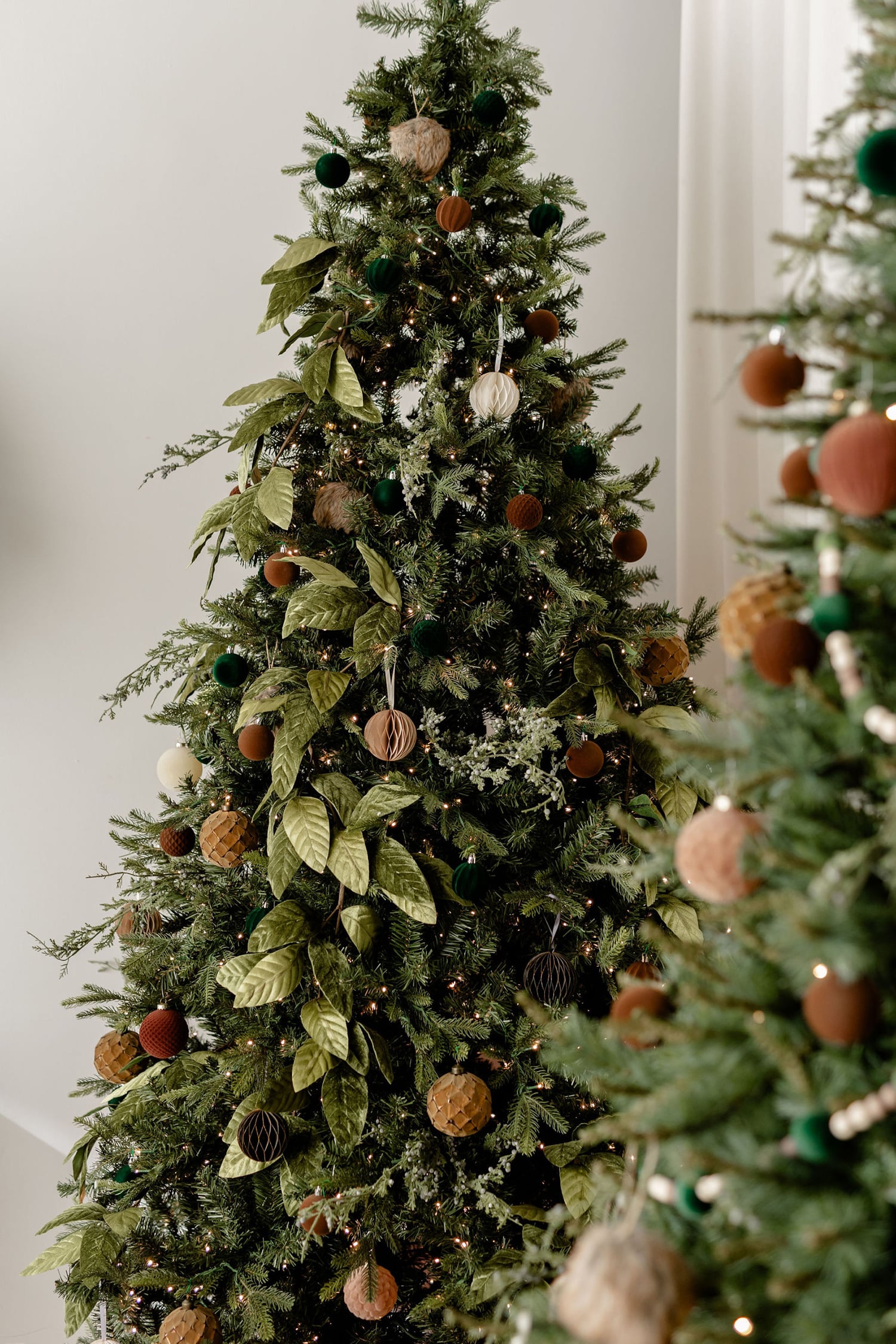

Rustic Lodge Christmas in Warm Earth Tones
Image courtesy of Mintroom
The Rustic Christmas Tree
The Christmas tree is where rustic Christmas decorating makes its strongest statement — and the most effective rustic trees are those that feel collected and layered rather than themed. Natural-looking trees, whether real or high-quality artificial, suit the style best. Warm white or soft yellow lights establish the right tone from the start — cooler lights work against the organic warmth that rustic Christmas depends on.
Wooden ornaments, burlap bows, twine-wrapped pieces, pinecones, dried orange slices, and berry clusters all reinforce the natural material language without requiring any single statement piece. A ribbon or burlap tree topper keeps the tree’s crown consistent with the overall direction rather than introducing a contrasting formal element.
This tree by Studio McGee takes the rustic palette in a softer, more romantic direction. A flocked tree in a wicker basket is decorated with brass bows throughout — including a brass bow clip as the tree topper — alongside pearly white ornaments with warm earth-tone accents and a hint of pink. The result is nostalgic and refined simultaneously, proof that rustic Christmas doesn’t have to mean heavy or dark — the wicker basket, natural flocking, and brass hardware keep it firmly grounded in organic materials while the soft palette gives it a genuinely feminine, romantic quality.

A Rustic Christmas Tree combining Neutral and Earth Tone Hues
Image courtesy of Studio McGee
Rustic Christmas Trends for 2026
The clearest direction in rustic Christmas decorating for 2026 is toward a more intentional, material-led approach — fewer pieces chosen more deliberately, with texture doing the visual work that color overload used to do. Three trends stand out as particularly strong this season.
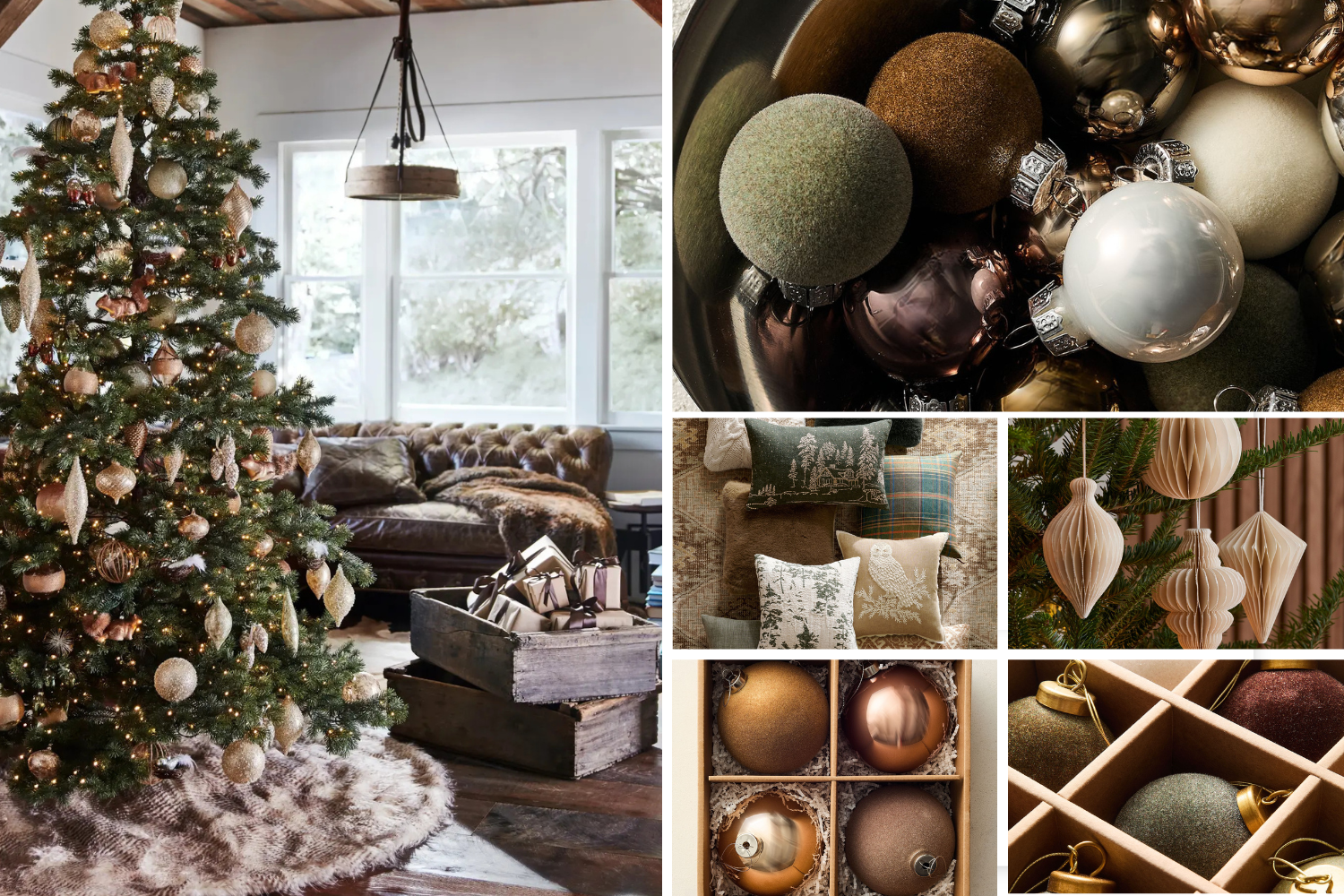
1. Layered Textures & Earth Tones
Warm earth-tone ornaments and layered textures work exceptionally well in rustic homes because they echo what’s already there. Amber, terracotta, bronze, and cream ornaments connect directly to the warm tones of wood and stone, making the holiday decorations feel like a natural extension of the architecture rather than something added seasonally. The layering principle is equally important — combining rough natural textures (pinecones, raw wood beads, burlap) with softer ones (velvet ribbon, wool throws, faux fur) introduces the depth and warmth that hard-surfaced rustic rooms need.
This collage shows the approach across multiple elements simultaneously. A lodge-style tree with warm metallic ornaments, paired with velvet pieces in olive green and brown, sits alongside an assortment of rustic holiday throw pillows and earthy ornaments in warm greens and browns, across varied textures. A faux-fur tree skirt grounds the base — soft and tactile against the harder ornament materials above — completing the layered effect from the floor up.
2. Evergreen Holiday
Dark green is one of the strongest rustic Christmas palette choices available — it connects directly to the evergreen boughs, wreaths, and garlands that have defined the season for centuries, while reading as genuinely sophisticated rather than traditionally festive when paired with the right neutrals and metallics.
These living rooms demonstrate the approach at its most refined.
Dark green garland and wreaths anchor the seasonal elements, while holiday pillows in neutral and earth tones keep the broader palette calm and grounded. Golden branches introduce a warm metallic thread that bridges the deep green and the neutral base without overwhelming either. The white walls and furnishings provide the contrast that prevents the dark green from making the room feel heavy — it’s a high-contrast approach that works precisely because the neutral base is doing the heavy lifting. The result sits comfortably between rustic and luxurious, which is exactly the direction modern rustic Christmas is moving.

Layering Evergreen Tones
Image courtesy of Pottery Barn
3. Winter Whites
A winter whites palette works exceptionally well in rustic homes precisely because it introduces contrast rather than competition — the soft, creamy tones highlight rather than compete with the warm wood and stone that define the architecture. Both approaches share the same underlying commitment: texture over bold color.
This collage shows the palette at its most layered and tactile. Faux-fur stockings, chunky woven throws, ribbed glass, velvet ribbon, and cable-knit accents create a display that’s as much about how things feel as about how they look.
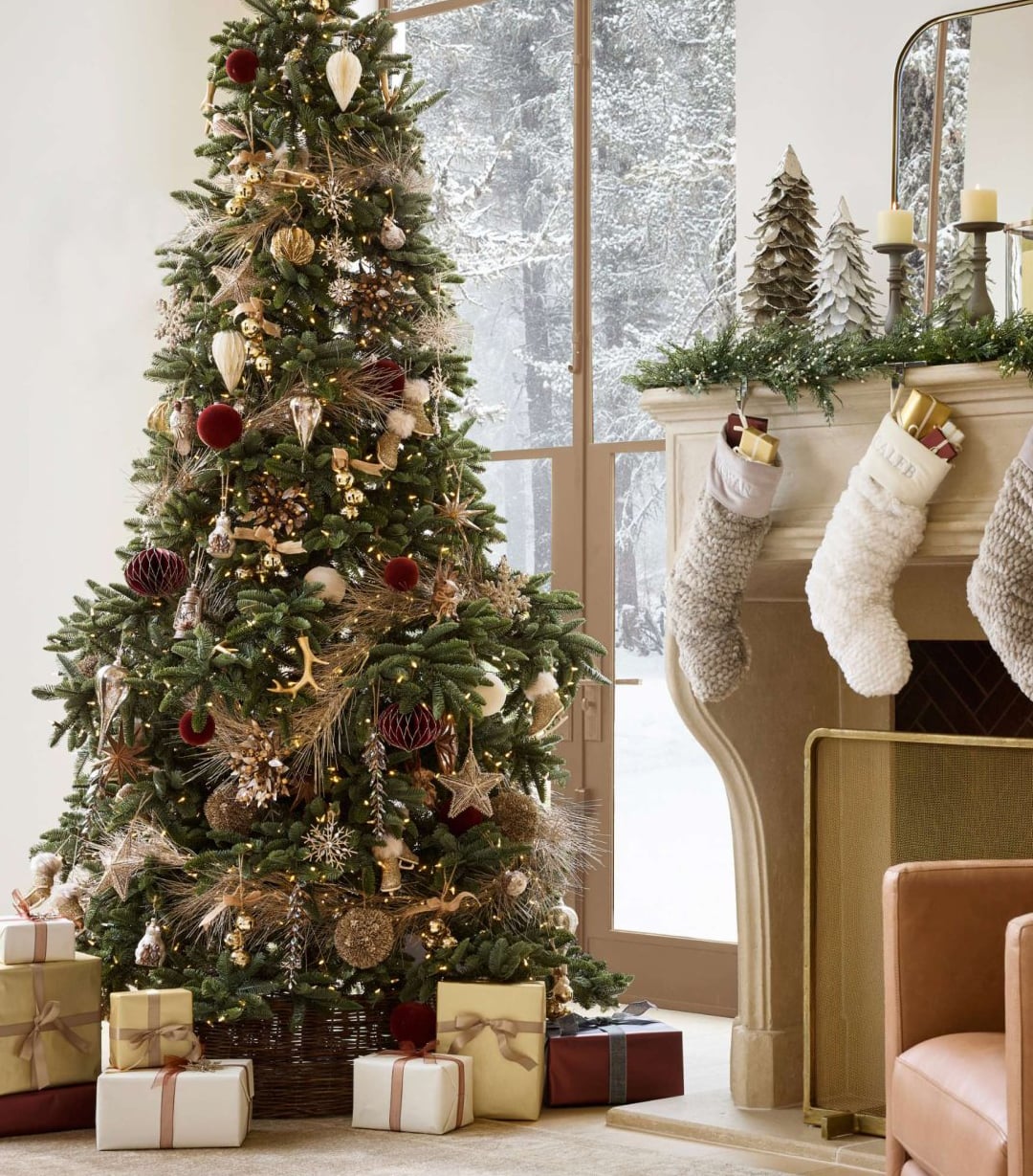
The color range moves through warm white, cream, tan, brown, taupe, and caramel — a tonal progression that stays cohesive precisely because every shade shares the same warm undertone. Against the rough-hewn surfaces of a log cabin or the painted shiplap of a farmhouse, this kind of soft, abundant texturing creates the depth and warmth that makes a rustic Christmas interior feel genuinely inviting rather than simply decorated.

Warm Whites in a Rustic Home
Image courtesy of Pottery Barn
4. Ralph Lauren Rustic Christmas
The Ralph Lauren Christmas aesthetic has become one of the strongest trending directions on social media — and it suits rustic homes more naturally than almost any other setting. Log cabins and mountain retreats already provide the dark wood and stone backdrop that this style depends on — the decorating layer simply dresses it up with cashmere throws, rich velvet ribbons, supple leather accents, and the kind of heritage-driven detail that makes a room feel genuinely considered.
The color palette — deep forest green, oxblood red, and navy blue — complements warm wood tones without competing with them, and the heavy use of tartan and plaid alongside brass and equestrian motifs amplifies the lodge quality that rustic homes already possess. This collage shows the full range of how the aesthetic translates into Christmas decorating: a dark leather accent chair with a plaid pillow and throw, plaid dinner chargers, red and green plaid wrapping paper with a gold bow, bouquets of deep red roses and pinecones, and blue, green and black plaid tablecloths. The color palette on the left anchors the mood board — rich, saturated, and warm in a way that feels genuinely seasonal without relying on a single traditional Christmas cliché.
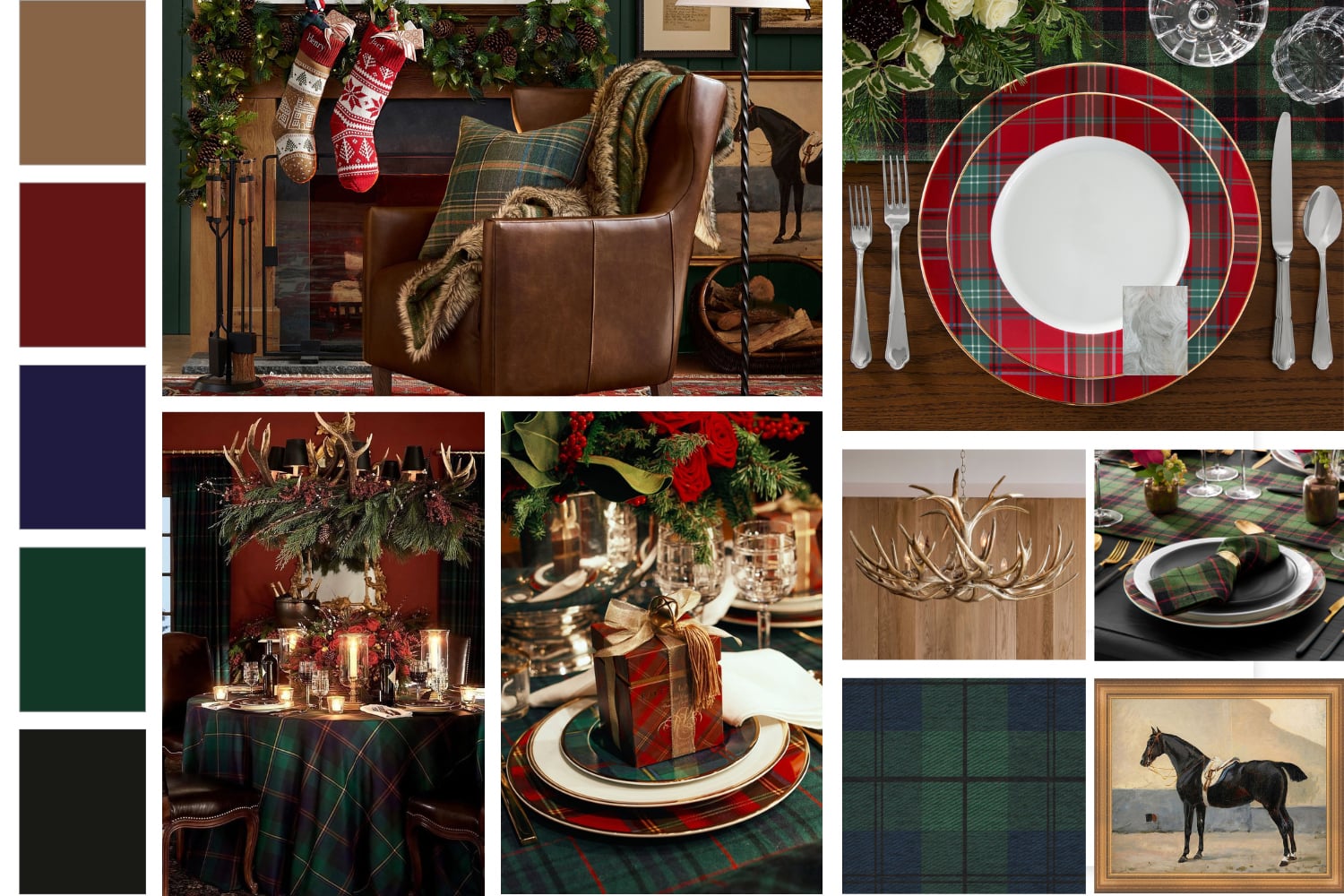
Ralph Lauren Rustic Christmas Color Scheme
Image courtesy of Pottery Barn
5. Modern Rustic
Modern rustic Christmas is the direction I find most personally compelling — it takes the natural-material foundation of traditional rustic and pairs it with a more restrained, sophisticated palette that suits contemporary interiors without losing any warmth.
The feature image above is my own Christmas tree. Black, copper, champagne, silver, and white ornaments create a palette that reads as genuinely elegant rather than conventionally festive — the copper and champagne tones connect directly to the warm wood tones throughout the room, while the black and white provide the high-contrast anchor that keeps the metallic palette from feeling too soft. Gifts beneath the tree are wrapped in forest green, white, and champagne solid paper with black and champagne ribbons — the color story extends all the way to the floor without a single piece of conventional Christmas red or green.
A massive black-framed mirror in the corner captures the tree’s full reflection, effectively doubling its visual presence in the room — one of the most impactful yet underused Christmas decorating techniques. Beside the tree, a black cabinet with warm wood backing holds evergreen branches, moss balls, candles, and rustic florals on its shelves, connecting the tree’s decorating palette to the surrounding room rather than letting it stand as an isolated seasonal element. Light oak flooring ties the warm wood tones throughout. The result is a Christmas tree that belongs to the room it sits in — which is the defining quality of modern rustic Christmas done well.
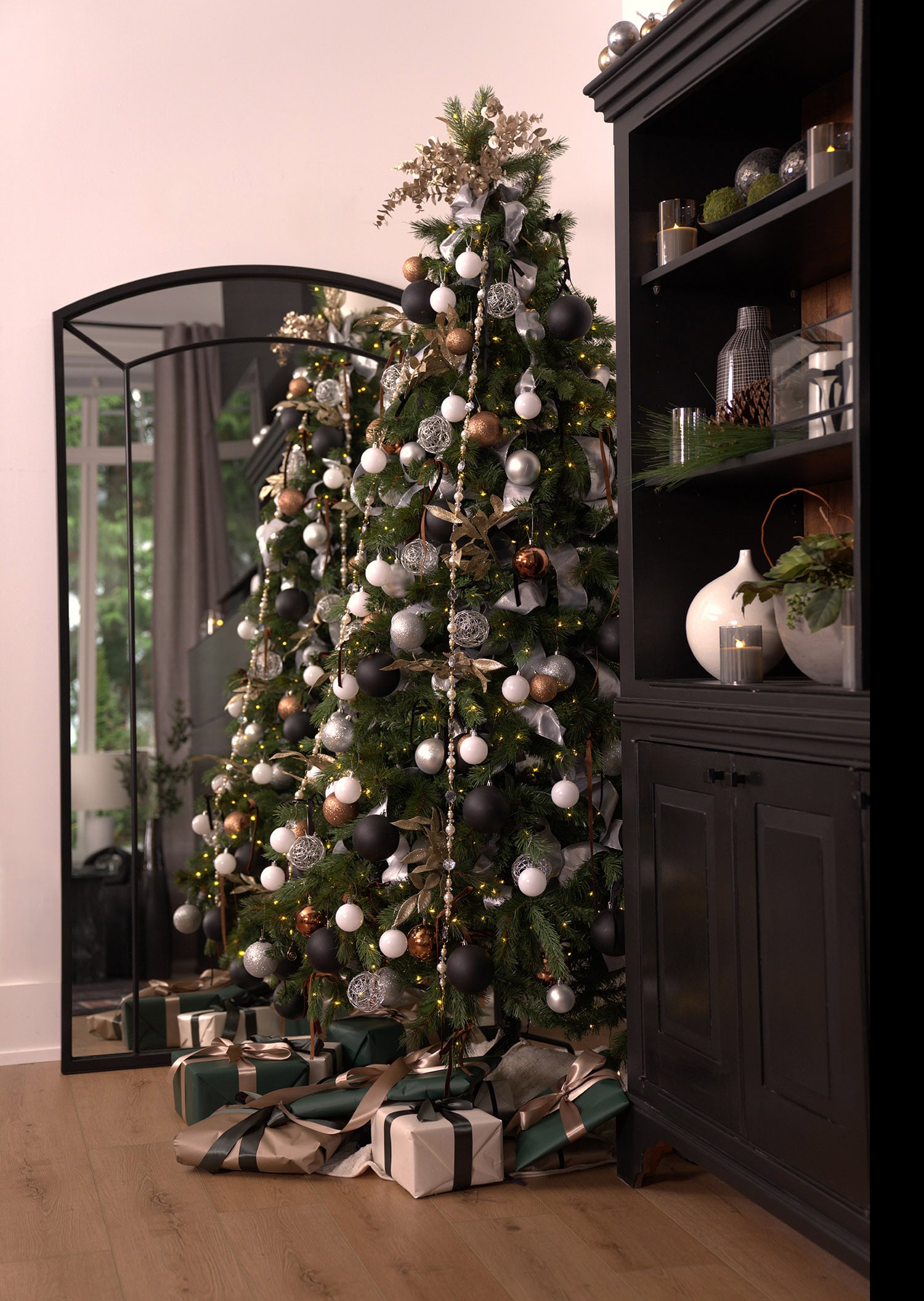
My Modern Rustic Tree
Design Elements of the Rustic Lodge Aesthetic
Layer natural greenery, wooden ornaments, plaid accents, and textured throws and pillows to create a genuine lodge Christmas. Here are the key design elements to include:
- Wooden Ornaments: Choose wooden ornaments for your Christmas tree — woodland animals, snowflakes, and traditional Christmas shapes all work well. Hand-painted or carved pieces add the most character.
- Plaid and Flannel: Integrate plaid and flannel textiles in neutral tones throughout your decor. Plaid ribbons for tree bows, flannel table runners, and plaid throw pillows all reinforce the lodge aesthetic without requiring any structural changes.
- Throws and Pillows: Layer furniture with warm throws and pillows in rich hues balanced with white and black. Faux fur throws add tactile softness against harder rustic surfaces.
- Antique Lanterns: Place vintage lanterns on tables and shelves filled with battery-operated candles or fairy lights for a warm, layered glow.
- Rustic Stockings: Hang burlap, faux fur, or knitted stockings from the mantel, bedposts, or stair railing. Personalized with names or initials, they become a genuine keepsake rather than a seasonal decoration.
- Mason Jar Candle Holders: Fill mason jars with small ornaments, pinecones, or string lights to create festive holders that work equally well on a dining table or a windowsill.
- Natural Centerpieces: Build Christmas centerpieces using wooden crates, birch logs, or a vintage wooden sled as the base. Arrange candles, pinecones, and ornaments on top for a rustic focal point.
- Cinnamon Stick Decor: Attach cinnamon sticks to wreaths or use them as tree ornaments. The scent alone does a great deal to establish a genuinely seasonal feeling throughout the room.
- Tree Skirt: Choose a tree skirt in burlap, sheepskin, or faux fur — the material at the base of the tree is more visible than most people realize and worth choosing carefully.
- Frosty Pinecones: Give pinecones a frosted appearance by lightly spraying them with white paint or adhesive, then sprinkling with Epsom salt. Use them in wreaths, garlands, or table displays.
- Rustic Gift Wrapping: Wrap presents in brown kraft paper tied with twine or burlap ribbon. Pine sprigs, cinnamon sticks, or small pinecones as gift toppers extend the natural material language all the way to the presents beneath the tree.
Rustic Farmhouse Christmas
Rustic farmhouse Christmas decorating succeeds because it draws from the same natural, unpretentious materials that define the style year-round — nothing feels forced or seasonally out of place. Natural greenery is the foundation: pine branches, eucalyptus, and holly in wreaths, garlands, and centerpieces establish the seasonal connection most directly and cost very little. Pinecones, berries, and dried orange slices extend the natural material palette to the Christmas tree, fireplace mantel, and dining table.
The material layering that completes the farmhouse Christmas look — wicker and stoneware, brass and iron bells strung on rope, velvet ribbons, and wood-beaded garland — adds texture and warmth without relying on traditional festive color. This year’s farmhouse direction leans toward rich but muted palettes of berry and fir accented with neutrals like gold and tan, a combination that feels genuinely seasonal without being overtly Christmas-themed.
The images here are from McGee & Co.’s rustic holiday collection — brass decorations, vintage-style wrapping paper, earth-tone ornaments, textured stockings, faux greenery, and wood-beaded garland that together demonstrate how thoughtfully chosen individual pieces create a cohesive farmhouse Christmas aesthetic.s Here


Christmas in a Log Cabin
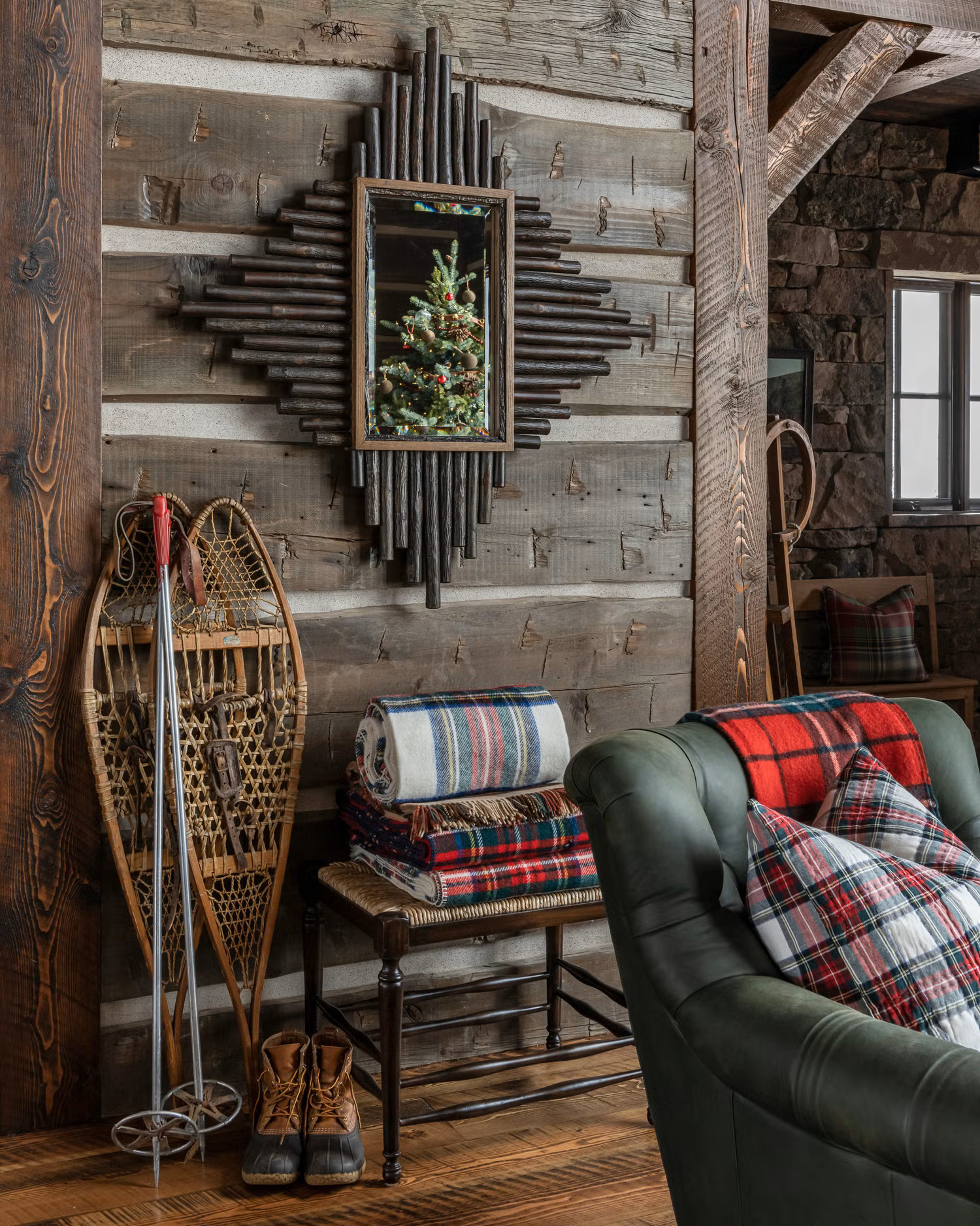
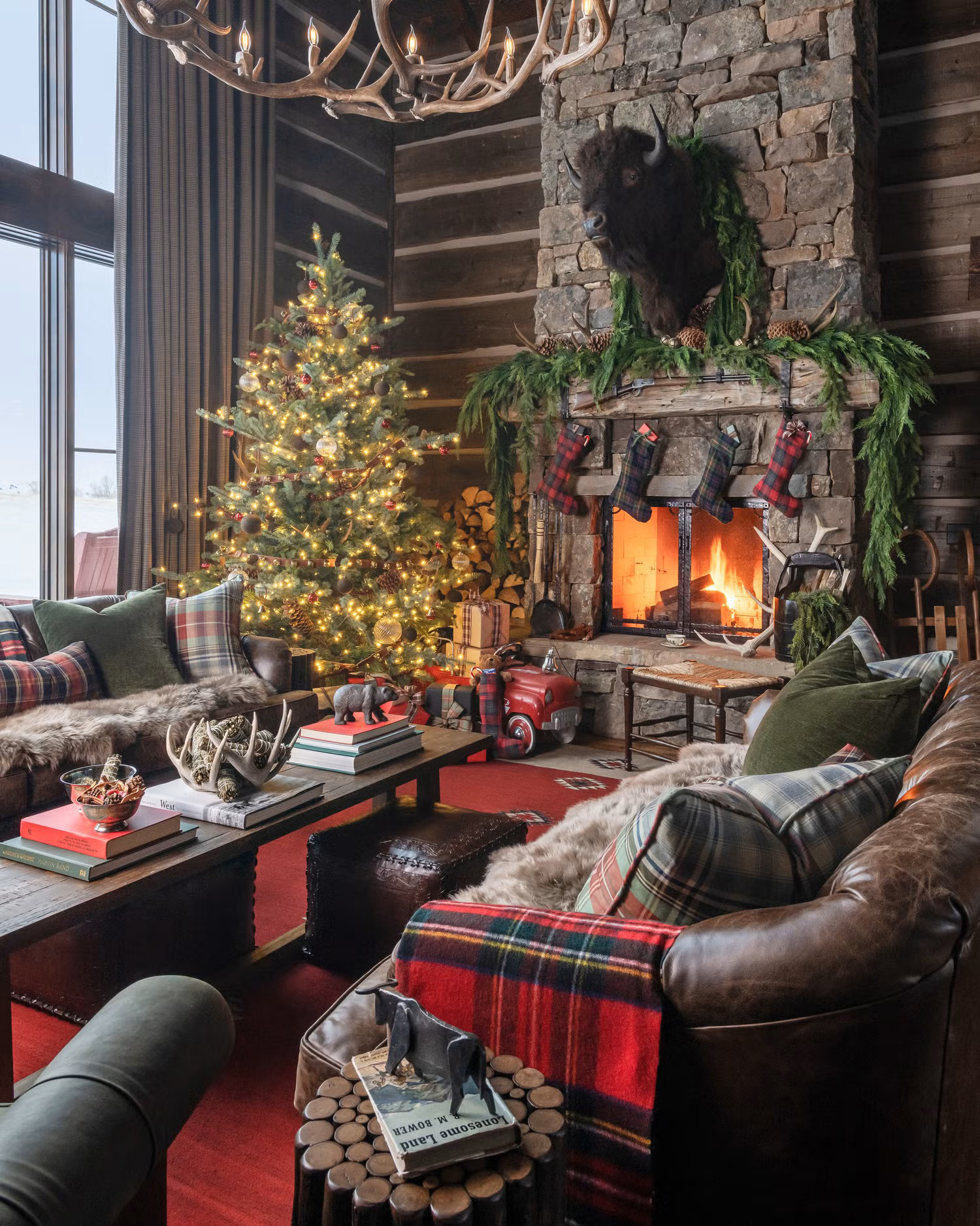
Log cabin Christmas decorating is where my own design background feels most relevant — having spent two decades working with handcrafted log homes and wilderness resorts, I understand how these spaces respond to seasonal decoration differently from conventional homes. The architecture does most of the work. Round log walls, exposed timber, and a massive stone fireplace already communicate warmth and shelter; the Christmas decorating layer simply needs to honor that rather than compete with it.
Natural materials are non-negotiable: evergreen boughs, holly branches, and pinecones connect the interior directly to the landscape outside. Plaid blankets and festive pillows add the soft textural layer that log cabins need against their hard surfaces, and candles or string lights provide the warm, layered glow that makes a cabin feel genuinely intimate after dark.
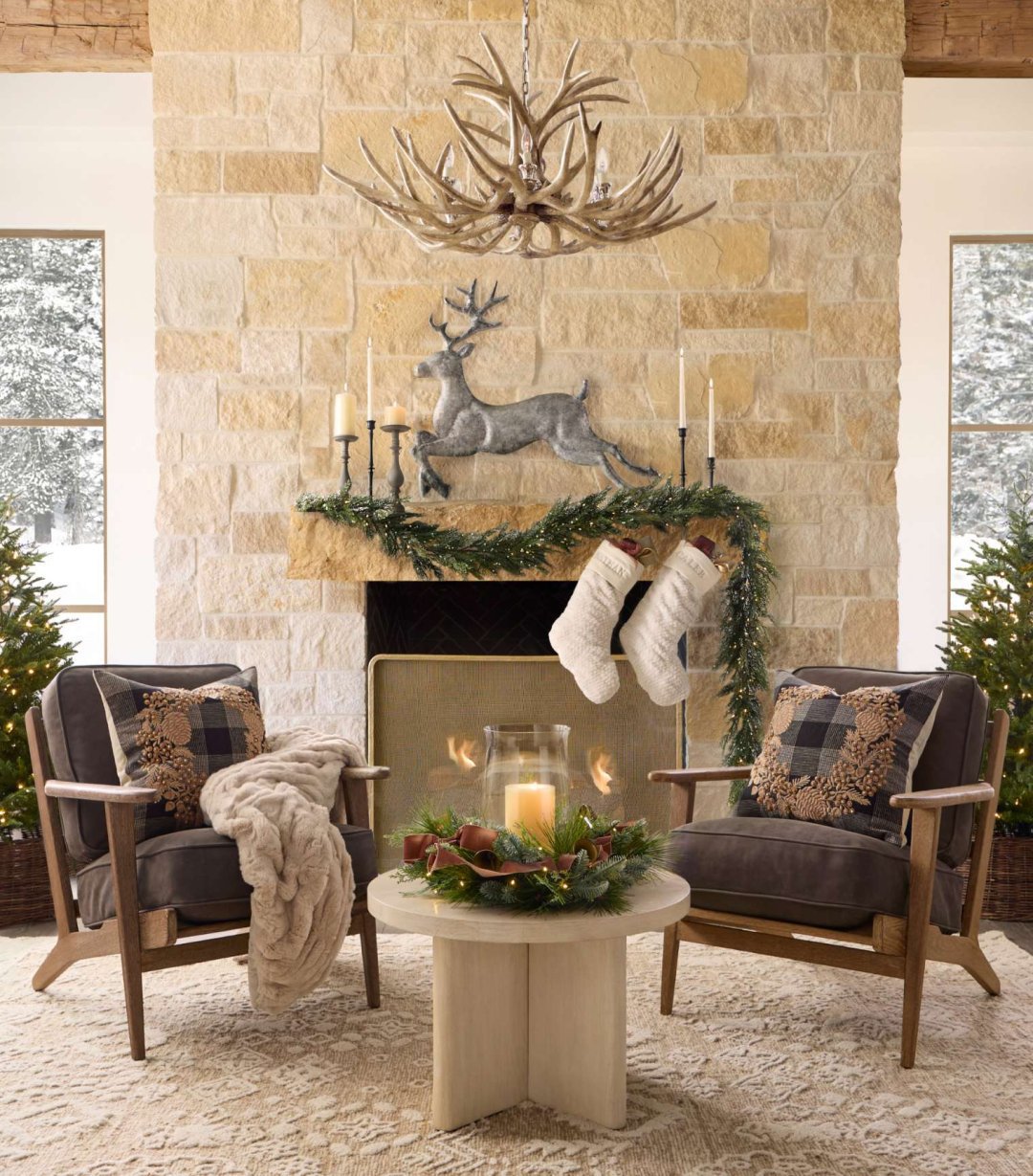
These two images capture the classic log cabin Christmas at its most authentic. A large stone fireplace anchors the room as the natural focal point, dressed with evergreen garland and plaid stockings. Leather furniture, plaid pillows and blankets, a Southwestern red area rug, and an antler chandelier overhead complete the Adirondack character — weathered, warm, and deeply connected to the tradition of the American wilderness lodge. This is the rustic Christmas direction I find most enduring precisely because it doesn’t try to be anything other than what it is.
Log Cabin Christmas
Image courtesy of Country Living Magazine ( Jeremiah Young Design)
Rustic Christmas Wreath & Garland Ideas
Wreaths and garland are the most versatile Christmas decorating tools available — they work on front doors, stair railings, mantels, mirrors, windows, and dining tables, and they establish the seasonal connection faster than almost any other single element. For rustic homes, the material choice matters: traditional greenery in pine, holly, or cedar suits the natural direction best, while birch bark and grapevine wreaths add an organic, foraged quality that manufactured alternatives rarely match.
This front porch shows garland used with real confidence. Evergreen garland with red berries and pinecones is draped at the top of each window along the full length of the porch — the repetition across multiple windows creates a unified, architectural statement rather than an isolated seasonal touch. Decorated outdoor Christmas trees flank the space, and two wicker chairs with plaid pillows and faux-fur blankets complete the scene. The black shutters and white walls provide the high-contrast backdrop that makes the rich green garland read with maximum impact.
Beyond the exterior, garland works equally well draped along a front porch railing, a staircase banister, or a fireplace mantel. A wreath placed flat as a dining table centerpiece — with candles, pinecones, and berries arranged within it — creates a holiday tablescape focal point that requires minimal effort. The consistent principle across all of these applications is restraint — garland used generously in one or two locations reads as intentional; scattered across every surface reads as accumulated.

Rustic Porch with Evergreen Garland
Image courtesy of Balsam Hill
Rustic Holiday Living Room
The living room is where rustic Christmas decorating has the most impact — it’s the room people spend the most time in and the one that sets the tone for the whole house. The fireplace mantel is the natural starting point: pine branches, eucalyptus, pinecones, and string lights establish the seasonal moment without requiring any structural changes. A garland of dried orange slices adds a warm, fragrant detail that reinforces the natural material direction.
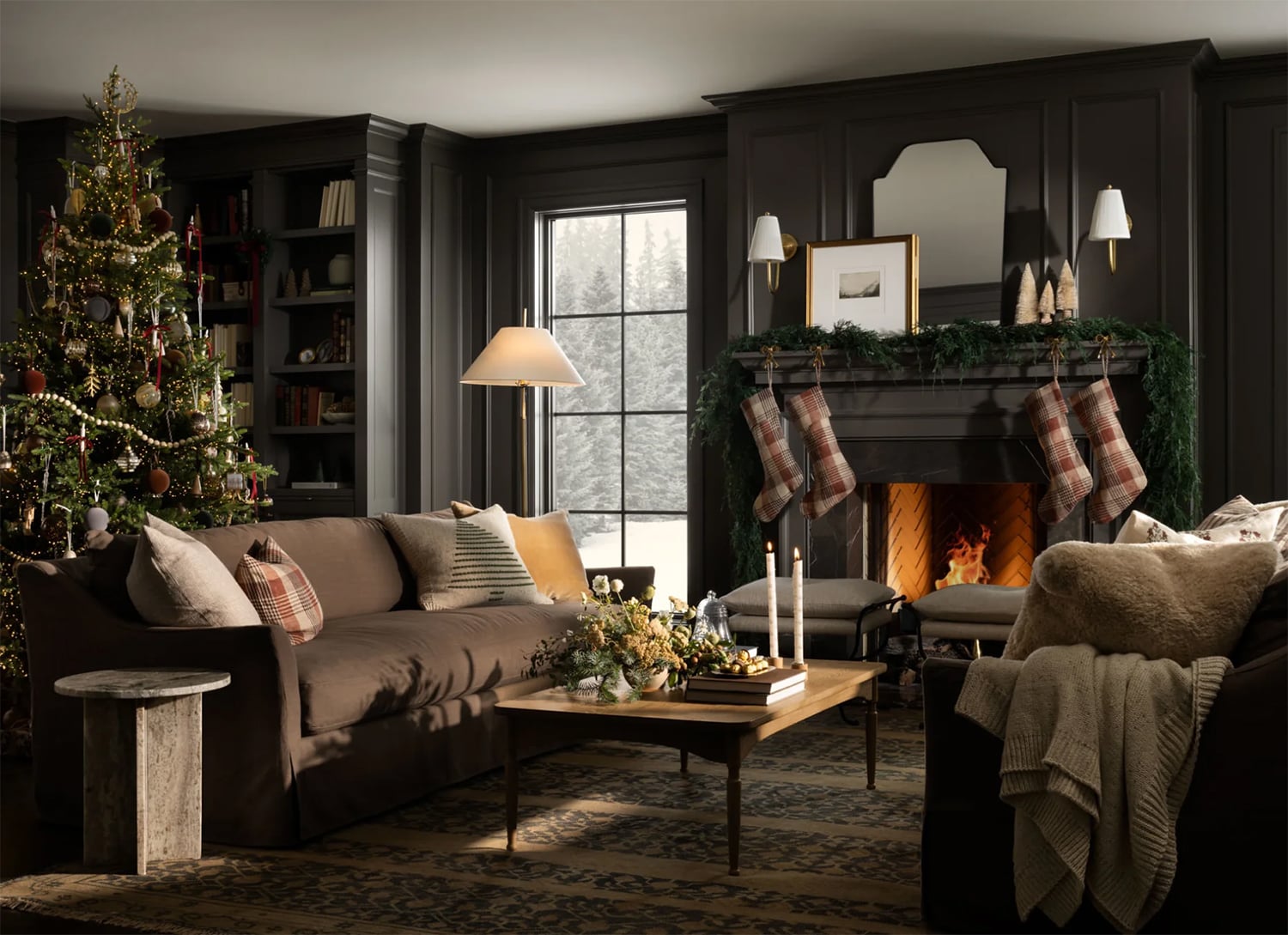
This modern rustic living room leans into a moody, sophisticated palette rather than the traditional warm cabin approach. Charcoal gray walls and a gray fireplace surround create a moody, enveloping backdrop that makes the seasonal decorating feel genuinely dramatic rather than simply festive. Brown linen sofas ground the seating area with the warmth of natural materials, while the vintage-style Christmas tree, decorated with gold and rust ornaments, sits comfortably within the room’s existing palette rather than introducing a contrasting seasonal color scheme.
The coordination here is deliberate and effective — rust, white, and dark gray stockings on the mantel use the same material and color palette as the sofa cushions and tree ornaments, creating a single cohesive decorating story from the mantel to the tree to the seating. Throw blankets and plaid pillows complete the layering, adding the soft textural element that dark-walled rooms need to feel warm rather than cold.
Modern Rustic Holiday Living Room
Image courtesy of McGee & Co.
Rustic Christmas Dining Room Ideas
The dining room is where rustic Christmas decorating translates most directly into an experience — the table setting, the candlelight, and the seasonal details all work together to make a meal feel genuinely celebratory. Natural centerpieces in mason jars or galvanized buckets, filled with pine branches, berries, and pinecones, immediately establish the rustic direction. Burlap table runners or plaid tablecloths, stoneware or pottery dinnerware, and vintage glassware complete the material story.
This dining room shows how the seasonal decorating can extend beyond the table itself to transform the whole room. Striped linen slipcover chairs have small wreaths tied to their backs with ribbon — a personal, considered detail that most dining room Christmas decorating misses entirely. A garland woven through the base of the pendant light brings the seasonal element upward into the room’s architecture rather than confining it to the table level. Wreaths on the cabinet doors carry the greenery theme across the full wall. Red tapered candles and seasonal floral arrangements on the table complete the setting — the red is the only traditional Christmas color in the room, used sparingly enough that it feels intentional rather than generic. Everything works together because the decorating decisions were made in relation to the room rather than applied on top of it.


Rustic Christmas in the Dining Room
Image courtesy of McGee & Co.
Rustic Holiday Bedroom
The bedroom is the most personal room to decorate for Christmas — and the most often overlooked. A few well-chosen seasonal additions can transform it without requiring as much effort as the living room or dining room. Flannel sheets, a plaid comforter, or a holiday-inspired duvet are the most immediate change available — the bedding is the room’s dominant visual element, and shifting it seasonally changes the whole character of the space.
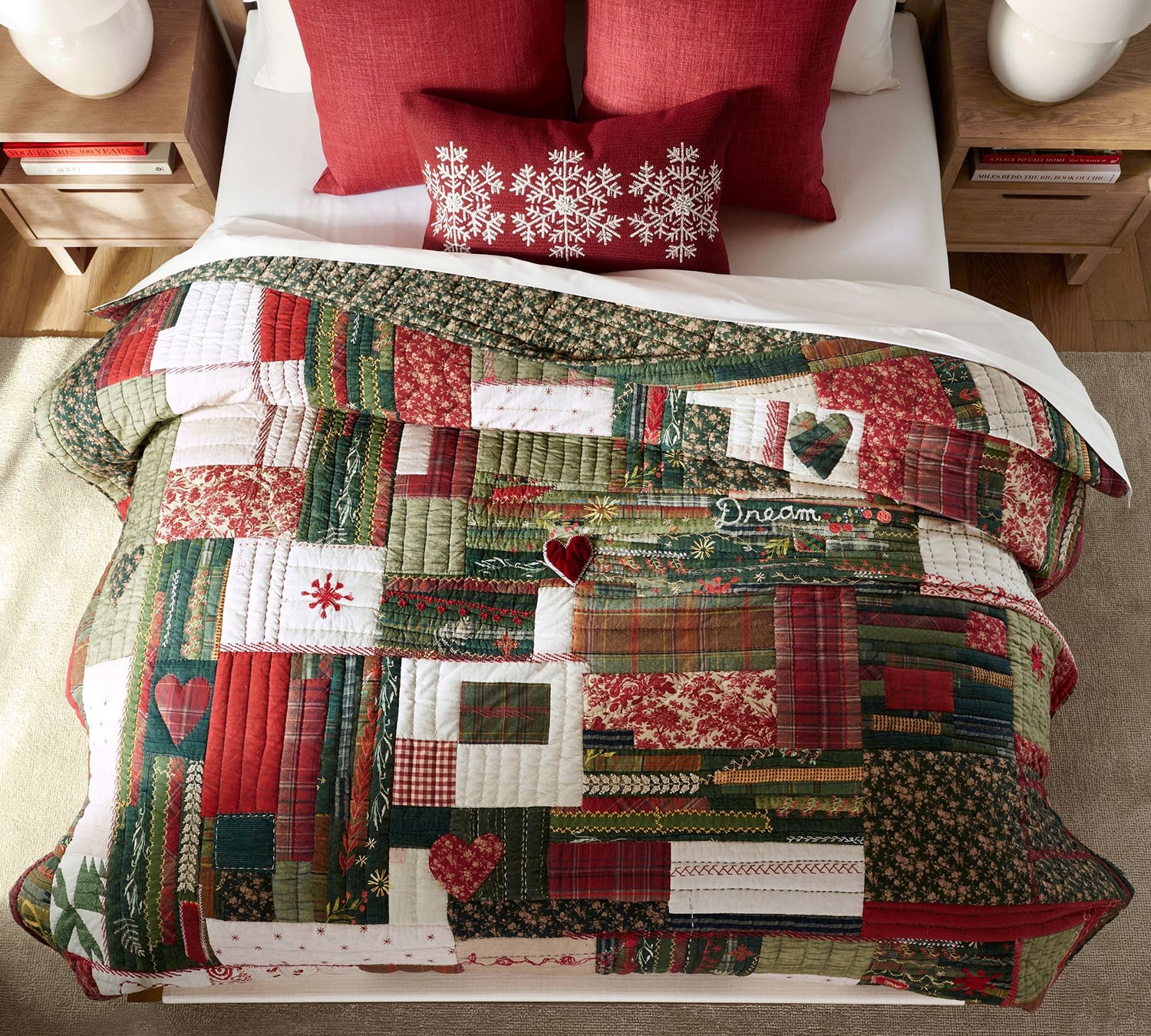
This bed shows exactly how much a single textile decision can accomplish. A rustic patchwork Christmas quilt in hand-stitched whites, greens, plaids, florals, and solids becomes the room’s focal point immediately — the variety of fabric and pattern gives it the collected, handmade quality that defines rustic Christmas at its most personal. Red throw pillows against white sheets provide the contrast that keeps the quilt from feeling too muted.
Beyond the bedding, rustic-inspired throw pillows, a faux fur blanket, pinecones or dried lavender on the nightstand, and soft string lights or candles add the seasonal layering that makes a Christmas bedroom feel genuinely considered rather than simply decorated. A wreath above the headboard or a stocking on the bedroom door extends the holiday detail into the room’s architecture without requiring anything elaborate.
Rustic Christmas Bedding
Rustic Kitchen Ideas
The kitchen is often the last room people think to decorate for Christmas — and one of the most rewarding when done well. Natural elements work particularly well here because the kitchen already centers on food, warmth, and gathering. A wooden tray or vintage crate on the kitchen island filled with fresh greenery, pinecones, and cinnamon sticks establishes the seasonal connection immediately without interfering with the room’s function.
This rustic farmhouse kitchen shows how the room’s existing character does most of the work. Light olive green cabinets, white walls, and a wood dining table provide the warm, natural foundation — the pot rack above with copper pots and leafy vines already reads as organic and collected before a single Christmas decoration is added. In a kitchen like this, the seasonal additions need only be subtle: a wreath on the kitchen window, string lights along a shelf, wooden spoons and mason jar utensil holders replacing everyday versions, and a stack of favorite holiday cookbooks on the counter. The copper pots and olive green cabinets already carry the warm, earthy quality that rustic Christmas depends on — the decorating simply needs to acknowledge rather than overwhelm what’s already there.

Rustic Christmas Kitchen
Image courtesy of Elmueble
Rustic Christmas Outdoor Decorating Ideas
Outdoor rustic Christmas decorating works best when it extends the same natural material language from inside to outside — greenery, wood, warm lighting, and weathered accents that feel connected to the landscape rather than placed on top of it. A wreath of pinecones, holly branches, birch bark, or dried flowers on the front door establishes the seasonal moment immediately, while garland draped along a porch railing or wrapped around tree trunks carries the outdoor Christmas theme beyond the entry.
This back deck shows outdoor rustic Christmas at its most genuine. A circular fire pit with chairs gathered around it is the anchor — four wicker chairs with faux fur throws and Scandinavian snowflake pillows create a seating arrangement that invites people to stay outside despite the cold. A large wreath with pinecones and branches hangs prominently, and garland with twinkling lights drapes along the railing. Snow-covered mountains and trees visible beyond the deck become part of the composition — the most powerful outdoor Christmas decoration available is simply the landscape itself, framed by the architecture of the space.
Beyond lighting and greenery, vintage accents add the rustic character that manufactured decorations rarely achieve — old wooden sleds, galvanized buckets planted with seasonal greenery, antique lanterns filled with pinecones and ornaments, and reclaimed wood signs with simple holiday messages all reinforce the natural, unhurried quality that defines rustic Christmas outdoors.
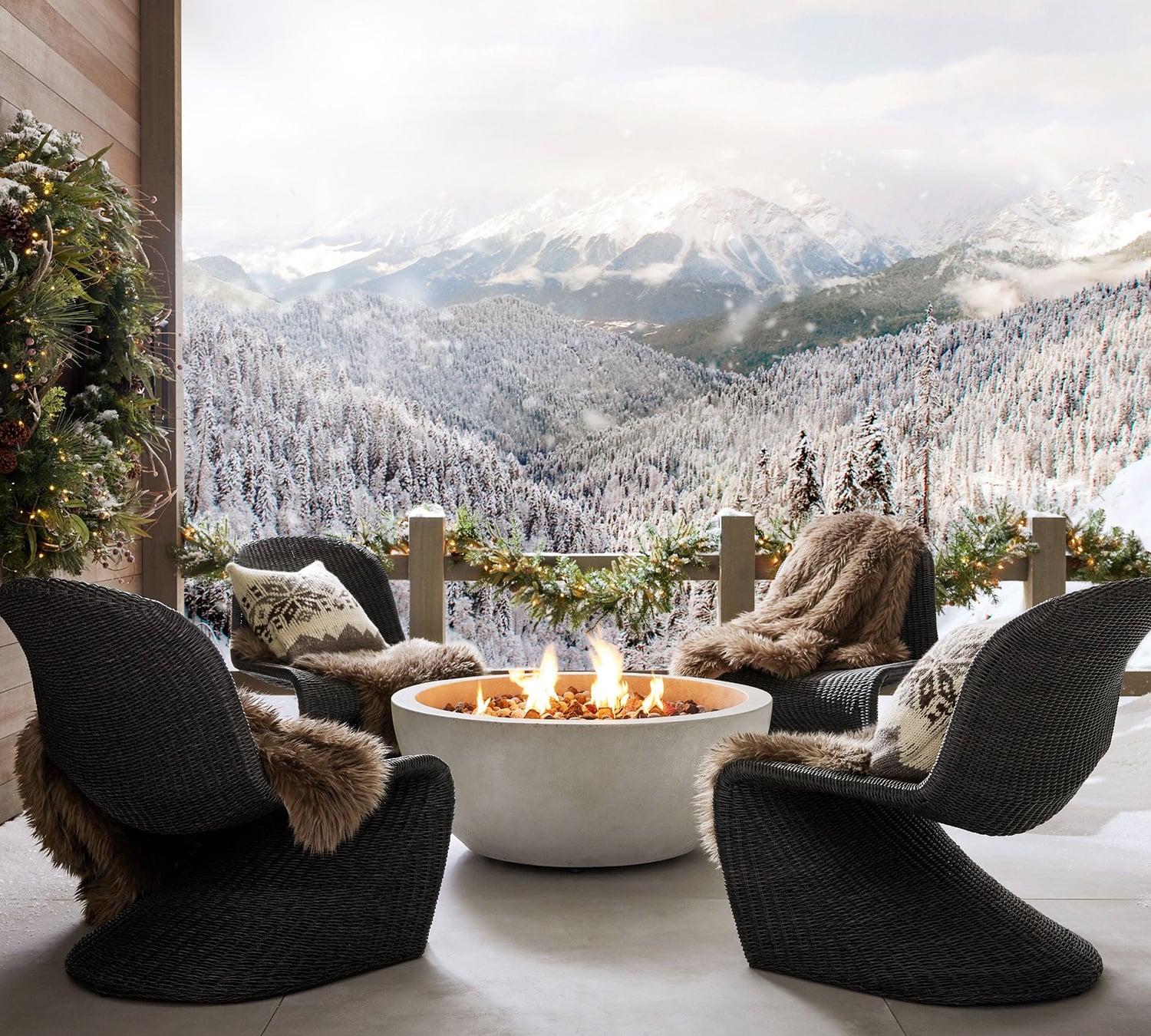
Mountain Home Deck Area Decorated for Christmas
Image courtesy of Pottery Barn
Rustic Christmas Design Tips
A few professional details that make a significant difference in rustic Christmas decorating:
Place Christmas wreaths beyond the front door — on interior walls, above a console table, or surrounding a patio seating area. Unexpected placements create a layered, considered effect that a single door wreath alone cannot achieve.
Nestle a hurricane lantern inside a berry wreath for an immediate burst of color and texture. The candlelight refracted through the wreath’s berries and greenery does more to establish a seasonal mood than almost any other single detail.
The fireplace mantel is the room’s most important Christmas decorating surface. Wreaths anchor the display, but berry garlands, woodland accents, and layered evergreen branches complete it — the mantel should feel abundant rather than sparse.
Burlap ribbon on a Christmas tree grounds the palette in natural material and works particularly well in rustic settings where conventional satin ribbon can feel out of place. Pair it with large pinecones and a sculptural topper — an owl, a star, or a simple bow — for a tree that feels genuinely connected to the natural world.
The first image shows these principles in a single room — a rustic dining table in front of a roaring stone fireplace, with a garland of pine boughs, pinecones, and white tapered candles running the length of the table. The mantel is loaded with evergreen branches, a Christmas tree anchors the corner, and the wood walls provide the warm backdrop that ties everything together. The second shows a burlap-ribbon tree with large pinecones and an owl topper in browns, greens, and silver — organic, considered, and entirely consistent with the room it would sit in.

Creating Your Rustic Christmas
Rustic Christmas decorating succeeds because it draws from materials and traditions that already feel genuine — natural greenery, handcrafted ornaments, candlelight, wool and burlap, and aged wood. Nothing needs to be forced or contrived because the aesthetic is rooted in how these homes actually look and feel year-round. The holiday layer simply deepens what’s already there.
Whether you lean toward the warmth of a traditional log cabin Christmas, the refined sophistication of the Ralph Lauren direction, or the clean restraint of a Scandinavian approach, the underlying principle stays the same: let natural materials lead, keep the palette cohesive, and choose a few meaningful pieces over an abundance of seasonal decorations. The homes that feel most genuinely Christmas are the ones where the decorating decisions were made with the same care as every other design decision in the house.
Frequently Asked Questions About Rustic Christmas Decorating Ideas
What makes Christmas decor look rustic?
Rustic Christmas decor is defined by natural materials, organic textures, and a palette rooted in the colors of the natural world rather than traditional bright red and green. Wood, burlap, wool, pinecones, evergreen branches, dried botanicals, and aged metals like copper, brass, and wrought iron are the foundational elements. Vintage and handcrafted pieces — hand-stitched quilts, carved wooden ornaments, antique lanterns — add the collected, personal quality that separates genuinely rustic decor from mass-produced seasonal decorations. The overall effect should feel like the home’s existing natural character has been deepened for the season rather than covered over with holiday decorations.
What are the Christmas decorating trends for 2026?
The strongest Christmas decorating directions for 2026 center on intentional material choices and tonal sophistication rather than bold seasonal color. Layered earth tones — amber, terracotta, bronze, olive green, and cream — continue to gain ground over traditional red and green, particularly in rustic and organic-modern interiors. The Ralph Lauren-inspired aesthetic of deep forest green, oxblood red, navy, tartan, and rich velvet is one of the most prominent trends on social media, translating exceptionally well into log cabins and mountain retreats. Winter whites — creamy neutrals layered with faux fur, cable knit, and velvet — remain consistently strong, as does the move toward fewer, better-quality decorations chosen deliberately rather than accumulated seasonally.
What are some ideas for earthy Christmas decor?
Earthy Christmas decor draws its palette directly from the natural world — warm browns, muted greens, terracotta, amber, cream, and bronze rather than saturated seasonal color. Start with natural materials as the foundation: pinecones, dried orange slices, cinnamon sticks, birch branches, and evergreen boughs establish the earthy connection immediately. Earth-tone ornaments in velvet, wood, and ceramic — rather than shiny glass — reinforce the organic quality throughout the tree. Burlap ribbon, jute garland, and linen table runners extend the material palette to every surface. Copper and brass accents add a warm metallic thread that bridges the natural tones without introducing anything that feels conventionally festive.
How do you decorate a rustic Christmas tree?
A rustic Christmas tree works best when the ornament selection feels collected rather than coordinated. Start with warm white or soft yellow lights — cool white lights work against the organic warmth that rustic style depends on. Choose ornaments in natural materials: carved or painted wood, burlap-wrapped pieces, dried botanicals, pinecones, and berry clusters. Earth-tone glass ornaments in amber, bronze, cream, and olive green complement the natural pieces without disrupting the palette. Burlap or jute ribbon wound through the branches replaces conventional satin ribbon and grounds the tree firmly in the rustic direction. Finish with a simple topper — a burlap bow, a wooden star, or a sculptural element like an owl or branch — rather than a formal star or angel that would feel out of place with the overall aesthetic.
What natural elements work best in rustic Christmas decorating?
The most effective natural elements in rustic Christmas decorating are those that connect the interior directly to the season happening outside. Evergreen boughs, pine branches, and eucalyptus establish the seasonal connection most immediately and work in wreaths, garlands, centerpieces, and mantel displays. Pinecones are the single most versatile natural element — they work as ornaments, garland components, centerpiece fillers, and gift toppers. Dried orange slices, cinnamon sticks, and star anise add both visual warmth and genuine fragrance that no artificial decoration replicates. Birch branches and bare twigs in tall vases add height and sculptural interest, particularly when wound with string lights. Berry clusters — real or high-quality faux — add the color note that keeps an all-natural display from feeling too muted.

