
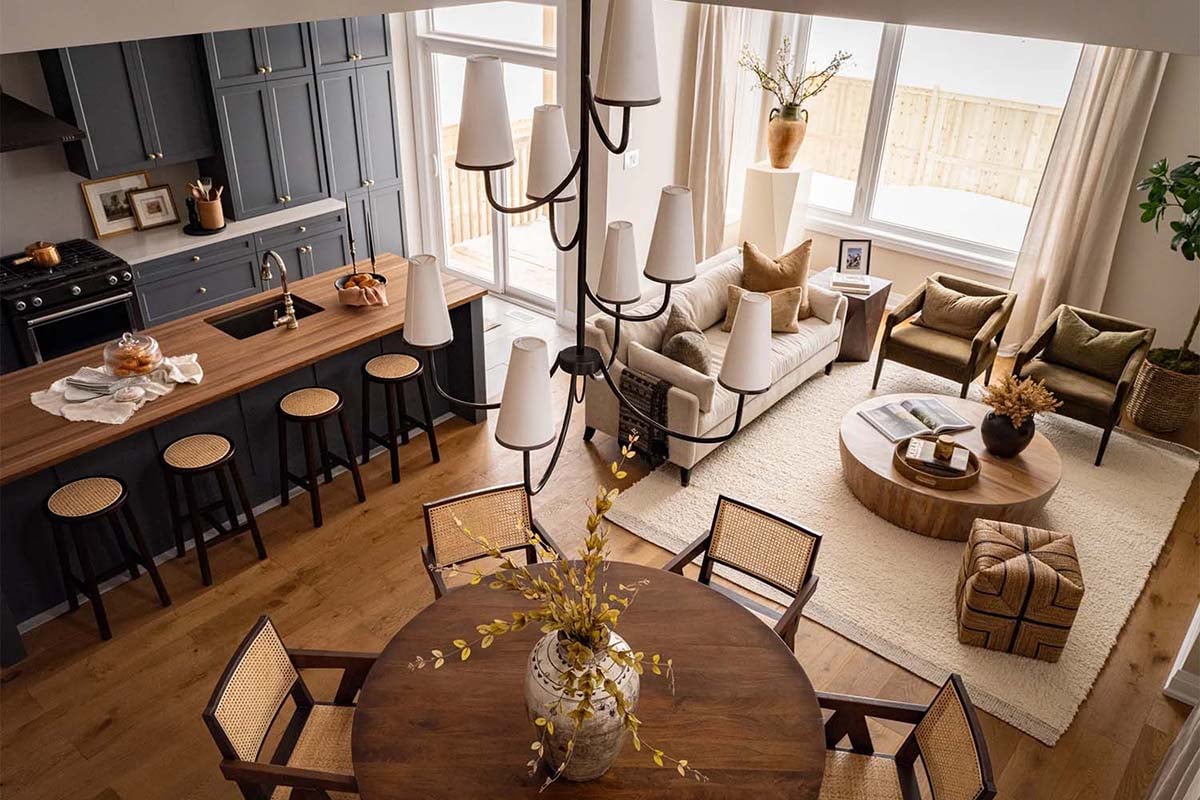
Dark Kitchen Cabinet Ideas: Balancing Drama and Warmth
By Interior Designer Tracy Svendsen | Published on April 06, 2024 | Updated January 19, 2026 |
Dark kitchen cabinets continue to shape modern kitchen design, offering depth, contrast, and a refined sense of sophistication. As an interior designer, I’ve seen how moody cabinetry—when balanced with light surfaces, natural wood, and stone—creates kitchens that feel intentional, inviting, and timeless rather than heavy. As darker palettes continue to evolve alongside warm neutrals and layered finishes, they’re part of a broader shift toward richer tones seen in today’s best kitchen cabinet colors.
Design forecasts reinforce this direction. Dark kitchen cabinetry is expected to remain a strong trend through 2026, particularly when paired with organic materials that add warmth and visual balance (Tredi Interiors 2026 Kitchen Trends). Deep, saturated color palettes are also increasingly used to bring richness and dimension to open-concept kitchens, helping define space while enhancing contemporary and transitional layouts (Homedit 2026 Design Forecast).
From classic black and charcoal to navy, deep green, and richly stained wood, dark kitchen cabinets offer remarkable versatility across styles. Below, you’ll find 31 inspiring dark kitchen cabinet ideas, along with practical design guidance to help you balance light and shadow for a kitchen that feels both dramatic and livable. Feature image courtesy of West of Main Design.
Key Takeaways
-
Dark cabinets add drama, depth, and a sophisticated focal point to any kitchen.
-
Pairing dark cabinetry with lighter surfaces, warm tones, or metallic accents balances the space and highlights architectural details.
-
Consider lighting, textures, and contrasting materials to prevent the kitchen from feeling heavy while enhancing richness and character.
-
Dark cabinets are versatile, working across modern, traditional, rustic, and eclectic design styles.

Dark Brown Kitchen Cabinets
Image courtesy of Nicole Hogarty Design
Designer Mood Board: Balancing Dark Cabinets with Warm, Organic Materials
I selected the following kitchen by West of Main because it demonstrates the level of restraint required for dark cabinetry to feel timeless rather than trend-driven. As an interior designer, I often approach dark kitchens as an exercise in balance—where depth must be carefully offset by warmth, proportion, and material clarity. In this space, the deep navy cabinetry reads as a grounded neutral, subtly shifting with the light rather than dominating the room.
What makes this project especially relevant is how depth is used to create structure rather than visual drama. The dark cabinetry acts as a visual anchor, allowing lighter stone surfaces and warm wood tones to soften the overall composition. Rather than relying on stark contrast, the design is built on tonal layering and measured transitions to ensure dark kitchens feel grounded, inviting, and livable over time.
This mood board reflects how I guide clients toward darker cabinet palettes: treating color as one element among many rather than the whole statement. Much like cream cabinetry, dark finishes succeed when they’re integrated with intention. Much like cream cabinetry, dark finishes succeed when they are integrated with intention—supporting the architecture, enhancing texture, and creating a kitchen that feels refined, enduring, and well-considered.
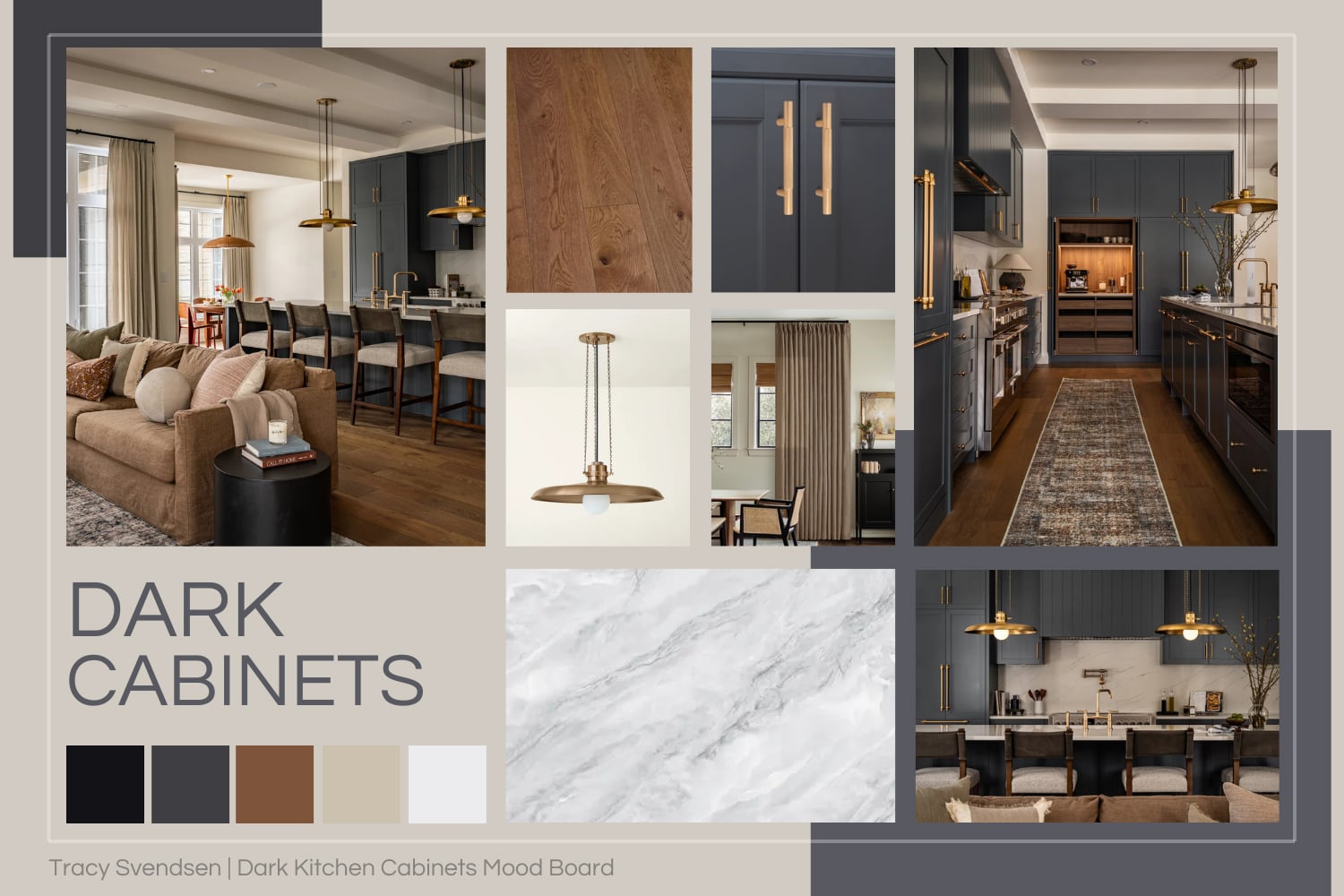
Designer mood board by interior designer Tracy Svendsen featuring dark navy cabinetry with charcoal undertones, warm wood flooring, bronze accents, and marble countertops for a refined, livable kitchen.
Here are a few benefits and design tips for dark kitchen cabinetry:
1. Benefits of Dark Kitchen Cabinets
Dark kitchen cabinets create a dramatic focal point while adding depth and elegance to a kitchen. They enhance the overall aesthetic, complementing both modern and traditional designs. Their rich tones are also practical, concealing fingerprints and minor wear while providing lasting style.

Dark Kitchen Cabinets
Image courtesy of West of Main Design
2. Black Kitchen Cabinets
Black cabinets are timeless, versatile, and perfect for creating a striking, sophisticated look. They pair beautifully with light countertops, backsplashes, and metallic accents. Interior designer Parris McKenna showcases black cabinets combined with a white backsplash and gold-accented lighting to achieve a polished, modern design.

Kitchen With Black Cabinets
Image courtesy of Parris McKenna Design
3. Dark Green Kitchen Cabinets
Dark green cabinets add warmth and a natural, earthy connection to a kitchen. They work with a wide range of materials and color palettes, from modern to rustic styles. Interior designer Kate Marker used dark olive-green cabinetry, parquet flooring, brass fixtures, and wood accents to create a welcoming, character-filled farmhouse kitchen.

Dark Green Kitchen Cabinets
Image courtesy of Kate Marker Interiors
4. Charcoal Gray Kitchen Cabinets
Charcoal gray cabinets offer a moody, contemporary feel while providing depth to the space. They contrast beautifully with lighter surfaces and can be paired with bold accents for visual layering. London Pierce Design demonstrates this with gray cabinets, a white kitchen island, and gold fixtures for a refined, modern aesthetic.

Kitchen with Dark Gray Cabinets
Image courtesy of London Pierce Design
5. Navy Blue Kitchen Cabinets
Navy blue cabinets bring sophistication and richness, creating a dramatic yet elegant kitchen. They pair seamlessly with light countertops and wood elements for balance. Hoedemaker Pfeiffer combined dark blue cabinets with a wood island and warm-toned rug, resulting in a bold and inviting space.
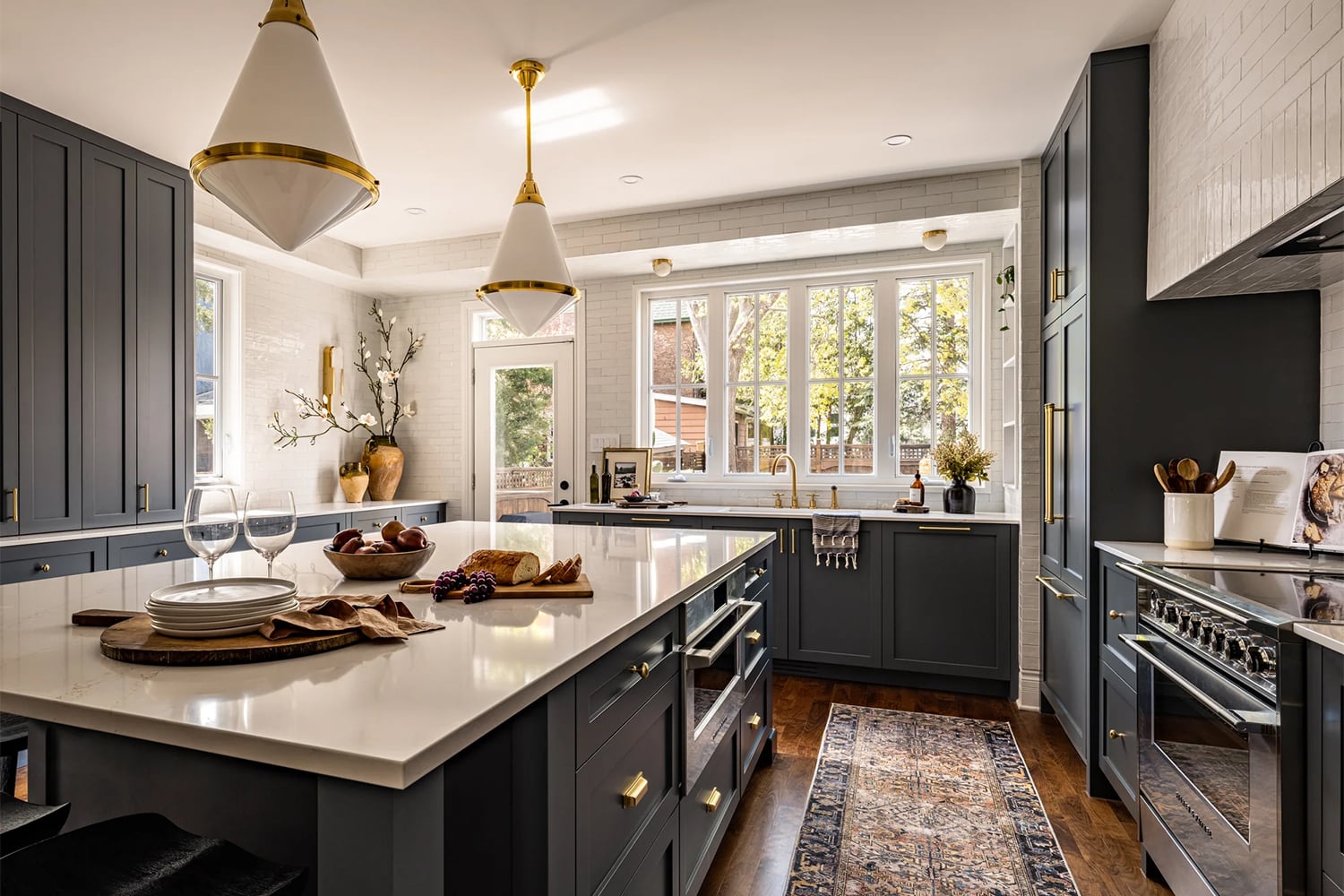
Dark Blue Kitchen Cabinets
Image courtesy of West of Main
6. Dark Brown Kitchen Cabinets
Dark brown cabinetry adds warmth, comfort, and a grounded, earthy feel. Its versatility allows it to pair with numerous materials and styles. Interior designer Amber Lewis highlights chocolate brown cabinets in a kitchen that exudes cozy, country-inspired charm.


Kitchen with Chocolate Brown Cabinets
Image courtesy of Amber Interiors
7. Dark Wood Kitchen Cabinets
Dark wood cabinets offer timeless elegance and rich character. Woods like walnut, cherry, and espresso-stained oak pair beautifully with light surfaces to create balanced contrast. Amber Lewis demonstrates how dark wood cabinetry with light countertops and backsplash enhances warmth and sophistication.

Dark Wood Kitchen Cabinets
Image courtesy of Amber Interiors
8. Ebony Kitchen Cabinets
Ebony cabinets create a deep, luxurious look that adds drama and sophistication to any kitchen. Their sleek finish works particularly well in contemporary designs, providing a striking contrast with lighter countertops and backsplashes. With ample natural or layered lighting, ebony cabinetry reflects light beautifully while maintaining a bold, elegant presence.

Ebony Kitchen Cabinets Paired with Oak Finishes
Image courtesy of Crystal Cabinets
9. Espresso Kitchen Cabinets
Espresso cabinets add warmth and a classic, versatile appeal. They pair with both light and dark materials, making them suitable for many design styles. This finish enhances kitchens with earthy palettes, creating a cozy, polished environment.

Espresso Kitchen Cabinets
Image courtesy of Country Kitchens Online
10. Dark Cabinets With Open Shelving
Open shelving or glass-front cabinets can break up dark cabinetry and showcase dishware or decor. This approach lightens the visual weight while keeping the richness of dark finishes. Combining dark cabinets with open shelving creates a layered, dynamic kitchen design.

Dark Cabinets with Open Shelving
Image courtesy of JFY Designs
11. Dark Lower Cabinets With White Upper Cabinets
A two-tone design with dark lower cabinets and white uppers balances depth and lightness. The white cabinets enhance openness, while the darker base anchors the space. This combination works across modern, traditional, and transitional kitchens.

Two-Tone Kitchen Cabinets with White Upper and Navy Blue Lower Cabinets
Image courtesy of Heidi Callier Design
12. Dark Kitchen Islands for Contrast
A dark kitchen island provides a bold focal point and adds dimensionality to the layout. It contrasts beautifully with lighter surrounding surfaces. Beau Geste Design paired a dark wood island with warm flooring and mixed cabinetry for a dramatic yet inviting kitchen.

Kitchen with Dark Wood Island
Image courtesy of Beau Geste Design
13. Metallic Accents
Metallic hardware and fixtures enhance the luxury and layered look of dark cabinets. Brass, copper, or stainless steel details introduce warmth and sparkle. Tiffany Leigh showcased olive green cabinets with brass accents and wood flooring for a refined, polished kitchen.


Dark Green Cabinets Paired with Warm Metallics
Image courtesy of Tiffany Leigh Design
14. Experiment with Textures
Textured surfaces such as stone, brick, and wood complement dark cabinetry beautifully. They add depth, richness, and tactile appeal to the kitchen. Layered textures create a visually dynamic and inviting space.

Texture in the Kitchen
Image courtesy of Amy Storm Design
15. Pairing with Other Colors
Dark cabinets can be paired with warm or cool tones depending on the desired mood. Beige or cream adds classic warmth, while gray or black reinforces modern sophistication. Thoughtful color combinations enhance depth and cohesion throughout the kitchen.

Pairing Dark Cabinets with Warm Earth Tones
Image courtesy of Heidi Callier Design
16. Dark Lower Cabinets with Cream Upper Cabinets
A dark lower cabinet paired with cream uppers balances weight and light, creating a spacious feel. This combination reflects natural light while adding grounding depth. The pairing works well in traditional and contemporary kitchens alike.

Dark Lower Cabinets Paired with Cream Upper Cabinets
Image courtesy of Studio McGee
17. Dark Cabinets in a Small Kitchen
With careful lighting and light-colored surfaces, dark cabinets can succeed in small kitchens. White countertops and backsplashes create contrast and openness. West of Main Design paired navy cabinets with white walls and subway tile to maintain a bright, airy feel.

Dark Cabinets in a Small Kitchen
Image courtesy of West of Main
18. Rich Wood Flooring
Pairing dark cabinets with rich wood flooring adds warmth and cohesion. The natural tones complement cabinetry and enhance visual harmony. Proper lighting and decor ensure the space feels inviting and layered.

Dark Cabinets and Warm Wood Flooring
Image courtesy of Design Shop Interiors
19. Balance with Light Elements
Lighter countertops, backsplashes, and flooring balance dark cabinetry for an open, harmonious kitchen. Light surfaces prevent heaviness and highlight the depth of cabinetry. Materials like marble or light tiles enhance texture and dimension.

Balance with Light Tones
Image courtesy of Studio McGee
20. Warm Earth Tones
Earth tones such as brown, tan, and beige create a cozy, grounded environment with dark cabinets. Countertops in caramel, amber, or golden brown reinforce the warmth. Wood flooring and copper or bronze accents complete a rustic, inviting look.

Dark Cabinets with Earth Tones
Image courtesy of Park & Oak Design
21. Cool Neutrals
Gray, taupe, or white tones provide a modern, sleek complement to dark cabinetry. They offer crisp contrast while enhancing depth. Using varied textures, like matte quartz or glossy subway tile, adds layered dimension.

Black and White Kitchen
Image courtesy of Amy Carman Design
22. Dark, Vibrant Cabinets in Contemporary Kitchens
Dark cabinets paired with vibrant accents infuse energy and personality. Bright colors create a modern, eclectic feel without overwhelming the space. Strategic placement of color keeps the design balanced and visually dynamic.

Dark Red Kitchen Cabinets
Image courtesy of Summer Thornton Design
23. Natural Light
Ample natural and layered artificial lighting prevents dark cabinets from feeling heavy. Pendant lights, under-cabinet fixtures, and windows enhance brightness. Proper illumination highlights cabinetry depth while keeping the kitchen welcoming.

Natural Light in a Kitchen
Image courtesy of Whittney Parkinson Design
24. Dark Cabinets in Traditional Kitchens
Vintage or antique hardware complements dark cabinetry for a classic look. Chandeliers or pendant lights add warmth and charm. These details create a timeless, inviting aesthetic in traditional kitchens.

Dark Cabinets in Traditional Kitchens
Image courtesy of West of Main Design
25. Matte Black Kitchen Cabinets
Matte black cabinets offer a sleek, modern edge without overwhelming the space. Their velvety finish adds depth and sophistication. Light countertops and backsplashes, such as white or light gray quartz, provide a striking contrast.

Black & White Farmhouse Kitchen
Image courtesy of Urbanology
26. Black, White, and Gold Kitchen
Black and white form a neutral foundation, while gold accents introduce warmth and luxury. This palette highlights cabinetry, backsplashes, and countertops. The combination achieves a cohesive, polished kitchen design.

Black, White & Gold Kitchen
Image courtesy of Best In American Living
27. Black, White & Dark Wood Tones
Black cabinets with white countertops create a crisp, clean contrast. Dark wood tones add warmth and texture, balancing the monochromatic palette. The result is a kitchen that feels both modern and inviting.

Black, White & Wood Tones
Image courtesy of JFY Designs
28. Black, Wood & Gold
Dark cabinets and wood paired with gold accents create a glamorous, sophisticated space. Gold hardware, faucets, and lighting add warmth and luxury. The contrast between dark cabinetry and metallic touches makes a bold focal statement.

Black, Wood & Gold Kitchen | Cody Ulrich
Image courtesy of Homes & Gardens
29. Pair Dark Cabinets With Dark Countertops
Dark cabinets and countertops create a seamless, polished look. The combination adds richness and depth, establishing cabinetry as a striking focal point. This palette exudes luxury while maintaining a refined look.

Dark Kitchen Cabinet Ideas
Image courtesy of Atmosphere Design
30. Black Cabinets and Warm-Tone Tile Flooring
Warm-toned tile flooring softens the boldness of black cabinets and adds character. Terracotta, beige, or light wood floors enhance warmth and visual layering. This pairing works across modern, rustic, and eclectic designs.

Dark Kitchen Cabinet Ideas
Image courtesy of Park & Oak Design
31. Dark Cabinets in Rustic Kitchens
Dark cabinets in rustic kitchens create warmth, depth, and timeless appeal. Rich wood tones highlight the natural grain and texture. Paired with lighter elements like white walls, brick, or stone, they add contrast and evoke nostalgic charm.

Dark Cabinets in Rustic Kitchens
Image courtesy of Scout & Nimble
Dark Kitchen Cabinet Ideas: Conclusion
Dark cabinets offer unparalleled versatility, depth, and style for kitchens of all sizes and aesthetics. Whether paired with light surfaces, warm wood, metallic accents, or vibrant colors, they can transform a space into a sophisticated, inviting environment. Thoughtful combinations of color, texture, and lighting allow dark cabinetry to balance drama, warmth, and timeless appeal, creating kitchens that are both functional and visually stunning.
Frequently Asked Questions About Dark Kitchen Cabinets
Are dark kitchen cabinets still in style?
Yes — dark cabinetry has moved well beyond a passing trend into a staple of contemporary kitchen design. Design forecasts for 2026 continue to point toward deeper, richer palettes, particularly when paired with organic materials like natural wood and stone that add warmth and balance. What’s changed is the approach: rather than an all-dark kitchen, the current direction uses dark cabinetry as an anchor — on an island, the lower cabinets, or one wall — paired with lighter surfaces that keep the space feeling open. This layered approach is part of why dark cabinets have staying power rather than feeling dated within a few years.
Are dark cabinets suitable for small kitchens?
Yes — with the right supporting choices. Strategic lighting, light-colored countertops, and a reflective backsplash all help dark cabinets work beautifully even in a compact kitchen. Rather than making the space feel cramped, dark cabinetry in a small kitchen often adds a sense of depth and sophistication that a small all-white kitchen can lack. The key is contrast — pairing the dark cabinets with enough lighter elements that the eye has somewhere to rest, so the room reads as cozy and intentional rather than closed in.
How do I balance dark cabinets with other colors?
Pairing dark cabinetry with lighter surfaces, warm wood tones, or metallic accents is the most reliable way to create both contrast and harmony. Cool neutrals like gray or taupe work well for a sleeker, more modern aesthetic, while warm woods and brass bring a softer, more layered feel. The principle that matters most is balance — dark cabinets need enough lighter material around them, whether that’s countertops, walls, or flooring, to keep the kitchen feeling grounded rather than heavy. Think of the dark cabinetry as the anchor of the room, with everything else working to support and lighten it.
What materials and finishes work best with dark kitchen cabinets?
Dark cabinets pair beautifully with a wide range of materials — quartz, marble, natural wood, and stone all work well, each bringing a different character to the space. Light countertops with subtle veining help break up the visual weight of dark cabinetry, while warm wood floors or open shelving add the organic texture that keeps a dark kitchen from feeling cold. In terms of finish, matte tends to read as more modern and understated, while glossy finishes reflect more light and add a touch of drama. Metallic hardware — brass for warmth, black or nickel for a sleeker look — adds the final layer of detail that ties the whole palette together.
What’s the difference between modern dark kitchens and dark cabinets with light countertops?
“Modern dark kitchen” tends to describe a more monochromatic, design-forward approach — dark cabinetry throughout, often paired with matching dark countertops or a single dramatic stone, minimal hardware, and clean lines. Dark cabinets with light countertops describe a more classic, high-contrast combination — dark lower cabinets or full cabinetry paired with a lighter stone or quartz countertop, which is one of the most popular and versatile pairings because the light surface does so much work to keep the kitchen feeling bright. Both approaches use the same dark cabinetry, but the supporting choices — particularly the countertop — completely change whether the kitchen reads as dramatic and moody or balanced and livable.
Inspired by these ideas? Explore my full Kitchen Design Ideas for 2026 collection for inspiration on cabinets, layouts, storage, and finishing touches.
View Recent Posts
Stunning Range Hood Design Ideas
Range hood design ideas covering stone, wood, plaster, copper, and stainless steel — with designer tips on proportion, material selection, and installation.

Fireplace Design Ideas
Discover fireplace design ideas that range from rustic to modern, country, traditional, Scandinavian and farmhouse with stunning photos.
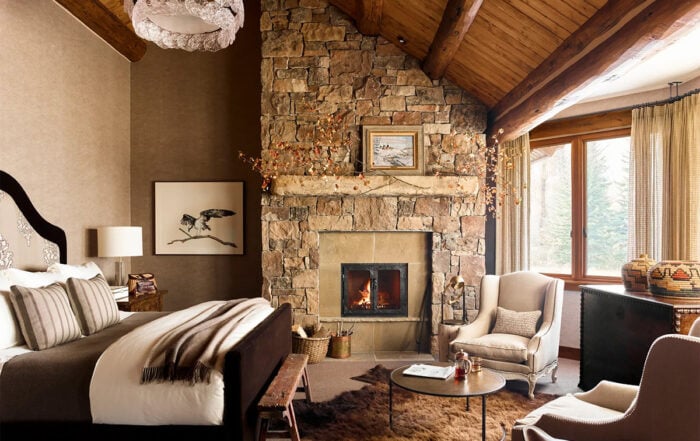
Rustic Bedroom Ideas
Rustic bedroom ideas covering natural materials, layered textiles, color palettes, and professional design strategies for log cabin, modern rustic, Scandinavian, and luxury retreat styles.
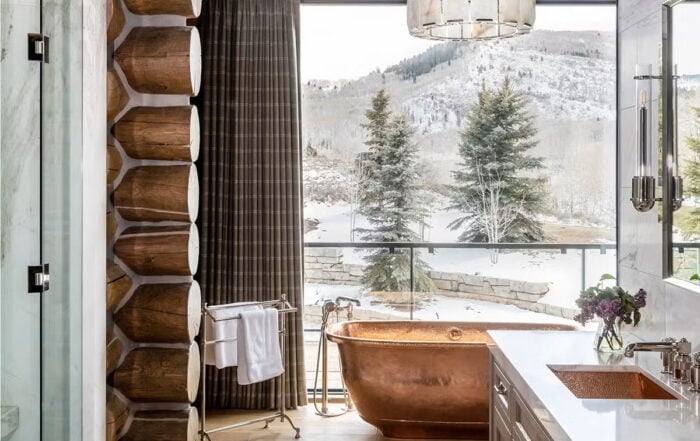
Rustic Bathroom Ideas
Rustic bathroom ideas — natural materials, vintage fixtures, earthy palettes, and designer tips for log homes, cabins, and mountain retreats.
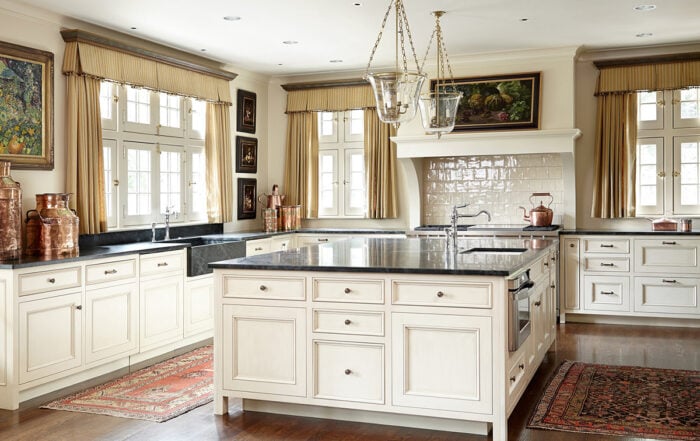
Cream Kitchen Cabinet Ideas
Cream kitchen cabinet ideas curated by interior designer Tracy Svendsen. Warmer than white and more versatile than beige, cream cabinets work beautifully across farmhouse, rustic, traditional, and modern kitchens.
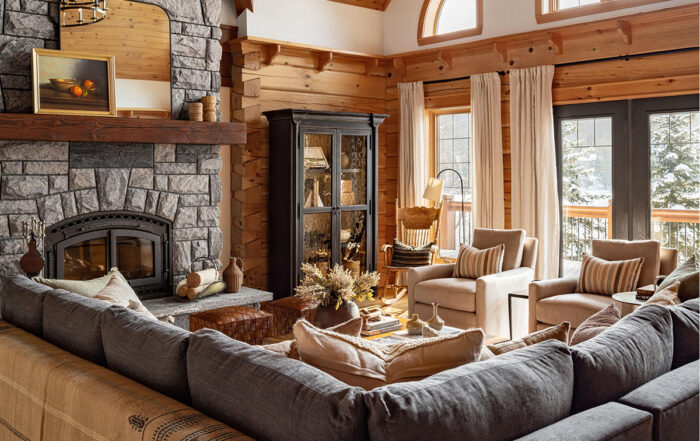
Log Home Decorating Ideas
Log home decorating ideas covering color palettes, furniture selection, lighting, stone fireplaces, and modern approaches to handcrafted log home interiors.

