
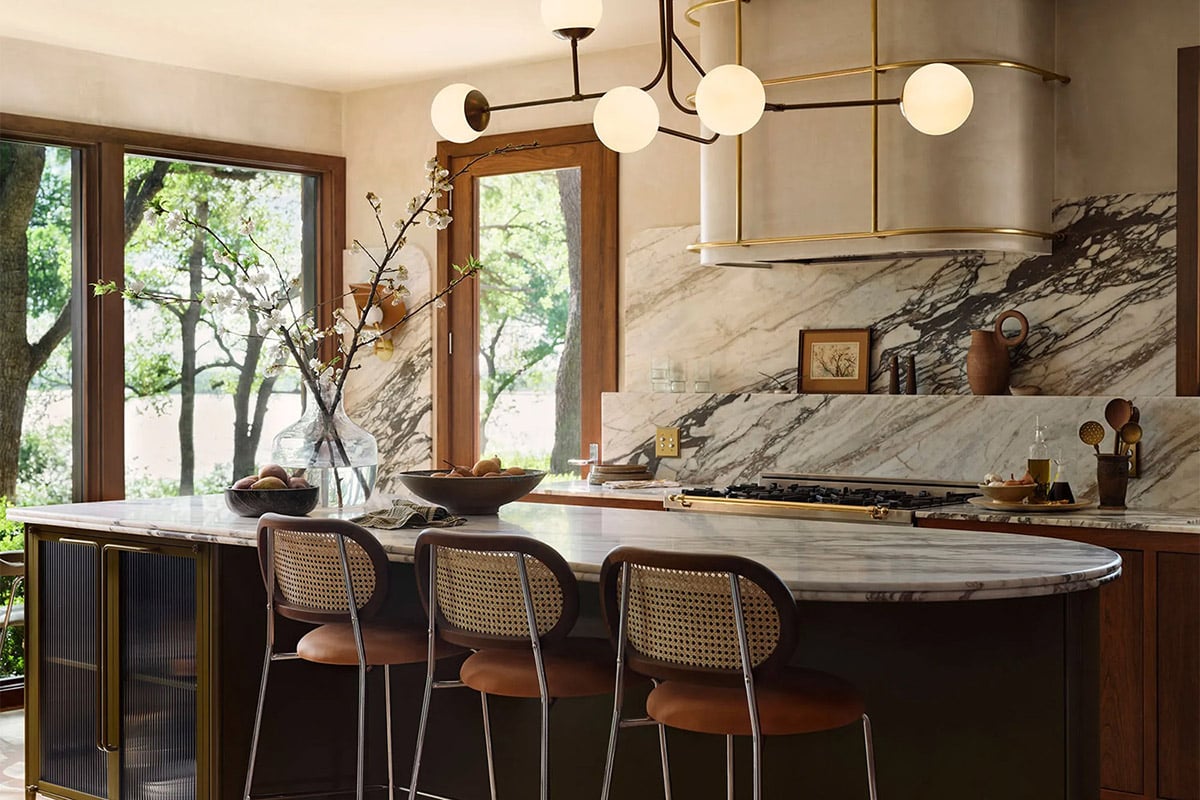
Kitchen Decorating Ideas from Interior Designer Tracy Svendsen
By Interior Designer TRACY SVENDSEN | Published on September 18, 2023 | Updated on January 17, 2026 |
Kitchen Decorating Ideas: As a kitchen and interior design expert, I help homeowners create functional, stylish, and welcoming spaces. Whether you’re planning a full kitchen remodel or updating finishes in an existing space, the right color palette, materials, and styling details can completely transform your kitchen.
This guide explores the top kitchen decorating trends for 2026, including modern, rustic, traditional, farmhouse, coastal, and contemporary styles. You’ll discover curated color schemes, material combinations, island design ideas, and styling tips that make your kitchen both beautiful and livable—ideally suited for mountain homes, log cabins, and modern residences alike.
Key Takeaways: Kitchen Decorating Ideas for 2026
Intentional Direction: Establish a clear aesthetic—Modern Rustic, Contemporary, or Traditional—before selecting finishes.
The New Palette: 2026 favors nature-inspired greens, warm woods, and “Cashmere” neutrals over stark whites.
Architectural Islands: Move toward dual islands, curved silhouettes, and statement materials to anchor the room.
Tactile Depth: Layer fluted wood, natural stone, and mixed metals to create high-end visual interest.

Warm & Inviting Kitchen with Wood Accents
Image courtesy of Lauren Nelson Design
Case Study of a Remodel with Before & After Photos
Transforming a dark, heavy kitchen into a bright sanctuary requires intentional contrast. In a recent renovation, I replaced dark-toned flooring and cabinetry with light wood and crisp white finishes to maximize light. To provide a necessary visual anchor, I introduced a saturated olive-green island, then echoed that hue through a curated collection of olive Breville appliances and green-toned artwork.
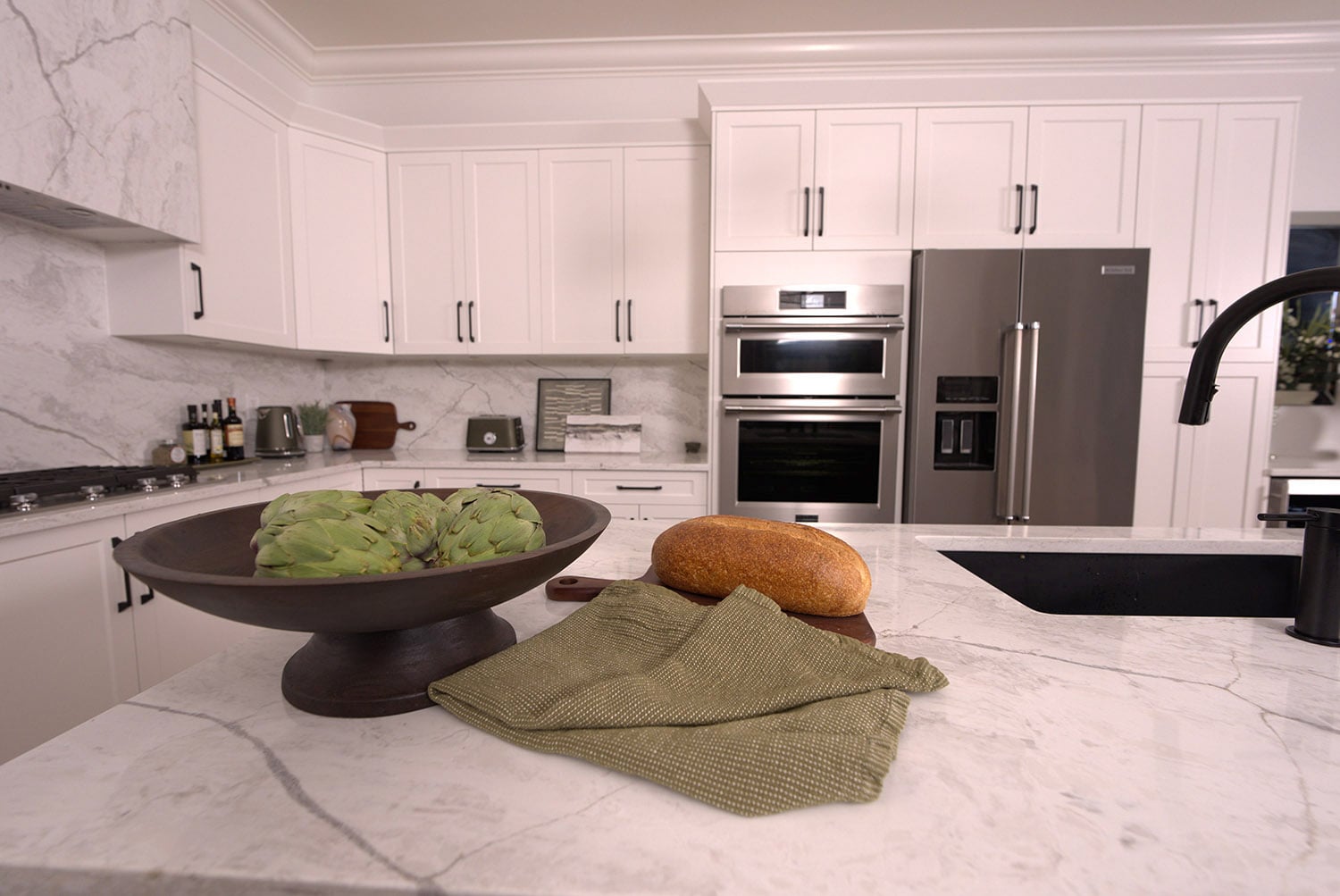
We completed the custom look by extending the quartz countertops to the backsplash and vent hood, creating a seamless, architectural finish. You can see the dramatic difference in the before and after images below. The lighter cabinetry reflects the light rather than absorbs it. Had the budget allowed it, I would have raised the cabinet height to the ceiling.

Before Kitchen Remodel

After Kitchen Remodel
1.0 Popular Kitchen Design Styles
Before picking hardware or browsing backsplash tiles, the most critical first step is to decide on a clear design direction for your dream kitchen. Establishing your style early on acts as a blueprint for the entire project, ensuring every choice—from the cabinetry to the lighting—feels intentional and cohesive.

Popular Kitchen Design Style
Image courtesy of NBD Design Group
1.1 Modern & Minimalist Kitchens
Modern minimalism centers on architectural calm. In a kitchen by Talbot Cooley Interiors, a white palette is elevated by a waterfall island on a light oak base. The integrated LED lighting in the Cristallo quartzite backsplash provides a seamless, high-end glow.
Designer Tip: Prioritize deep pull-out drawers with custom organizers to keep surfaces clutter-free.

Modern Kitchen with Wood & Stone Accents
Image courtesy of Talbot Cooley Interiors (Julie Soefer Photography)
1.2 Modern Rustic Kitchens
The shift toward “Nature-Inspired Modern” is perfectly positioned for mountain and lake homes. According to the NKBA 2026 Kitchen Trends Report, there is a deepening commitment to organic aesthetics. Far Studio Design illustrates this through ebonized and white oak cabinetry with fluted details, paired with golden Paonazzo marble and burnished brass.
Designer Tip: Combine rough textures, such as reclaimed timber, with ultra-smooth surfaces, like honed marble, to achieve a sophisticated rustic edge.
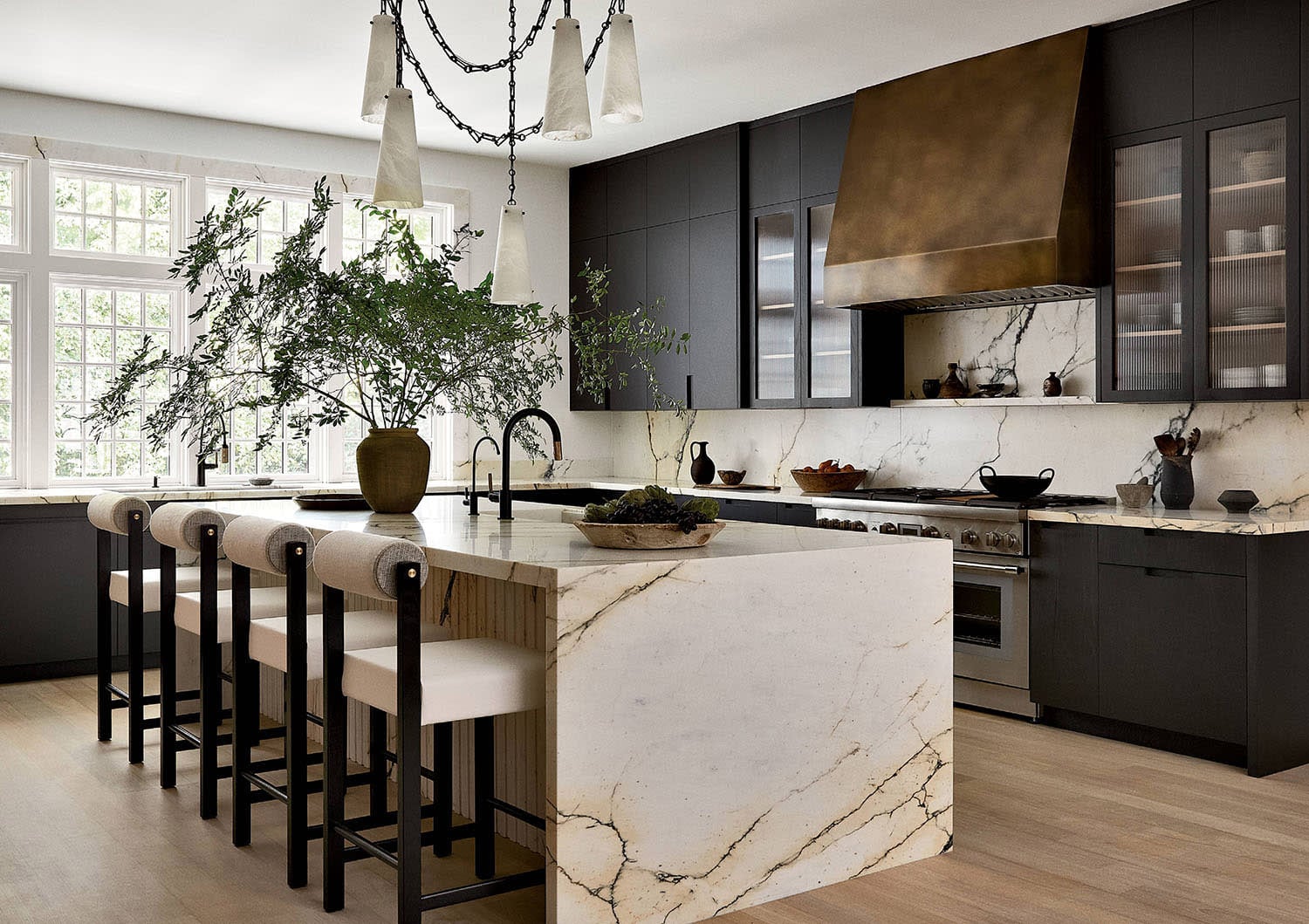
Modern Rustic Kitchen with Warm Textures
Image courtesy of Far-Studio (Brian Wetzel Photography)
1.3 Contemporary Kitchens
Contemporary design is defined by the “here and now.” Ali Budd demonstrates this fluidity by transforming a pale green quartzite island into a restaurant-style banquette. The mix of open shelving and statement lighting creates a look that is trendy yet curated.
Designer Tip: Apply the “Rule of Three”: highlight three bold elements, like backsplash, lighting, and faucet, keeping other surfaces classic for easy updates.

Contemporary Kitchen Design
Image courtesy of Ali Budd Interiors
1.4 Traditional Kitchens
Traditional design relies on timeless proportions and warm, natural materials. Susan Marinello Interiors expertly balances light-absorbing woods with reflective lacquers. Set against luminous plaster walls, the understated neutrals—whites, creams, and taupe—elevate the architecture without competing with the landscape.
Designer Tip: Mix matte and reflective finishes to add three-dimensional depth to neutral palettes.

Traditional Kitchen Design
Image courtesy of Susan Marinello Interiors (Aaron Leitz Photography)
1.5 Modern Farmhouse Kitchens
The Modern Farmhouse aesthetic remains a favorite for its ability to balance rustic charm with clean, contemporary lines. Ashley Montgomery balances farmhouse charm with modern discipline by pairing cream cabinetry with a dark-wood island. Reclaimed beams and woven textures provide warmth, while heavily veined marble countertops introduce luxury.
Designer Tip: Layer warm earth tones—sand, mushroom, and terracotta—against natural wood grains to create a sophisticated, tonal depth.

Modern Farmhouse Kitchen
Image courtesy of Ashley Montgomery
1.6 Country Kitchens
Modern country is about a “collected” soul. Amber Lewis pairs taupe and cream tones with dark wood flooring and copper accents. A shiplap wall and cozy kitchen nook invite a slower, more personal pace.
Designer Tip: Use “Functional Decor”—display high-quality cookware and artisanal pottery throughout the architecture to add authentic texture.

Modern Country Kitchen
Image courtesy of Amber Interiors
1.7 Coastal Kitchens
Modern coastal captures refined serenity. Devon Grace Interiors utilizes light-drenched oak and architectural beams to set the tone. Dual navy islands topped with white quartz provide a grounded, modern contrast to the airy surroundings.
Designer Tip: Use deep navy or charcoal as an anchor to prevent light-drenched spaces from feeling “washed out.”

Modern Coastal Kitchen
Image courtesy of Devon Grace Interiors
2.0 Kitchen Color Schemes
Choosing the right kitchen color scheme is about more than just cabinet paint. A successful kitchen palette considers how cabinetry, countertops, flooring, hardware, and accent finishes work together to create balance, warmth, and longevity. Whether you’re planning a kitchen remodel or updating finishes over time, these designer-approved kitchen color schemes reflect both timeless principles and the emerging trends shaping kitchens in 2026.

Elegant Kitchen with Hues of Green
Image courtesy of Kari Arendsen
2.1 White + Warm Wood + Gold Metallics
This refined palette balances softness, warmth, and understated luxury. White walls and cabinetry provide a clean architectural backdrop, while warm wood elements—such as light parquet flooring and fluted island detailing—add texture and depth. Gold metallic accents introduce warmth and polish without overpowering the space.
In this modern kitchen designed by Erik Maille, curved forms soften the white-and-taupe cabinetry, while richly veined marble surfaces add a sense of natural movement. Gold finishes appear in the contemporary pendant lights, faucet, and open shelving, creating a cohesive, high-end look that feels intentional rather than decorative.
Designer Tip: Repeat metallics in lighting, faucets, and shelving for a polished, intentional aesthetic.

White, Warm Wood & Gold
Image courtesy of Erik Maille Design
2.2 White + Mixed Wood Tones + Dramatic Veining
This layered palette combines contrast and warmth through a thoughtful mix of wood tones and statement stone. Mixing wood species and metal finishes adds dimension and character to a white kitchen, while dramatic stone veining visually ties the palette together. When balanced with restraint, contrast becomes the defining feature rather than a distraction.
In another kitchen designed by Erik Maille, the cherry-toned cabinets feature fluted glass details that add texture without visual weight. Mixed metals—ranging from gold and weathered brass to black iron—are used selectively in the hardware, reinforcing the layered, collected feel while maintaining a cohesive, high-end aesthetic.
Designer Tip: Layer metals (gold, brass, black iron) selectively to reinforce a curated, high-end feel.

White Cabinets & Mixed Wood Tones
Image courtesy of Erik Maille Design
2.3 Nature Inspired Greens + Creamy Whites + Warm Wood Tones
This nature-inspired palette is a defining kitchen color direction for 2026, blending softness, warmth, and organic texture. Light olive-green cabinetry introduces subtle color without overwhelming the space, while white quartz countertops and a classic white subway-tile backsplash keep the palette bright and timeless.
In this kitchen designed by Tiffany Leigh, layered textures bring the scheme to life. Gold hardware adds warmth and refinement, while woven baskets, sculptural counterstools, rustic pottery, and organic vessels soften the architecture.
Designer Tip: Integrate woven textures, pottery, and leafy branches to reinforce the natural palette.

Light Olive Green Cabinets & Warm Wood Tones
Image courtesy of Tiffany Leigh
2.4 Navy Blue + White + Warm Wood Tones
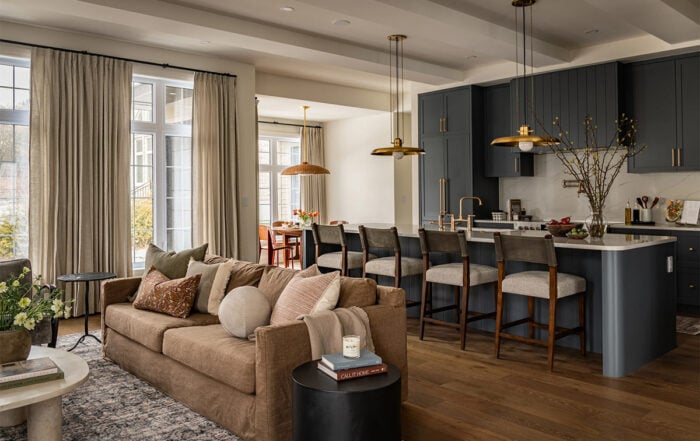
This palette offers a sophisticated balance of depth and warmth, ideal for open-concept homes where the kitchen connects to adjacent living spaces. In a kitchen designed by West of Main, rich navy-blue cabinetry anchors the room and adds a sense of tailored refinement. White walls and white quartz countertops brighten the palette, creating clean visual contrast and keeping the darker tones from feeling heavy.
Designer Tip: Extend navy tones across islands and cabinetry to create a cohesive flow into adjoining living areas.

Kitchen with Navy Blue Cabinets
Image courtesy of West of Main
2.5 Wood Cabinets + Taupe + White
One of the most influential kitchen trends for 2026 is the Wood Revival, with 59% of NKBA designers now favoring wood grain over painted cabinetry. Mid-tone stains—especially white oak and walnut—are leading the movement, celebrated for their natural variation and organic warmth.
In a kitchen designed by Lexi Westergard, light wood cabinets and matching flooring establish a grounded, earthy foundation. White quartz countertops extend partially up the wall for a seamless backsplash effect, topped with handcrafted taupe zellige tile that adds depth, texture, and soft tonal variation.
Designer Tip: Use open shelving and contrast pieces, such as black stools, to add visual depth without overpowering softer tones.

Modern Farmhouse Kitchen with Wood Cabinets
Image courtesy of Lexi Westergard
3.0 Kitchen Islands
Kitchen islands are both functional and decorative, serving as prep stations, gathering spaces, and visual anchors in your kitchen. The right island design enhances workflow, introduces architectural interest, and can set the tone for the overall color palette and material selection. Islands can be bold focal points or subtly integrated into the design, depending on your kitchen’s size, style, and layout.

Kitchen Islands
Image courtesy of Atelier Davis Design
3.1 Dual Kitchen Islands
In this beautifully executed kitchen by Lindye Galloway, dual islands offer both generous prep space and a striking visual balance. These islands share architectural lines and wood bases but diverge in surface materials to create a high-impact, layered focal point.
Thoughtful details elevate the overall design: a white fluted range hood adds sculptural interest, black-framed reeded glass cabinet doors introduce subtle texture, and open wood shelving warms the palette.
Designer Tip: Incorporate sculptural elements, such as fluted hoods or black-framed glass cabinets, to add visual interest.

Two Kitchen Islands
Image courtesy of Lindye Galloway
3.2 Statement Island Colors
In this contemporary kitchen by For Design Studio, a striking, deep-green island serves as the anchor of the entire space. The bold color choice feels both modern and timeless, offering a sophisticated contrast to the room’s lighter elements. A matching fluted range hood reinforces the palette and brings sculptural dimension to the design.
Rich-toned parquet wood flooring adds warmth underfoot, while white quartz countertops seamlessly extend up the wall as a backsplash for a clean, uninterrupted look. Bright gold pendant lighting and fixtures introduce a luxurious metallic accent, enhancing the dark green tones and adding a high-end sheen that ties the whole palette together.
Designer Tip: Reinforce the color in smaller details (pendants, fixtures) to unify the palette.
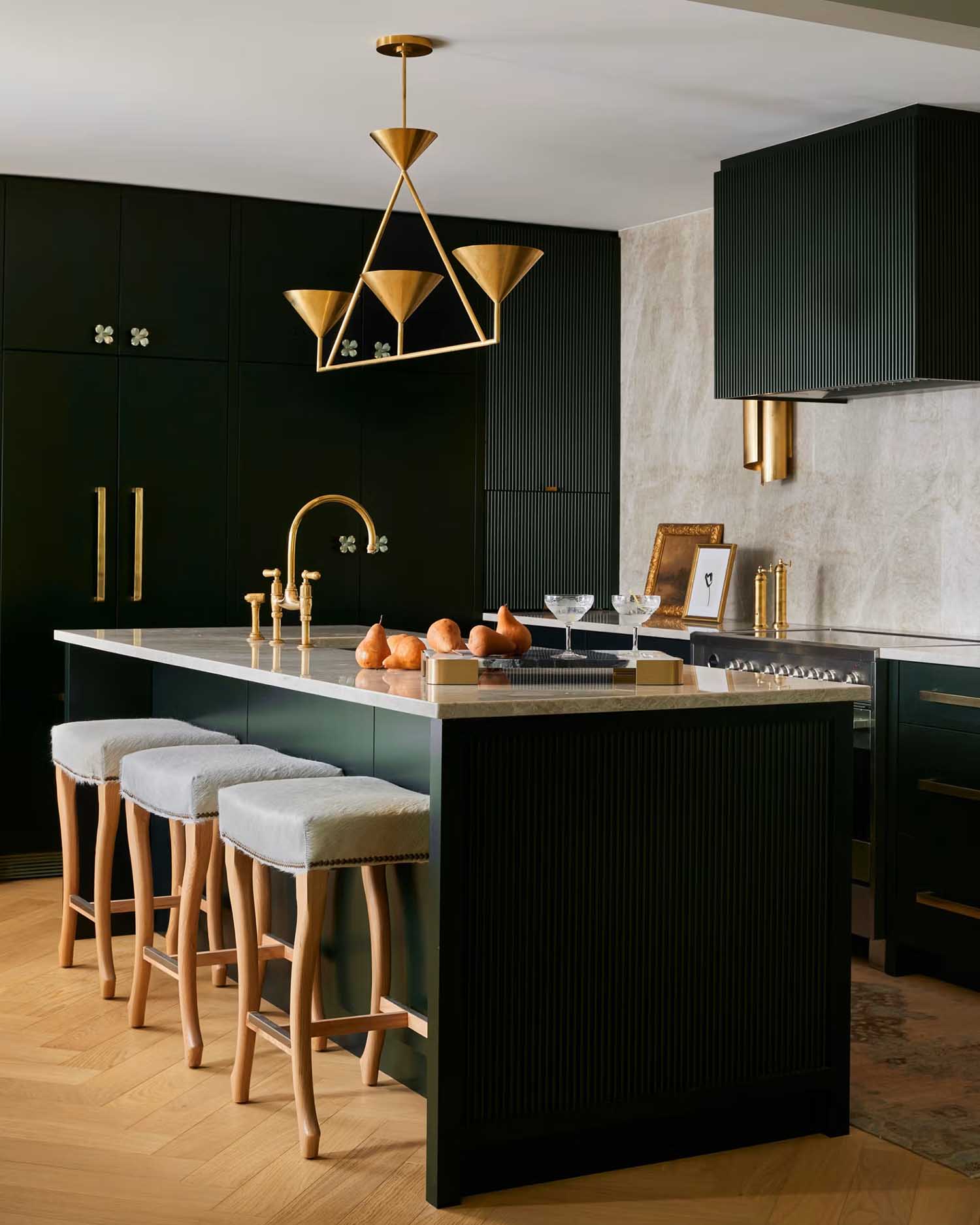
Dark Green Kitchen Island
Image courtesy of For Studio
3.3 Mixed-Material Islands
In this contemporary kitchen by James E. Howard Design, mixed materials take center stage to create a refined, architectural look. The black-and-white color scheme is softened with light oak cabinetry, bringing warmth and balance to the modern palette. The space features two kitchen islands—each designed to complement the other while adding subtle contrast.
To achieve an architectural look, this design uses materiality to define function. One island features a bold, sculptural black base, while the other integrates light oak with silver-footed details. This subtle contrast creates a custom, layered feel without overwhelming the airy backdrop.”
Designer Tip: Use subtle contrast between islands to create visual interest without clashing.
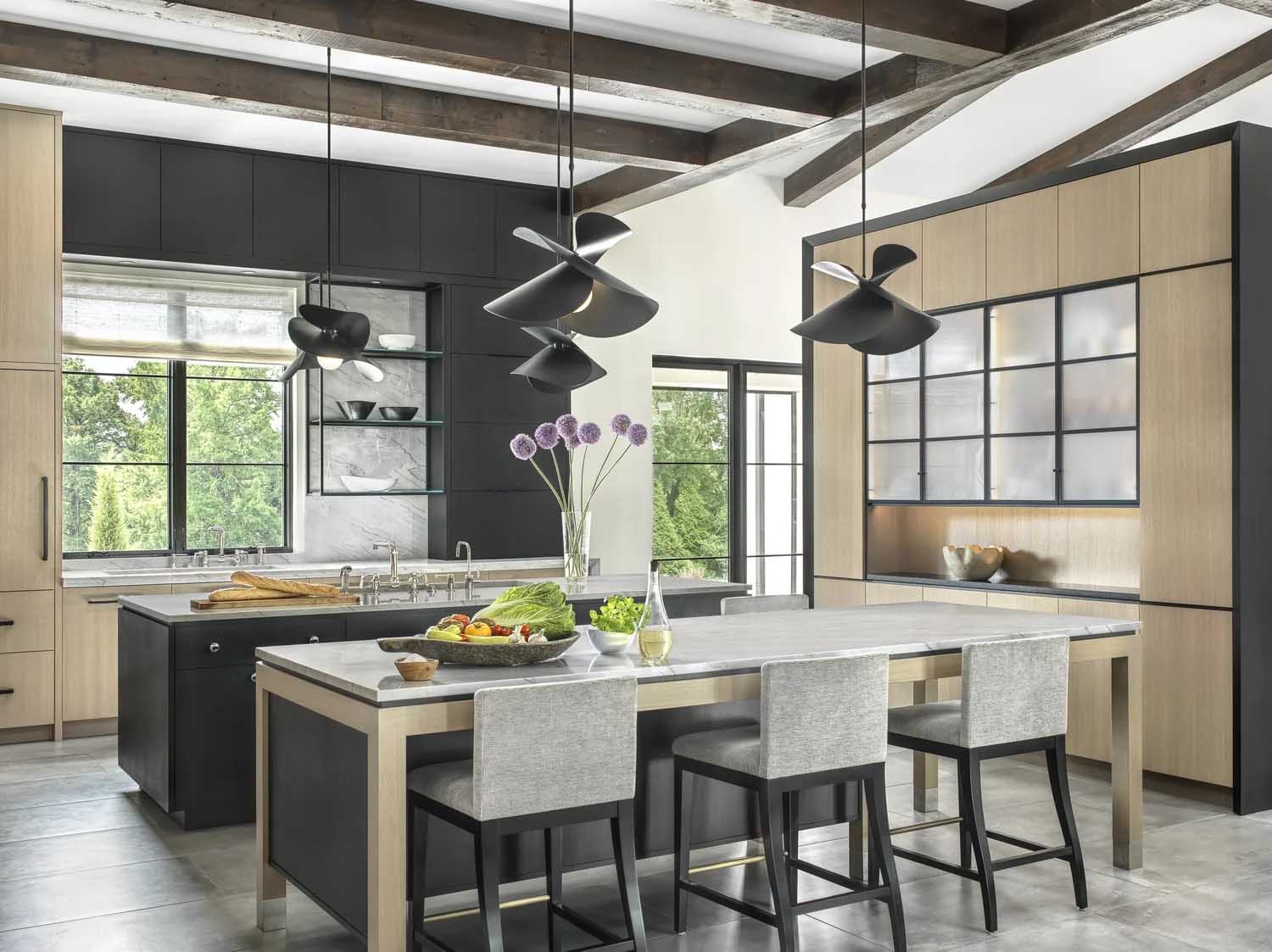
Mixed Materials
Image courtesy of James E. Howard Design
3.4 Waterfall Countertops
In this contemporary kitchen by Laura Kehoe, a navy-blue island with a quartz waterfall countertop serves as the focal point, adding a refined, fully finished architectural edge. The waterfall detail draws the eye downward, emphasizing the island’s clean lines and giving the kitchen a distinctly modern feel.
Light oak cabinetry introduces warmth to the two-tone palette, while white quartz countertops and a matching backsplash keep the design crisp and cohesive. A black range hood provides a striking contrast, anchoring the room visually.
Designer Tip: Pair with contrasting cabinetry or pendants to highlight the architectural feature.

Waterfall Edges
Image courtesy of Laura Keyhoe
3.5 Curved Islands
Curved kitchen islands are emerging as a defining feature of the 2026 biophilic design movement, softening hard architectural lines and creating a more organic, nature-inspired flow. In this modern organic kitchen by Jamie Baird, warm natural materials set the tone—wood is carried across the flooring, cabinetry, ceiling, and island base for a cohesive, grounded aesthetic.
Creamy white walls and dramatically veined stone surfaces provide contrast and visual relief, ensuring the space still feels bright and modern. The island’s gently curved countertop introduces sculptural elegance and improves circulation around the workspace. Dark leather counterstools add depth and texture, reinforcing the warm, earthy palette that defines this new era of natural luxury.
Designer Tip: Curves improve circulation and soften angular architecture, reinforcing organic design.

Modern Organic Kitchen
Image courtesy of Jaimie Baird Design
3.6 Island Seating
Island seating is one of the easiest ways to introduce personality and warmth into a kitchen, acting as both a functional element and a key design statement. In this open-concept home designed by Alisha Taylor, the seating becomes a focal point that beautifully ties together the mixed wood tones and a warm, earth-inspired palette throughout the adjoining kitchen, living, and dining areas.
The island stools feature light-wood frames paired with deep-rust velvet seats and backs—a rich, tactile contrast that complements the space’s shades of olive green, warm neutrals, and natural materials.
Designer Tip: Repeat curves, textures, or colors from the island or surrounding palette for harmony.

Counter Stools with Character
Image courtesy of Alisha Taylor
3.7 Pendant Lighting
Pendant lighting is another key opportunity to introduce character and sculptural presence into a kitchen. In this modern farmhouse kitchen designed by Allison Lind, three black conical pendant lights create a striking contrast against the warm wood tones of the flooring, cabinetry, and kitchen island.
The island features fluted wood detailing, adding texture and architectural interest, while the countertops, backsplash, and vent hood are all clad in dramatically veined quartz for a seamless, high-end finish. Together, the pendants and carefully chosen materials elevate the space, balancing warmth, texture, and contemporary sophistication.

Pendant Lighting in the Kitchen
Image courtesy of Allison Lind
4.0 Styling the Kitchen: Accessories & Finishing Touches
Once the structural elements, such as islands and cabinetry, are set, the final layer of design—styling—is what truly breathes life into the space. As an interior designer, I love styling the kitchen. While cabinetry, countertops, and lighting set the foundation, the finishing touches add personality and warmth, making the kitchen feel lived-in and elevated.


How to Style a Kitchen
Images courtesy of Sheila Kramer
Once the design is complete, I step back and evaluate the color palette. For example, in my own kitchen renovation, white cabinets, light wood flooring, an olive green island, black accents, and white quartz countertops provided the perfect backdrop for styling. I selected accessories that echoed the color story: a few olive-hued Breville appliances, two pieces of artwork with green undertones, dark-wood cutting boards, a small plant, and a tray for gourmet olive oil and vinegar.
Other items that instantly elevate a kitchen include floral arrangements, candles, vases filled with leafy branches, pottery, and decorative bowls. By layering textures, shapes, and colors, you can turn countertops, open shelving, and islands into curated, functional displays that feel intentional rather than cluttered.
Designer Tip: Keep the styling cohesive by repeating your palette in small accents throughout the kitchen. This creates harmony and ties together every element, from appliances to art to functional accessories.

Styling Counters, Islands & Open Shelving
Image courtesy of DISC Interiors
4.1 Gallery Walls
A gallery wall is an effortless way to add personality and visual interest to a kitchen. In a kitchen designed by KBD Design, a large blank wall behind the island was transformed with a striking gallery display. The arrangement combines contemporary artwork, landscape pieces, colorful fruit prints, and black-and-white images, creating an eclectic mix that feels curated rather than cluttered.
Using frames of varying sizes, shapes, and finishes adds depth and movement, while the mix of subject matter keeps the display dynamic and engaging. A gallery wall not only fills space but also turns the kitchen into a gallery-like environment, blending function with artistic expression.
Designer Tip: When styling a kitchen gallery wall, consider repeating colors from the surrounding palette to maintain cohesion. This ensures the wall feels integrated rather than visually competing with the cabinetry and countertops.

Gallery Wall in a Kitchen
Image courtesy of KBD Design
4.2 Leafy Branches
Adding a vase of leafy branches is a simple yet highly effective styling trick interior designers use to bring color, verticality, and sculptural interest to a kitchen. In a kitchen designed by KBD Design, a large white fluted contemporary vase is filled with a few carefully chosen green branches. The result is a striking organic accent that draws the eye upward and introduces natural texture without overwhelming the space.
Designer Tip: Use leafy branches to echo other green accents in your kitchen—such as cabinetry, islands, or small appliances—to create a cohesive, nature-inspired palette. Branches can be easily swapped out seasonally, making them a flexible, low-maintenance styling element.

Kitchen Countertop Styling with Leafy Greens
Image courtesy of KBD Design
4.3 Open Shelving
Open shelves are a prime opportunity to showcase both function and style, allowing everyday items to double as decorative elements. In a luxury kitchen designed by McCroskey Interiors, open shelving is thoughtfully placed in multiple areas, creating visual interest, depth, and dimension throughout the space.
Dishware, pottery, candles, books, plants, and sculptural objects are layered to feel collected yet intentional. A vase filled with leafy branches adds organic height and texture, repeating natural elements elsewhere in the kitchen for a cohesive, balanced look.
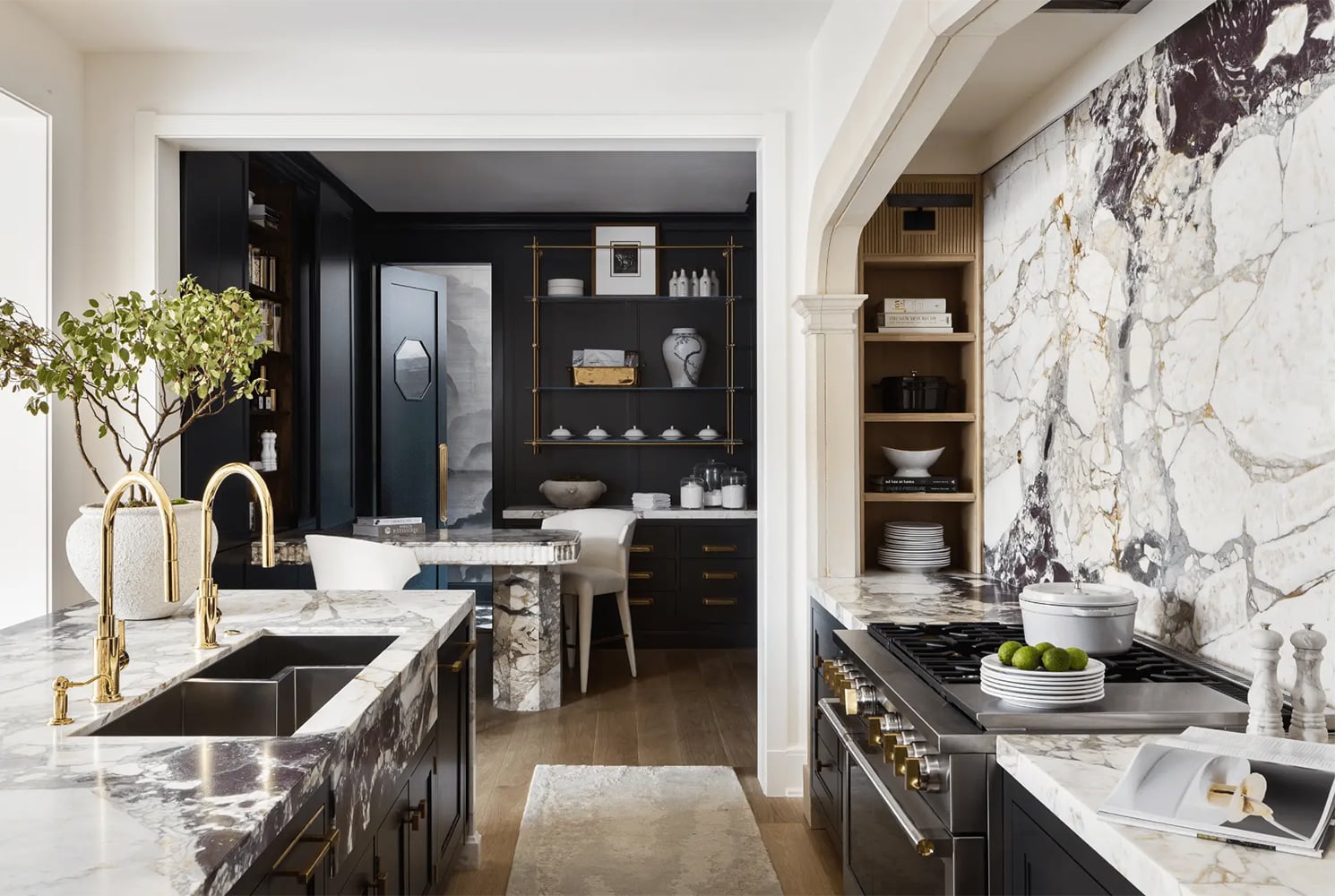
Open Shelving
Image courtesy of McCroskey Interiors
4.4 Coffee Bars
A coffee bar is both a practical feature and a design opportunity in the kitchen. When built into cabinetry, it can be neatly concealed behind doors or left open as a styled vignette. In this example, the coffee bar is integrated into warm wood cabinets, with the back wall clad in earthy-toned zellige tiles for texture and color.
The wood shelving above provides space to display mugs, teapots, teacups, and wicker baskets, while the lower level is dedicated to coffee appliances and essentials. This layered approach balances functionality with visual appeal, turning a simple coffee station into a curated, inviting focal point.
Designer Tip: Use a consistent palette and repeat textures from the surrounding kitchen—like wood and earthy tiles—to tie the coffee bar seamlessly into the overall design while making it feel like a styled feature rather than just storage.
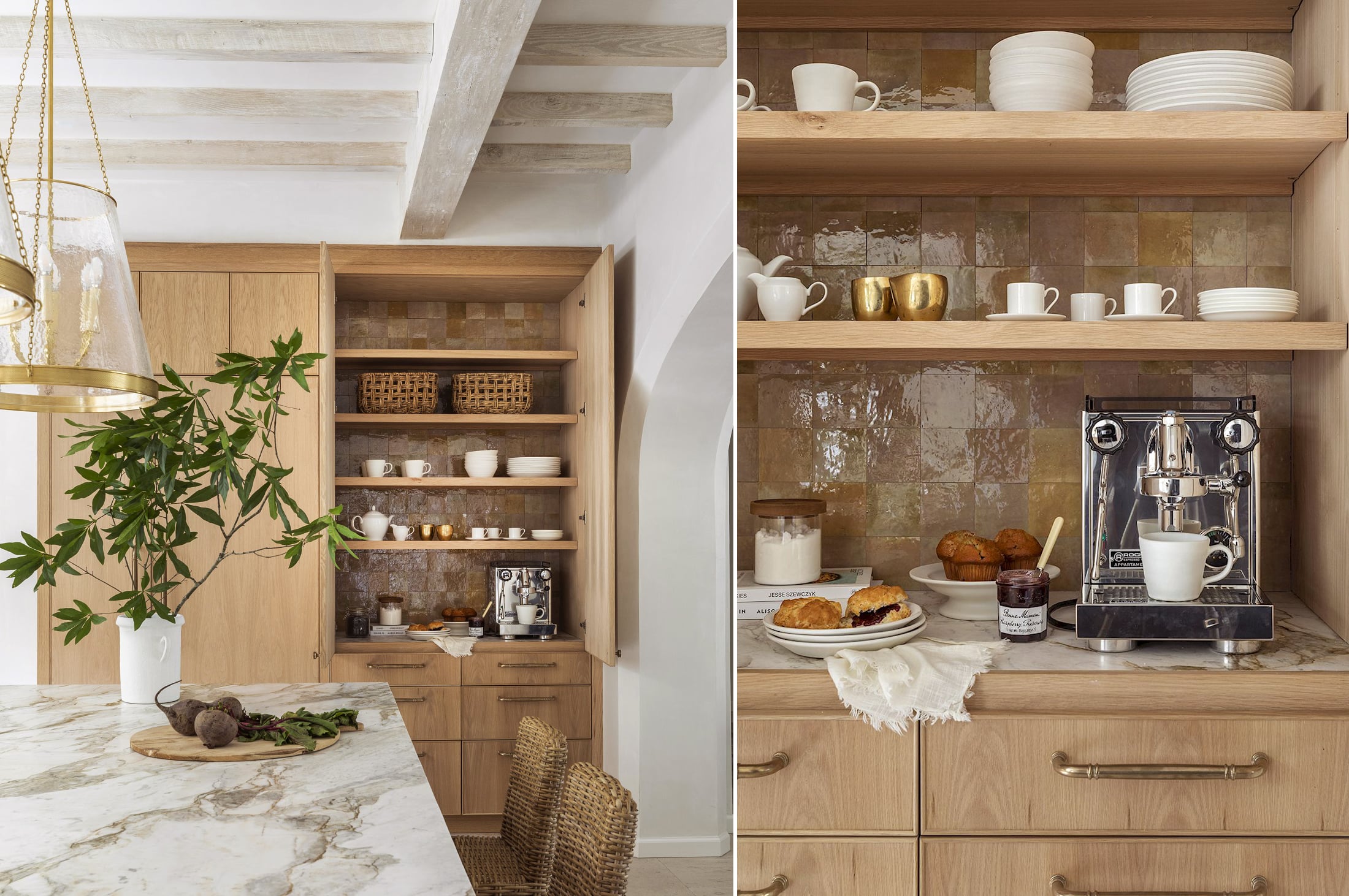
Kitchen Coffee Bar
Image courtesy of Marie Flanigan
4.5 Kitchen Breakfast Nooks
Breakfast nooks are the perfect opportunity to blend comfort and style in a kitchen. In a country-style nook designed by Studio McGrath, white shiplap walls and a large window create a bright, inviting backdrop. The built-in bench is layered with solid blue and floral white pillows, while two lamp-style wall sconces flank either side, providing both ambient light and architectural interest.
A wood table and whitewashed chairs with blue-and-white textiles anchor the nook. I recommend layering florals, woven baskets, and tapered candles to add height and sculptural interest without cluttering the small footprint.
Designer Tip: Layering textiles, natural elements, and curated accessories in a breakfast nook adds warmth and personality without cluttering the space. Repeating colors and patterns from the surrounding kitchen helps tie the nook seamlessly into the overall design.

Country-Style Breakfast Nook
Image courtesy of Studio McGrath
4.6 Pantries
A well-styled pantry can be both highly functional and visually appealing. In a kitchen pantry designed by Ashley Martin, a natural fieldstone accent wall adds texture and organic warmth, complemented by white cabinetry and countertops.
Light wood flooring reinforces the warm, inviting aesthetic, while abundant natural light highlights the space’s curated details. By mixing functional storage—like wicker baskets and canisters—with artwork and plants, the pantry becomes an aesthetic extension of the kitchen rather than just a utility closet.”
Designer Tip: Balance function and style by mixing practical storage items with decorative accents. Group similar objects in odd numbers, layer textures, and repeat the kitchen’s color palette to create a cohesive, elevated look.

Kitchen Pantry Design
Image courtesy of Ashley Martin
Kitchen Decorating Ideas Conclusion:
Decorating a kitchen is about more than choosing cabinets and countertops—it’s about creating a space that feels functional, inviting, and reflective of your personal style. From selecting the right color palette and materials to designing statement islands and thoughtful styling details, every choice contributes to a cohesive, livable kitchen. By incorporating current trends, layered textures, and curated accents, you can achieve a kitchen that’s both on-trend for 2026 and timeless in appeal.
Frequently Asked Questions (FAQ)
1. How can I make a kitchen island a focal point?
Bold colors, mixed materials, waterfall edges, and curved shapes turn islands into striking features. Adding pendant lighting, upholstered stools, or sculptural detailing enhances both style and functionality, making the island a centerpiece of your kitchen design.
2. How do I style my kitchen without cluttering it?
Focus on curated accents and repeated color themes. Use vases with leafy branches, pottery, functional coffee bars, gallery walls, or breakfast nooks to add personality. Group items thoughtfully, layer textures, and maintain balance between decorative and practical elements.
3. Are rustic or farmhouse kitchens still relevant in 2026?
Yes. Modern rustic and contemporary farmhouse kitchens remain popular. The trend emphasizes warmth, tactile contrast, and organic textures rather than heavy, dark finishes. Layered neutrals, fluted wood details, and natural materials make these kitchens feel current, cozy, and inviting.
Inspired by these ideas? Explore my full Kitchen Design Ideas for 2026 collection for inspiration on cabinets, layouts, storage, and finishing touches.
View Recent Kitchen Design Posts
Stunning Range Hood Design Ideas
Range hood design ideas covering stone, wood, plaster, copper, and stainless steel — with designer tips on proportion, material selection, and installation.
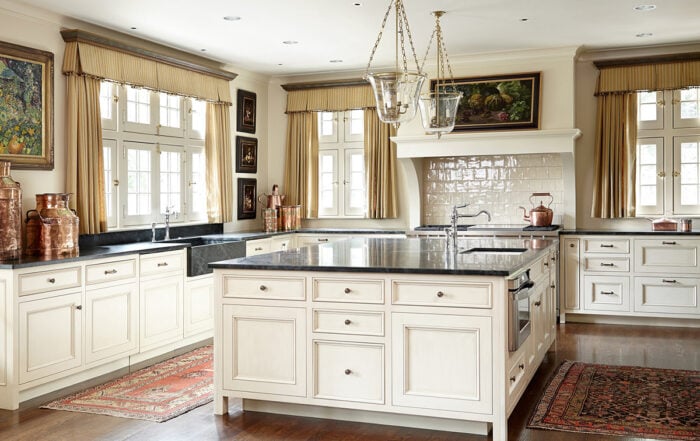
Cream Kitchen Cabinet Ideas
Cream kitchen cabinet ideas curated by interior designer Tracy Svendsen. Warmer than white and more versatile than beige, cream cabinets work beautifully across farmhouse, rustic, traditional, and modern kitchens.
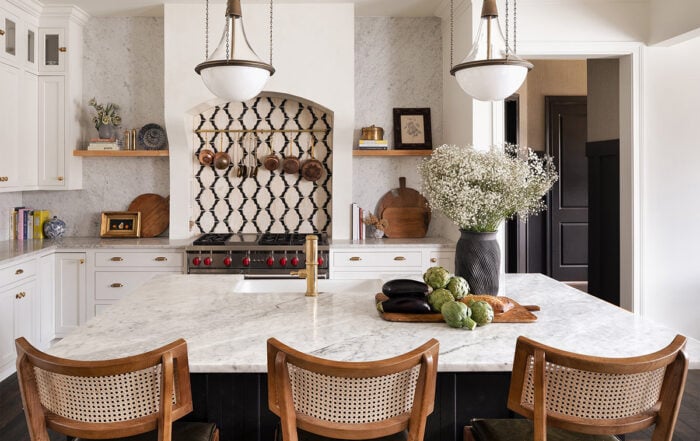
Country Kitchen Ideas
Discover 43 country kitchen ideas featuring warm earth tones, natural materials, vintage accents, and expert guidance on cabinets, colors, and styling for an authentic country kitchen design.
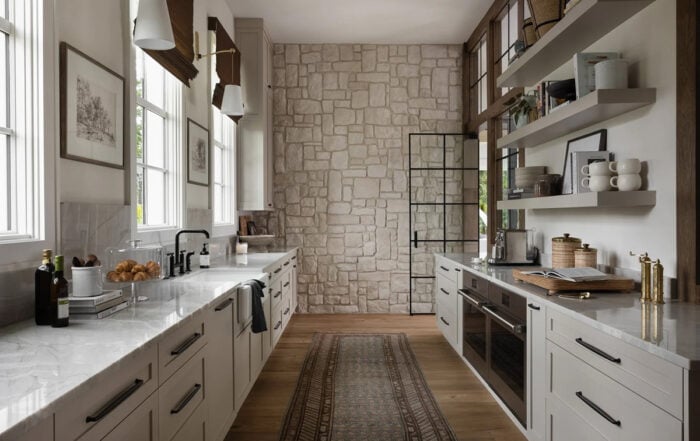
Kitchen Pantry Design Ideas
Kitchen pantry design ideas covering butler's pantries, storage zones, and color schemes — turning an overlooked space into a design feature.
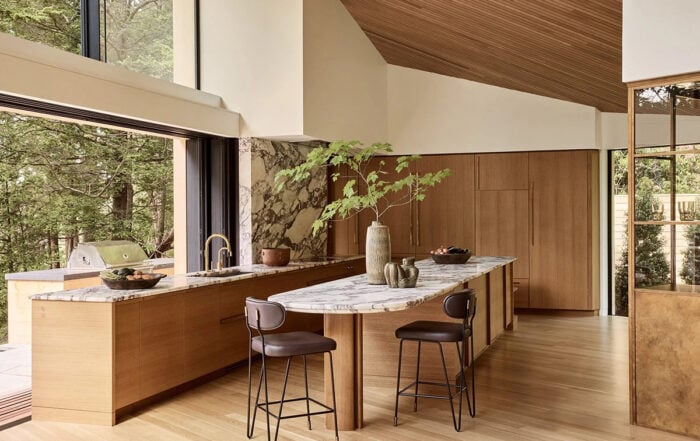
2026 Kitchen Design Trends
When new kitchen trends are revealed each year, they provide a wealth of inspiration for adding style and personality, whether through color, material, or zoning concepts. Discover the 11 core themes driving kitchen design for 2026.
Kitchen Cabinet Color Ideas
Here are a few stunning kitchens designed by top interior designers that feature cabinetry in a broad range of colors. From sage green to warm creams, deep blues and bold black to timeless white hues.

