
Two-Tone Kitchen Cabinet Ideas That Add Depth, Contrast, and Style
By Interior Designer TRACY SVENDSEN | Published on May 17, 2023 | Updated on January 28, 2026 |
As an interior designer, I often recommend two-tone kitchen cabinets when a space needs more depth, contrast, or visual interest without overwhelming the room. Mixing cabinet colors or finishes allows you to highlight architectural details, define zones, and create a kitchen that feels layered and intentional. For more inspiration across shades, tones, and combinations, see my guide to cabinet color inspiration.
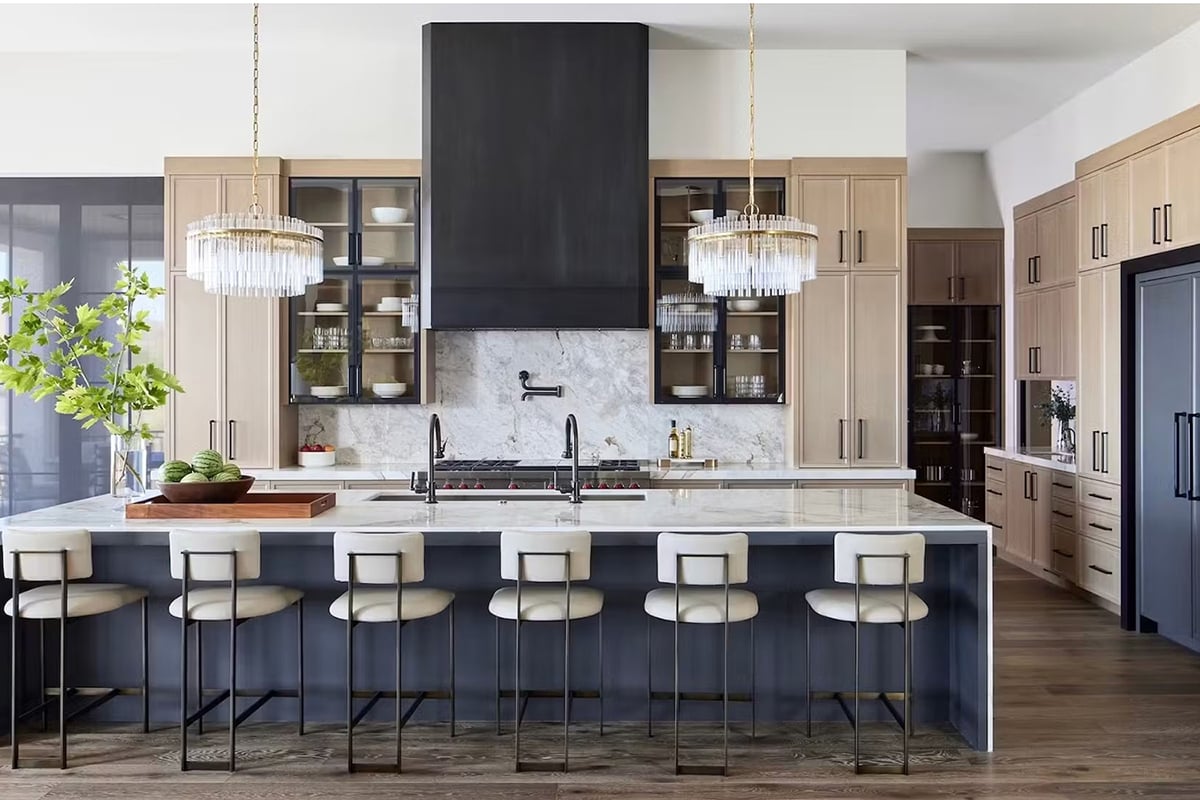
In this post, I’m sharing two-tone kitchen cabinet ideas that have worked beautifully in real homes—from subtle, tone-on-tone pairings to bold contrasts that make a statement. Whether your style leans modern, classic, or rustic, these examples and design tips will help you choose color combinations that feel balanced, functional, and timeless. Feature image courtesy of Luxe Source (Laura Kehoe Design)
Key Takeaways
-
Two-tone kitchen cabinets combine two different colors or finishes to add depth, contrast, and personality to a kitchen, making the space feel more dynamic and visually compelling.
-
This design approach is highly versatile, working with bold contrasts like white and navy as well as subtle variations such as lighter and darker shades of the same hue to suit contemporary, traditional, and rustic styles.
-
Two-tone cabinets can highlight architectural features—such as islands, open shelving, or range hoods—by using contrasting colors or finishes that draw the eye and create focal points.
-
Smart color balance and harmony are key to achieving a cohesive look; designers often pair lighter shades on upper cabinets with darker tones below to ground the space and maintain visual flow.
-
Experimenting with materials and textures, such as painted finishes paired with wood or matte contrasted with gloss, adds tactile richness and customization to reflect personal style
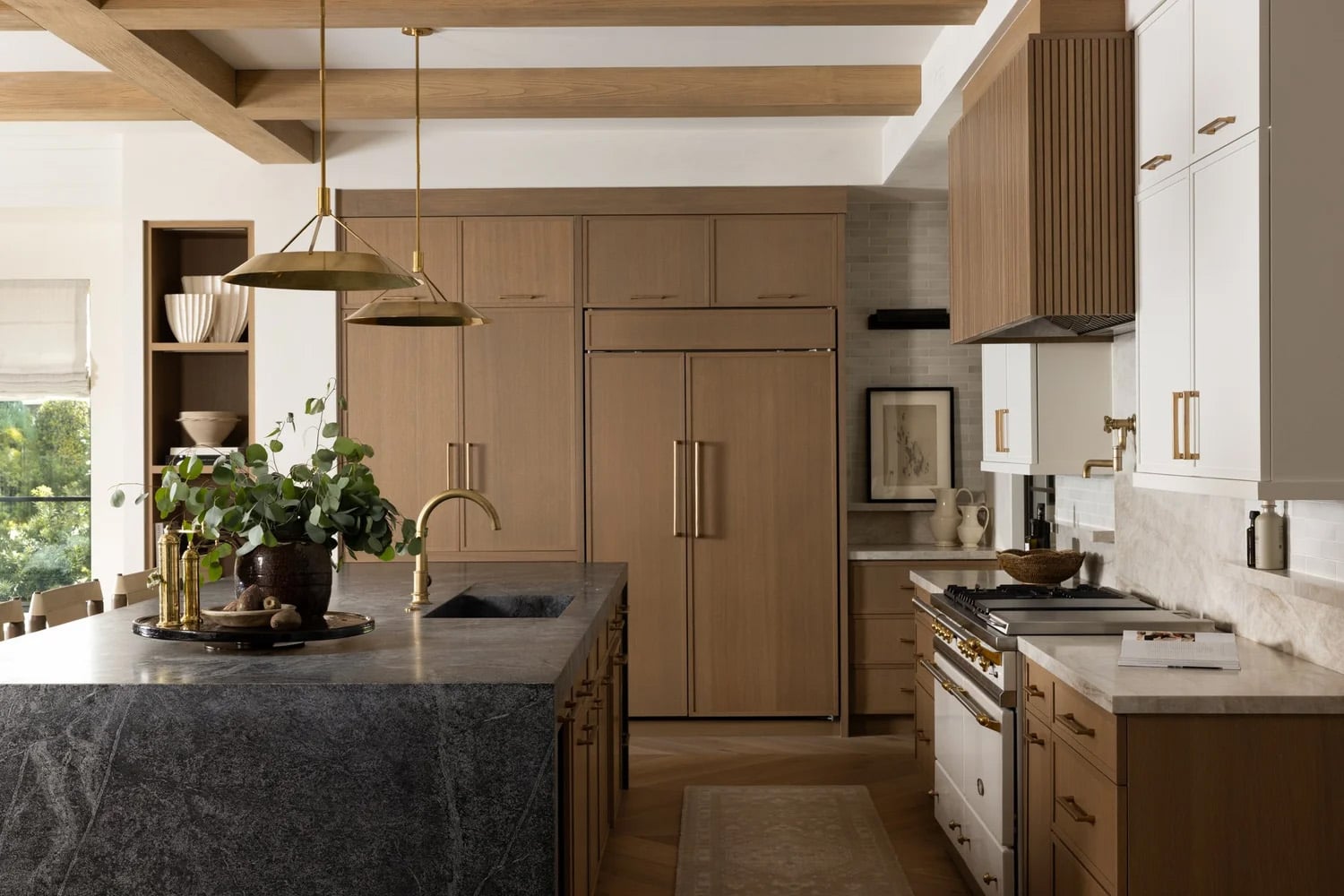
Two-Tone Cabinets in Light Wood & White
Image Source Ashley Martin Home
Designer Mood Board: Two-Tone Kitchen Cabinets
This kitchen, designed by Heidi Caillier, is a strong example of how two-tone cabinetry can introduce contrast without creating visual noise. Cream upper cabinets with glass fronts recede softly into the wall, while deep navy lowers anchor the room and provide weight at eye level. The effect is balanced and architectural rather than decorative.
For this mood board, I focused on the relationship between light and grounding tones — a pairing that prevents darker cabinetry from overwhelming the space. The island, painted in Railings, and the upper cabinetry in Wimborne White (both by Farrow & Ball), create a tailored contrast that feels structured and timeless. The palette is reminiscent of a classic tuxedo: crisp, defined, and intentional.
Traditional wood stools add warmth and soften the stronger contrast of navy and white, while warm wood flooring reinforces continuity throughout the space. A white subway tile backsplash keeps the backdrop quiet, allowing the cabinetry to remain the focal point. Pale yellow floral curtains in the adjacent dining area introduce a subtle layer of pattern without disrupting the composition.
What makes this two-tone approach successful is proportion. Lighter tones above maintain openness and reflect light, while darker tones below ground the kitchen and conceal daily wear. It’s a reminder that effective contrast in kitchen design is less about bold color and more about strategic placement.
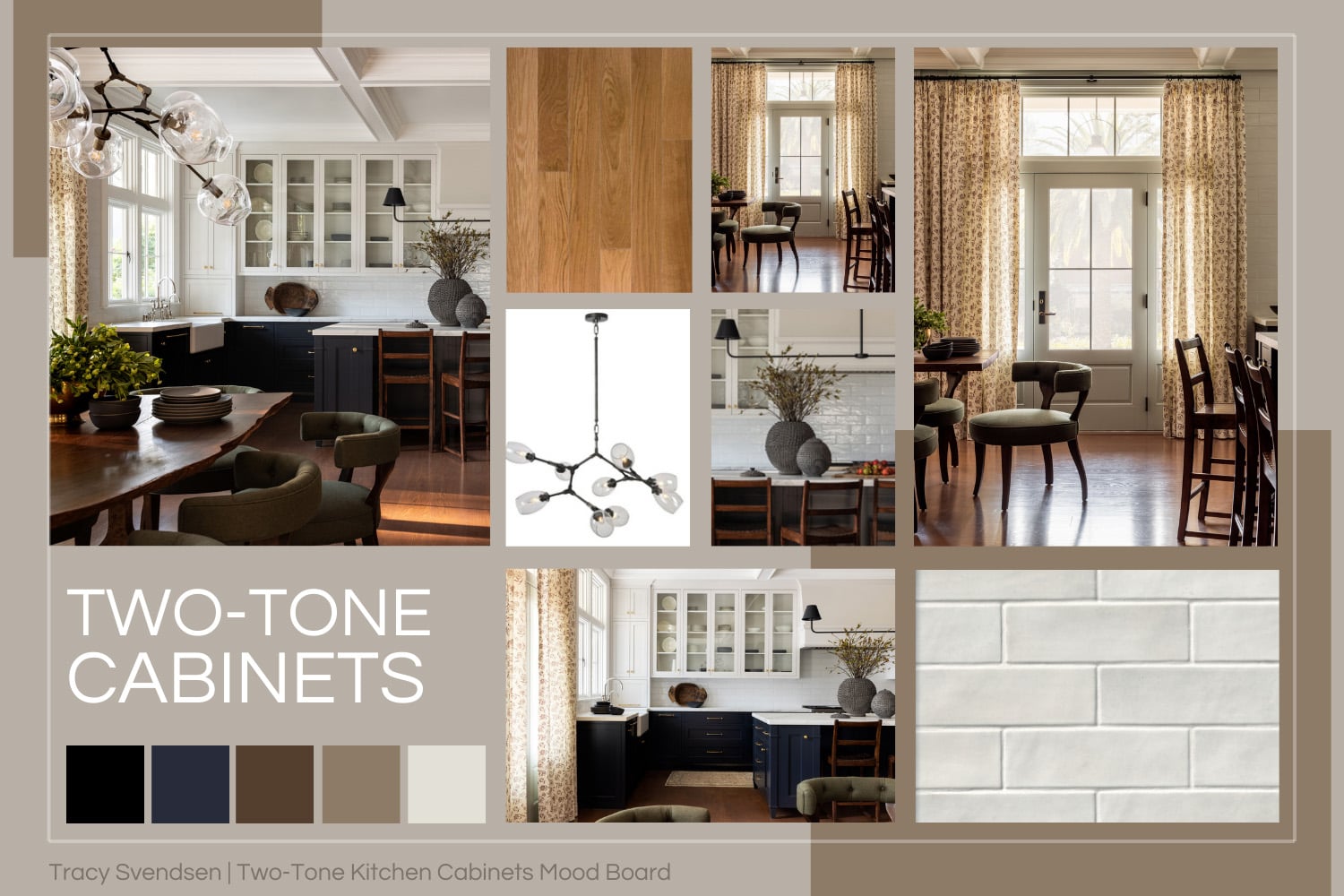
Designer mood board created by interior designer Tracy Svendsen, inspired by a two-tone kitchen designed by Heidi Caillier.
What are two-tone kitchen cabinets?
Two-tone kitchen cabinets use two different colors or finishes—most often separating upper and lower cabinetry—to introduce contrast and dimension into the kitchen. This approach prevents the space from feeling flat while allowing cabinetry to become a deliberate design feature rather than a backdrop.
By pairing complementary or contrasting tones, two-tone cabinets naturally draw the eye and help define the kitchen’s visual structure. Popular combinations include lighter upper cabinets with darker lowers, such as white paired with black or deep wood tones, creating a clean, modern look with strong visual balance.

Two-Tone Cabinets in Gray and Blue
Image Source Wendy Word Design
Alternatively, a softer approach pairs two shades from the same color family—such as light gray upper cabinets with a deeper gray below—to maintain visual continuity while still introducing contrast. This layered effect keeps the kitchen refined and cohesive without relying on high-contrast color blocking.
One of the strongest advantages of two-tone kitchen cabinets is their flexibility. With endless color and finish combinations, this approach lets you tailor the cabinetry to your personal style, whether you prefer a bold statement or a more understated, balanced design. The result is a kitchen that feels considered, distinctive, and tailored to how you live.
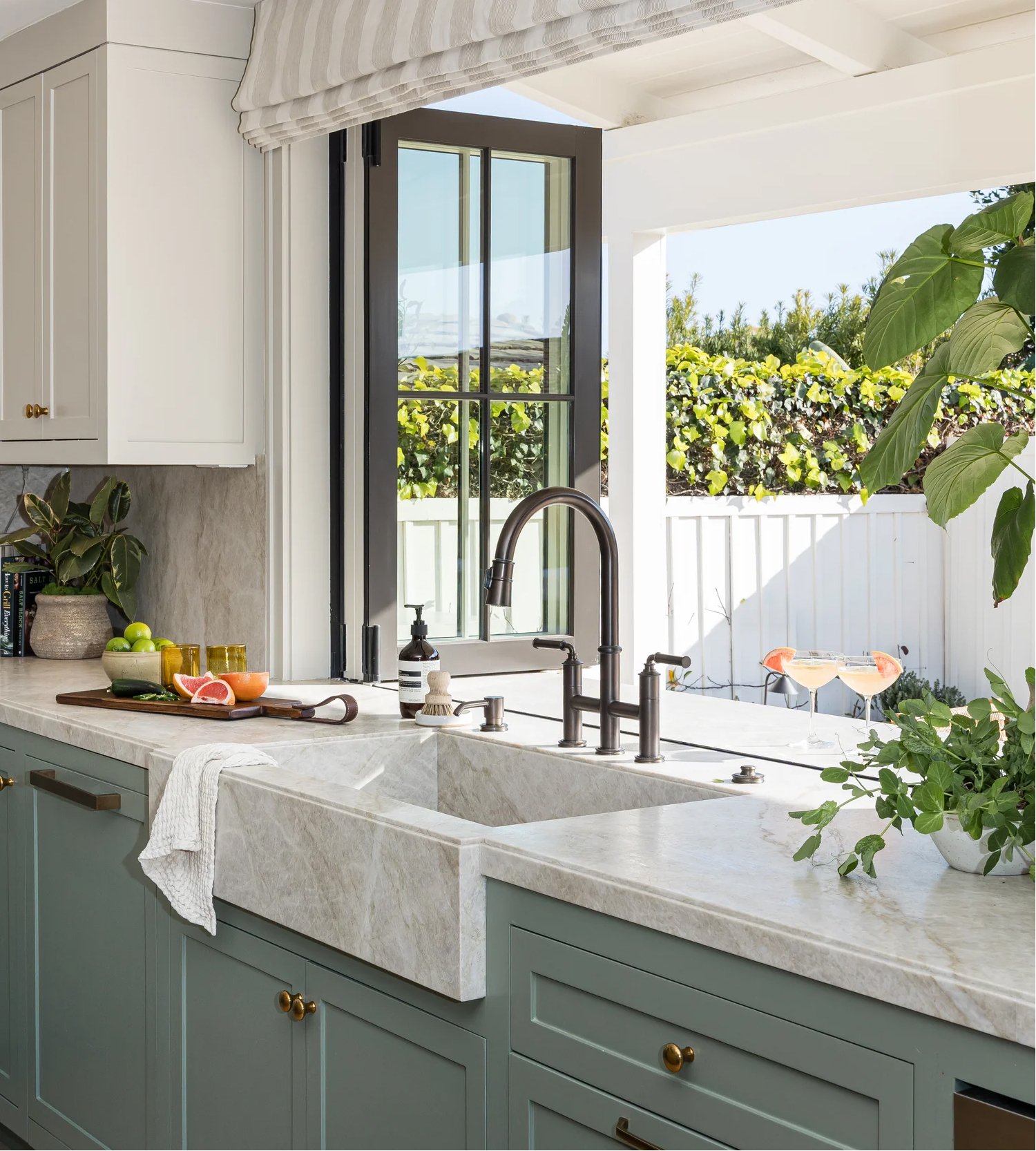
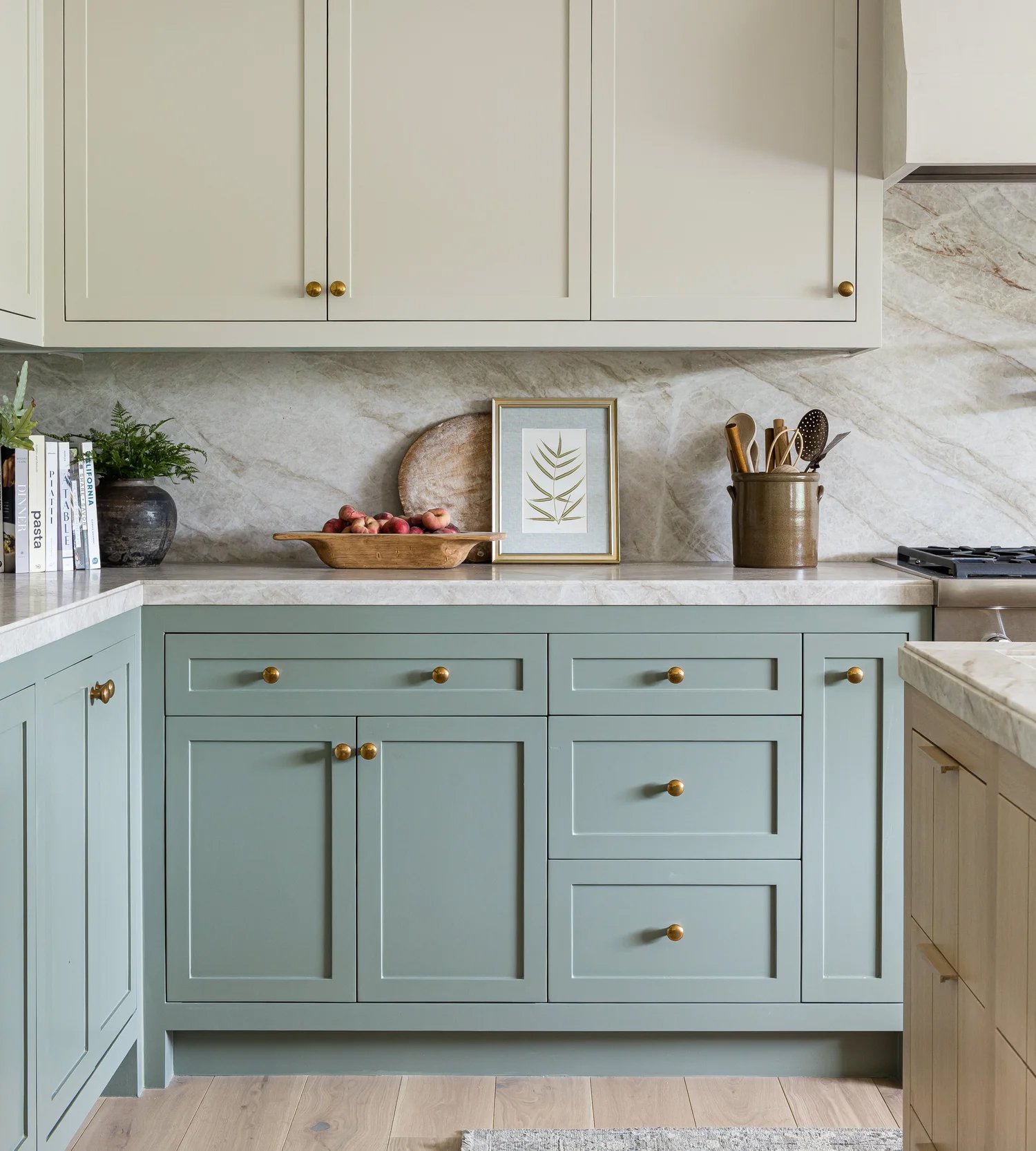
Light Green & Cream Cabinetry
Image courtesy of Pure Salt Interiors
Benefits of Two-Tone Kitchen Cabinets
Two-tone kitchen cabinets are a favorite among designers because they help visually break up large expanses of cabinetry while adding contrast and definition. As Yelp home expert and interior designer Lauren Makk notes, “A two-toned kitchen is an effortless way to create instant interest.” This approach allows cabinetry to feel intentional rather than uniform or heavy.
By mixing complementary colors, finishes, or materials, two-tone cabinets can highlight focal areas such as islands or open shelving while supporting the kitchen’s overall style. Popular combinations include white and gray, navy and white, or black paired with warm wood tones, but the most successful designs rely on thoughtful color coordination to achieve a cohesive, well-balanced result.

Taupe & Wood Cabinets
Image courtesy of House of Jade
Practical Advantages of Two-Tone Kitchen Cabinets
Beyond aesthetics, two-tone kitchen cabinets offer strategic design advantages that improve balance and proportion within the space. By visually grounding lower cabinets with darker tones and keeping upper cabinets lighter, kitchens can feel more open while still maintaining depth and structure—especially important in smaller or open-concept layouts.
Two-tone cabinetry also provides flexibility when working around existing features. Islands, range hoods, or open shelving can be intentionally differentiated without introducing additional materials, allowing these elements to feel integrated rather than added on. This approach helps create a layered, custom look while maintaining a cohesive color story throughout the kitchen.

Dark Blue & Light Wood Cabinets
Image courtesy of Flemming Interiors
Two-Tone Kitchen Cabinet Ideas for Any Style
Two-tone kitchen cabinets are a versatile way to add character, contrast, and depth to your space. Whether you prefer bold statements or a more subtle look, there are many approaches to suit your style.
Contrasting colors create a striking effect—pairing light upper cabinets with dark lowers, like white and navy, adds sophistication and focus. Neutral and bold shades, such as gray and espresso, balance warmth and depth without overwhelming the room. Monochromatic tones use different shades of the same color to layer visual interest while maintaining cohesion.
For a natural touch, mix wood and paint, combining wood textures with painted cabinetry to add warmth and personality. Open shelving can also complement a two-tone scheme, providing display space for dishes or decor while keeping the kitchen airy and inviting.

Two-Toned Cabinets
Image courtesy of My Domaine
Popular Trends in Two-Tone Cabinets
Two-tone kitchen cabinets continue to evolve, offering opportunities to personalize your space with color, texture, and materials. Here are some popular trends to consider:
-
Color blocking: Pair bold, contrasting shades—like emerald green with white or mustard yellow with navy—to create a striking focal point.
-
Metallic accents: Add brass, copper, or gold hardware, or even metallic cabinet finishes, for a touch of sophistication and modern flair.
-
Contrasting textures: Combine smooth, glossy cabinets with matte or textured surfaces to add depth and dimension.
-
Minimalist design: Sleek, handle-less cabinets in monochromatic tones create a clean, streamlined look.
-
Natural materials: Incorporate wood, stone, or concrete finishes to bring warmth, texture, and an organic feel to your kitchen.
These trends can be mixed and adapted to reflect your style while creating a visually dynamic, modern, and inviting kitchen.
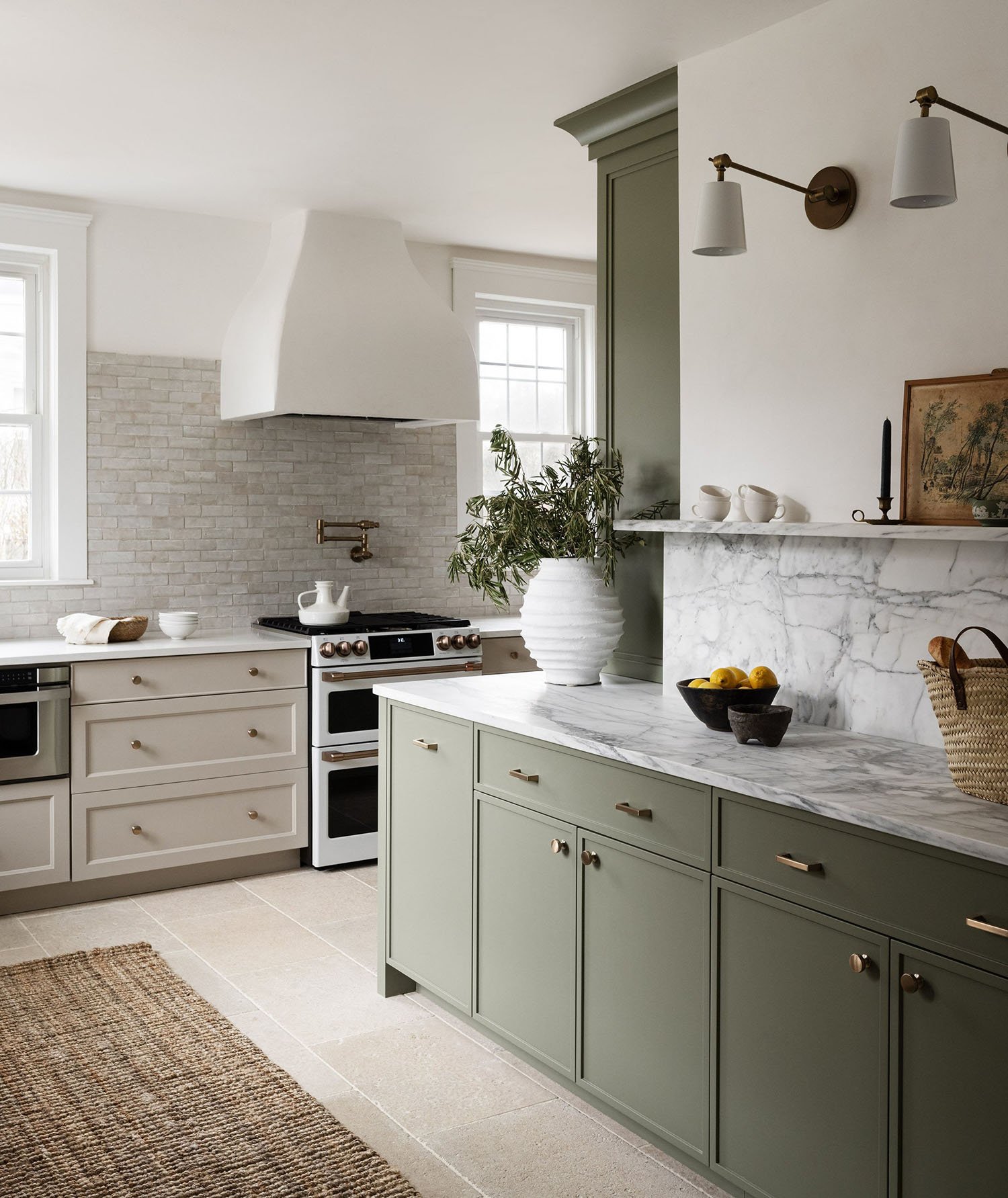
Light Olive Green & Cream
Image courtesy of Sarah Burgess Interiors
How to Pick Color Combinations
Two-tone kitchen cabinets give you the freedom to mix and layer colors while maintaining balance. A common guideline is to use a darker shade on the bottom and a lighter tone above—this grounds the lower cabinets and draws the eye upward, making the space feel taller and more open. Colors can range from subtle complementary tones to bold contrasts, depending on your style.
Expert tips for choosing the right combination:
-
Match your kitchen’s style: Modern, traditional, or rustic kitchens benefit from color choices that support the overall aesthetic.
-
Create contrast: Pair light and dark shades or complementary colors to define different areas and add interest.
-
Draw inspiration from surroundings: Consider countertops, backsplash, and flooring to harmonize your palette.
-
Consider kitchen size: Light upper cabinets expand small spaces; bold colors work well in larger kitchens.
-
Test before committing: Try samples in different lighting to see how colors interact.
-
Seek professional advice: Designers or color consultants can provide guidance to achieve a cohesive, personalized look.
With thoughtful color choices, your two-tone cabinets can become a striking and unique feature that elevates your entire kitchen.

Two-Tone Kitchen Cabinet Ideas | Contemporary Kitchen Design
Image courtesy of Urbanology Design
Popular Color Choices for Two-Tone Kitchen Cabinets
Here are a few of the most popular two-tone kitchen cabinet combinations, though many other options can work depending on your style and kitchen layout. Choosing the right combination can enhance the room’s balance, highlight architectural features, and bring personality to your kitchen. Whether you prefer subtle contrasts or bold, eye-catching colors, two-tone cabinets allow you to create a space that feels both functional and visually dynamic.
White and Wood Cabinets
White cabinets offer a clean, timeless look that brightens any space. Pairing them with wood adds warmth and natural texture to the kitchen. This combination works beautifully for modern-rustic, farmhouse, or country-style kitchens. In the open-concept kitchen below, white oak cabinets form distinct pantries on either side of a white kitchen island, creating a natural two-tone effect. Designer Jamie Deck of Shift Interiors describes it as “like a china cabinet in a kitchen,” highlighting its functional and aesthetic appeal. The space combines modern organic design with seamless white and pale gray quartz countertops, open shelving, black accents, and a black-framed window for a sleek, contemporary look.

Elegant & Sophisticated Two-Tone White & Wood Cabinets
Image Source Shift Interiors
Rachel of Maison de Pax designed her parents’ stunning rustic-transitional kitchen, featuring elegant two-tone cabinets, quartzite countertops, and a marble backsplash. The lower cabinets are rustic light oak, paired with white cabinetry above, complemented by a white oak island and flooring. Black hardware, open wood shelving, and white-and-gray quartz countertops with matching tile backsplash complete this functional and visually striking kitchen.

Two-Tone White & Wood Cabinets in Country Kitchens
Image Source Maison de Pax
In this modern farmhouse kitchen by Savvy Interiors, light oak lower cabinets are paired with crisp white upper cabinetry for a striking two-tone effect. The design features a white herringbone tile backsplash, a gold metallic range hood, and gold open shelving in front of two windows, complemented by black-and-white pendant lights over the island. Light oak flooring and two-tone wood lighting in oak and caramel hues complete the cohesive and inviting space.

Farmhouse Kitchen with White & Wood Cabinets
Image courtesy of Savvy Interiors
This country kitchen, designed by Joanna Gaines, features light sage green lower cabinets paired with white upper cabinets above the fridge for a subtle two-tone effect. Vertical white shiplap walls extend to the ceiling above the lower cabinets, accented by a large window and a wood open shelf with an antique brass bar for hanging copper pots. Warm wood flooring and island, white quartz countertops, a farmhouse sink, and rustic, rough-hewn beams framing the open entrance complete the inviting, timeless space.

Farmhouse Kitchen with White Wood Cabinets
Image courtesy of Joanna Gaines
In this Studio McGee kitchen, crisp white cabinets are paired with a dark wood island for a classic two-tone look. The space features white oak flooring, brass hardware, open shelving, white quartz countertops, and gray pendant lights with brass interiors. A farmhouse sink, open island storage for pottery and books, and a neutral area rug in front of the sink add warmth, texture, and functional charm.


Two-Tone Kitchen Cabinets with Dark Wood Island and White Cabinets
Image courtesy of McGee & Co
Blue & White Cabinets
White and blue cabinets suit a variety of design styles, including modern, farmhouse, country rustic, and coastal kitchens. White cabinets keep the space bright and airy, while navy or darker blues add depth, elegance, and timeless contrast. Lighter blues provide a softer, more subtle variation that still highlights the two-tone design.

Two-Tone Kitchen Cabinets in White & Navy Blue
Image courtesy of Heidi Callier Design
Two-Tone Grey & Cream Kitchen Cabinets
Grey and cream cabinets create a soothing and elegant contrast in the kitchen. Cream provides warmth, while grey adds a cooler, grounding element, beautifully balancing the space. From soft light greys to deep charcoal tones, this pairing is versatile and works in both traditional and modern kitchens.

Two-Tone Grey & Cream Kitchen Cabinets
Image courtesy of Studio McGee
In these two stunning kitchens, soft gray pairs beautifully with taupe and white cabinets for a sophisticated two-tone look. In the first kitchen by Kelsey Leigh, a dove gray island complements taupe cabinets and veined white-and-gray countertops, with the area rug tying the colors together. The second kitchen, designed by Jean Stoffer, features deep gray lower cabinets and an island base paired with warm white upper cabinets, white countertops, and gray-toned light wood flooring for a balanced, cohesive design.

Sheer Elegance with Two-Tone Grey & Cream Kitchen Cabinets
Image courtesy of Kelsey Leigh Design

Sophisticated Two Tone Grey & Cream Kitchen Cabinets
Image courtesy of Jean Stoffer Design
Grey & Wood Tone Cabinets
Grey pairs beautifully with nearly any color, including warm wood tones, for a balanced and inviting kitchen. In this space designed by Caitlin Flemming, soft gray upper cabinets are paired with light wood lower cabinets and a matching wood-tone island, complemented by light gray quartz countertops and a multi-shade gray tiled backsplash. Warm wood flooring, antique brass lighting, and black leather counter stools complete the cohesive and stylish two-tone design.

Striking Kitchen Cabinets in Grey & Wood Tones
Image courtesy of Caitlin Flemming Design
In this two-tone kitchen by Jean Stoffer, light wood cabinets in a warm gold hue are paired with a dove gray island for a striking contrast. Dark wood flooring, white ceilings, black-and-white contemporary pendant lights, and wood-paneled walls above a partial quartz backsplash complete the sophisticated design. Brass hardware, white quartz countertops, and an earth-toned area rug in shades of brown, pale green, and tan add texture, color, and warmth.

Two Tone Kitchen Cabinets in Gray & Wood
Image courtesy of Jean Stoffer Design

Two Tone Kitchen Cabinets in Gray & Wood
Image courtesy of Jean Stoffer Design
Green & White Cabinets
Green and white cabinets offer a versatile two-tone option suitable for a variety of design styles. Shades of green—from sage to olive, emerald, or deeper tones—create a striking contrast with crisp white cabinets. In the two kitchens shown, designers paired light sage green with white, complemented by light oak flooring, modern light fixtures, white tile backsplashes, white walls, and brass cabinet hardware.

Two-Tone Kitchen in Soft Green & White with Brass Accents
Image courtesy of Caitlin Flemming Design

Lovely White & Green Kitchen Design
Image courtesy of Erin Gates Design
Two-Tone Black & White Kitchen Cabinets
Black and white cabinets are a classic two-tone pairing that adds contrast, elegance, and sophistication to any kitchen. In this design by Urbanology, black lower cabinets and a black island are paired with white upper cabinets, complemented by a glossy white subway tile backsplash, white quartz countertops, and white oak flooring. Wood ceiling beams, black-and-gold pendant lights, and wood counter stools add warmth, texture, and a balanced finishing touch.

High Contrast Black & White Kitchen Design
Image courtesy of Urbanology Design
Tips for Incorporating Two-Toned Cabinets into Your Kitchen Design
Use two-tone cabinets to create a focal point in your kitchen, such as an island, a range hood, or a feature wall. Choose contrasting or complementary colors that draw the eye while maintaining balance between upper and lower cabinets.
Consider the overall flow of your kitchen and coordinate your cabinet colors with other elements, such as countertops, backsplash, and flooring. Smooth transitions between colors help create a cohesive look, while lighting—both natural and artificial—can affect how the colors appear.
Accessorize thoughtfully with hardware, lighting, and decorative items that complement your two-tone design. By following these guidelines, you can introduce color, texture, and elevated design elements while keeping your kitchen harmonious and visually appealing.

Kitchen Design by Modern Nest
Image courtesy of Modern Nest
Popular Trends for 2026 in Two-Tone Kitchen Cabinets
Two-tone kitchen cabinets continue to evolve, offering homeowners creative ways to add style and personality to their kitchens. Here are some of the top trends to consider:
-
Color Blocking: Bold, contrasting colors create a striking focal point. Popular choices include emerald green, mustard yellow, or deep red paired with neutrals for modern and contemporary kitchens.
-
Metallic Accents: Brass, copper, or gold hardware adds elegance, while metallic finishes on cabinetry can create a sleek, modern look.
-
Contrasting Textures: Mix smooth, glossy cabinets with matte or textured finishes to add depth and visual interest.
-
Minimalist Design: Monochromatic palettes and handle-less cabinets keep the design clean and simple while still making a statement.
-
Natural Materials: Incorporate wood, stone, or concrete finishes to add warmth, texture, and a connection to nature.
These trends provide inspiration, but the key is to choose a style that reflects your taste and creates a kitchen that’s uniquely yours.
Frequently Asked Questions About Two Tone Kitchen Cabinets
What is the rule for two-tone kitchen cabinets?
The fundamental rule is contrast with cohesion — the two colors should be distinct enough to create visual interest but share enough common ground to feel intentional rather than mismatched. In practice, this means choosing colors from the same temperature family — two warm neutrals, or a warm neutral paired with a warm deep tone — rather than mixing warm and cool colors, which creates an uncomfortable disconnect. The most reliable approach is to anchor one color as the dominant tone covering 60-70% of the cabinetry and use the second color as the accent on the island, lower cabinets, or a specific zone. The transition point between the two colors — typically the countertop line — serves as a natural visual break, making the combination feel considered rather than arbitrary.
What is the best color combination for two-tone kitchen cabinets?
The most versatile and consistently successful two-tone combination is cream or warm white upper cabinets paired with a deeper contrasting lower cabinet or island — navy, forest green, charcoal, or warm wood tones all work beautifully. This combination works because the lighter upper cabinets keep the kitchen feeling open and bright while the deeper lower tone adds grounding and visual weight where it’s most comfortable — at counter height and below. For a softer result, pairing two neutrals at different values — warm white uppers with taupe or greige lowers — creates a tonal two-tone effect that feels sophisticated without high drama. The specific colors matter less than the relationship between them — contrast at the right level for your space and consistent undertones throughout.
Are two-tone kitchen cabinets still in style for 2026?
Yes — two-tone kitchen cabinets remain one of the most recommended approaches in contemporary kitchen design and show no signs of fading. The 2026 design direction has actually strengthened the case for two-tone kitchens — the broader shift toward warmer, more layered palettes and away from uniform all-white kitchens plays directly to what two-tone cabinetry does best. Where the trend has evolved is in the color choices — the stark white-and-navy combinations that defined early two-tone kitchens are giving way to more nuanced pairings: warm cream with deep olive, taupe with charcoal, or natural wood with soft white. The principle remains the same; the palette has simply become warmer and more considered.
What are popular color pairings for two tone kitchen cabinets?
The most popular two-tone pairings currently fall into three categories. High-contrast pairings — white or cream uppers with navy, forest green, or charcoal lowers — create the most dramatic and visually striking results. Warm neutral pairings — cream with taupe, warm white with greige, or off-white with warm gray — create a sophisticated tonal effect that feels layered without drama. Natural material pairings — painted cabinets in any neutral combined with a natural wood island or lower cabinets — bring warmth and organic texture that painted-only combinations can’t replicate. Of these three, I most frequently recommend natural material pairings to clients — the combination of painted and wood cabinetry feels genuinely timeless and works across modern, farmhouse, traditional, and rustic kitchen styles.
Should upper or lower cabinets be darker in a two-tone kitchen?
As a general rule, darker lower cabinets and lighter uppers is the more forgiving and versatile approach — and the one I recommend to most clients. Darker tones at counter height and below feel visually grounded and stable, while lighter uppers keep the kitchen feeling open and prevent the space from feeling heavy or cave-like. The exception is when ceiling height allows for drama — in kitchens with high ceilings and abundant natural light, darker uppers can create a sophisticated enveloping effect that works beautifully. The practical consideration is also worth noting: lower cabinets take more wear, marks, and scuffs than uppers — darker lower cabinets hide everyday kitchen use far more forgivingly than dark upper cabinets, which are at eye level and show every fingerprint.
Inspired by these ideas? Explore my full Kitchen Design Ideas for 2026 collection for inspiration on cabinets, layouts, storage, and finishing touches.
View Recent Posts
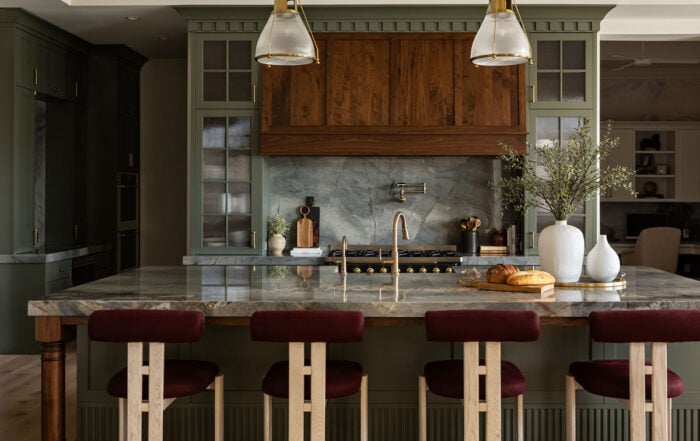
Stunning Range Hood Design Ideas
Range hood design ideas covering stone, wood, plaster, copper, and stainless steel — with designer tips on proportion, material selection, and installation.

Fireplace Design Ideas
45 fireplace design ideas, from ceiling-high stone and fluted plaster to wood paneling and black tile, with a designer’s tips on materials, scale and color.
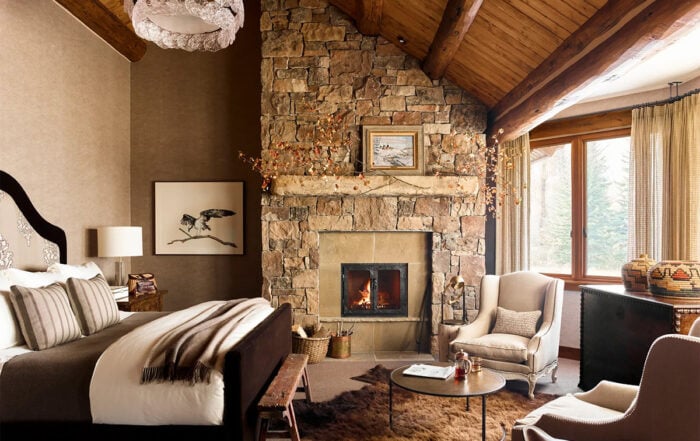
Rustic Bedroom Ideas
Rustic bedroom ideas covering natural materials, layered textiles, color palettes, and professional design strategies for log cabin, modern rustic, Scandinavian, and luxury retreat styles.
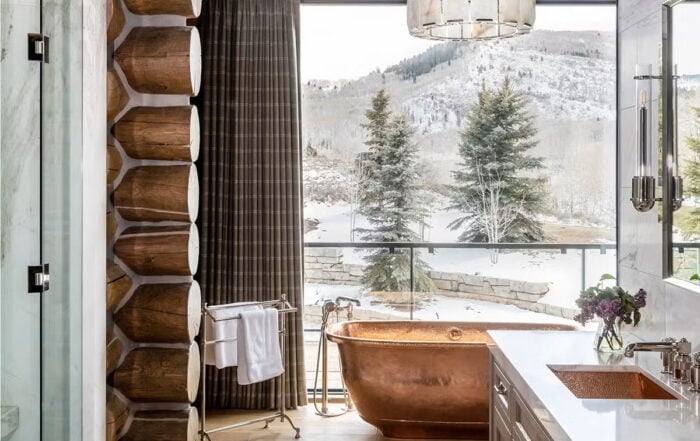
Rustic Bathroom Ideas
Rustic bathroom ideas — natural materials, vintage fixtures, earthy palettes, and designer tips for log homes, cabins, and mountain retreats.
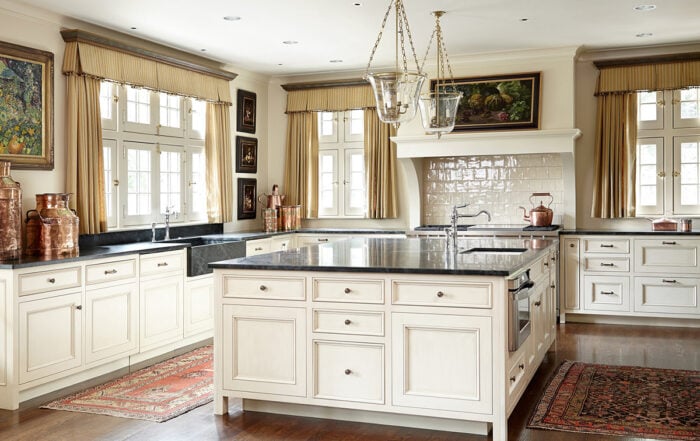
Cream Kitchen Cabinet Ideas
Cream kitchen cabinet ideas curated by interior designer Tracy Svendsen. Warmer than white and more versatile than beige, cream cabinets work beautifully across farmhouse, rustic, traditional, and modern kitchens.
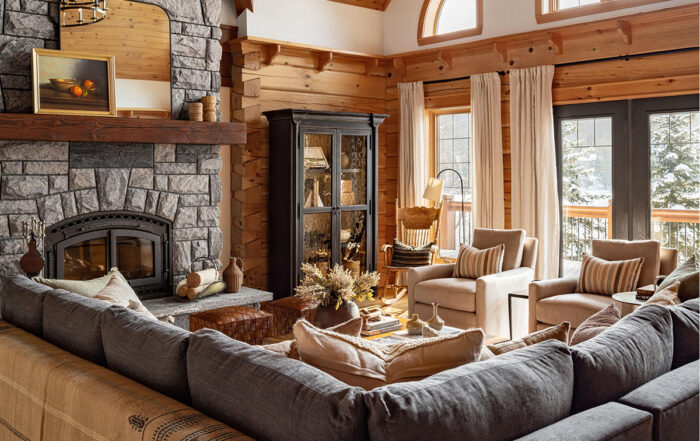
Log Home Decorating Ideas
Log home decorating ideas covering color palettes, furniture selection, lighting, stone fireplaces, and modern approaches to handcrafted log home interiors.
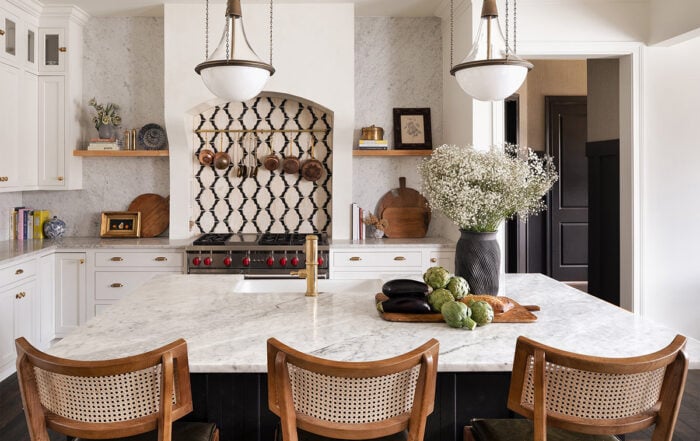
Country Kitchen Ideas
Discover 43 country kitchen ideas featuring warm earth tones, natural materials, vintage accents, and expert guidance on cabinets, colors, and styling for an authentic country kitchen design.
Coastal Decorating Ideas
Coastal decorating ideas — color palettes, natural textures, living rooms, bedrooms, and outdoor spaces.
Rustic Backyard Ideas
Rustic backyard ideas — fire pits, natural materials, outdoor seating, container planting, and log home porches.

