
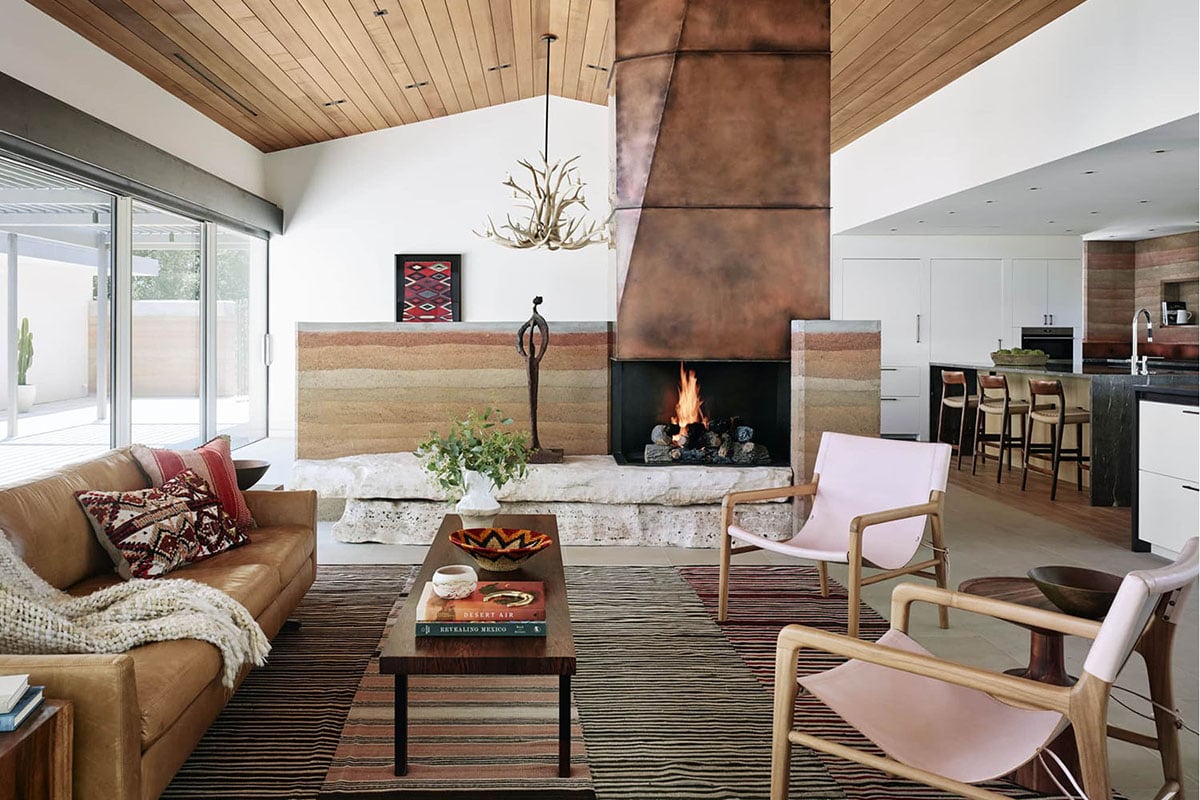
Southwestern Decorating Ideas: Designer Inspiration for 2026
By Interior Designer, Tracy Svendsen | Published Oct 30, 2023 | Updated August 10, 2026 |
Southwestern decorating has never really left — and in 2026 it feels more relevant than ever. The warm colors, natural materials, bold patterns, and cultural depth of this design aesthetic connect to something genuine: the specific landscape, light, and artistic traditions of the American West and Southwest. When creating a southwestern-style home for my interior design clients, I draw inspiration from the surrounding views for the color scheme and layer those earthy hues with warm textures, rich wood tones, sculptural objects, and a playful mix of patterns.
The Western style of the 21st century is glamorous, upbeat, refined, colorful, and comfortable — a long way from the kitschy version of the aesthetic that gave it an unfair reputation in earlier decades. Southwestern décor incorporates elements of Native American and Spanish cultures, and that cultural depth is precisely what gives the style its richness and authenticity. As Nancy Farina of the California Design Center describes Southwestern architecture: “large rooms, high ceilings, and huge entryways to reflect the vastness of the Southwest landscape.” That sense of scale and openness informs the interior direction throughout this guide.
Whether you’re adding Southwestern character to a rustic retreat, a log home, or a contemporary interior, the ideas throughout this post cover color, pattern, texture, and room-specific applications — with the design perspective of someone who has worked with this aesthetic across client projects for decades. Feature image above courtesy of Jobe Corral Architects.
Key Takeaways
-
Southwestern style blends warm, earthy tones with natural materials and rich cultural influences to create spaces that feel inviting, character‑filled, and connected to the landscape.
-
Neutral bases enhanced with warm hues such as terracotta, rust, and deep ochre allow bold geometric patterns and vibrant textiles to shine without overwhelming the space.
-
Natural textures and materials, such as reclaimed wood, stone, leather, and wrought iron, are central to the aesthetic, adding depth, authenticity, and a handcrafted feel.
-
Cultural and artisan elements, including Navajo textiles, pottery, and geometric patterns, reinforce the Southwestern identity and add visual richness.
-
Southwestern design adapts well to varied applications — from living rooms and kitchens to dining and bedroom spaces — by layering color, pattern, and texture to highlight both tradition and personal expression.

Modern Southwestern Living Room
Image courtesy of Max Humphrey
Designer Mood Board: Southwestern Decorating Ideas
For this mood board, I selected a southwestern-inspired living room designed by Max Humphrey because it demonstrates how this style can feel current, elevated, and intentional rather than overly themed.
The architectural envelope establishes a modern farmhouse foundation — vaulted ceilings with dark wood slats and beams, white horizontal shiplap walls, and black-framed windows. This neutral structure allows southwestern accents to be layered in strategically rather than dominating the space. That balance is key. When the base architecture is restrained, regional influences can feel considered instead of literal.
Here, southwestern character is introduced through materiality and pattern: warm leather seating, Pendleton textiles, a cowhide accent pillow, and sculptural elements like mounted horns. The palette of white, gray, brown, black, and muted red is controlled and cohesive, preventing the palette from feeling overworked. A pale gray flat-weave rug and contemporary sofa keep the space grounded in modern sensibility.
What makes this room especially relevant for 2026 is its restraint. Southwestern design today works best when distilled—layered with texture, warmth, and heritage references, yet interpreted through clean lines and thoughtful editing. This approach creates a space that feels bright, livable, and refined while still honoring the spirit of the Southwest.

Mood Board by Interior Designer Tracy Svendsen – A Modern Approach to Southwestern Decorating
What is Southwestern Interior Design?
Southwestern interior design draws its character from the specific landscape, light, and cultural traditions of the American West and Southwest — the terracotta soils, the vast blue skies, the adobe architecture, and the centuries-old artistic traditions of Native American and Spanish Colonial cultures that shaped the region. It’s a design style with genuine cultural depth rather than a superficial regional theme.
The defining material elements are warm earthy tones, natural materials — adobe, rough-hewn wood, stone, leather, and terra cotta tile — and vibrant geometric patterns drawn from Navajo, Pueblo, and Spanish Colonial textile traditions. These patterns appear in everything from area rugs and upholstery to pottery and wall art, and they’re what give Southwestern interiors their distinctive visual energy within an otherwise earthy, grounded palette.
The rustic-style connection is natural — Southwestern design shares the same commitment to natural materials and handcrafted quality that broadly defines rustic design, but with a specific regional and cultural identity that sets it apart from other rustic traditions.
Here are some ideas to get you started:

Southwestern Living Room with Gallery Wall
Image courtesy of Modern Nest
1. Fusing Southwestern Style With Log & Timber Frame Architecture
Blending the heavy timber textures of log home architecture with the adobe and stucco surfaces typically associated with Southwestern design presents a specific challenge — both are visually dominant materials that need careful handling to coexist without competing. The most effective solution is to let the architecture lead and introduce Southwestern character through furnishings, textiles, and art rather than through structural surfaces.
This adobe compound designed by David Michael Miller shows that approach at its most resolved. Curving adobe walls, round log ceiling beams, tile flooring, and a wood ceiling establish the architectural foundation — the combination of adobe smoothness and log texture creating the material dialogue that defines Southwestern log home design at its most authentic. Clean-lined dark brown leather seating and simple furnishings defer to the architecture rather than compete with it, while a gallery wall of black-and-white desert photography and throw pillows in orange, purple, and pink introduce Southwestern color and cultural references at the accessory level. The client’s artwork collection takes center stage precisely because the furniture choices don’t.
Designer Tip: I recommend clean-lined, Mid-Century Modern-influenced furniture in a log home with Southwestern accents — the simplicity of the furniture silhouettes provides the visual breathing room that prevents the combination of heavy timber and bold Southwestern pattern from feeling overwhelming. The architecture and the art do the expressive work; the furniture simply supports them.

Southwestern Living Room with Log Beams
Image courtesy of David Michael Miller Design
2. A Neutral Foundation for Southwestern Layering
A neutral architectural base is the most important single decision in a Southwestern interior — white plaster walls, bleached or light-toned ceiling beams, and pale wood flooring create the quiet backdrop that allows earth tones, bold geometric patterns, and sculptural objects to read with maximum clarity. Without that neutral foundation, the richness of Southwestern materials and pattern quickly becomes visually overwhelming.
In this living room by Architectural Alliance, white curving plaster walls, light bleached round log ceiling beams, and an adobe-style kiva fireplace establish the neutral Southwestern architectural foundation. Contemporary furniture, a geometric Southwestern area rug, and large sculptural rock formations and petrified wood on the floating credenza layer the regional character within that quiet base — each element reading clearly against the white plaster backdrop.
Designer Tip: I recommend establishing the neutral base at the architectural level first — walls, ceiling, and flooring — before introducing any Southwestern color or pattern. The contrast between the quiet neutral structure and the warm, patterned accessories is what gives Southwestern design its visual energy. Introduce the regional character through textiles, art, and objects rather than through wall color or architectural finishes.

Southwestern Decorating Ideas for the Living Room
Image courtesy of Architectural Alliance
3. Reclaimed Wood
Reclaimed wood brings a specific quality to a Southwestern interior that new timber finishes can’t replicate — the genuine age and history of each piece adds the authenticity that defines the style at its most considered. Whether used as a feature wall, in furniture, or as architectural detail, reclaimed wood connects the interior directly to the handcrafted building traditions of the Southwest.
In this Santa Fe living room, dark rough-hewn log ceiling beams against white plaster walls establish the material contrast that defines Southwestern architecture — the raw organic timber reading as structural and genuine rather than decorative. The carved reclaimed wood double doors in the background add the artisan craftsmanship detail, while built-in plaster niches display Native American pottery and sculptural objects — the collection doing the cultural storytelling that the architecture sets up.
Designer Tip: I recommend reclaimed wood in Southwestern interiors specifically for its material honesty — the visible grain, knots, and aging in genuine reclaimed timber connect to the handcrafted quality of Navajo textiles and Native American pottery in a way that new wood with a distressed finish never quite achieves.

Open & Spacious Southwestern Living Room
Image courtesy of Estately
4. Earthy Tones With an Unexpected Pink Accent
Earth tones are the natural foundation of Southwestern design — rusty reds, deep oranges, golden yellows, and warm browns drawn directly from the landscape. What elevates a Southwestern palette beyond the expected is the introduction of one unexpected accent color that shifts the mood without disrupting the warmth.
In this living room, soft pink linen curtains introduce that unexpected note against white plaster walls and dark wood ceiling beams — the pink warm enough to sit naturally within the earth-tone palette while adding a lightness that terracotta or rust alone couldn’t achieve. A boldly patterned ottoman with dark ground and colorful botanical embroidery anchors the center, while a large-scale horse portrait above the fireplace and a leather butterfly chair add the Western character references. Neutral brown tones in the striped area rug and carved wood side table ground the composition throughout.
Designer Tip: I recommend introducing one unexpected accent color — soft pink, dusty blue, or sage green — into an otherwise warm Southwestern palette. The contrast between the unexpected accent and the warm earth tones creates a freshness that prevents the palette from feeling heavy or predictable.

Santa Fe Southwestern-Style Living Room
Image courtesy of Sotheby’s Realty
5. Color Palette Adaptation to Log Homes
Adapting a Southwestern palette to a log home requires one specific consideration — the warm amber, honey, and reddish tones of the logs themselves set the underlying color palette before any decorating decision is made. Colors that fight those undertones create visual tension; colors that echo them create cohesion. Maintaining a neutral, creamy base on drywall sections and introducing Southwestern color through textiles — terracotta rugs, turquoise pillows, rust throws — is the most reliable approach.
WRJ Design applied this principle with particular success in this handcrafted log home living room. The Southwestern geometric area rug grounds the space while the window treatments, river rock fireplace, and camel sofa all pull out the golden tones present in the logs — every color choice referencing the timber rather than competing with it. I find this room genuinely compelling for one specific reason: the bright green velvet accent chair echoes the color of the aspen trees visible through the floor-to-ceiling windows, and the subtle grays in the upholstery reference the surrounding mountain palette. The landscape outside is doing as much design work as the interior decisions.
Designer Tip: I recommend looking out the windows before finalizing any color decisions in a log home with significant views — the specific greens, grays, and earth tones of the surrounding landscape are the most reliable color palette available, and furniture and textile choices that reference those exterior tones will always feel more resolved than colors chosen independently of the setting.
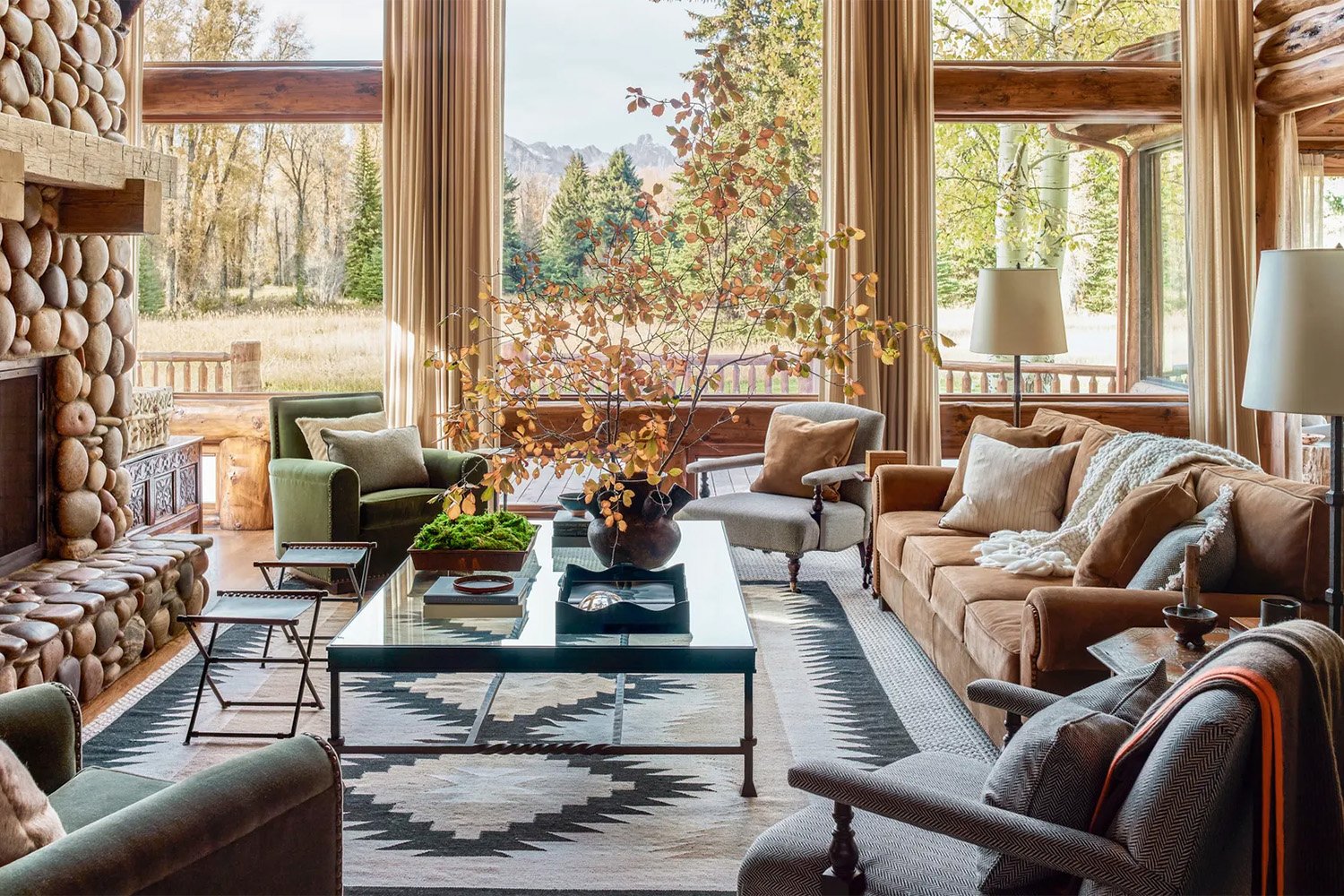
Log Cabin Outside of Jackson, Wyoming
Image courtesy of WRJ Design
6. Wrought Iron
Wrought iron is one of the most historically rooted materials in Southwestern design — its use in chandeliers, staircase railings, fireplace screens, and furniture hardware traces directly to the Spanish Colonial influence that shaped the architecture and craft traditions of the Southwest. In a log home or timber frame great room, oversized wrought iron chandeliers are particularly effective — their scale substantial enough to hold their own against heavy timber ceilings.
This Mediterranean-influenced Southwestern lodge by David Naylor Interiors shows wrought iron used at multiple scales simultaneously — the large circular chandelier with candle-style lights anchors the ceiling, the ornate fireplace screen and tools add the handcrafted detail at the focal wall, and the glass and wrought iron coffee table base brings the material down to furniture level. The sculptural white plaster fireplace surround provides the clean architectural counterpoint that allows the dark wrought iron to read clearly.
Designer Tip: I recommend wrought iron as the primary metal finish in a Southwestern interior — its dark, slightly rough surface connects to the handcrafted quality of adobe construction and Native American pottery in a way that polished or brushed metals never quite achieve. In a log home great room, an oversized wrought iron chandelier is worth the investment — undersized lighting in a timber frame space always looks tentative regardless of its quality.
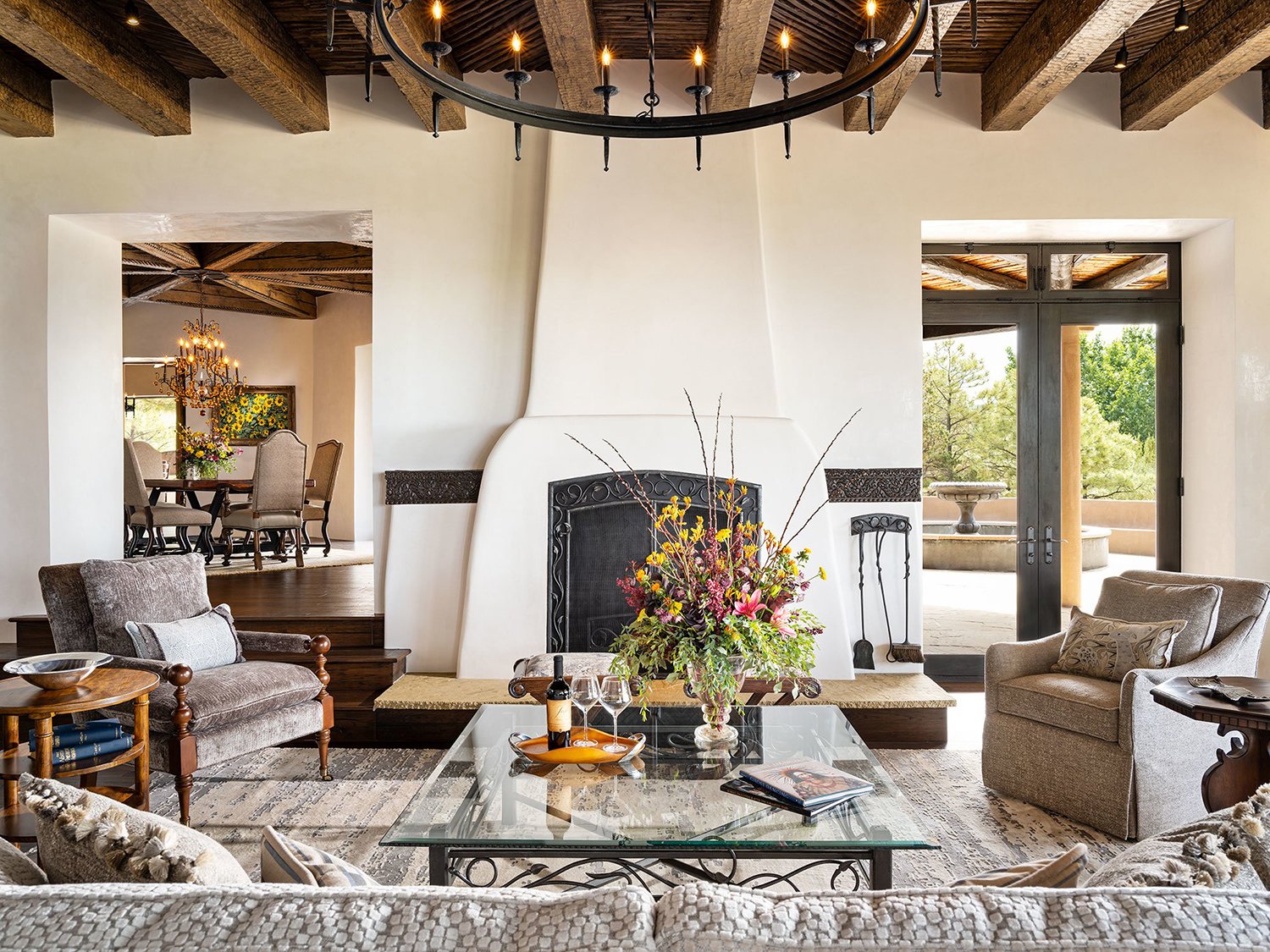
Southwestern Living Room
Image courtesy of David Naylor Interiors
7. Preserving the Original Southwestern Architecture
The most authentic Southwestern interiors are often the ones where the original architectural elements were left intact rather than updated — the round log vigas, pine plank ceilings, adobe plaster walls, and original mullioned windows of a Pueblo revival home carry a material and historical authenticity that no new construction replicates.
In this Santa Fe Pueblo revival space designed by Helen Thompson — interior designer and author of ‘Santa Fe Modern’ — the original vigas, pine plank ceiling, and mullioned windows were preserved and became the foundation for a layered, eclectic interior. A sculptural travertine coffee table, classic clam chair in cream boucle, and Danish-style oak chairs with rust upholstery introduce the Mid-Century furniture references that sit naturally against the ancient architecture. A convex mirror with a green Talavera tile frame above the adobe fireplace mantel adds the distinctive decorative craft element — the handmade tile connecting the contemporary furnishings to the regional artistic tradition.
Designer Tip: I recommend preserving original architectural elements in a Southwestern home wherever structurally possible — round log vigas, adobe plaster, and original windows carry a material authenticity that removal and replacement never restores. The furniture and accessories can be contemporary; the architecture should remain honest to its origins.
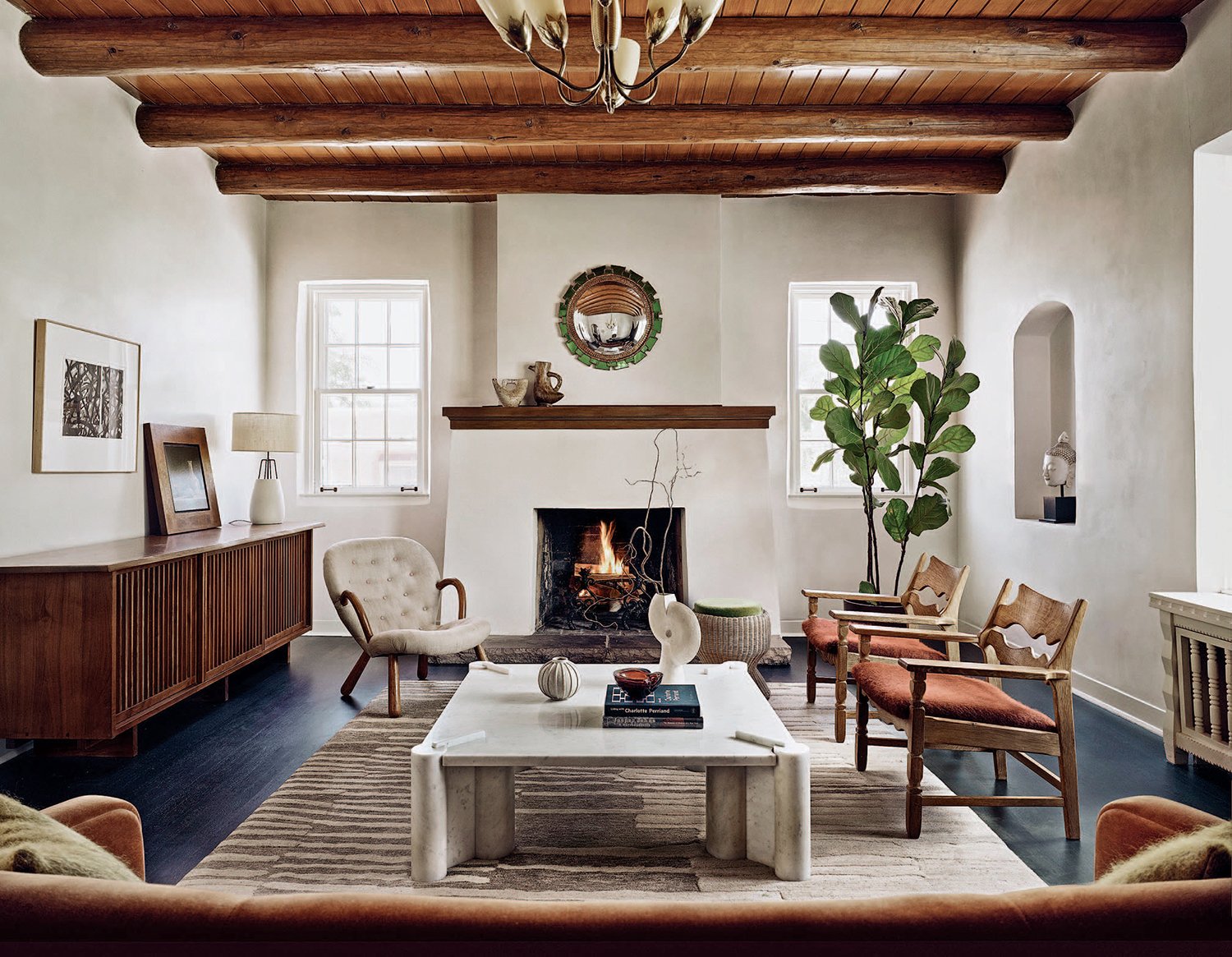
Pueblo-Style Living Room by Helen Thompson
Image courtesy of Cowboys Magazine
8. Leather Furniture
Leather is one of the most naturally suited materials in a Southwestern interior — its warm caramel and cognac tones connect directly to the earth tone palette, it improves with age and use rather than showing wear, and its durability suits the practical, lived-in character that authentic Southwestern design demands.
This mid-century Southern California ranch by Kirsten Blazek shows leather used as the room’s primary design statement. A large caramel leather U-shaped sectional anchors the space on a warm Southwestern textile rug with tassel fringe — the leather’s warm tone connecting naturally to the herringbone oak flooring and mid-century walnut credenza. Western landscape artwork, collected objects, and Native American-inspired wall hangings on white shiplap walls layer the regional character around the leather foundation. The sculptural organic coffee table introduces the contemporary material note that prevents the warm leather and wood palette from feeling dated.
Designer Tip: I recommend full-grain or top-grain leather in a Southwestern interior specifically for its aging quality — the patina that develops over years of use adds the material authenticity that gives a Southwestern room its most genuinely lived-in character. Cognac, saddle, and warm caramel tones suit the earth tone palette most naturally.

A Bland Ranch House Transformed into a Southwestern-Inspired Paradise
Image courtesy of Architectural Digest
9. Stucco Walls
Stucco and adobe plaster are the defining wall surfaces of Southwestern architecture — their slightly rough, organic texture absorbs and reflects light differently throughout the day, creating a warmth that painted drywall never achieves. Applied to interior walls, stucco adds an adobe-like quality that connects a space directly to the regional building tradition, and it works equally well in timber-frame, log homes, and cabins, where textured plaster between beams adds material depth without compromising the structure.
This vacation home by Sara and Rich Combs shows stucco used at its most architecturally integrated — built-in plaster banquette seating is shaped directly from the stucco walls, an approach rooted in traditional adobe construction where furniture and architecture were often one continuous material. The open adobe fireplace with dark wood mantel shelf, woven rattan pendants, dark wood ceiling beams, and layered Moroccan and Southwestern rugs complete the natural material palette. The large-scale abstract artwork in ochre, terracotta, and cream above the fireplace introduces the contemporary art note that lifts the room beyond a purely regional aesthetic.
Designer Tip: I recommend stucco or lime plaster as an interior wall treatment in any desert-inspired or Southwestern space — its thermal mass helps keep rooms cooler in warm climates and warmer in cool ones, and its natural texture adds the material depth that flat, painted walls lack entirely.

Southwestern Living Room in Joshua Tree, California
Image courtesy of The Joshua Tree House
10. Navajo Textiles – Pillows, Throws and Rugs
Navajo textiles are among the most culturally significant design elements in Southwestern interiors — their geometric patterns, natural wool construction, and centuries-old weaving traditions carry an authenticity that no manufactured reproduction replicates. Incorporating genuine Navajo or Navajo-inspired textiles into a Southwestern interior is one of the most direct ways to honor the cultural heritage that defines the style.
Navajo throw pillows and blankets in warm browns, cream, gold, and black introduce the geometric pattern at the textile level — the scale and placement of the pattern doing the visual work without requiring bold wall color or architectural intervention. A single Navajo throw draped over a leather sofa or a pair of geometric pillows on a neutral linen sectional can shift the entire character of a room toward the Southwestern direction with minimal commitment.
Designer Tip: I recommend introducing Navajo textiles through multiple pieces at different scales — a large area rug as the primary pattern statement, throw pillows as the secondary layer, and a folded blanket as the tertiary accent. The repetition of the same geometric vocabulary across three different scales creates a cohesive Southwestern textile story without any single piece feeling isolated or token.


Paseo Road Taos Southwestern Pillows
11. Antlers, Skulls, and Western Sculptural Objects
Antlers, deer skulls, and longhorn mounts are among the most culturally rooted decorative elements in Southwestern and Western design — they carry the specific symbolism of the landscape and its wildlife in a way that no manufactured decorative object replicates. Used with restraint, a single skull or antler mount becomes the room’s most distinctive focal point.
This Southwestern bedroom by Locati Architects shows a deer skull mounted between two beds on a reclaimed wood accent wall — the organic form of the skull and antlers reading as sculpture against the warm, varied grain of the wood behind it. Pendleton-style geometric throw pillows in red, black, and gray, red bolster pillows, Western equestrian artwork, and a Southwestern-patterned Roman shade layer the regional character consistently throughout. The dark faux fur throws at the foot of each bed add the tactile softness that prevents the bold Western palette from feeling too graphic.
Designer Tip: I recommend limiting Western sculptural objects — skulls, antlers, mounted horns — to one per room rather than grouping multiples. A single well-placed mount reads as a genuine design decision; multiple mounts read as a collection that tips the room from Southwestern toward themed. One strong piece, positioned intentionally, carries more design authority than several competing for attention.

Bedroom with Navajo Throw Pillows & Skull Above Bed | Southwestern Decorating Ideas
Image courtesy of Locati Architects
12. Colorful Terracotta Tile
Terracotta tile is one of the most historically authentic materials in Southwestern design — its warm orange-brown tones connect directly to the clay soils and adobe construction traditions of the region. In high-traffic areas like entryways and kitchens, its durability makes it as practical as it is culturally resonant.
This Spanish Colonial Revival staircase shows terracotta used at its most expressive — hand-painted Talavera tiles in deep reds, oranges, and black cover each stair riser in a different geometric pattern, the wrought iron railing completing the Spanish Colonial material palette.

Southwestern Staircase by Pritzkat & Johnson Architects
Image courtesy of Houzz
Designer Tip: I recommend hand-painted Talavera or encaustic tile on stair risers as one of the most impactful and relatively affordable ways to introduce authentic Southwestern pattern into a home — the vertical surface allows the full pattern to be appreciated as you move through the space.
13. Rustic Light Fixtures
Lighting fixtures in wrought iron, aged brass, or natural rattan connect directly to the handcrafted quality that defines Southwestern design. Forged iron chandeliers, Talavera ceramic pendants, and woven rattan shades reinforce the regional identity at the ceiling level.
For log homes and timber frame spaces, fixture scale matters as much as material — a great room with exposed beams demands a chandelier substantial enough to hold its own against the architecture. The right fixture anchors a Southwestern room as decisively as any structural element.

Rustic Lighting Fixture Designed by Tate Studio Architects
Image courtesy of Houzz
Designer Tip: I recommend sizing up when selecting light fixtures for a Southwestern great room or living space — a fixture that feels slightly oversized in a showroom almost always looks right in a room with high ceilings and exposed timber, where undersized lighting reads as tentative regardless of its quality.
14. Rustic Pottery
Native American pottery is one of the most culturally significant decorative elements in Southwestern design — the hand-painted geometric patterns, natural clay construction, and centuries-old traditions of Pueblo and Acoma potters carry an authenticity that no manufactured ceramic replicates. Displayed as a centerpiece or on open shelving, genuine pottery does the cultural storytelling that the style depends on.
In this eclectic rustic dining room by Emily Henry, three large hand-painted Pueblo-style pots on the walnut dining table become the room’s primary decorative statement — their intricate geometric patterns connecting the contemporary furniture and bold Persian rug to the Southwestern cultural tradition. Round log ceiling beams and white plaster walls provide the neutral architectural backdrop that allows the pottery to read with full clarity.
Designer Tip: I recommend displaying Southwestern pottery in odd-numbered groupings of varying heights — three pieces of different scales create the visual hierarchy and movement that a single piece or a matched pair never achieves. Positioning them at table center or on a low console allows the hand-painted patterns to be seen at close range, which is where their quality is most apparent.

Southwestern Dining Room
Image courtesy of Emily Henry Interiors
15. Woven Baskets for Visual Interest
Woven baskets in natural straw, reed, and yucca are among the most versatile elements in Southwestern design — they add organic texture at multiple scales, from large floor baskets to wall-mounted basket collections that function as both art and cultural reference.
Displayed as a gallery wall above a rustic wood console, these baskets with geometric patterns read as genuine artisan objects — their varied sizes and weave patterns creating visual rhythm that conventional art rarely achieves.

Entryway Designed by Nancy Meyers
Image courtesy of Architectural Digest
Designer Tip: I recommend mounting woven baskets as wall art in a Southwestern interior — grouped in an asymmetric arrangement of five to seven pieces in varying sizes, they create the organic gallery quality that framed prints in the same space would never achieve.
16. Native American Patterns
Native American geometric patterns — in rugs, blankets, and throw pillows — are the most direct way to introduce authentic Southwestern character into an interior. Their bold angular forms and earthy color palettes work across a wide range of room types and furniture styles.
This display of Navajo-inspired blankets in terracotta, burgundy, gray, and teal alongside geometric throw pillows shows the full range of pattern scale available — from subtle tone-on-tone weaves to bold high-contrast geometric statements.

Southwestern Textiles
Image courtesy of Pinterest
Designer Tip: I recommend anchoring a Southwestern room with one large-scale patterned rug as the primary pattern statement, then introducing smaller geometric patterns through pillows and throws. Layering pattern at different scales creates depth without the room feeling overworked.
17. Desert Vibes with Plants
Cacti, succulents, and snake plants are among the most naturally suited plants for a Southwestern interior — their sculptural forms, low maintenance requirements, and connection to the desert landscape make them genuinely appropriate rather than decoratively imposed. Grouped in woven baskets or terracotta pottery, they add the organic botanical element that connects the interior to the Southwest landscape.
This corner vignette shows desert plants used with genuine styling confidence — a large snake plant, prickly pear cactus, and columnar cactus grouped in woven seagrass planters on black metal stands, alongside a geometric Southwestern pillow on a rattan chair. The varied heights and forms of the plants create the sculptural composition that a single specimen alone never achieves.
Designer Tip: I recommend grouping desert plants in woven baskets or natural fiber planters rather than ceramic pots in a Southwestern interior — the organic texture of the basket connects the plant to the broader natural material palette of the space, while a ceramic pot introduces a separate material that can feel disconnected from the overall composition.

Decorating with Succulents
Image courtesy of Etsy
18. Ranch Style Southwestern Design
Ranch-style Southwestern design shares the same material foundation as broader Southwestern decorating — natural wood, stone, leather, and handcrafted textiles — but with a more specifically Western, working-ranch character. The emphasis is on function, durability, and the specific objects of ranch life elevated into decorative elements.
This dining space shows ranch Southwestern character at its most collected and personal. A wooden rack mounted on the white plaster wall displays a collection of Navajo blankets in cream, brown, and black geometric patterns — used as a textile gallery rather than stored away. A geometric Navajo textile as a table runner on the rustic wood dining table, leather-and-iron campaign chairs, dark log ceiling beams, and a sculptural iron pendant complete the ranch-style composition.
Designer Tip: I recommend displaying Navajo or Southwestern blankets on a wall-mounted wooden rack as an alternative to conventional wall art — the textile patterns read as genuinely artisan and culturally specific in a way that framed prints rarely achieve, and the rack itself adds the rustic hardware detail that connects the display to the ranch aesthetic.

Designer & Stylist Jill Sharp’s Home
Image courtesy of Veranda Magazine
19. Southwestern Textiles
Southwestern textiles — Navajo-inspired blankets, Pendleton wool patterns, and geometric woven rugs — are the most direct way to introduce regional character into a log home or mountain interior. Their bold geometric patterns and handcrafted quality connect to the same artistic traditions as the pottery and basket weaving that define the Southwestern cultural aesthetic.
This handcrafted log home reading corner shows Southwestern textiles used at every scale simultaneously — an accent chair upholstered directly in a Pendleton-style geometric pattern in navy and cream, a Navajo-inspired area rug in red and gray beneath, a burgundy blanket draped over the arm, and blue geometric throw pillows. The chinking between the round logs on the wall behind reinforces the authentic construction character that the Southwestern textiles complement naturally. A mounted elk above and dramatic mountain views complete the composition.
Designer Tip: I recommend upholstering at least one accent chair in a bold Southwestern textile rather than limiting the pattern to throws and pillows — a fully upholstered geometric chair reads as a genuine design commitment rather than a decorative addition, and it anchors the Southwestern character of the room more convincingly than any number of smaller textile accents.
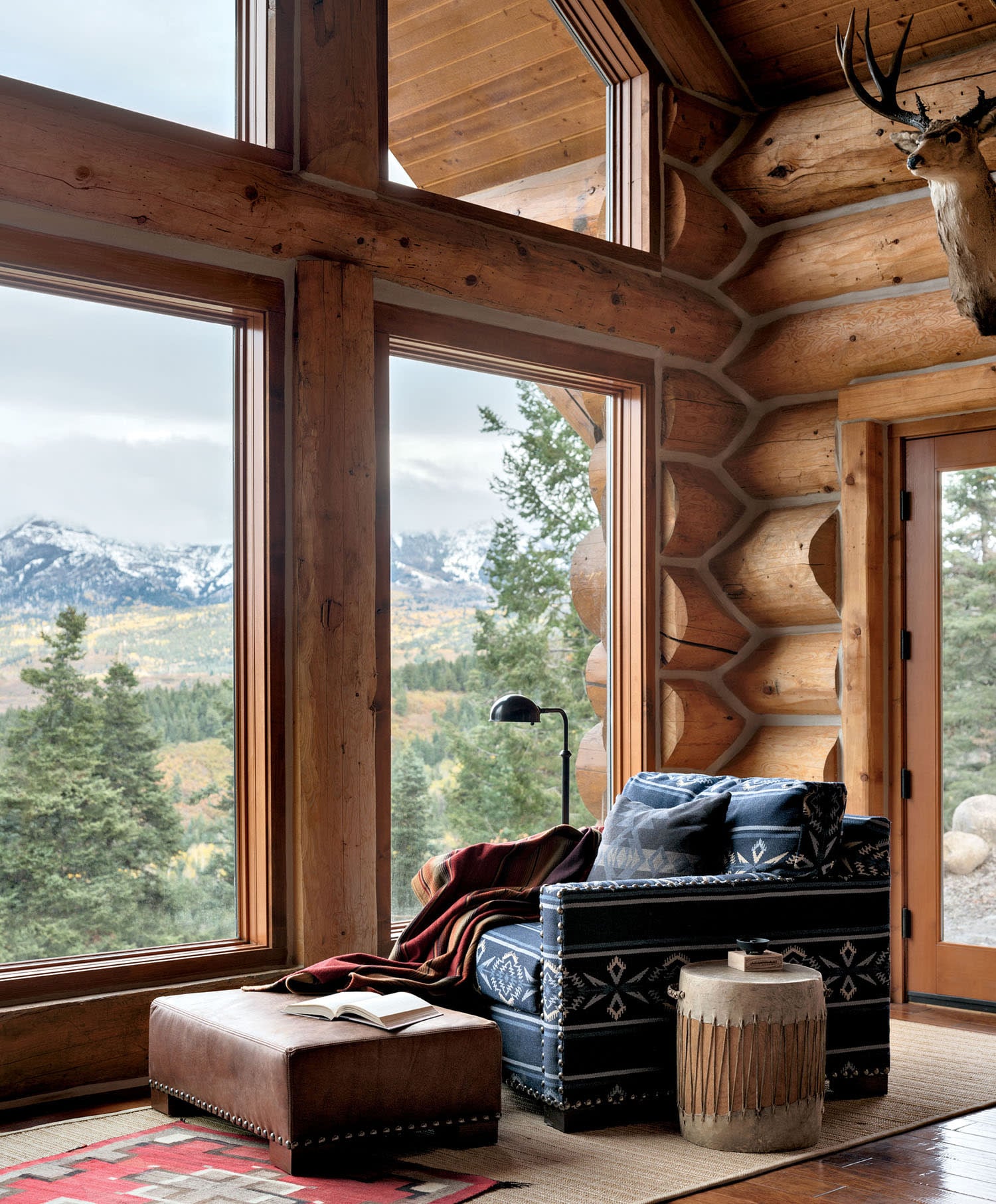
Decorating with Southwestern Textiles
Image courtesy of Alfredo Paredes Design
20. Carrying the Southwestern Character Throughout the Home
The most convincing Southwestern interiors are the ones where the design language is consistent from room to room — the same architectural elements, material palette, and cultural references appearing throughout rather than concentrated in a single showcase space. When the living room, kitchen, bedroom, and dining room share the same foundation, the home reads as genuinely Southwestern rather than selectively decorated.
These four rooms from the same Santa Fe home show that consistency at its most authentic. Terracotta tile flooring, white plaster walls, exposed log vigas, and arched doorways appear in every room — the architectural language establishing the Southwestern character before any furniture or accessory decision is made. The dining room’s ornate plaster archway, terracotta-upholstered high-back chairs, and wrought iron chandelier; the kitchen’s whitewashed cabinetry and Persian rug on terracotta tile; the bedroom’s wood ceiling beams and rustic bench — each room is distinct in function and character while sharing the same material and architectural vocabulary throughout.
Designer Tip: I recommend establishing the Southwestern architectural elements — terracotta tile, plaster walls, exposed vigas — at the building or renovation stage rather than trying to introduce the regional character purely through furnishings and accessories afterward. The architecture is what makes a Southwestern interior feel genuinely rooted rather than decorated.


Traditional Southwestern Design Carried Throughout the Home
Image courtesy of HGTV
21. Southwestern Living Room
The living room is where Southwestern design makes its most immediate impression — the combination of white plaster walls, exposed wood ceiling beams, arched niches, and a sculptural fireplace creates an architectural language that is specific to the region and immediately recognizable.
In this living room by Modern Nest Homes, a dramatic white plaster fireplace surround rises to the full height of the vaulted ceiling — the architectural scale of the fireplace anchoring the symmetrical room composition of two facing white linen sofas. Terracotta tile flooring, warm wood ceiling beams, plaster-arched niches, rustic pottery on a carved-wood credenza, and earth-tone throw pillows in brown, ochre, and camel layer the desert-inspired palette throughout. A contemporary brass chandelier and dark coffee table introduce the modern counterpoint that prevents the traditional Southwestern architecture from feeling dated.
Designer Tip: I recommend sizing the fireplace surround to the full ceiling height in a Southwestern great room wherever the architecture allows — a fireplace that reaches the ceiling reads as a genuine architectural feature rather than a decorative insert, and in a room with high vaulted ceilings it provides the vertical anchor that the space requires.

Modern Southwestern Living Room
Image courtesy of Modern Nest Homes
22. Southwestern Kitchen
The kitchen is where Southwestern material authenticity has its most unexpected opportunity — rammed earth walls, copper fixtures, and handmade tile backsplashes bring genuine regional character into the most functional room in the home without compromising practicality.
This modern Southwestern kitchen shows rammed earth used as the primary design statement — the backsplash wall reveals visible horizontal strata in terracotta, rust, ochre, and sand tones that directly reference the layered sedimentary landscape of the Southwest. A large patinated copper range hood picks up the warm earth tones of the rammed earth behind it, creating a material connection between the two most visually prominent elements in the cooking zone. White flat-front cabinetry, a dark stone island countertop, warm wood island base with woven seat counter stools, and light oak flooring provide the contemporary framework that allows the rammed earth and copper to read as deliberate design choices rather than rustic additions.
Designer Tip: I recommend rammed earth or Venetian plaster in a Southwestern-inspired kitchen backsplash as an alternative to conventional tile — the layered, organic surface quality of both materials references the desert landscape more authentically than any printed or manufactured tile pattern, and both are surprisingly durable in a kitchen environment when properly sealed.

Rammed-Earth Walls in a Southwestern Kitchen
Image courtesy of Jobe Corral Architects
23. Southwestern Dining Room Ideas
The Southwestern dining room works best when one strong regional element — an antler chandelier, a hand-painted tile floor, or a rammed earth accent wall — anchors the space while the furniture takes a more contemporary direction. The contrast between the regional and the modern is what gives a Southwestern dining room its distinctive character.
In this open-concept dining space, a large antler chandelier anchors the dining zone above a rustic wood table with contemporary dusty blue upholstered chairs — the unexpected pairing of Western sculptural lighting with clean-lined modern seating capturing the modern Southwestern tension precisely. A bold striped Southwestern rug in red, blue, and multicolor grounds the dining area within the larger open floor plan, while the rammed earth kitchen wall and copper range hood visible beyond connect the dining space to the same material palette throughout the home.
Designer Tip: I recommend an antler chandelier as the single most impactful Southwestern lighting choice for a dining room — its organic sculptural form reads as genuinely regional in a way that no manufactured fixture replicates, and it anchors a dining zone within an open floor plan more effectively than a conventional pendant or drum shade.

Southwestern Dining Room
Image courtesy of Jobe Corral Architects
24. Southwestern Bedroom Ideas
A Southwestern primary bedroom at its most ambitious combines the region’s defining architectural elements — natural stone, exposed wood ceiling structure, and wrought iron — with the layered textile warmth that makes the bedroom feel genuinely personal rather than simply grand.
This primary bedroom shows Southwestern design applied at full architectural scale. A coffered wood ceiling with LED underlighting creates a warm ambient glow that activates the ceiling structure as a design feature after dark. A natural stone fireplace surround and stone accent wall anchor the left side of the room, while an ornate arched wrought iron headboard anchors the bed — the dark iron reading as a deliberate counterpoint to the warm stone and wood throughout. Layered bedding in gold, red, and burgundy with embroidered and patterned textiles introduces the rich color and textile depth that the neutral stone and wood architecture supports.
Designer Tip: I recommend LED underlighting on a coffered or beamed ceiling in a Southwestern bedroom — the warm glow it casts downward activates the ceiling structure as a genuine design feature after dark, creating the atmospheric quality that recessed lighting alone never achieves in a room with significant architectural ceiling detail.

Southwestern Bedroom
Image courtesy of Houzz
25. Southwestern Outdoor Living
Outdoor living is central to the Southwestern lifestyle — the climate, the landscape, and the architectural tradition of adobe and plaster all extend naturally beyond the interior walls. A Southwestern outdoor space works best when it feels like a continuation of the interior rather than a separate furnished area.
These two desert patios showcase the Southwestern aesthetic at its most immersive. The first uses built-in white plaster seating — the same construction logic as interior adobe — layered with Southwestern geometric throw pillows in cream, brown, and black, with a round concrete fire pit at the center and saguaro cacti and desert mountains as the backdrop. The second takes a more informal approach — floor cushions and Kilim-upholstered ottomans on a woven mat within a low white plaster wall enclosure, surrounded by the same desert landscape. In both cases, the desert itself is the primary design element — the furniture and textiles simply creating a comfortable foreground for the landscape beyond.
Designer Tip: I recommend built-in plaster or concrete seating for a Southwestern outdoor space wherever the budget allows — the permanence and material connection to adobe construction reads as genuinely regional in a way that freestanding outdoor furniture rarely achieves, and incorporating natural elements like native cacti and desert plants into the surrounding landscape removes the need for any conventional garden planting.


Southwestern Outdoor Areas
Image courtesy of The Joshua Tree House
26. Warm Wood Tones
Warm wood tones are the material thread that runs through every successful Southwestern interior — from pine viga ceiling construction and reclaimed plank floors to dark oak cabinetry and open wood shelving. The specific warmth of the wood connects to the amber, ochre, and terracotta tones of the desert landscape in a way that cooler materials never quite achieve.
These two Modern Nest spaces show warm wood working at different scales and applications. The living room’s pine viga ceiling and plank construction create the warm architectural envelope that grounds the Western gallery wall below — a collected arrangement of desert landscapes, figure sketches, and regional artwork in varied frame styles and sizes. The kitchen shows warm dark oak cabinetry and open wood shelving against sage green brick tile backsplash — the wood’s warmth connecting naturally to the earthy green tile and the marble countertop with a farmhouse sink and brass faucet below.
Designer Tip: I recommend warm-toned wood — pine, oak, walnut, or reclaimed timber — over cool-toned species like maple or ash in a Southwestern interior. The warm undertones in amber and honey-toned woods connect to the earth tone palette naturally, while cooler wood tones can create a visual tension that’s difficult to resolve within the Southwestern color story.


Warm Wood Tones
Image courtesy of Modern Nest Design
Designing with the Southwest in Mind
Southwestern decorating celebrates a deep connection to the land through warm colors, natural materials, and time-honored craftsmanship. By layering textured textiles, earthy finishes, and artisan details, you can create interiors that feel both grounded and expressive.
Whether applied subtly — a Navajo rug, a piece of hand-thrown pottery, a wrought iron fixture — or embraced fully through adobe architecture, rammed earth walls, and a complete regional material palette, Southwestern design offers an enduring approach to creating spaces that feel authentic and rich in cultural character. The landscape is always the starting point; the design work is simply learning to bring it inside.
Frequently Asked Questions About Southwestern Decorating
How do you decorate in southwestern style?
Southwestern decorating is built around a specific set of principles — warm earth tones, natural materials, handcrafted elements, and a connection to the landscape of the American Southwest. Start with a foundation of warm neutrals — terracotta, adobe, sand, and warm white — then layer in the defining elements: woven textiles in geometric patterns, hand-thrown pottery, natural wood and leather, wrought iron accents, and plants like cacti and succulents that reference the regional landscape. The most authentic southwestern interiors feel collected rather than decorated — each piece carrying its own history and character rather than arriving as part of a coordinated set.
What colors are used in southwestern design?
Southwestern color palettes draw directly from the landscape of the American Southwest — the terracotta of adobe walls, the turquoise of desert sky and Native American jewelry, the warm ochre of sandstone, the deep burgundy of dried chiles, and the sage green of desert plants. In practice, the most versatile southwestern palette builds from a warm neutral base — terracotta, sand, or warm white — and introduces turquoise, coral, and deep red as accent colors. For a more contemporary southwestern approach, the palette shifts toward muted versions of these same hues — dusty terracotta, aged turquoise, and weathered ochre — paired with natural linen and warm wood tones for a result that feels sophisticated rather than overtly themed.
What is modern southwestern design?
Modern southwestern design takes the essential character of traditional southwestern style — earth tones, natural materials, handcrafted elements, and regional cultural references — and filters it through a contemporary design sensibility. Where traditional southwestern interiors embrace bold pattern, abundant accessories, and rich color, modern southwestern pares back to the most essential elements: clean-lined furniture in natural leather or linen, selective use of geometric pattern, statement pottery or woven pieces as focal points, and a warm neutral palette with carefully chosen turquoise or terracotta accents. The result feels grounded and warm without reading as themed or regional — a sophisticated interpretation of the style that works in virtually any home.
What materials are used in southwestern interior design?
Natural and handcrafted materials are the foundation of authentic southwestern design. Adobe and plaster walls — smooth and warm — are the most characteristic architectural element. Wood appears throughout in rough-hewn ceiling beams, hand-carved furniture, and natural wood floors. Leather upholstery and accents add warmth and durability. Woven textiles — Navajo-inspired blankets, kilim rugs, and serape-pattern throws — introduce the geometric pattern that defines the style. Wrought iron appears in lighting fixtures, hardware, and decorative accents. Hand-thrown pottery in earthy glazes and turquoise tones adds the handcrafted quality that mass-produced accessories cannot replicate. Together these materials create a tactile richness that is distinctly southwestern.
How do you add southwestern style to a modern home?
The most effective approach is to introduce southwestern elements selectively rather than comprehensively — treating them as accents within a neutral contemporary framework rather than committing to a fully themed interior. Start with one or two statement pieces: a genuine Navajo-style rug, a collection of hand-thrown pottery, or a set of wrought iron pendants. Build a warm neutral palette on walls and larger furniture pieces — terracotta, warm white, or sand — that provides a natural foundation for southwestern accents. Add a cactus or succulent arrangement for the organic regional reference. The goal is a space that feels warm, textural, and connected to the landscape without reading as a themed replica of a southwestern interior — restraint is what makes modern southwestern feel sophisticated rather than costume.
View Recent Posts
Stunning Range Hood Design Ideas
Range hood design ideas covering stone, wood, plaster, copper, and stainless steel — with designer tips on proportion, material selection, and installation.
Rustic Bedroom Ideas
Rustic bedroom ideas covering natural materials, layered textiles, color palettes, and professional design strategies for log cabin, modern rustic, Scandinavian, and luxury retreat styles.
Rustic Bathroom Ideas
Rustic bathroom ideas — natural materials, vintage fixtures, earthy palettes, and designer tips for log homes, cabins, and mountain retreats.
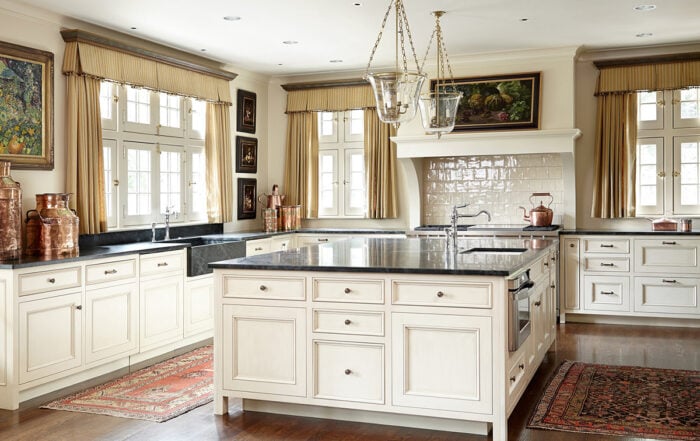
Cream Kitchen Cabinet Ideas
Cream kitchen cabinet ideas curated by interior designer Tracy Svendsen. Warmer than white and more versatile than beige, cream cabinets work beautifully across farmhouse, rustic, traditional, and modern kitchens.
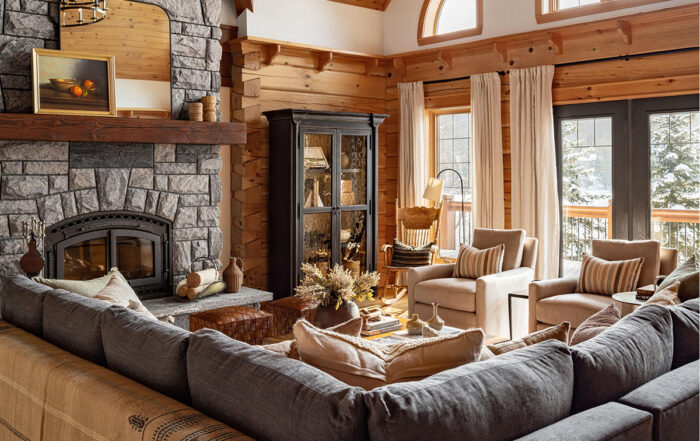
Log Home Decorating Ideas
Log home decorating ideas covering color palettes, furniture selection, lighting, stone fireplaces, and modern approaches to handcrafted log home interiors.
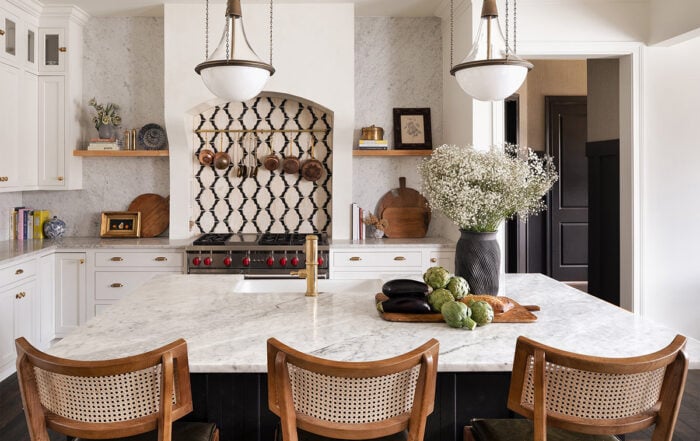
Country Kitchen Ideas
Discover 43 country kitchen ideas featuring warm earth tones, natural materials, vintage accents, and expert guidance on cabinets, colors, and styling for an authentic country kitchen design.

