
Farmhouse Bedroom Ideas: Natural Materials & Designer Tips
By Interior Designer TRACY SVENDSEN | Published on December 07, 2023 | Updated on September 19, 2026 |
The farmhouse bedroom succeeds when it resolves the same tension as farmhouse design throughout the home — the warmth and material authenticity of traditional country interiors alongside the clean lines and restrained palette of contemporary design. The bedroom is where that balance matters most, because the space needs to feel genuinely restful, not simply well decorated.
In my experience designing farmhouse and log home interiors, the bedrooms that work best share one quality — the material choices feel genuinely considered rather than thematically applied. Reclaimed wood, linen bedding, aged metal fixtures, and a muted natural palette create the warmth that rustic bedroom design depends on, while clean-lined furniture and white or neutral walls prevent the space from feeling heavy or dated.
The ideas in this guide cover the full range of farmhouse bedroom design decisions — from color palette and furniture selection to lighting, textiles, and the specific approaches that work best in a guest bedroom context as well as a primary suite. The same principles apply whether you’re updating an existing room or starting from scratch — and whether your home leans toward traditional country living or a more contemporary farmhouse direction. Feature image courtesy of Jaimee Rose Design.
Key Takeaways: Farmhouse Bedroom Ideas
- Avoid matching bedroom furniture suites — mixing pieces from different periods and sources creates the collected, personal quality that coordinated sets never achieve.
- Natural fibers are the foundation of farmhouse bedding — linen, cotton, and wool improve with age and washing in ways synthetic fabrics don’t. Layer at least four distinct textile textures for genuine depth.
- One genuine antique or vintage piece does more for a farmhouse bedroom’s character than any number of new pieces with distressed finishes — prioritize authenticity over manufactured rustic appearance.
- Choosing artwork first and using it as the palette anchor produces more cohesive results than selecting art to match a room that’s already furnished.
- Mixing distinct wood tones — light, medium, and dark — creates the material depth that a single wood finish alone never achieves.

Farmhouse Bedroom with Shiplap Walls, Vaulted Ceiling and White Linen Bedding
Image courtesy of McGee & Co
What is Farmhouse Design?
Farmhouse design draws from the architecture and material traditions of working farm buildings — the honest construction, practical layouts, and natural materials that defined rural homes across North America and Europe for centuries. What makes the style enduring is that those same qualities — wood, stone, linen, aged metal, and unpretentious craftsmanship — translate naturally into contemporary interiors without requiring any historical recreation.
The farmhouse bedroom specifically is defined by a few consistent material decisions: a wood element at the ceiling or wall level, bedding in natural fibers like linen or cotton, furniture with genuine weight and substance rather than delicate or ornate profiles, and a palette drawn from the natural landscape — cream, warm white, soft gray, muted sage, and earthy brown. Pattern enters through textiles — plaid, ticking stripe, or simple geometric — rather than through wallpaper or painted surfaces.
What distinguishes farmhouse design from other rustic directions is its relationship to function. Unlike more decorative rustic styles, farmhouse interiors prioritize practicality — storage that works, furniture that holds up to daily use, and materials that improve rather than deteriorate with age. The aesthetic follows from those functional priorities rather than being imposed on them, which is why well-executed farmhouse bedrooms feel genuinely inhabited rather than staged.
For a more contemporary take — cleaner lines, shiplap, and a more restrained modern palette — the modern farmhouse bedroom guide covers that direction specifically.

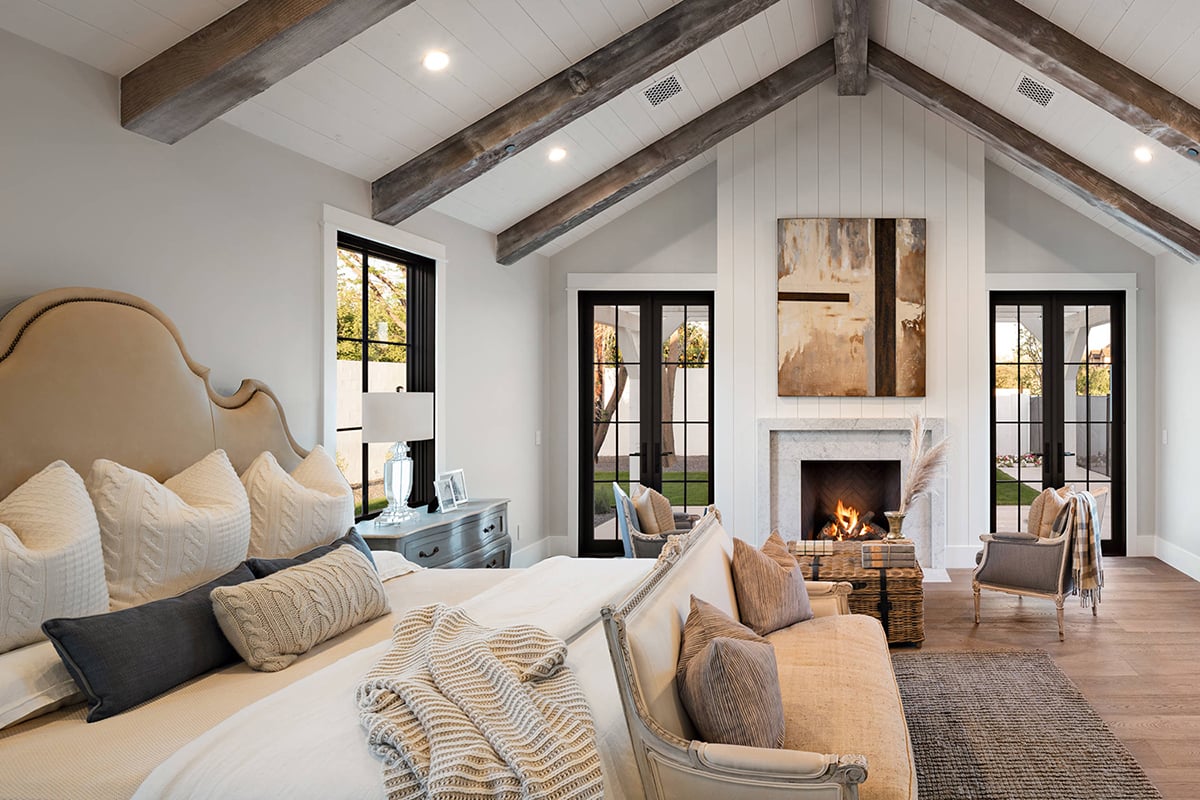
Primary Farmhouse Bedroom with Vaulted Ceiling, Fireplace, and Warm Earth Tones
Image courtesy of Jaimee Rose Interiors
1. Neutral Color Palettes for Farmhouse Bedrooms
The farmhouse bedroom color palette starts with restraint—muted neutrals and nature-inspired tones that let natural materials and textiles carry the visual interest rather than the wall color. The palette should feel drawn from the landscape rather than selected from a paint chart.
Warm neutrals — buttermilk, camel, cream, straw, and wheat — suit traditional farmhouse bedrooms with warm, golden wood tones. Cool neutrals — gray, greige, khaki, and stone — work better alongside painted cabinetry or more contemporary furniture profiles. Natural blues and greens—duck-egg blue, robin-egg blue, Wedgwood blue, and sage green—add color without disrupting the palette’s organic quality. For a warmer direction, earth tones — chestnut, mushroom, umber, sepia, and terracotta — connect the bedroom directly to the rustic material palette of the broader farmhouse aesthetic.
Designer Tip: I recommend choosing the wall color after selecting the most specific element in the room — whether that’s the bedding fabric, a statement rug, or a key piece of artwork. Finding bedding, a rug, or art that matches a hyper-specific wall color is significantly harder than finding paint to match them, given the thousands of paint colors available. The exception is when you want a true neutral backdrop you rarely plan to change — in that case, start with the wall color and build around it.

Farmhouse Primary Bedroom
Image courtesy of Arhaus Furniture & Decor
2. Skip Matching Bedroom Sets
One of the most effective ways to give a farmhouse bedroom genuine character is to avoid a coordinated bedroom suite—the matching bed, dresser, and nightstand sets that read as purchased rather than collected. Rooms that mix furniture from different periods, sources, and finishes always feel more personal and considered than rooms assembled from a single collection.
Interior designer Amber Lewis demonstrates this approach in a bedroom that pairs a four-poster canopy frame with sheer cream drapery panels against a vintage wood dresser—two pieces from different eras that work together because they share the same warm, organic material quality. The walls feature Oak Wallpaper in Walnut from Amber’s own collection — a pattern inspired by antique Indian block-print textiles — above board-and-batten wainscotting in a cream hue below. Layers of textured linen bedding, a textured quilt, a wool knit throw, and decorative pillows in warm earth tones complete the collected, unhurried quality that matched sets never achieve.
Designer Tip: I recommend starting with one distinctive furniture piece—an antique dresser, a vintage bench, or an inherited nightstand—and building the rest of the room around it rather than buying a coordinated set. That single piece of genuine history gives the room its character, and everything chosen to complement it tends to be more considered.
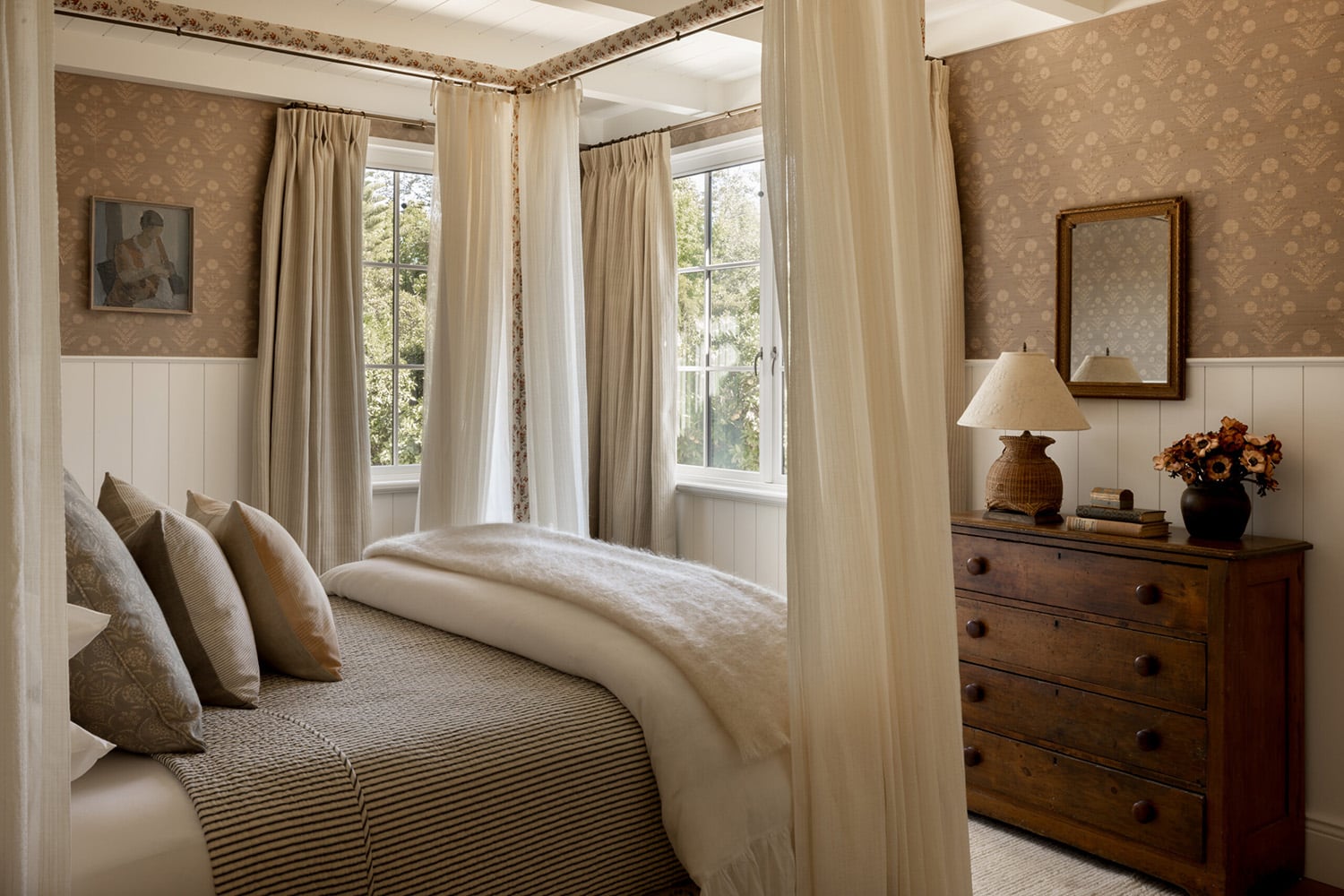
Farmhouse Bedroom with a Four-Poster Canopy Bed and a Combination of Wallpaper and Wainscotting
Image courtesy of Amber Lewis Design
3. Layer Organic Materials
The farmhouse bedroom connects to its agricultural roots most naturally through organic materials — jute, linen, wool, wicker, and natural wood — layered at different scales throughout the room. The key is using these materials with enough variety in texture and weight that the layering feels genuinely rich rather than uniform.
Interior designer Lindye Galloway applies this principle with particular material discipline. A light oak canopy bed frame draws the eye upward toward dark wood ceiling beams—the vertical connection between the two wood elements gives the room its architectural structure. Soft cream walls, muted sage green bedding, a deep charcoal velvet bolster pillow, and warm gray bedside tables and foot-of-bed bench establish the restrained, nature-connected palette. Neutral linen Roman shades frame the windows, a tall tree in a woven basket adds height and the botanical element in the corner, and layered area rugs under the bed introduce the textile depth at floor level. Artwork above the bed pulls every hue in the room into a single composition.
Designer Tip: I recommend introducing the “farm” element through texture rather than through decorative references — a jute-wrapped basket, a woven planter, a wool throw, or a linen Roman shade all signal the organic farmhouse quality without requiring any thematic objects. The materials do the work quietly rather than announcing themselves.
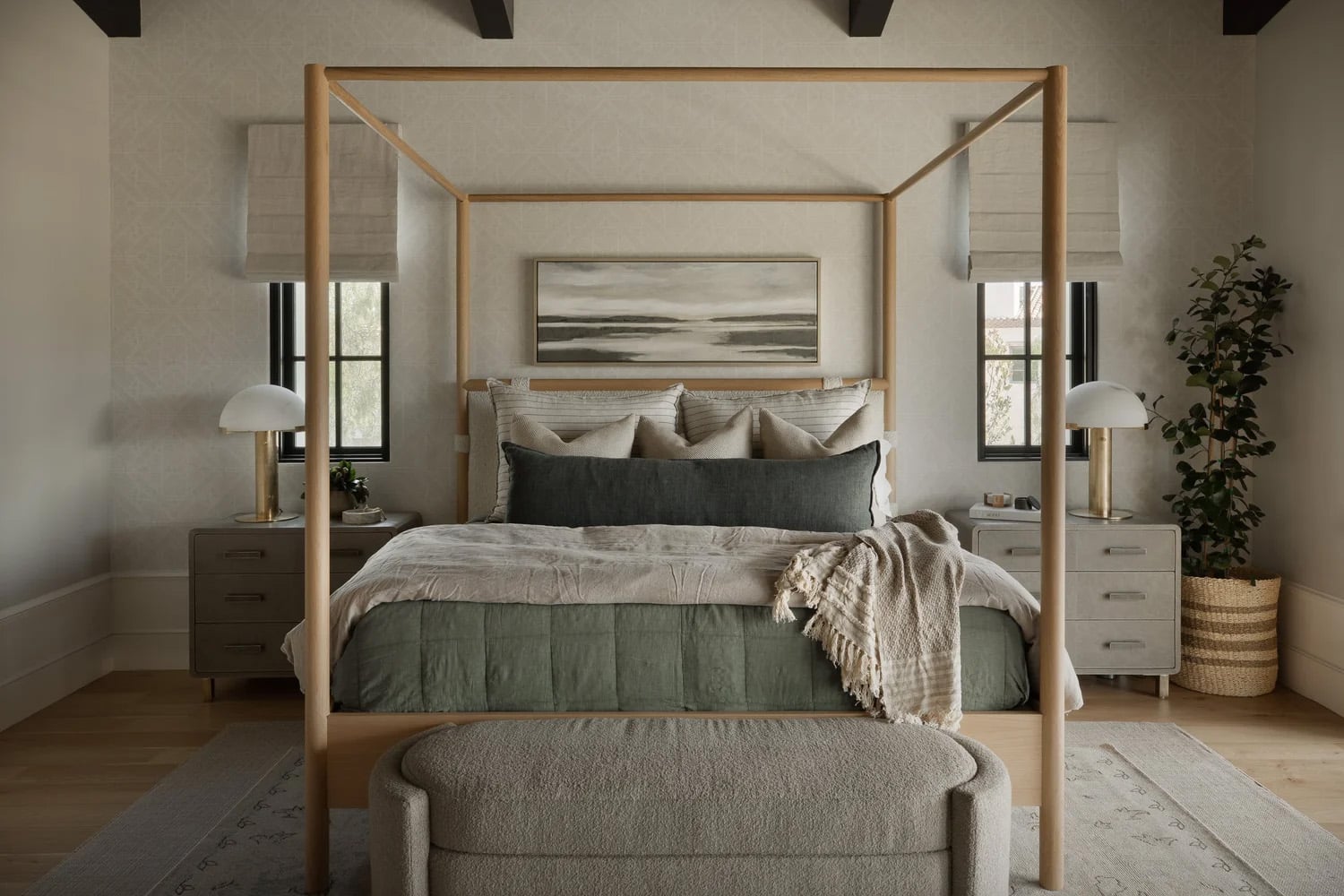
Organic Farmhouse Bedroom with Layers of Linen, Natural Wood and Linen
Image courtesy of Lindye Galloway
4. Choose a Distinctive Headboard
The headboard is the bedroom’s primary focal point — the first element the eye moves to and the one that most directly communicates the room’s design direction. In a farmhouse bedroom, a headboard in linen, boucle, woven paper cord, velvet, or reclaimed wood introduces the organic material quality that manufactured upholstered headboards in conventional fabrics rarely achieve.
This organic farmhouse bedroom by Amber Lewis centers on a mid-century modern bed with spindle legs and a paper cord headboard and footboard — an unusual material choice that bridges the rustic and the refined in a single piece. Thick, raw, exposed ceiling beams frame the upper room, while soft greige textured plaster walls, creamy ivory linens, muted olive ottomans at the foot of the bed, dark wood nightstands, a faded vintage-style area rug, and a large rustic pot with a tree complete the warm, moody neutral palette throughout.
Designer Tip: I recommend choosing a headboard in a natural or tactile material — linen, boucle, velvet, or woven texture — over a standard upholstered headboard in a conventional fabric. The material quality of the headboard sets the tone for every other textile decision in the room, and a headboard with genuine tactile presence elevates the bedding and soft furnishings around it simply by association.
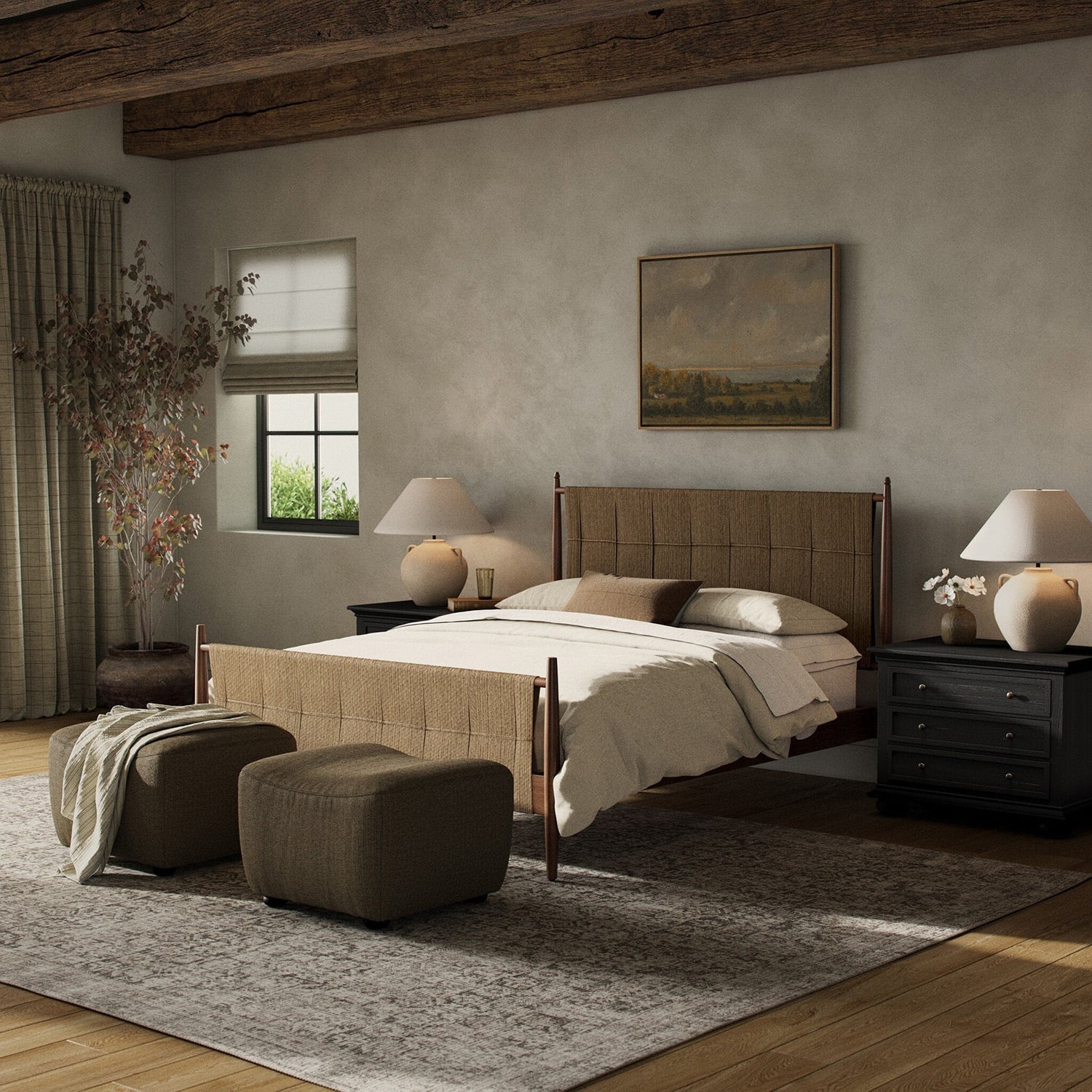
Warm & Inviting Farmhouse Primary Bedroom with a Paper Cord Headboard and Footboard
Image courtesy of Amber Lewis Design
5. Artwork as a Visual Anchor
In a farmhouse bedroom, a single strong piece of artwork above the bed does more design work than almost any other decision — it establishes the color palette, sets the mood, and gives every subsequent furniture and textile choice a reference point to respond to. Choosing the artwork first and building the room around it produces a more cohesive result than selecting art to match a room that’s already furnished.
This bedroom by Ashley Martin Home shows that principle applied with genuine material confidence. A moody vintage landscape above the bed sets the deep, warm palette—the dark tones in the canvas pull through into dark wood ceiling beams, dark wood nightstands, and dark wood flooring throughout. Tree-patterned wallpaper behind the bed frames the artwork as an architectural moment rather than a hung piece. Woven caramel leather ottomans at the foot of the bed, a cream upholstered bed piled with tone-on-tone pillows, and layered textures in linen, wool, and ceramics complete the rich, considered composition.
Designer Tip: I recommend selecting the primary artwork for a farmhouse bedroom before purchasing any furniture or bedding — pull the two or three dominant tones from the canvas and use those as the palette anchors for everything else in the room. The result is a cohesion that feels genuinely designed rather than assembled piece by piece.
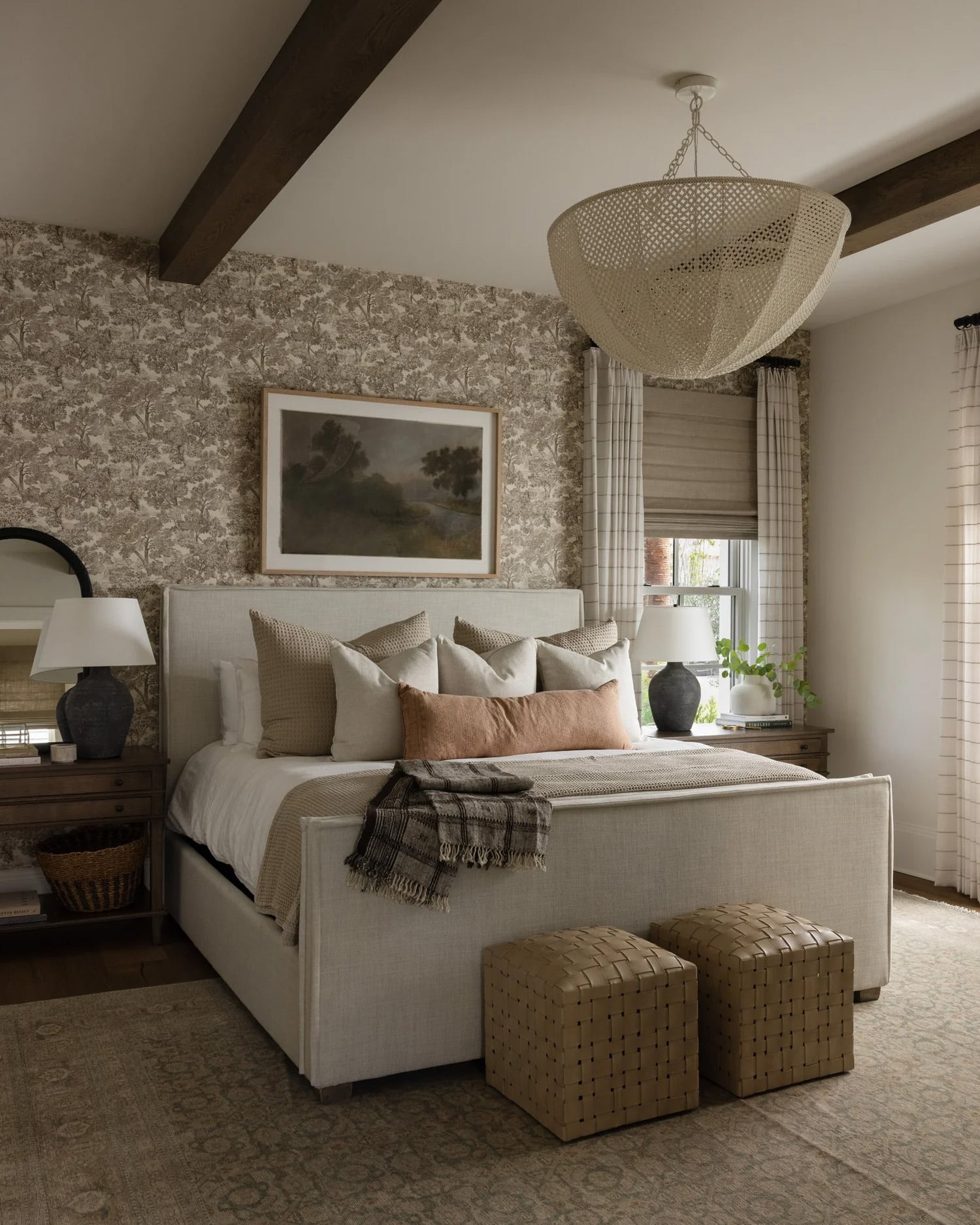
Farmhouse Bedroom with a Moody Vintage Landscape Above the Bed
Image courtesy of Ashley Martin Home
6. Vintage and Antique Pieces
Genuine farmhouse style has always been rooted in practicality and resourcefulness — using what was available, repairing what could be repaired, and keeping pieces that worked regardless of when they were made. That material history is what gives an authentic farmhouse bedroom its character, and it’s impossible to replicate with new furniture finished to look old.
This bedroom by Blanc Marine shows antique and vintage pieces layered with genuine design confidence. A black iron canopy bed with an upholstered headboard anchors the room, while an ornate fireplace with a vintage white-and-gray veined marble surround and mantel provides the architectural focal point on the opposite wall. A vintage crystal chandelier, a statement area rug in warm earth tones, rust-toned accent pillows, pinch pleat drapery, antique sculptures, and a long dark velvet bench at the foot of the bed layer the collected, personal quality that defines the style. A clear glass vase of tall leafy green branches brings the botanical element that connects the interior to the natural world outside.
Designer Tip: I recommend prioritizing antique or vintage pieces for the elements that get the most visual attention — the dresser, the mirror, the bench, or a bedside table. People notice these pieces first and remember them longest. New pieces can fill the functional gaps; the vintage pieces provide the soul.
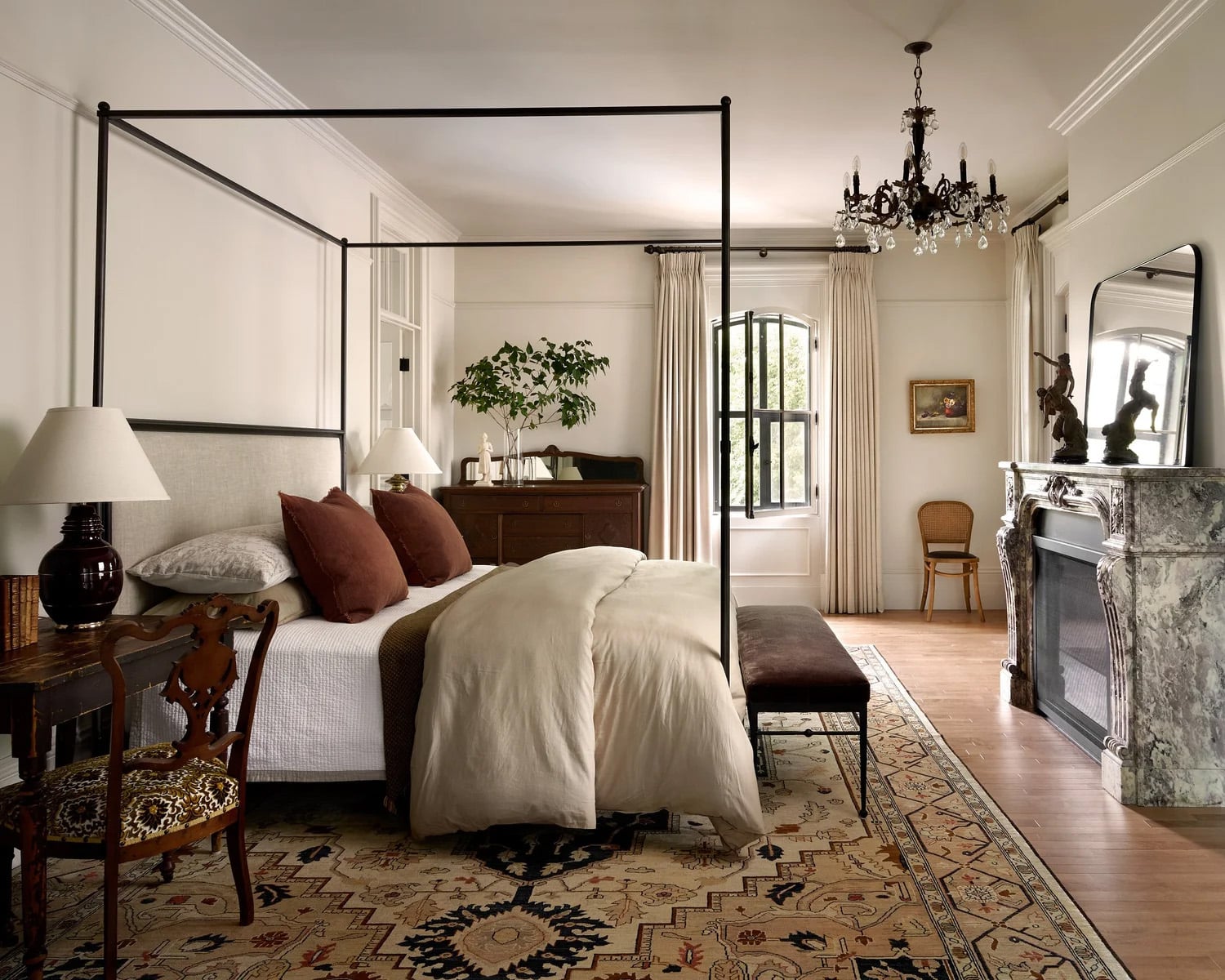
Farmhouse Bedroom Incorporating Vintage and Antique Accents
Image courtesy of Blanc Marine Design
7. Built-Ins and Open Shelving
Built-ins add genuine value to a bedroom — not just storage value but design value. As a designer, this is something I feel strongly about. Open shelving in particular gives a bedroom the opportunity to display the collected objects, books, artwork, and personal pieces that give a space its specific character. I have open shelving throughout various spaces in my own home, often with LED lighting behind or beneath the shelves for warmth after dark.
This primary farmhouse bedroom by Ashley Martin shows built-ins used with real architectural intention. Two warm wood cabinets inset into the wall on either side of the ensuite door feature lower closed drawers and upper open shelves trimmed in wood — the built-in frame matching the warm wood tone of the flooring and ceiling beams throughout. Brass wall sconces above the shelves provide the task lighting, while stacked books, brass objects, white organic vases, wood bowls, and family photos layer the personal, collected display that open shelving makes possible. A cream upholstered bed, two upholstered gray accent chairs, a round cream fabric ottoman at the foot of the bed, layered linen bedding, and a large cream textured area rug complete the warm, considered composition.
Designer Tip: I recommend shelf styling built-ins with a mix of personal objects and practical ones — books, family photos, and travel pieces alongside vases and sculptural objects. The personal items are what give the shelving its genuine character. A shelf styled purely with decorative objects reads as staged; one that includes things with actual meaning to the people who live there reads as real.
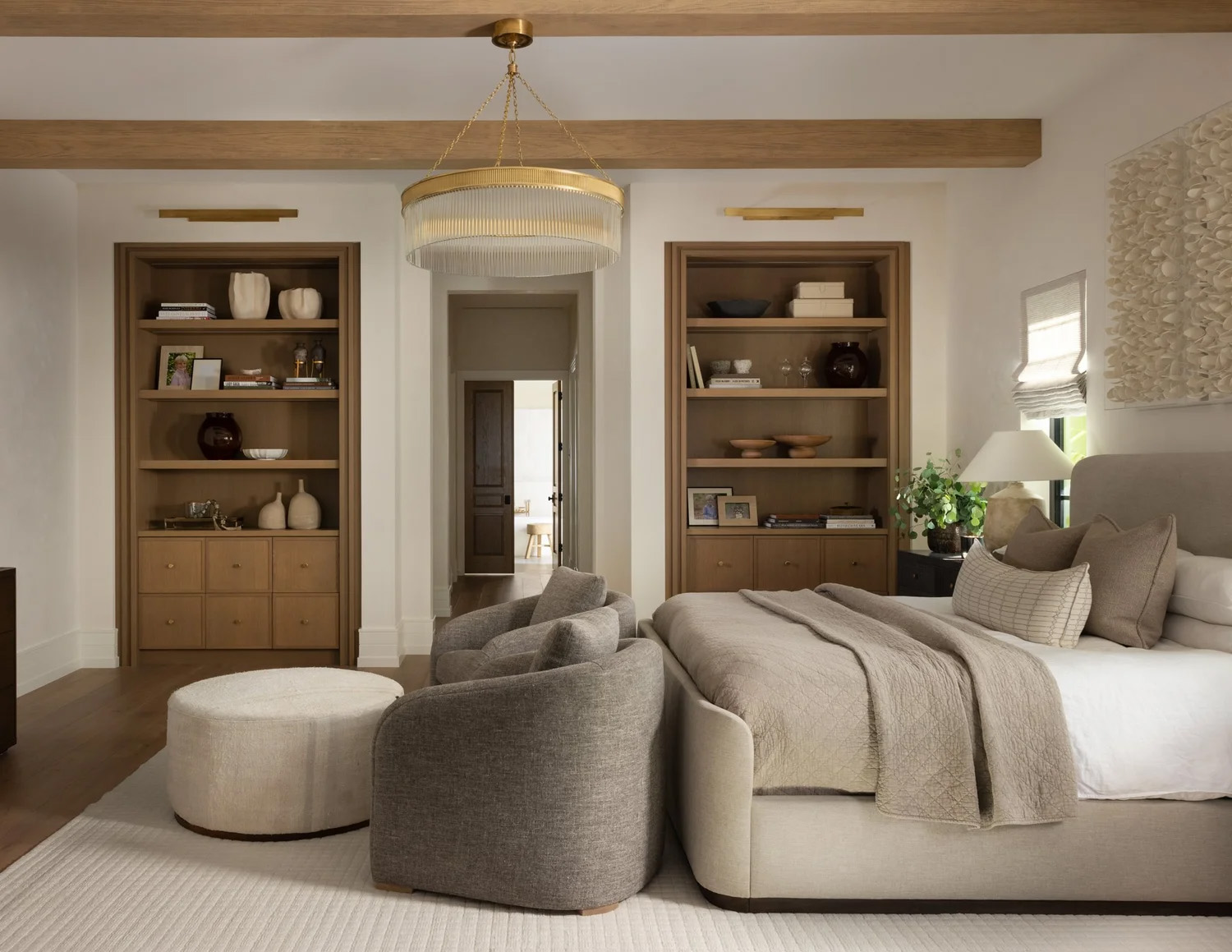
Built-In Cabinetry With Open Shelving in the Bedroom
Image courtesy of Ashley Martin Home
8. Monochromatic Texture Layering
A neutral palette doesn’t require color to feel rich — it requires texture. The difference between a neutral bedroom that feels flat and one that feels genuinely warm is almost always the number of distinct textures present rather than the number of colors. When every surface introduces a different material quality — smooth linen against chunky knit, ruffled cotton against distressed wool — the room reads as layered and considered within a single tonal range.
This bedroom by Joanna Gaines demonstrates the approach with complete material restraint. White walls, white-washed wood ceiling beams, and white linen bedding establish the monochromatic foundation, while a ruffled linen bed skirt, crisp duvet, chunky gray-blue knit throw, and cream textured throw pillows layer the textile depth at the bed level. A single pale blue accent pillow introduces the subtlest color note without disrupting the tonal unity. The curving black iron bed frame and the warm brown trim on the doors leading outside provide the high-contrast architectural elements that prevent the all-white palette from feeling too uniform — the contrast between the dark iron frame and the natural wood doors creating the room’s clear focal point.
Designer Tip: I recommend a minimum of four distinct textile textures in a monochromatic bedroom — a smooth base layer, a matte mid-layer, a chunky or nubby accent, and a natural fiber at floor level. That combination of surface qualities creates the depth that color would otherwise provide.

Traditional Farmhouse Bedroom
Image courtesy of Joanna Gaines
9. End of the Bed Bench
A bench at the foot of the bed does more than provide a place to sit — it anchors the bed visually, completes the furniture composition, and adds a textile layer at a height that throw pillows and bedding alone can’t reach. In a farmhouse bedroom, a bench in a natural fiber, tweed, leather, or upholstered linen connects naturally to the organic material palette throughout the space.
This bedroom by Sarah Liz Lawson shows the bench used as a deliberate grounding element. A textured tweed-like bench spanning the full width of the mattress anchors the bed within the room’s broader composition — its scale and weight preventing the bed from floating visually within the space. A crisp upholstered headboard with thin wood trim, a rich camel duvet with chocolate velvet accent pillows and a cream, chocolate, and camel floral bolster, dark olive green nightstands, warm wood flooring and ceiling beams, and floor-to-ceiling sheer linen curtains establish the warm monochromatic palette in taupe, camel, charcoal, cream, and brown. A large burnt orange area rug mirrors the warmth of the bedding and beams at floor level, while windowpane wallpaper in thin dark intersecting lines over warm taupe adds the subtle pattern that ties the linear elements throughout the room together.
Designer Tip: I recommend sizing an end-of-bed bench to match the full width of the mattress rather than choosing a smaller accent bench — a bench that spans the full width reads as architectural and intentional, while a narrower bench can look undersized and decorative rather than genuinely functional.
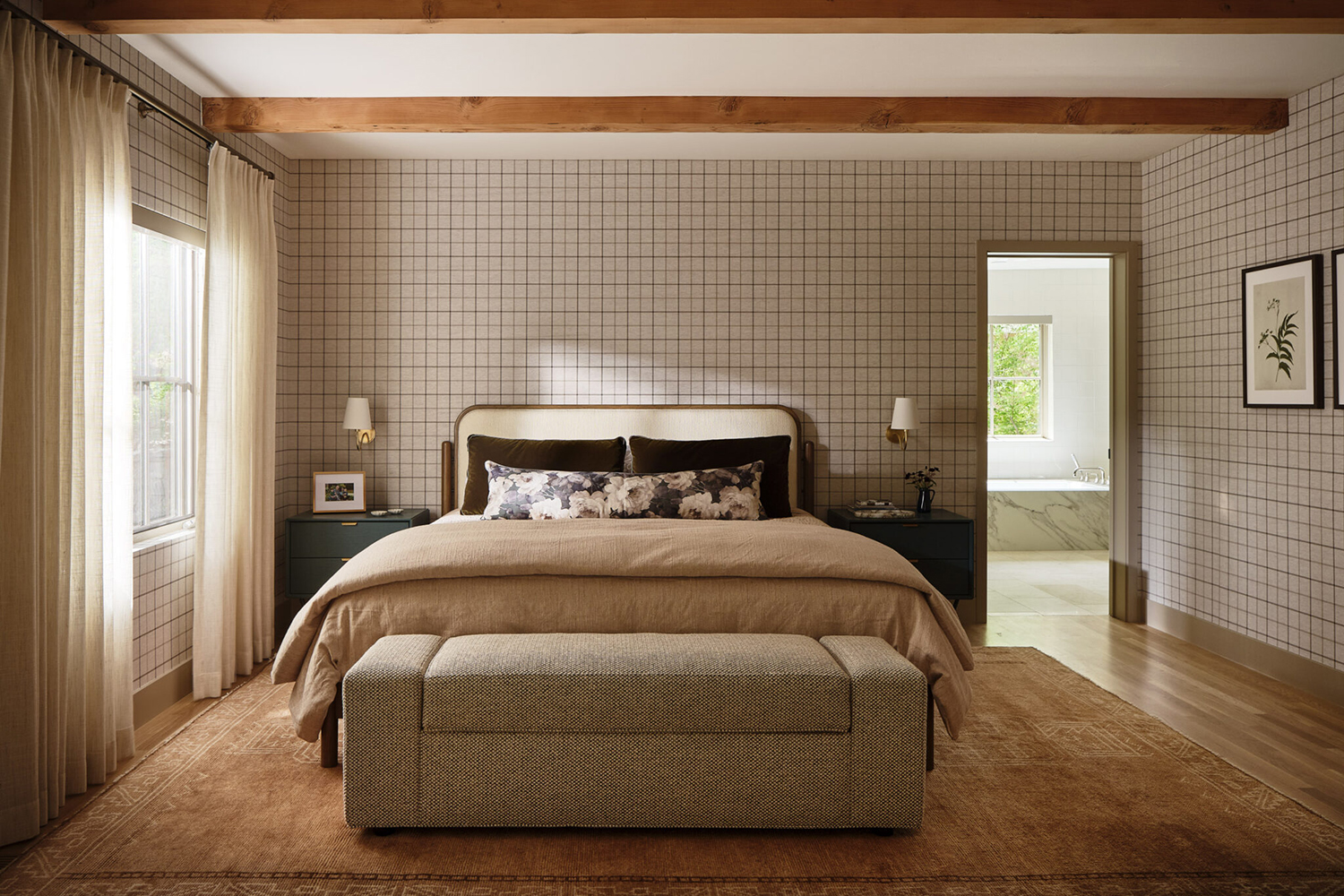
Farmhouse Bedroom with Windowpane Wallpaper and Warm Wood Flooring & Beams
Image courtesy of Sarah Liz Lawson
10. Mix Distinct Wood Tones
Matching every wood finish in a bedroom is one of the most common mistakes in farmhouse interior design — the result reads as coordinated rather than collected, and loses the material depth that comes from genuine variety. The more effective approach is intentional contrast: pairing lighter tones with distinctly darker, richer finishes so each wood element reads clearly rather than blending into a uniform backdrop.
This bedroom by Shea McGee layers wood tones across four distinct values. Medium-toned wood ceiling and beams establish the mid-range anchor, golden oak bedside tables introduce the warm lighter tone, a dark wood canopy bed with cream upholstered headboard and footboard provides the rich dark contrast, and light wide-plank white oak flooring grounds the composition at the lowest value. A subtle mural wallpaper wraps the entire room, black steel-framed windows add the architectural contrast element, and a camel-toned curved settee at the foot of the bed softens the geometry. Two olive green velvet club chairs tucked by the window, stone table lamps, and layered bedding in crisp white linen with olive green, sage, and taupe accent pillows complete the calm, considered palette throughout.
Designer Tip: I recommend identifying at least three distinct wood values in a farmhouse bedroom — light, medium, and dark — and ensuring each appears in a different element: flooring, ceiling or beams, and a furniture piece. That three-tone range creates the depth and dimension that a single wood tone, however beautiful, never achieves on its own.
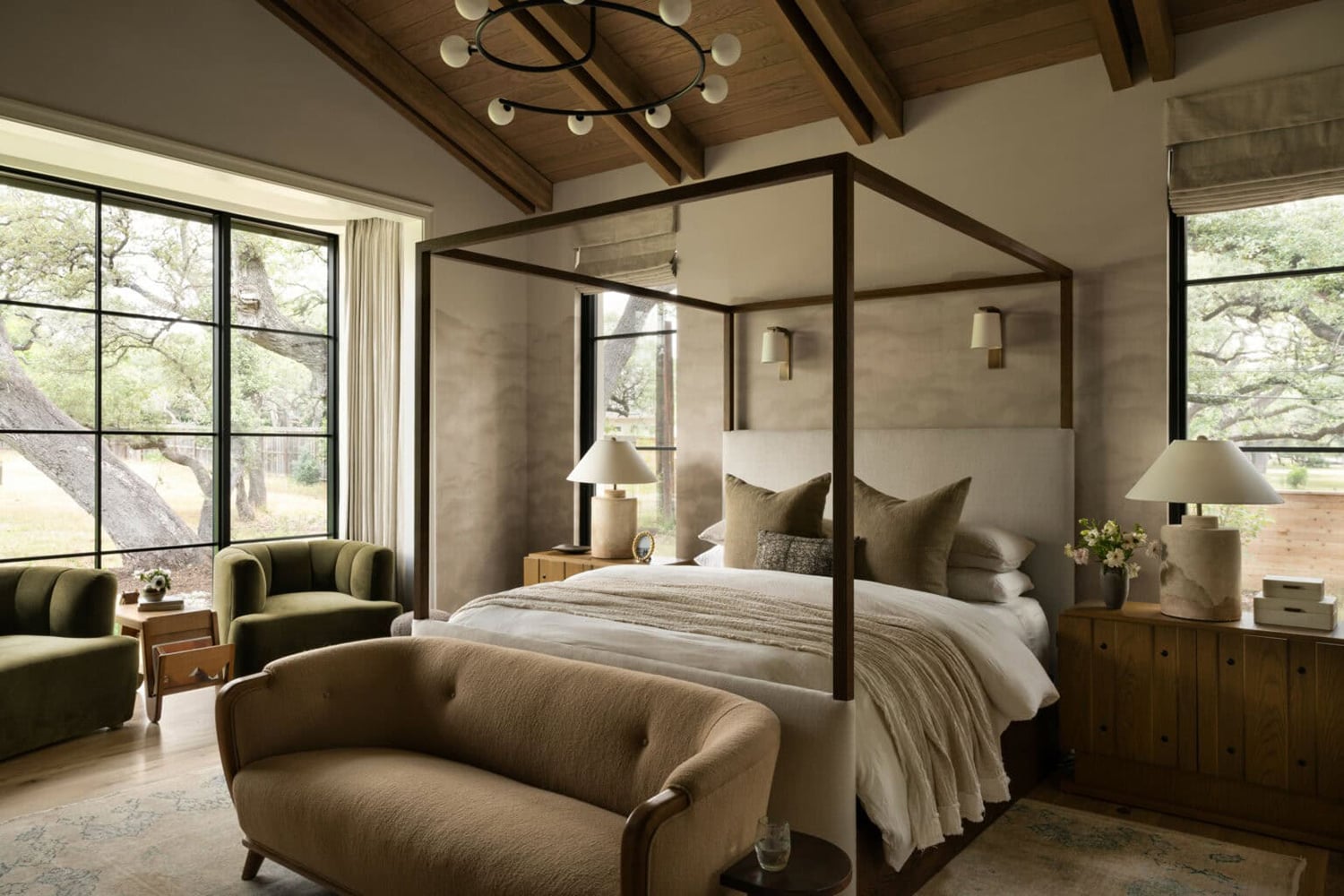
Mixing Wood Tones in Farmhouse Bedrooms
Image courtesy of Studio McGee
11. Farmhouse Bedding
The bed is the bedroom’s primary design decision — and in a farmhouse bedroom, the bedding does more work than almost any other element. Traditional farmhouse bedding includes white linen with lace trim, florals, gingham, checks, plaids, and stripes — patterns rooted in the textile traditions of rural domestic life that translate naturally into contemporary farmhouse interiors.
Layering is essential. A base of crisp linen or cotton, a quilt or coverlet folded at the foot of the bed, a casually draped throw blanket, and a considered arrangement of decorative pillows in complementary patterns and textures create the abundant, lived-in quality that defines farmhouse bedding at its most considered.
This bedroom by Firefinish Interiors shows farmhouse bedding applied with genuine restraint. A white linen duvet, white pillows, two charcoal square pillows, and a white-and-gray geometric bolster keep the palette simple, while the solid charcoal throw at the foot of the bed adds the weight and warmth the composition needs. A curving light oak bench with a white upholstered seat and mixed-pattern and solid pillows completes the layering at the foot of the bed—the bench does the design work that a second throw or additional pillows would overdo.
Designer Tip: I recommend mixing one patterned pillow with one solid for every pair on the bed—the solid gives the pattern breathing room and keeps the arrangement from feeling busy. A bolster in a simple geometric pattern bridges the two effectively.
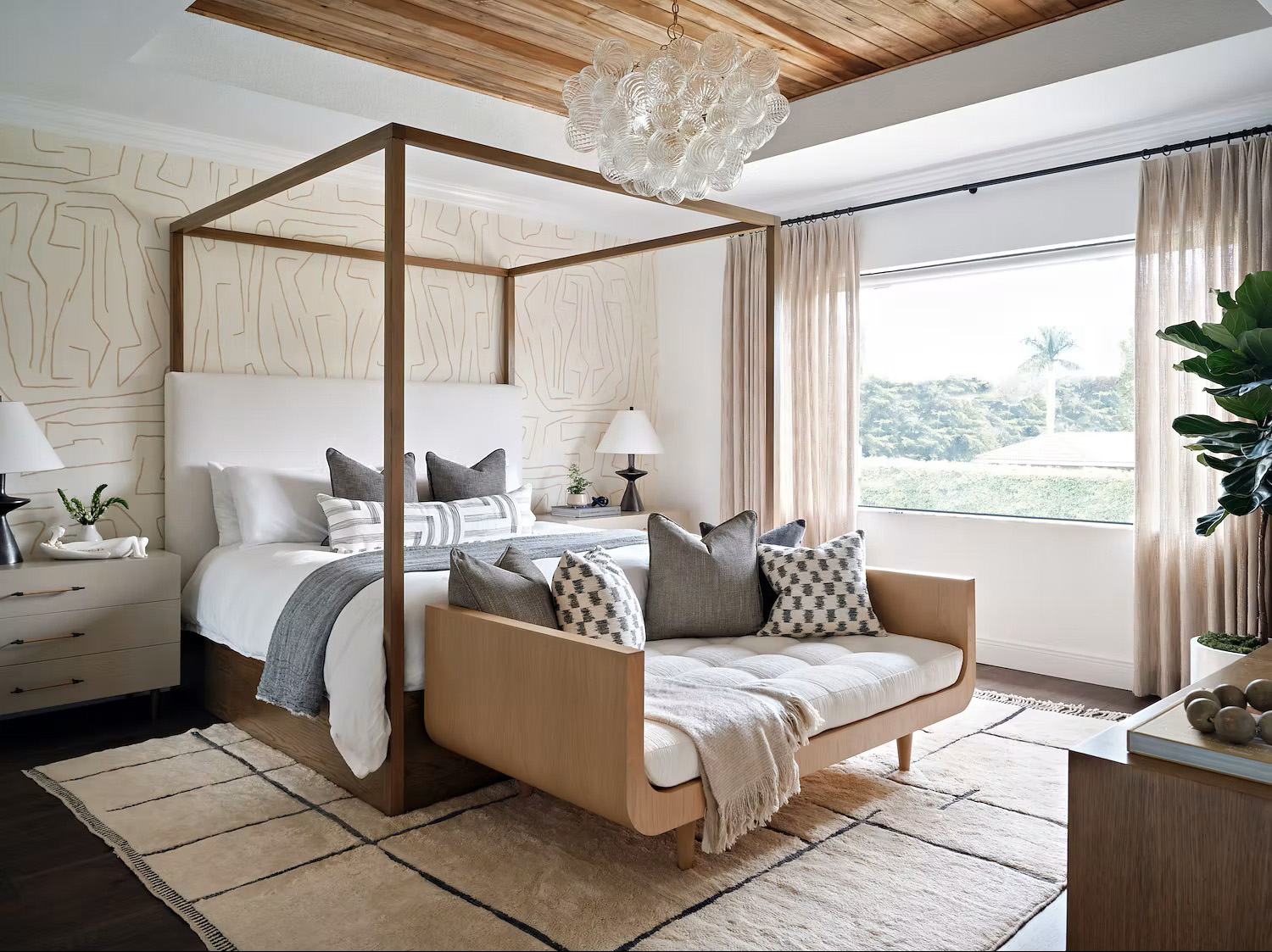
Farmhouse Bedroom With White and Charcoal Bedding
Image courtesy of Firefinish Interiors
12. Highlight Architectural Features
In a farmhouse bedroom with genuine architectural character — exposed trusses, a stone or slate fireplace, vaulted ceilings, shiplap walls — the decorating decisions should amplify those features rather than compete with them. The most effective approach is high contrast: crisp white walls and surfaces that allow the dark wood, stone, and aged materials to read with full clarity.
This bedroom shows that principle applied with complete tonal confidence. Cathedral-style white plank vaulted ceilings with exposed dark rustic wood trusses and beams establish the architectural drama, while white horizontal shiplap walls, dark wood flooring, and a charcoal slate fireplace with a deep, dark wood mantel create a high-contrast black-and-white foundation throughout. A gray velvet upholstered canopy bed, two rich warm wood nightstands, a cognac leather bench at the foot of the bed, and a large natural fiber woven rug layer the warm organic materials within that high-contrast framework.
Designer Tip: I recommend keeping wall color strictly white or off-white in a bedroom with dark exposed trusses or beams — the contrast between the white ceiling plane and the dark structural timber is what makes the architecture read clearly. Any wall color that reduces that contrast diminishes the impact of the beams.

Farmhouse Bedroom with High Contrast
Image courtesy of Chango & Co
13. Create a Seating Zone Within the Bedroom
A primary farmhouse bedroom with enough square footage benefits greatly from a dedicated seating zone — a defined area within the room that functions independently of the bed and turns the space from a single-purpose sleeping room into a genuine retreat. The seating zone is what distinguishes a considered primary suite from simply a large bedroom.
This primary bedroom by Amber Lewis shows the seating zone executed at full scale. An L-shaped built-in bench runs the full length of the back wall under the black-framed windows, providing generous seating with thick cream upholstered cushions layered with textural pillows in solids, florals, and stripes—the variety of pattern and texture across so many pillows creates a genuinely abundant, personal display.
A coffee table and two wood accent chairs complete the sitting area. Warm cream shiplap walls and ceiling with a matching beam tone, floor-to-ceiling linen curtains, light oak flooring, and a neutral cream upholstered headboard and foot-of-bed bench establish the warm, tonal palette throughout—every surface contributing to the same cream and warm earth-tone composition.
Designer Tip: I recommend a built-in bench along a window wall as the most space-efficient seating zone solution in a primary bedroom — it uses wall space that would otherwise be unused, provides the natural light that makes the seating area genuinely pleasant to occupy, and the built-in quality suits the architectural permanence of a farmhouse bedroom in a way that freestanding furniture doesn’t.

Farmhouse Bedroom in Neutral Tones with a Built-In Bench
Image courtesy of Amber Interiors
14. Traditional Country Farmhouse Bedroom
The traditional farmhouse country bedroom draws from an older, quieter design vocabulary than the contemporary farmhouse direction — custom window treatments, upholstered furniture with soft curves, floral arrangements, and the kind of considered detail that takes time rather than budget to achieve.
This bedroom by Kara Childress shows the traditional country direction at its most considered. A large curved bay window, with sheer warm-white center panels, patterned outer curtains, and a custom-fitted fabric valence with a subtle warm neutral pattern, frames the room’s primary architectural feature. A linen skirted cream armchair and ottoman tucked into the window cove with a woven basket holding a cream wool throw creates an intimate reading nook within the bay — the most personal corner of the room. A light stone fireplace, plush white duvet, elegant neutral settee at the foot of the bed, weathered wood mirror, light wood flooring, large neutral area rug, and a rustic pot with peach-toned florals complete the warm, layered composition.
Designer Tip: I recommend custom window treatments as the highest-impact investment in a traditional farmhouse bedroom — a fitted valence with coordinating panels introduces the bespoke quality that ready-made curtains never achieve, and in a room with architectural features like a bay window, the window treatment is the design decision that either honors or ignores the architecture.

Elegant Country Farmhouse Bedroom
Image courtesy of Kara Childress Interior Atelier
15. Rustic Farmhouse Bedroom
The rustic farmhouse bedroom sits at the intersection of the two design directions this post covers — the natural material authenticity of rustic design and the practical, unpretentious quality of farmhouse interiors. In a log home specifically, the wood walls, ceiling beams, and flooring do the heavy lifting architecturally, and the bedding and textiles simply need to respond to that warm material foundation.
This log home bedroom by West of Main shows that response handled with genuine tonal discipline. Warm natural wood walls, flooring, and ceiling beams establish the rustic foundation, while a wood bed frame with tan linen upholstery, wheat-toned floor-to-ceiling curtains, and a neutral textured area rug in wheat and white keep the palette within the same warm natural range. White bedding with warm wheat euro pillows, two green floral accent pillows, and a golden mustard lumbar introduce the color notes that prevent the all-neutral palette from feeling flat. A cognac leather bench at the foot of the bed with a faux fur throw, a woven wicker tray, a rustic pot, and golden mustard dried florals layer the organic material detail at the lowest level of the room. Dark wood antique nightstands anchor the bed on either side.
Designer Tip: I recommend introducing one botanical color note — a muted green, dusty rose, or soft mustard — into an otherwise neutral rustic farmhouse bedroom through accent pillows or a dried floral arrangement. The color connects the interior to the natural landscape outside without disrupting the warm neutral palette that suits log home interiors most naturally.
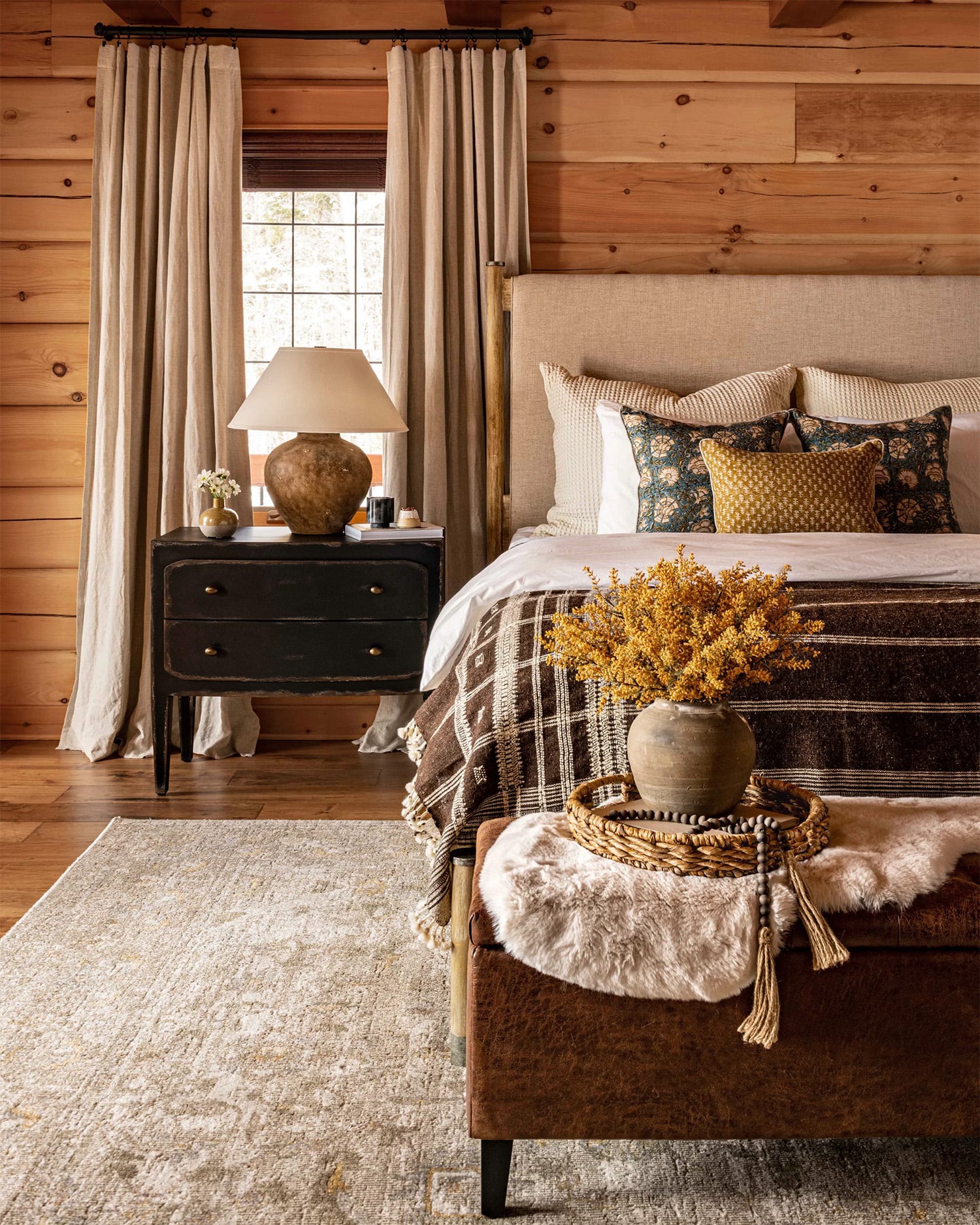
Rustic Farmhouse Bedroom
Image courtesy of West of Main Design
16. Style the Dresser as a Vignette
The dresser is one of the most overlooked styling opportunities in a farmhouse bedroom — a flat surface at eye level that’s typically used for functional storage but has the potential to function as a considered vignette. The distinction between a dresser that looks styled and one that simply has things on it comes down to varying height, material, and the balance between functional and decorative objects.
This bedroom by Studio McGee shows the dresser vignette at its most natural. A natural oak dresser carries a small table lamp for height, a mirror leaning against the wall rather than hung above it, a dark brown vase with leafy greens, an art print, and a marble bowl stacked on books — each object at a different height and in a different material, the arrangement feeling collected rather than placed. The surrounding room reinforces the same warm, considered palette — an oatmeal linen upholstered bed, white duvet with warm gray throws and pillows, warm wood flooring, white floor-to-ceiling curtains, and a seating area with two caramel velvet accent chairs with turned dark wood legs and a round cream textured coffee table.
Designer Tip: I recommend leaning a mirror against the dresser wall rather than hanging it directly above — the leaned mirror reads as more casual and personal than a mounted one, and it allows the other objects on the dresser surface to be seen and rearranged without working around a fixed hanging point.

Modern Farmhouse Bedroom with Cozy Textures
Image courtesy of McGee & Co
Designing Your Farmhouse Bedroom
The farmhouse bedroom works best when it reflects genuine material choices and personal accumulation rather than a coordinated decorating scheme. The 16 ideas in this guide cover the full range of decisions — from headboard selection and bedding layering to architectural features, seating zones, and dresser vignettes — but the common thread throughout is the same: materials that feel honest, furniture that has history, and textiles that reward touch.
From my years designing log home and farmhouse interiors, the bedrooms I return to are never the most elaborate. They’re the ones where a single antique piece anchors the room, where the bedding layers feel genuinely considered, and where the natural materials connect the interior to the landscape outside. That quality is available at any budget — it’s a matter of intention rather than expenditure.
Frequently Asked Questions About Farmhouse Bedroom Ideas
What are some good color ideas for a farmhouse bedroom?
Farmhouse bedroom palettes work best when drawn from the natural landscape — warm neutrals like buttermilk, cream, camel, and wheat form the foundation, while cool neutrals like gray, greige, and stone provide a quieter alternative. Natural blues and greens — duck-egg blue, Wedgwood blue, and sage green — add color without disrupting the organic quality of the palette. For a warmer direction, earth tones like chestnut, mushroom, terracotta, and umber connect the bedroom to the rustic material palette of the broader farmhouse aesthetic. The most important principle is choosing the wall color after selecting the most specific element in the room — whether that’s the bedding, a statement rug, or a key piece of artwork — since finding paint to match those elements is significantly easier than finding textiles to match a specific wall color.
Is farmhouse style still popular in 2026?
Farmhouse style remains one of the most searched and enduring interior design directions in 2026 — and the reason is straightforward. The natural materials, unpretentious craftsmanship, and warm neutral palettes that define the style connect to a genuine desire for spaces that feel grounded and personal rather than trend-driven. What has evolved is the interpretation — the heavy themed farmhouse aesthetic of a decade ago has given way to a more refined, material-led direction that pairs genuine vintage and antique pieces with clean-lined contemporary furniture. The result feels current without being fashionable, which is precisely why it continues to resonate.
What bedding works best in a farmhouse bedroom?
The traditional farmhouse bedding vocabulary includes white linen with lace trim, florals, gingham, checks, plaids, and stripes — patterns rooted in the textile traditions of rural domestic life. Natural fibers perform best in a farmhouse context: linen, cotton, and wool all improve with washing and age in a way that synthetic fabrics never do. Layering is essential — a crisp base sheet, a duvet or quilt as the primary cover, a folded throw or blanket at the foot of the bed, and a considered arrangement of decorative pillows in complementary patterns and textures creates the abundant, lived-in quality that defines farmhouse bedding at its most considered. I recommend mixing one patterned pillow with one solid for every pair — the solid gives the pattern breathing room and prevents the arrangement from feeling overdone.
How do you add farmhouse character to a bedroom without a full renovation?
The most impactful changes in a farmhouse bedroom don’t require structural work. Start with the bedding — switching to linen or cotton in a neutral farmhouse palette immediately shifts the room’s character. Add one genuine vintage or antique piece — a dresser, a mirror, or a bedside table with actual age and history does more for the farmhouse quality of a room than any number of new pieces with distressed finishes. Layer organic textures through a jute or wool area rug, woven baskets, and a chunky knit throw. Replace generic light fixtures with something in aged brass, wrought iron, or a natural material. Finally style the dresser as a vignette — a leaning mirror, a botanical element in a vase, stacked books, and a personal object create the collected quality that defines genuine farmhouse style without touching a single wall.
What furniture is essential in a farmhouse bedroom?
A farmhouse bedroom is built around a small number of considered furniture decisions rather than a complete matched suite. The bed frame sets the tone — wood, iron, or a naturally upholstered headboard in linen or boucle all suit the aesthetic. A genuine antique or vintage dresser adds the material history that new furniture lacks. An end-of-bed bench in a natural fiber, leather, or upholstered textile anchors the bed visually and adds a practical layer. Open shelving or built-in cabinetry provides the display opportunity that closed storage doesn’t. Beyond those four pieces, a comfortable accent chair or a window seat creates the seating zone that distinguishes a considered primary bedroom from simply a room with a bed in it.
View Recent Posts

Fireplace Design Ideas
Discover fireplace design ideas that range from rustic to modern, country, traditional, Scandinavian and farmhouse with stunning photos.
Rustic Bedroom Ideas
Rustic bedroom ideas covering natural materials, layered textiles, color palettes, and professional design strategies for log cabin, modern rustic, Scandinavian, and luxury retreat styles.
Rustic Bathroom Ideas
Rustic bathroom ideas — natural materials, vintage fixtures, earthy palettes, and designer tips for log homes, cabins, and mountain retreats.
Cream Kitchen Cabinet Ideas
Cream kitchen cabinet ideas curated by interior designer Tracy Svendsen. Warmer than white and more versatile than beige, cream cabinets work beautifully across farmhouse, rustic, traditional, and modern kitchens.
Log Home Decorating Ideas
Log home decorating ideas covering color palettes, furniture selection, lighting, stone fireplaces, and modern approaches to handcrafted log home interiors.
Coastal Decorating Ideas
Coastal decorating ideas — color palettes, natural textures, living rooms, bedrooms, and outdoor spaces.
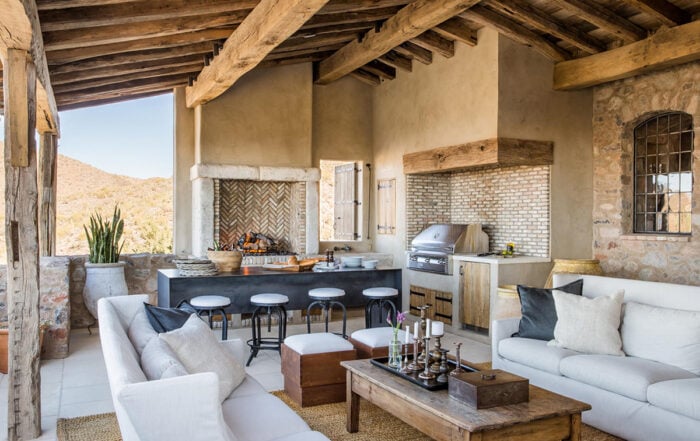
Rustic Backyard Ideas
Rustic backyard ideas — fire pits, natural materials, outdoor seating, container planting, and log home porches.
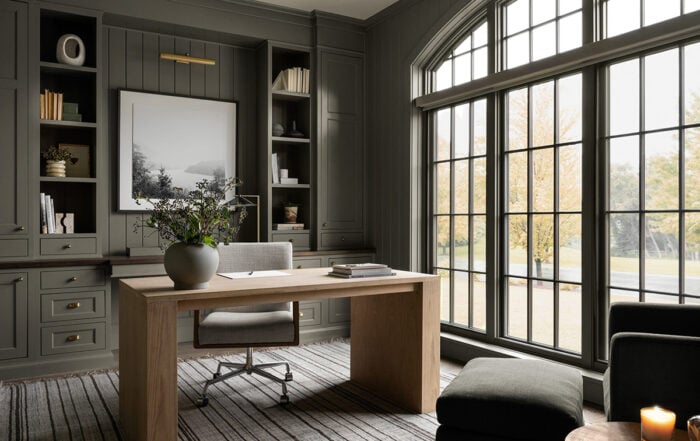
Modern Farmhouse Home Offices
Modern farmhouse home office ideas — color palettes, built-ins, desk configurations, and designer tips for every style and budget.
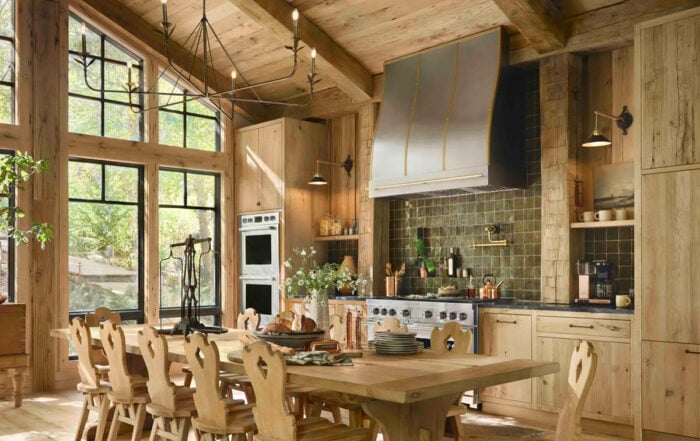
Chip & Joanna Gaines Colorado Mountain Home
Explore the stunning transformation of Chip and Joanna Gaines’ 1960s Colorado lodge into a timeless mountain refuge. Learn the design secrets behind their "braver" new style, featuring saturated greens, antique textures, and reimagined family spaces.

