
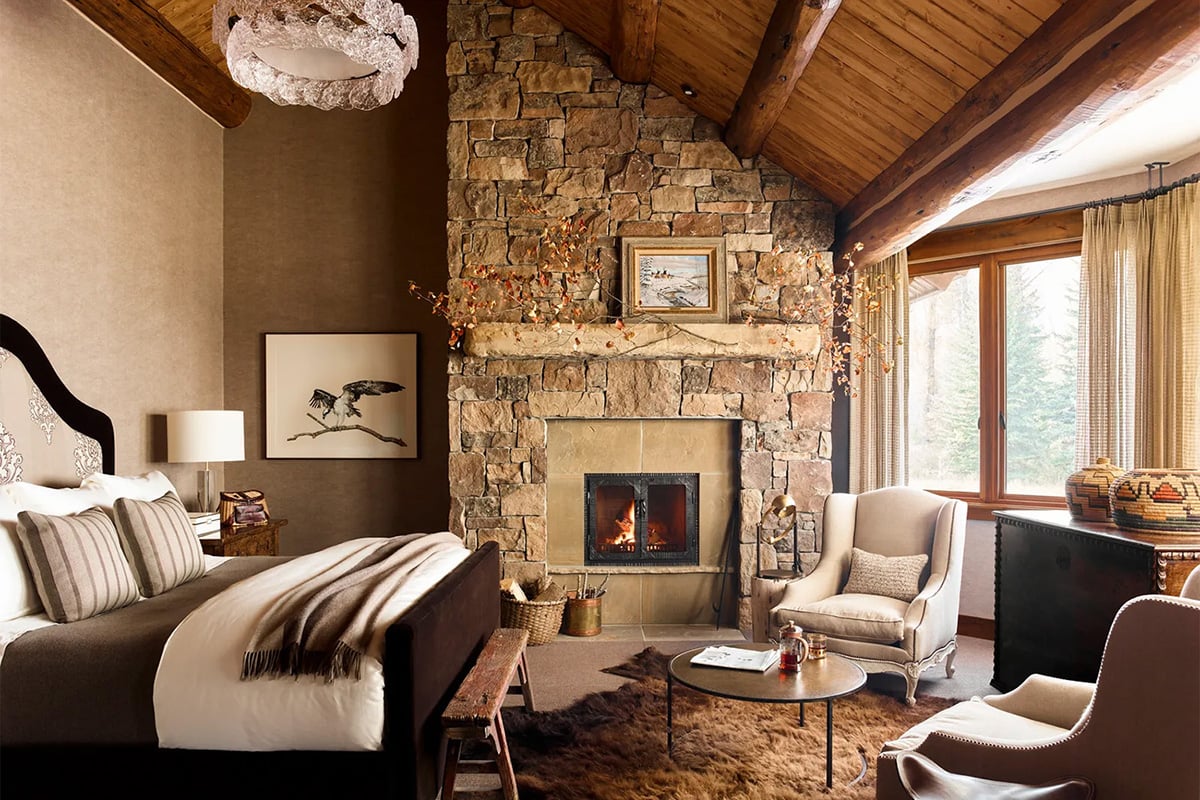
Rustic Bedroom Ideas: Natural Textures and Refined Comfort
By Interior Designer Tracy Svendsen | Published on July 04, 2026 |
In my three decades as an interior designer, the most successful rustic bedrooms share one quality — they master the tension between rugged architecture and refined softness. A rustic bedroom shouldn’t just look like a cabin; it should feel like a considered retreat where raw materials such as hand-hewn beams and reclaimed timber are balanced with the sophisticated comfort of high-quality textiles.
In this guide, I’m sharing the professional strategies I use to design bedrooms that are historically grounded yet luxuriously modern. From layered bedding to earth-tone color palettes, here are 29 ideas to transform your bedroom into an intentional, nature-inspired space — ideal for a primary bedroom, vacation cabin, lake house, or mountain retreat where rustic character and modern comfort need to coexist. Feature image courtesy of Architectural Digest (WRJ Design).
Key Takeaways: Rustic Bedroom Design
- Natural materials — solid wood, linen, wool, stone, and leather — are the foundation of every successful rustic bedroom, ideally making up 60-70% of the visual field before any decorative decisions are made.
- Balance is the defining principle: pair rugged architectural elements with refined softness, rustic textures with modern lighting, and heavy materials with light-reflective surfaces to prevent the space from feeling heavy or dated.
- Nature-inspired color palettes — warm whites, soft neutrals, muted greens, earthy browns, and subtle grays — create a calm, cohesive foundation that lets natural materials take the lead.
- Modern rustic design refines traditional elements through cleaner furniture silhouettes, contemporary lighting, and intentional negative space — the style has evolved well beyond the heavy, themed cabin aesthetic.
- Layered textiles and warm lighting complete the atmosphere — the Rule of Three for bedding, the Double Rug technique, and warm-toned bulbs do more to establish a rustic mood than almost any single furniture or decor choice.
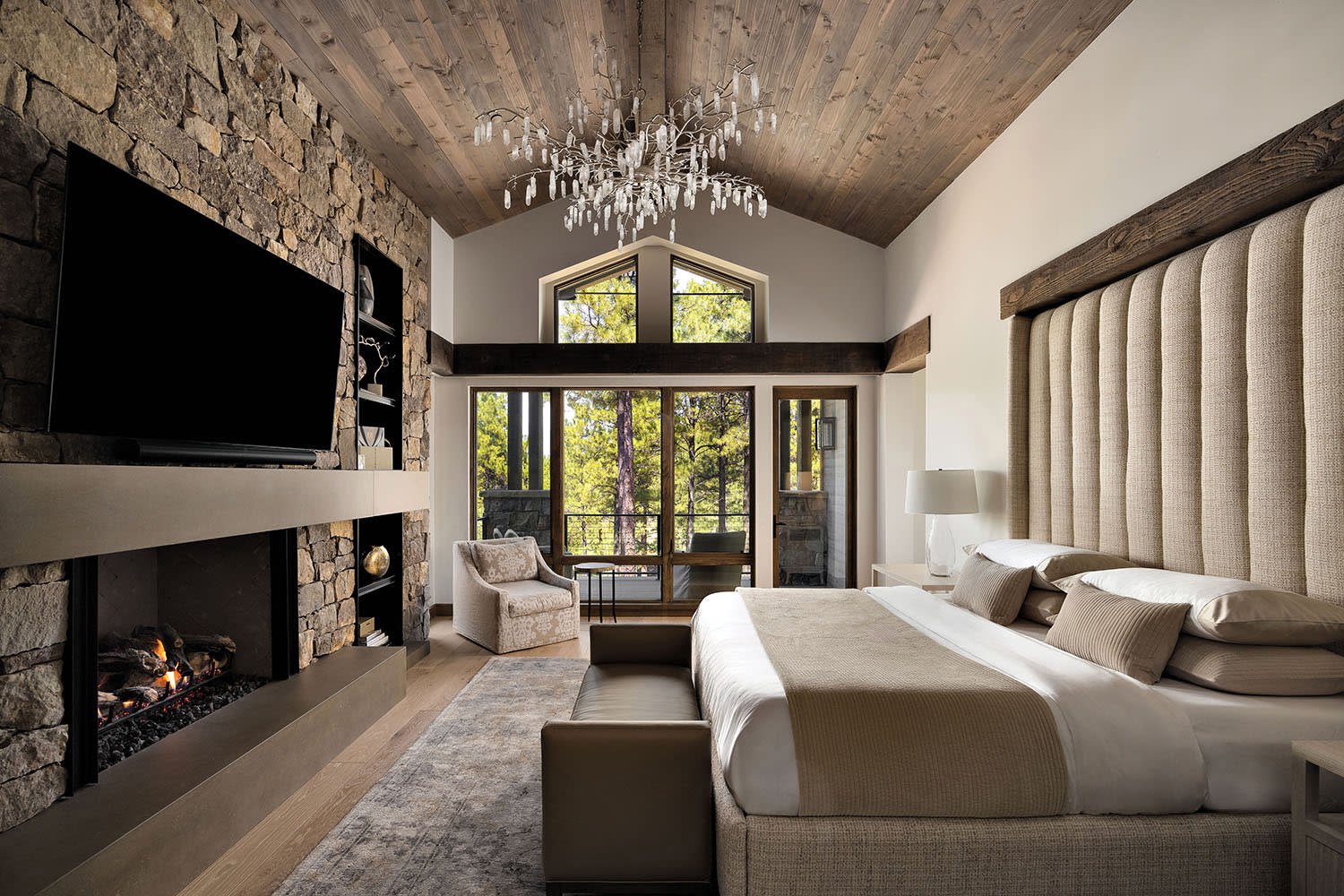
Sophisticated & Elegant Modern Rustic Bedroom
Image courtesy of Luxe Interiors (Kevin Brost Photo: Desert Rain Interiors)
Designer Mood Board: Western Influence in a Refined Rustic Bedroom
The mood board below reflects how rustic bedrooms are actively evolving rather than where they’ve traditionally been. In my experience, the style is moving away from overtly rugged expressions and toward a more refined balance of craftsmanship and restraint. In this handcrafted log home bedroom by Alfredo Paredes, Western influence feels authentic because it’s embedded in material quality and proportion rather than decorative excess — every stitch and rivet speaks to heritage without feeling themed.
When I design bedrooms in log or rustic homes, I start with a grounded palette of warm earth tones and layer in contrast through texture rather than pattern overload. Elements such as Southwestern textiles, wool blankets, leather accents with nailhead detailing, and black-and-white Western photography work best when they’re curated sparingly and paired with quieter backdrops. The goal is to let craftsmanship, patina, and natural materials carry the space — creating bedrooms that feel collected, timeless, and deeply connected to place rather than styled to a moment.
Western-inspired rustic bedrooms feel most authentic when texture and material quality lead, and decorative elements are edited rather than layered excessively.
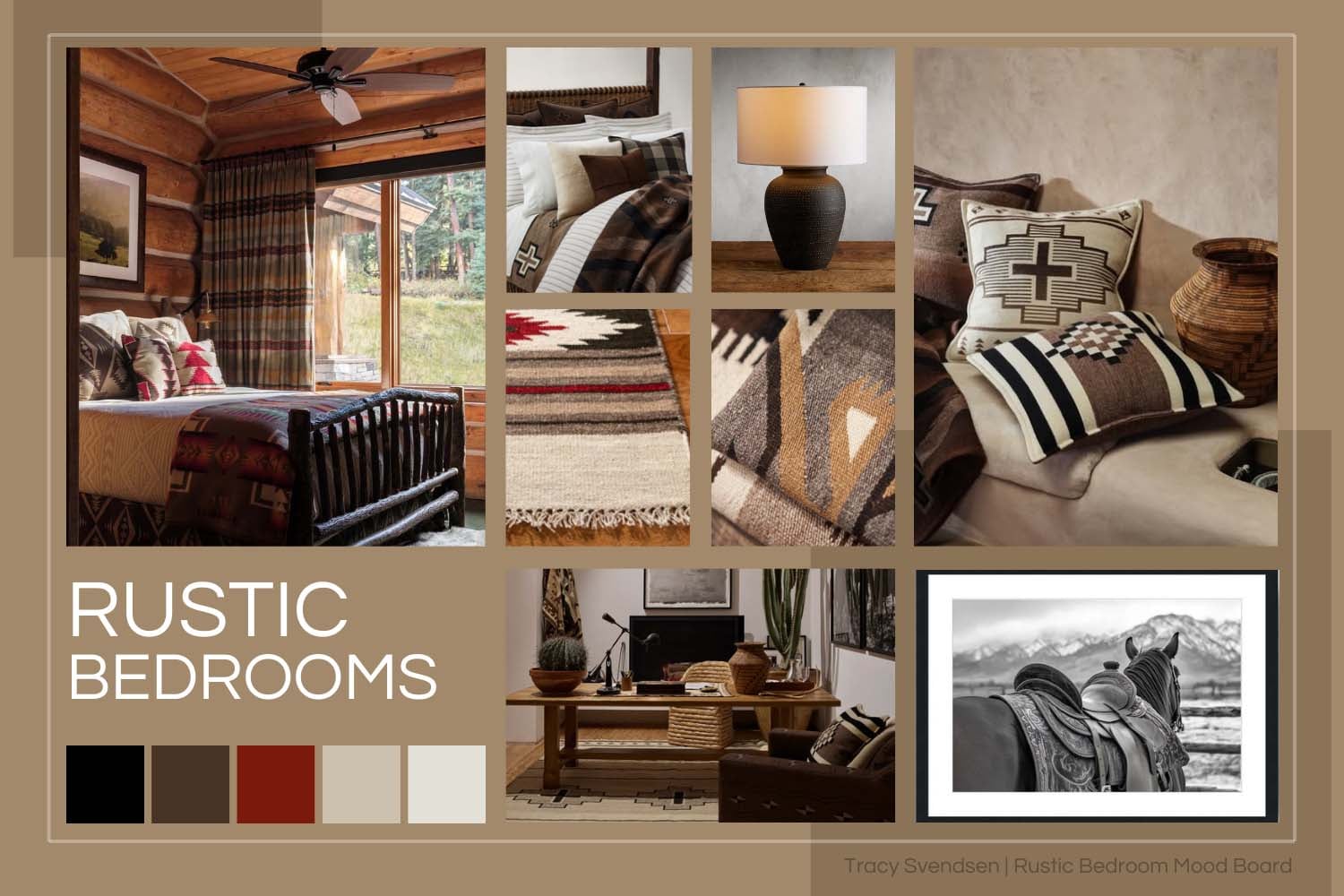
Designer mood board interpretation by interior designer Tracy Svendsen.
1. Choose a Grounded Rustic Color Palette
In my practice, I never choose a wall color in isolation; a rustic bedroom should feel like a seamless extension of the view outside your window. I recommend starting with a “foundation piece”—a large-scale landscape painting, a vintage Persian rug, or the organic hues of the surrounding terrain. By pulling three to five tones directly from the local environment—whether it’s mountain slate or muted forest moss—you create a palette that feels inherently grounded rather than “decorated.”
Designer Tip: Apply the 60-30-10 Rule to balance your selections. Devote 60% of the room to a neutral base inspired by stone or sand, 30% to a secondary texture, such as mid-tone timber, and 10% to a bold accent found in nature, such as deep forest green or terracotta.

Rustic Bedroom with Wood Floors & Beams & Stone Fireplace
Image courtesy of Peace Designs
2. Use Moody Neutrals for a Bedroom Sanctuary
Once your framework is set, select warm earth-tone shades that invite immediate relaxation. To achieve true retreat quality, I move away from clinical grays and toward “moody” neutrals that wrap the room in comfort. Think of the colors found in a forest at dusk: deep charcoal, muted ochre, and rich, chocolatey browns. Layering these through matte-finish materials like linen sheets and wool blankets ensures the room feels calm and considered.
Designer Tip: To prevent a room from feeling monochromatic or “too brown,” introduce “Cool Earth Tones” like slate blue or sage green. These colors act as a visual palate cleanser, making the warm architectural elements stand out while maintaining an airy, nature-inspired feeling.

Warm, Earthy Hues in a Rustic Bedroom
Image courtesy of Amber Interiors
3. Log Cabin Bedroom Design Strategies
Handcrafted log walls are a powerful focal point, but they can easily dominate a space. To balance the rugged architecture, I use “Textural Relief”—introducing soft, high-contrast surfaces, such as floor-to-ceiling linen drapery or an upholstered headboard.
Designer Alfredo Paredes demonstrates this perfectly in a Western-style bedroom by layering Southwestern textiles throughout the window treatments and bedding. This technique breaks up the repetitive lines of the logs, transforming a heavy room into a sophisticated, airy sanctuary.
Designer Tip: In vaulted rooms, scale is everything. Small fixtures will disappear. I spec “over-scaled” lighting, such as a 36-inch chandelier, to fill the vertical volume and bring the ceiling height down to a more intimate, human scale.
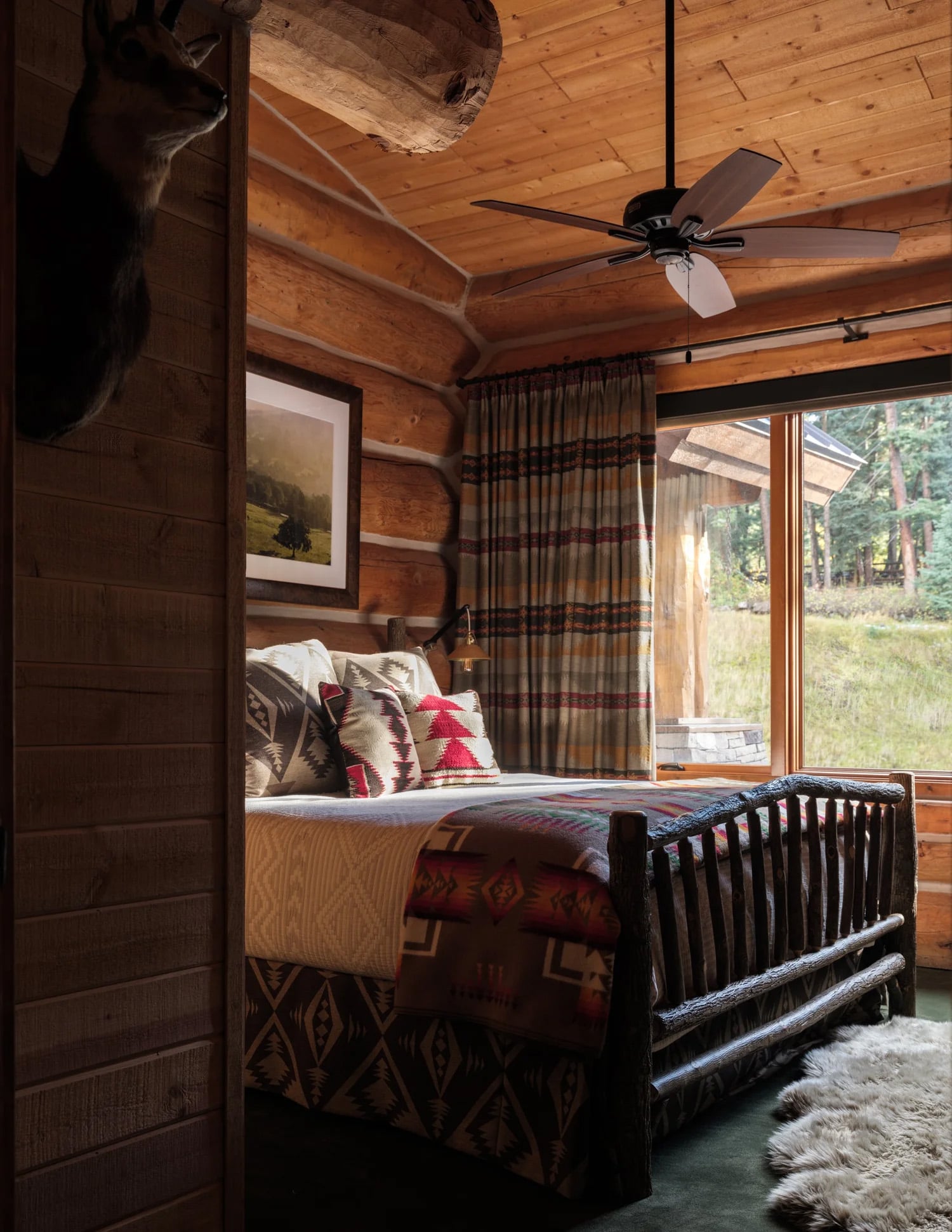
Western Rustic Bedroom in a Handcrafted Log Home
Image courtesy of Alfredo Paredes
4. Incorporating Reclaimed Wood Furniture
The foundation of a rustic interior design lies in the “tactile honesty” of natural materials. To establish a modern base, I recommend using wide-plank flooring and selecting substantial, handcrafted furniture, favoring reclaimed timber that retains its original character. Beyond traditional furniture, look for creative ways to introduce organic forms, such as repurposing a weathered barn door into a headboard or styling with a primitive bench.
Designer Tip: To keep a wood-heavy room from looking like a showroom, mix your grain and finish options. I often pair a refined white-oak dresser with a rugged reclaimed timber bed frame. As long as you maintain consistent undertones, the variety in texture will make the room look curated over time.

Rustic Bedroom with Wood Ceiling
Image courtesy of Norfolk Builders of Montana
5. Stone Fireplace Ideas for Rustic Bedrooms
Incorporating masonry, whether through a soaring fireplace or a textured accent wall, introduces a sense of permanence to a bedroom. This elemental material acts as a visual anchor, grounding the space and strengthening the connection to the outdoors. Beyond its enduring aesthetic, stone provides an architectural counterpoint to the soft textiles of the bed, ensuring the design feels both grounded and enduring.
Designer Tip: When selecting stone, mirror the local geology. For mountain homes, use jagged, dry-stack fieldstone; for coastal retreats, consider smoother river rock. Matching the interior masonry to the natural landscape makes the house feel as if it were built of the land.

Stone Accents in a Rustic Bedroom
Image courtesy of Alder & Tweed Design
6. Selecting the Right Light Fixtures
To enhance the ambiance of a rustic retreat, I look for fixtures crafted from “living finishes” like wrought iron, aged brass, or blackened steel. For a more traditional wilderness aesthetic, an antler chandelier serves as a magnificent sculptural centerpiece that instantly defines the room’s character. Because wood and stone tend to absorb light, it is essential to create a layered plan—integrating these statement overhead fixtures with wall sconces and bedside lamps to ensure the space feels warm and atmospheric rather than dark.
Designer Tip: To get that high-end lodge feel, choose “Warm White” bulbs. In a room filled with natural wood and organic textures like antlers, you want a bulb that emits a soft amber glow. Avoid “Daylight” or “Cool White” bulbs, as they can make beautiful timber look flat and gray; a warm bulb will bring out the rich, golden tones in the wood.

Rustic Light Fixtures and Wood Beams in a Rustic Bedroom
Image courtesy of Ryan Street Design
7. Adding Character Through Vintage and Antique Pieces
Incorporating vintage elements is the most effective way to infuse a bedroom with a sense of history, nostalgia, and old-world charm. Unlike mass-produced furniture, distressed dressers and weathered bedside tables carry a patina that adds immediate character and a “lived-in” soul to the space. I particularly enjoy using antique pottery to introduce warm, matte textures and visual interest. Placing large rustic pots on a fireplace mantel, a nightstand, or in a corner with a tall plant adds a sculptural element that feels both personal and considered.
Designer Tip: To master the vintage look without the room feeling like an antique shop, focus on the “Hero Piece.” Choose one significant vintage item—like a primitive wood trunk at the foot of the bed or a set of reclaimed shutters—and pair it with clean-lined, modern bedding. This contrast makes the vintage piece feel like a curated work of art rather than just an old object.

A Traditional Rustic Bedroom with Vintage Elements
Image courtesy of Denman Construction
8. Decorating with Natural Elements and Branches
One of my favorite ways to breathe life into a rustic interior is by incorporating architectural tree branches. They introduce a sense of verticality and movement that manufactured decor cannot replicate. Because they are seasonal, branches allow you to refresh your space throughout the year—bringing in the vibrant buds of early spring or the rich, structural silhouettes of late fall. Supplementing these with lush greenery or simple floral arrangements adds a soft, organic layer that grounds the room and deepens its connection to the outdoors.
Designer Tip: When decorating with branches, think about the silhouette. Look for a tall, sculptural limb with interesting bends and place it in a heavy, textured stoneware vase. This creates an “art installation” effect that draws the eye upward and adds a sense of genuine design confidence to a corner or dresser top.

A Rustic Bedroom in Warm-Earth Tones and Natural Elements
Image courtesy of Betsey Brown Design
9. Maximizing Natural Light in Rustic Interiors
A true rustic-style home should feel intrinsically connected to the outdoors, which is why maximizing natural light is a top priority. I prefer lightweight window treatments that let sunlight filter through while maintaining an intimate feel.
Sheer linen curtains or simple woven wood blinds are excellent choices; they provide privacy without obstructing the “living art” of the surrounding landscape. If you are in the design phase, prioritizing large windows or even a skylight can dramatically transform the room’s mood, creating a bright, airy space that shifts beautifully with the time of day.
Designer Tip: To create a professional, high-end look, hang your curtain rods “high and wide.” Mount the rod roughly 4–6 inches above the window frame and extend it past the sides. This ensures that when the curtains are open, the entire glass pane is exposed to maximize light, while the extra height makes your rustic ceilings feel even loftier.

Cozy & Inviting Rustic Bedroom
Image courtesy of JLF & Associates
10. Mixing Modern & Rustic Lighting Styles
In my designs, I often use a contemporary light fixture as a deliberate “visual anchor” to balance the inherent roughness of wood and stone. The sleek, clean lines of a modern fixture prevent a rustic bedroom from feeling overly themed or “stuck in time.” These sculptural elements—crafted from materials such as matte black metal, glass, or polished nickel—provide a sophisticated contrast that sharpens the overall composition. This principle extends beyond the bedroom — introducing modern silhouettes into a rustic kitchen design or living space creates the same sophisticated contrast throughout the home.
Designer Tip: When mixing styles, look for modern fixtures with a “warm” soul. A minimalist ring chandelier or a sleek linear pendant works beautifully in a rustic setting if it features a soft finish, such as oil-rubbed bronze or antiqued brass. The goal is to find a piece that looks modern in shape but feels classic in its material.

Rustic Bedroom with Contemporary Lighting
Image courtesy of Locati Architects
11. Layering Organic Textiles & Fibers
Using raw, unrefined elements is essential to creating a cohesive rustic aesthetic. I recommend choosing bedding and curtains made of heavy linen or organic cotton to complement architectural wood elements and add tactile depth to the bedroom. To anchor the space, integrate a woven jute or sisal rug. These natural fibers add essential warmth and texture, grounding the furniture and softening the visual weight of the architecture.
Designer Tip: To prevent a jute rug from feeling too coarse in a bedroom, try the “Double Rug” technique. Layer a smaller, ultra-soft wool rug or a plush sheepskin directly over a larger jute area rug. This provides the rugged, organic look of natural fibers while ensuring underfoot comfort when you step out of bed in the morning.

A Log Cabin Bedroom with Rustic Decor and Accessories
Image courtesy of Cathedral Mountain Lodge
12. Farmhouse-Inspired Details
To infuse a bedroom with approachable warmth, consider incorporating farmhouse elements such as shiplap wall detailing, apron-front motifs, or sliding barn doors. These details provide a sense of “honest craftsmanship” that works beautifully alongside more rugged, rustic materials. The key is to keep the lines clean—using simple hardware in matte finishes—to ensure the farmhouse influence feels like a genuine architectural choice rather than a fleeting trend.
Designer Tip: When using shiplap, try installing it vertically. While horizontal planks are traditional, vertical lines draw the eye upward, making your ceilings feel taller and giving the classic farmhouse look a more modern, unexpected edge. It’s a simple shift that immediately elevates the room’s designer credentials.

A Moody Rustic Farmhouse Bedroom with Gray Tones
Image courtesy of Amber Lewis Interiors
13. Mastering the Art of Layering
To make a bedroom feel lived-in and layered, you must think beyond the surface and focus on a “piling on” of varied textures. A bed should look like a collected retreat, achieved by mixing materials like a down-filled duvet, chunky knit throws, and soft wool blankets. Incorporating a high-quality quilt connects to the heritage of rustic design; whether it features a traditional pattern or a modern monochromatic stitch, it adds a layer of heritage and warmth that feels deeply personal.
Designer Tip: To achieve that high-end mountain lodge look, I always use the Rule of Three: start with a breathable linen base sheet, add a medium-weight wool or cotton blanket, and finish with a heavy-textured duvet or quilt folded at the foot of the bed. This creates visual depth and ensures your space stays adaptable as temperatures shift.

A Rustic Bedroom in a Handcrafted Log Home
Image courtesy of Shelter Interiors
14. Expertly Mixing & Matching Textures
Start with foundational elements like linen or cotton curtains and bedding, which provide a soft, breathable base. From there, I suggest layering the bed with contrasting weights: a chunky knit throw, a patterned wool blanket, or accent pillows crafted from sheepskin and faux fur.
These diverse material finishes break up the visual weight of wood and stone. For wall decor, a woven tapestry or textile hanging can soften a room’s hard surfaces. At the same time, a jute or sisal rug provides a crisp, organic finish underfoot, completing the material layering from floor to ceiling.
Designer Tip: When mixing textures, aim for a balance of “High and Low” loft. If your bedding is smooth and flat, pair it with an extra-thick, oversized knit throw. This dramatic difference in height and weight gives a rustic room a professional, multi-dimensional look rather than a flat, one-note appearance.

A Modern Rustic Bedroom with Layered Textures
Image courtesy of Amber Interiors
15. Why Natural Textures Define Rustic Design
Organic textures are the foundation of this style, immediately fostering a sense of calm by strengthening our connection to the landscape. These elements—ranging from the grain of raw wood to the cool touch of stone—provide a grounding effect that sleek, synthetic materials cannot match.
When selecting materials for your space, prioritize textiles like linen, wool, and leather, and opt for rugged finishes like jute while strictly avoiding anything with a high sheen. Ultimately, incorporating these diverse materials across your furniture, decor, and bedding is the most effective way to create a warm, deeply layered space.
Designer Tip: To ensure your textures feel intentional, follow the “Matte Rule.” In a rustic setting, light should be absorbed by surfaces rather than reflected. Swapping out shiny silk or polyester for matte-finished cotton or velvet ensures the room feels quiet and restorative, which is the ultimate goal of a nature-inspired sanctuary.
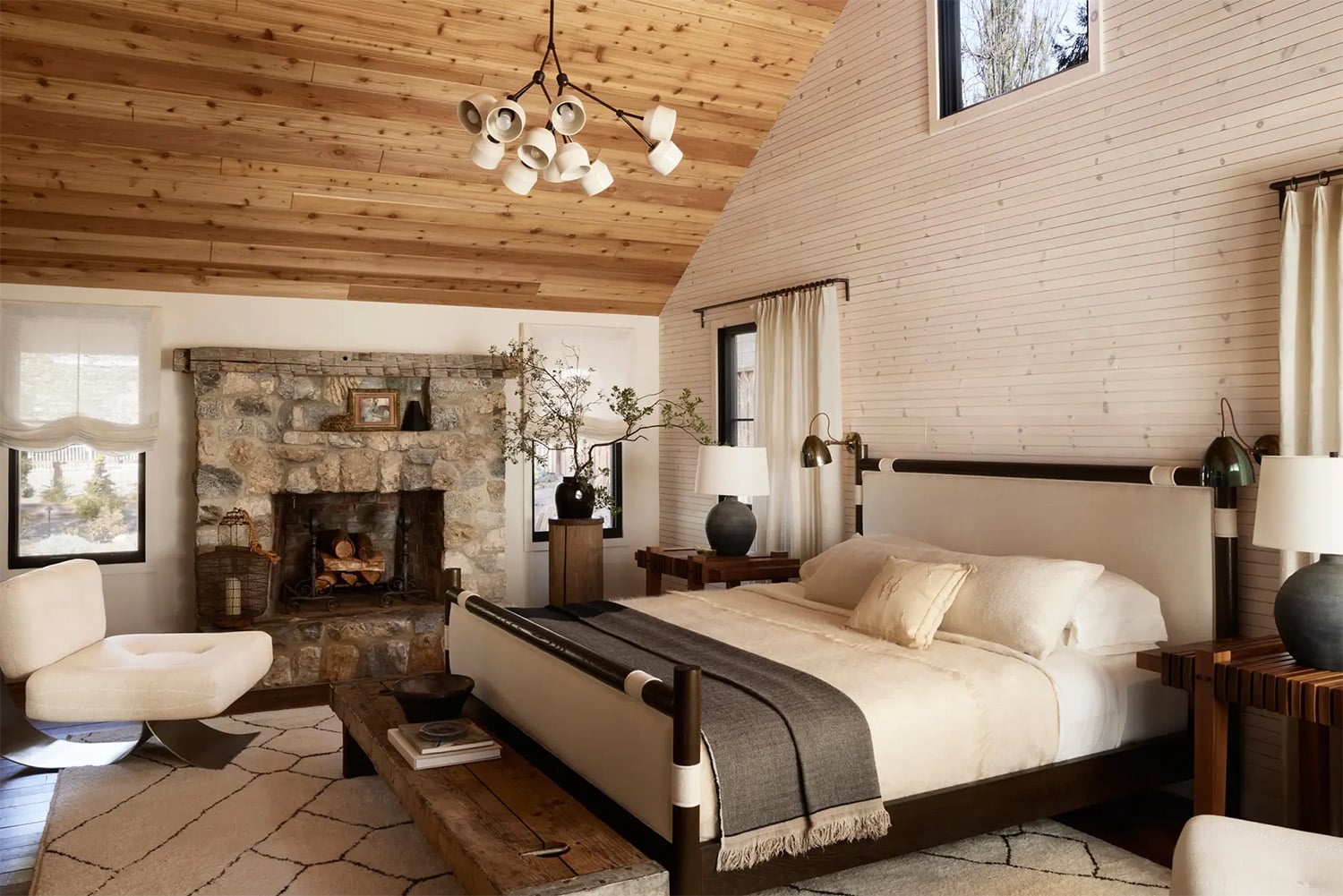
Rustic Bedroom with Vaulted Wood Ceiling and Stone Fireplace
Image courtesy of ODG Interiors
16. Using a Statement Textile to Build Your Color Story
One of the most reliable techniques I use when designing rustic bedrooms is to let a single bold textile set the room’s entire color direction. Rather than choosing wall color, upholstery, and accent pieces independently, I start with one piece — a handwoven blanket, a Southwestern throw, a vintage quilt — and pull every subsequent color decision directly from it.
This timber frame bedroom demonstrates the technique perfectly. A richly colored Southwestern blanket at the foot of the bed becomes the room’s color anchor — its warm reds, oranges, and earthy tones are picked up in the velvet accent chair, the red leather bench, and the decorative cowhide accent, creating a cohesive color story that feels collected rather than coordinated. The hand-hewn wood feature wall and carved four-poster bed provide the rustic architectural foundation, while the white duvet keeps the palette from feeling heavy — giving the bold textile accents room to breathe against a clean backdrop.
Designer Tip: When using a statement textile as your color anchor, limit yourself to two or three tones rather than all of them. In this room, the warm reds and oranges do the work — the turquoise in the blanket is present but not repeated elsewhere, which prevents the palette from feeling busy. Restraint in color selection is what separates a curated room from an overwhelming one.

A Modern Mountain Bedroom with Metal Accents
Image courtesy of Edgell Building
17. Utilizing Metal Accents for Industrial Contrast
As with rustic living rooms, wrought metals are an effective addition to a rustic bedroom, offering a crisp counterpoint that balances soft, natural materials. I often specify wrought-iron bed frames or hardware to introduce refined, structural lines.
The inherent strength and durability of metal make it a practical choice, but its true value lies in its versatility. Whether finished in a deep matte black, distressed to show age, or left raw for a primitive look, these metal touches act as the “punctuation marks” of the room—defining the space without overwhelming its organic soul.
Designer Tip: To keep metal accents from feeling cold, look for “Hand-Forged” details. Elements such as visible hammer marks or slight irregularities in the joinery add a human touch. These small imperfections help the metal feel like it belongs alongside raw wood and stone, rather than coming from a modern assembly line.

A Modern Rustic Mountain Bedroom with Nature-Inspired Artwork
Image courtesy of Locati Design
18. Nature & Wildlife Artwork
To reinforce the connection to the outdoors, I recommend decorating the walls with artwork that reflects the local landscape. A serene woodland scene or a mountain vista naturally introduces warm, earthy hues into the space, grounding the design in its environment.
For a classic wilderness aesthetic, wildlife prints featuring buffalo, deer, or elk add a sense of history and scale. Regardless of the subject, large-scale pieces will have the greatest visual impact, serving as strong focal points that anchor the room’s color palette. As an artist whose work is deeply rooted in the natural world, I’m drawn to original pieces over reproductions — a single original landscape painting by a local artist carries an authenticity that printed reproductions rarely achieve, and it becomes a genuine conversation piece in a way that mass-produced art simply cannot.
Designer Tip: When hanging large-scale art, consider the framing as much as the image. For a modern rustic look, use a simple, thin “floater” frame in a dark wood or black finish. This allows the artwork to feel like a window into the outside world without the distraction of a heavy, ornate frame that might compete with your architectural textures.

A Modern Rustic Mountain Bedroom with Nature-Inspired Artwork
Image courtesy of Locati Design
19. Best Bedding Choices for Rustic Bedrooms
Select your bedding early in the design process, as it serves as a primary color anchor for the entire room. The tones found in your linens can inspire every subsequent choice, from the shade of your window treatments to the finish of your bedside furniture.
Traditional rustic design often leans into heritage patterns, such as Southwestern geometrics or classic wildlife motifs. However, for a more contemporary interpretation, you can utilize solid-colored bedding in a neutral tone as a quiet base. This allows you to introduce the rustic aesthetic through a few textured accent pillows or a well-placed cabin-style quilt at the foot of the bed.
Designer Tip: When opting for a neutral base, play with “visual weight” rather than color. A heavy linen duvet cover in a stone-grey hue feels more “rustic” than a smooth cotton one in the same color. It is the fabric’s thickness and weave that convey the lodge aesthetic when you aren’t using bold patterns.

Layering Rustic Bedding
Image courtesy of Locati Design
20. Enhancing the Sensory Experience
A true retreat appeals to more than just the eyes; it should engage all the senses to foster a feeling of genuine rest. Beyond tactile comfort, I recommend using scent to ground the room’s atmosphere.
Incorporating candles or a diffuser with essential oils like cedarwood, sandalwood, or balsam fir creates an immediate olfactory connection to the forest. Complement this sensory layer with soft, ambient lighting—such as dimmable table lamps or subtle accent lights—to create a warm, welcoming glow that helps the mind transition from a busy day to a restful night.
Designer Tip: When choosing scents for a rustic space, stick to “Wood-Base” notes. While lavender is excellent for sleep, scents like pine, amber, or vetiver feel more aligned with a timber-framed home. These deeper, “earthy” fragrances evoke a sense of being sheltered in nature.

Modern Rustic Bedroom with Stone Fireplace
Image courtesy of Locati Architects
21. Designing with Repurposed Elements
One of the most rewarding aspects of this aesthetic is the ability to give storied materials a second life, immediately infusing a room with character. You can transform salvaged wooden pallets or reclaimed barn siding into a custom headboard, creating a one-of-a-kind focal point that carries its own history. This approach does more than add charm; it introduces authentic textures that cannot be replicated with mass-produced furniture, ensuring your retreat feels soulful and unique.
Designer Tip: When repurposing old wood, pay attention to the “Edge Detail.” If you are building a headboard from salvaged planks, sand the edges just enough to prevent splinters, but leave the original saw marks and nail holes visible. To finish, use a matte clear wax rather than a glossy varnish—this preserves the timber’s weathered look while protecting it for years to come.

Rustic Bedroom Ideas
Image courtesy of Locati Design
22. Bringing the Outdoors in With Organic Accents
To truly master this aesthetic, you must blur the line between your interior and the natural world outside. One of the most effective ways to achieve this is by integrating sculptural elements that retain their organic shapes. I often recommend incorporating naturally shed antlers or horns; their unique silhouettes and neutral tones provide a sense of verticality and raw texture that manufactured decor cannot match. By treating these natural finds as pieces of art, you create a sophisticated environment that feels like a natural extension of the wilderness.
Designer Tip: To keep antlers and horns looking modern rather than “cabin kitsch,” use them sparingly as sculptural accents. Instead of a crowded wall of trophies, place a single, beautiful shed antler on a stack of linen-bound books or a bedside table. This shifts the focus to the organic form, making the piece feel like a curated collector’s item.

Rustic Bedroom Combining Rustic and Modern Elements
Image courtesy of Locati Design
23. Exploring the Rustic Country Cottage Aesthetic
For a softer departure from rugged lodge styles, the country cottage approach beautifully blends organic materials with vintage character. This style focuses on creating a space that feels inherited rather than designed, utilizing checkered prints, gently distressed furnishings, and soft, nostalgic lighting.
You can achieve this balance by pairing a white-painted wood dresser with muted floral curtains, or layering a delicate botanical comforter over a wrought-iron bed frame. By grounding these lighter elements in a palette of earthy tones and gentle pastels, you create an environment that feels airy yet deeply rooted in tradition.
Designer Tip: The secret to a sophisticated cottage country bedroom look is to avoid “perfect” matches. Instead of buying a coordinated bedroom set, try sourcing individual pieces that look as if they were gathered over time. A mismatched vintage nightstand or a hand-painted chair provides that authentic “cottage” soul that makes a room feel lived-in and loved.
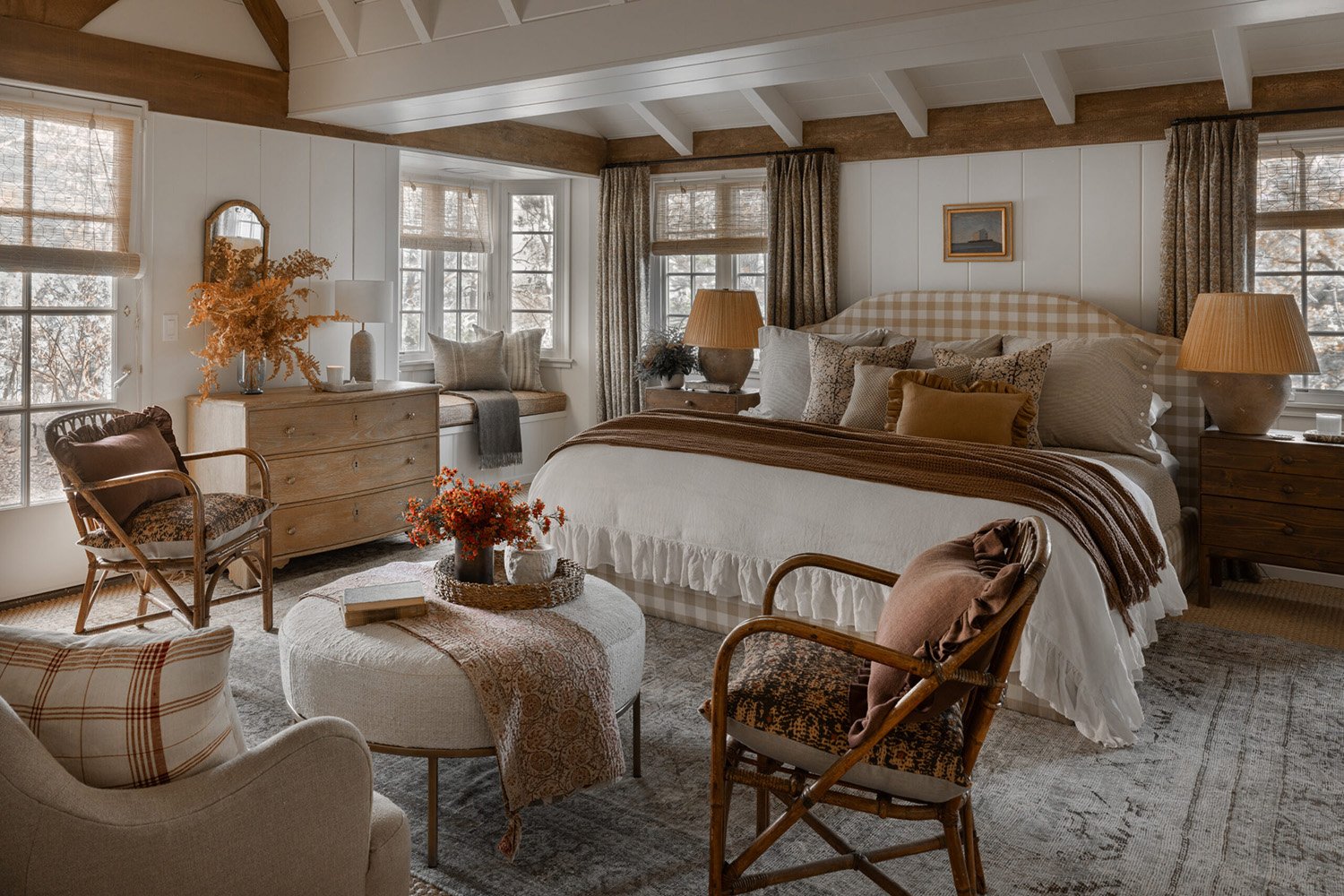
Rustic Country Cottage Bedroom
Image courtesy of Amber Lewis Interiors
24. Southwestern Accents
Incorporating Southwestern elements is an effective way to add warmth and a sense of place to a rustic bedroom. This style draws inspiration from the high desert, utilizing sun-baked colors and bold patterns that complement raw timber and adobe-style architecture.
I recommend integrating geometric textiles—such as a Navajo-inspired rug or hand-woven throw pillows—to introduce vibrant pattern energy without losing the organic feel. The key is to balance the rich, warm hues of terracotta, ochre, and turquoise with the rugged textures of reclaimed wood and leather, creating a look that feels both historic and spirited.
Designer Tip: To keep a Southwestern look from feeling too heavy, incorporate “Living Finishes.” Choose unlacquered brass hardware or copper lighting fixtures that will develop a natural patina over time. These metals react to the air and touch, creating a changing, weathered appearance that perfectly mirrors the rugged beauty of a desert landscape.

Southwestern Bedroom Design
Image courtesy of Edgell Building
25. Tailoring the Aesthetic for Lakeside Retreats
The key to a successful lake home retreat is selecting materials that reflect the surrounding shoreline. I recommend using foundational elements, such as a heavy timber bed frame paired with a stone accent wall, to mimic the natural landscape.
To maintain a sense of place, lean into a palette of deep forest greens, slate blues, and sandy beiges. These colors, when combined with woven rugs made from natural fibers, create a natural transition between the water outside and the comfort of the indoors.
Designer Tip: To truly capture the “lake life” essence, incorporate reflective textures carefully. While we usually stick to the Matte Rule, a lakeside room can benefit from a few glass or mercury-silver accents. These small touches catch the morning light off the water, bringing that unique, shimmering lakeside quality right into your personal retreat.

Rustic Lakehouse Bedroom
Image courtesy of West of Main Design
26. The Fusion of Rustic Scandinavian Style
The rustic Scandinavian aesthetic—often called “Scandi-Rustic”—expertly blends the raw, organic soul of a mountain cabin with the clean, minimalist discipline of Nordic design. To achieve this balance, I recommend starting with a restrained neutral palette of creams, soft grays, and oatmeal tones.
This allows the architectural quality of natural wood and stone to remain the primary focus. By choosing furniture with streamlined, unornamented silhouettes, you maintain a sense of modern simplicity while the heavy textures of wool and reclaimed timber provide the warmth the palette requires.
Designer Tip: To master the “Scandi-Rustic” look, prioritize “Negative Space.” In a traditional rustic room, we tend to fill the corners with decor, but Scandinavian influence calls for breathing room. Choose one or two high-quality statement pieces—like a single handcrafted wooden bench—and leave the surrounding area clear. This makes the natural materials feel more like art and less like clutter.

Rustic Scandinavian Bedroom
Image courtesy of Planete-Deco
27. Modern Rustic Bedroom
A modern rustic bedroom achieves a sophisticated balance by pairing the raw, structural honesty of wood and stone with the sleek, refined finishes of contemporary design. To master this look, I suggest using organic elements sparingly—perhaps a single reclaimed wood beam or a live-edge headboard—to introduce texture without overwhelming the space. By maintaining a streamlined aesthetic with clean-lined furniture and simple geometric patterns, you create a fresh and inviting environment that feels both grounded in nature and ideally suited to a modern lifestyle.
Designer Tip: The key to “Modern” rustic is High-Contrast Minimalism. Pair very rough textures with very smooth ones. For example, place a sleek, polished concrete lamp on a weathered, circular-sawn oak nightstand. This intentional juxtaposition between the “refined” and the “rugged” is what creates that high-end, designer feel.

Modern Rustic Bedroom Design
Image courtesy of Amber Interiors
28. Log Cabin Bedroom
In a well-designed log cabin bedroom, such as the featured project by Jacobs Studio, the key is to create a striking balance between the architecture and the interior finishes. By utilizing crisp white bedding, plush carpeting, and light-toned walls, you make a striking contrast against the saturated warmth of structural wood beams and log walls.
This brightness allows the natural light from the outdoors to flood the space, preventing the timber from feeling heavy or dark. Introducing sharp black accents—through lighting or hardware—adds a modern counterpoint that grounds the airy elements and highlights the home’s craftsmanship.
Designer Tip: When working with full log walls, avoid “Matching Wood on Wood.” If your walls are a deep honey pine, choose a bed frame in a different material, like upholstered linen or black metal. This prevents the room from feeling like a “wooden box” and allows the cabin’s beautiful architecture to stand out as the primary feature.

Log Home Bedroom
Image courtesy of Jacobs Interiors
29. Curating a Luxury Rustic Retreat
Inspired by Nicky Dobree’s high-end alpine work, this approach treats the rustic bedroom as a sophisticated sanctuary. The design centers on the interplay between architectural wood beams and contemporary amenities, such as a sleek, modern fireplace.
To replicate this elevated look, prioritize a floor-to-ceiling integration of natural materials—from wood flooring to ceiling planks—and break up the surfaces with oversized landscape artwork. By incorporating large-scale accent chairs and deeply layered textiles, the room feels grand in its proportions yet intimate in its comfort.
Designer Tip: To achieve this “Luxury Chalet” feel, focus on scale. Small, daintier pieces can get lost against heavy timber walls. Instead, choose furniture with a larger footprint and artwork that commands attention. This ensures the decor feels as substantial and permanent as the building’s own structure.

Modern Rustic Bedroom Design
Image courtesy of Nicky Dobree Design
A Final Note on Rustic Bedroom Design
A well-designed rustic bedroom doesn’t happen by accident — it’s the result of intentional decisions about materials, scale, texture, and light, made with a clear understanding of how each element relates to the others. The 29 ideas in this guide cover a wide range of directions, from log cabin and luxury alpine to Scandinavian, Southwestern, and country cottage — but the underlying principle running through all of them is the same: let natural materials lead, balance rugged architecture with refined softness, and design a space that feels genuinely connected to the landscape surrounding it.
Whether you’re designing a primary bedroom, a vacation cabin, or a mountain retreat, I hope these professional strategies give you a clear starting point — and the confidence to make choices that feel personally yours rather than simply on-trend.
Frequently Asked Questions About Rustic Bedroom Ideas
What defines a rustic bedroom?
A rustic bedroom is defined by natural materials, organic textures, and a warm, grounded aesthetic inspired by nature. Wood, linen, wool, stone, and leather create an authentic, enduring feel rooted in craftsmanship and comfort.
What is the difference between rustic and modern rustic bedroom design?
Traditional rustic bedrooms emphasize rugged textures and classic cabin elements, while modern rustic design refines those materials with cleaner lines, lighter palettes, and contemporary furnishings for a more updated, livable look.
How do you design a rustic bedroom?
Start with the architecture and natural materials — wood, stone, and linen establish the foundation before any decorative decisions are made. Choose a nature-inspired palette of warm whites, soft neutrals, muted greens, and earthy browns, then layer in texture through bedding, rugs, and window treatments. Balance rugged architectural elements with refined softness — an upholstered headboard against log walls, crisp white bedding in a timber-framed room — to prevent the space from feeling heavy or overly themed. Lighting is the final layer: warm-toned bulbs, layered sources, and dimmable fixtures do more to establish a rustic atmosphere than almost any single furniture or decor choice.
How do you decorate a rustic bedroom without it feeling outdated?
Balance is key. Pair rustic materials with modern lighting, streamlined furniture, and restrained décor. Keeping the palette light and the layout uncluttered prevents the space from feeling heavy or overly themed. Today’s rustic bedrooms emphasize natural materials, thoughtful restraint, and modern comfort — using lighter color palettes, cleaner furniture silhouettes, and layered textures to create spaces that feel calm, considered, and livable.
What colors work best in a rustic bedroom?
Rustic bedrooms work best with nature-inspired colors — warm whites, soft neutrals, muted greens, earthy browns, and subtle grays. These tones enhance natural materials and create a calm, cohesive foundation. For a more dramatic direction, deep charcoal, forest green, or rich terracotta work beautifully in rooms with ample natural light, where the depth of color reads as warm and sheltering rather than heavy. The key principle in either direction is warmth — even neutrals should lean toward warm rather than cool undertones, since cool grays or stark whites work against the organic quality of natural materials.

